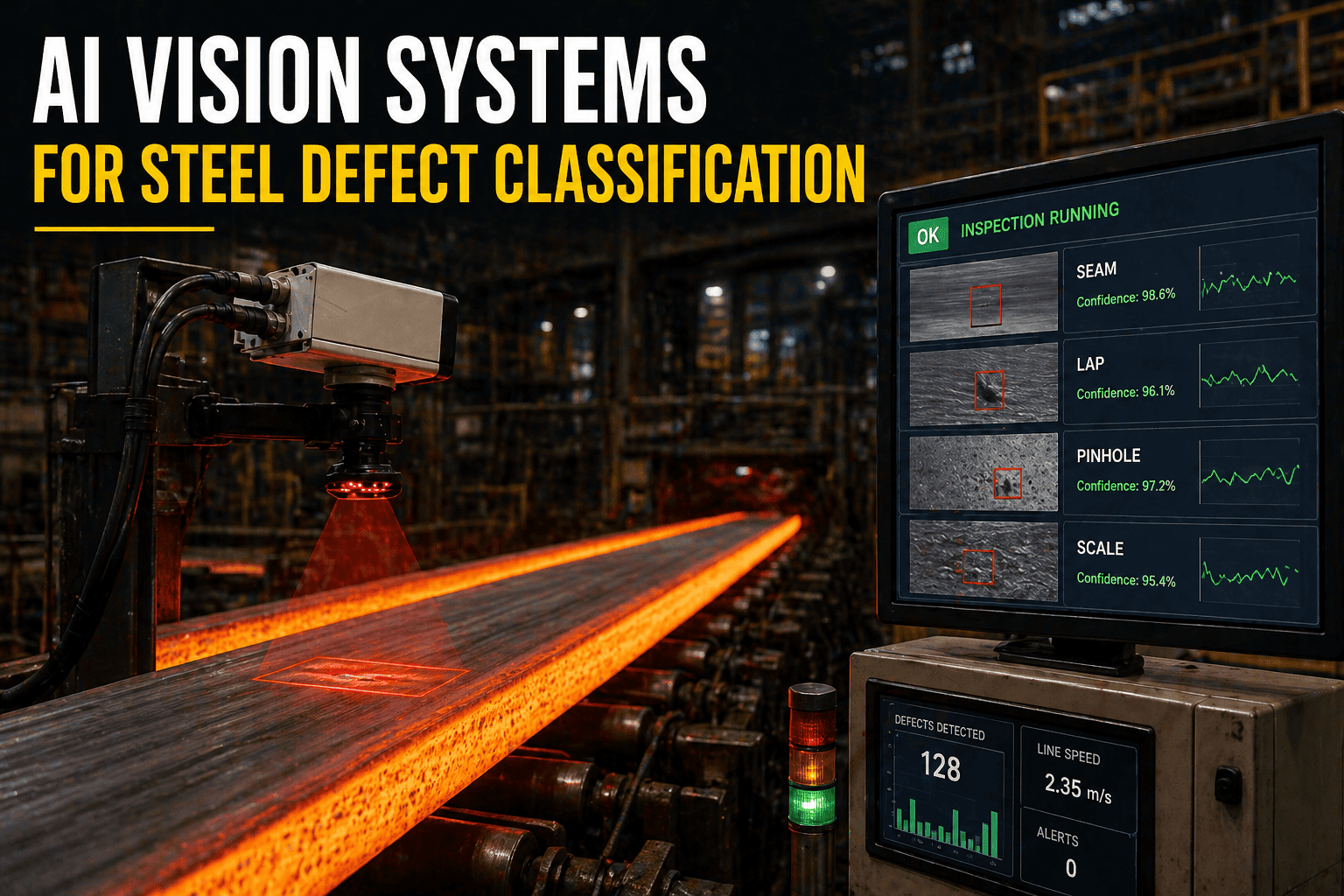
Zero defects. The holy grail of manufacturing that engineers have chased for decades. In steel production—where a single surface scratch can reject an entire coil worth $50,000, where internal inclusions invisible to the eye can cause catastrophic failure in automotive applications—the stakes couldn't be higher. Traditional quality control accepts defects as inevitable, building inspection and rework into the cost structure. But Vision AI is rewriting the rules, making "zero defect" not just an aspiration but an achievable operational reality.
The question isn't whether Vision AI can detect defects—that's proven. The real question is whether it can prevent them entirely by catching process deviations before defects form. Leading steel manufacturers using AI-powered quality systems report defect rates dropping from thousands of PPM to double digits. Oxmaint's Vision AI platform is helping steel plants close the gap between "near-zero" and true zero-defect production.
The Zero-Defect Journey: Where Does Your Plant Stand?
What "Zero Defect" Really Means in Steel
Let's be precise about terminology. Zero defect doesn't mean defects never occur—it means no defective product reaches customers.
Zero Defect ≠ Perfect Process
Variation exists in every process. Raw materials vary. Equipment wears. Temperatures fluctuate. Expecting perfection from imperfect inputs is unrealistic.
Zero Defect = 100% Containment
Every defect detected before shipping. No escapes to customers. Combined with process feedback that continuously reduces defect generation.
Zero Defect = Continuous Improvement
Each detected defect triggers root cause analysis. Process adjustments prevent recurrence. Defect rate trends toward zero over time.
The Three Pillars of Zero-Defect Steel Production
Detection
Find every defect, no matter how small
- 100% surface inspection at line speed
- Sub-millimeter defect detection
- Consistent 24/7 accuracy
- No sampling—every square cm covered
Classification
Grade accurately for right disposition
- Defect type identification
- Severity assessment
- Customer-specific grading rules
- Automatic routing decisions
Prevention
Stop defects before they form
- Real-time process correlation
- Early warning alerts
- Automated parameter adjustment
- Root cause pattern recognition
Vision AI Capabilities: What's Possible Today
*Internal flaw detection requires complementary ultrasonic or eddy current inspection—Vision AI handles surface; integrated systems handle the complete picture.
Want to see Vision AI detect defects on your specific steel grades? Schedule a live demonstration with your sample material.
The Path from Detection to Prevention
Detection alone doesn't achieve zero defect—it just catches problems after they occur. The breakthrough happens when Vision AI connects to process control.
Detect
AI identifies defect in real-time
Correlate
Link defect to process conditions
Alert
Warn operators of deviation
Adjust
Correct process automatically
Prevent
Defect never forms
Honest Assessment: What's Achievable Today
Achievable Now
- 99%+ surface defect detection accuracy
- Zero customer escapes for detectable defects
- 60-80% reduction in defect generation rate
- Real-time process feedback and alerts
- Automatic grading and disposition
- Complete quality documentation
Challenging But Progressing
- Sub-surface inclusion detection (needs sensor fusion)
- Fully autonomous process correction
- Predicting defects before any visual evidence
- 100% classification of novel defect types
- Eliminating all human review requirements
Future Capabilities
- True zero PPM across all defect types
- Predictive quality before production starts
- Self-optimizing process control
- Cross-plant learning and optimization
- Customer-specific quality prediction
ROI: The Business Case for Zero-Defect Vision AI
Cost of Defects (Without Vision AI)
Savings with Vision AI
Is Zero-Defect Possible for Your Plant?
Every steel operation is different. Let us analyze your specific defect challenges, production environment, and quality requirements to show you exactly what's achievable with Vision AI.