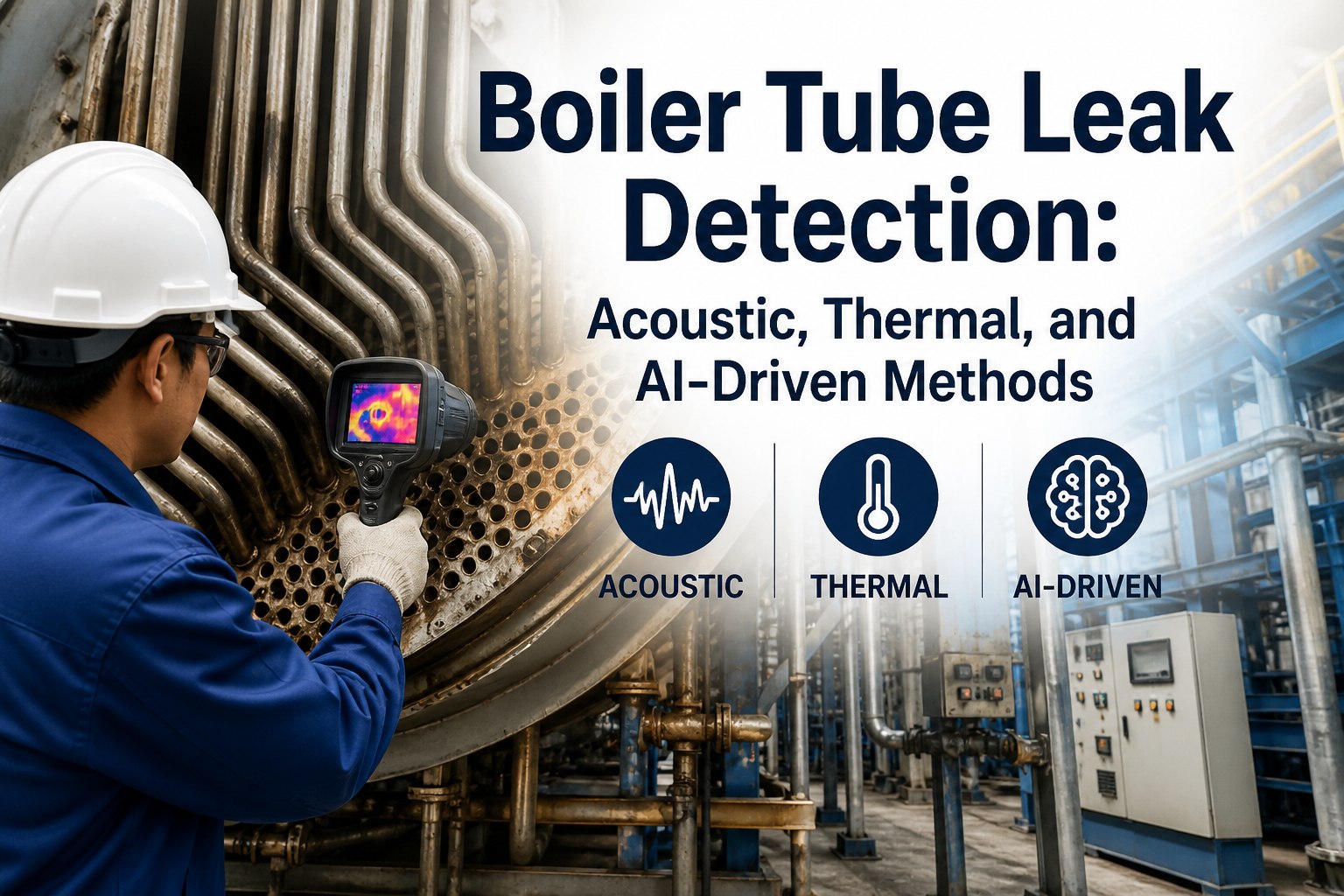
Boiler Tube Leak Detection: Acoustic, Thermal, and AI-Driven Methods
By Riley Quinn on May 2, 2026
It's 2:47 AM on a Saturday. Your operations shift supervisor calls. There's a hissing sound in the boiler. Steam pressure is dropping. The unit is coming off-line whether you're ready or not. Sound familiar? Boiler tube leaks are the number one cause of forced outages in fossil-fueled power plants — accounting for over 52% of unplanned shutdowns at coal-fired stations, costing $2 million to $10 million per incident, and taking an average of 3.6 days to repair on a 500 MW unit. The cruel part: that pinhole leak almost always started broadcasting ultrasonic signals weeks before your operators heard a thing. The plants that catch tube failures early aren't using better welds or thicker tubes — they're combining acoustic emission monitoring, infrared thermography, and AI pattern recognition to spot tube degradation 25 hours to several weeks before pressure drops. See how Oxmaint's AI predictive maintenance turns 2 AM emergencies into scheduled maintenance windows — start your free trial. This guide breaks down the three detection methods plants are using in 2026 — and what each one actually catches.
MAY 12, 2026 5:30 PM EST , Orlando
Upcoming Oxmaint AI Live Webinar— Boiler Tube Leak Detection: From Acoustic Sensors to AI Vision
Join the OxMaint team in Orlando for a hands-on session on detecting waterwall, superheater, reheater, and economizer tube leaks weeks before failure — acoustic emission, IR thermography, and AI-driven predictive monitoring mapped to your boiler configuration in one session.
of forced outages at coal-fired plants stem from boiler tube leaks
$2M–$10M
typical cost per boiler tube leak incident
3.6 days
average repair time on a 500 MW unit
$5B/yr
total impact on U.S. electric power industry
Where Boiler Tubes Actually Fail — Mapping the 4 Risk Zones
Not all boiler tubes fail the same way. The tube section, fluid being carried, and operating temperature dictate the failure mechanism — which in turn dictates which detection technology will catch it. Before choosing acoustic, thermography, or AI, plants need to know which zones are at highest risk. Here's the anatomy of a typical water-tube boiler with the four most common leak zones called out.
Zone 1Waterwall Tubes
Operating temp: 600–700°F
Top failure modes: Hydrogen damage, fireside corrosion, caustic gouging
Best detection: Acoustic emission + thermography
Zone 2Superheater Tubes
Operating temp: 1,000–1,100°F
Top failure modes: Long-term overheating, creep, oxidation
Best detection: Thermography + AI thermal trending
Zone 3Reheater Tubes
Operating temp: 1,000–1,050°F
Top failure modes: Stress corrosion, dissimilar metal weld failure
Best detection: Acoustic + AI multi-sensor fusion
Zone 4Economizer Tubes
Operating temp: 400–600°F
Top failure modes: Fly ash erosion, oxygen pitting, dewpoint corrosion
Best detection: Acoustic emission + flue gas monitoring
The 3 Detection Methods — What Each Catches and What It Misses
No single technology catches every type of boiler tube failure. Acoustic emission is fast and excellent at active leaks but blind to slow degradation. Thermography sees overheating and scaling weeks in advance but can't pinpoint a pinhole. AI vision and pattern analysis tie everything together and add prediction. The plants achieving the best results combine all three. Walk through your boiler's specific tube failure history with Oxmaint's reliability engineers — book a 30-minute session.
A
Method 01
Acoustic Emission (AE) Monitoring
Piezoelectric or airborne sensors mounted on the boiler shell pick up the high-frequency ultrasonic signature (20–100 kHz) generated when steam or water escapes a pressurized tube. Modern systems use FFT spectrum analysis and 3D source localization to pinpoint the leak's coordinates within the tube bank — without sending people into hot zones.
Strengths
Real-time detection of active leaks · Pinpoint location within tube bank · No process interruption · Works at full operating pressure
Limitations
False alarms from soot blowers · Cannot detect pre-leak degradation · Small leaks below detection threshold · Background noise interference
25+ hrsTypical lead time before catastrophic rupture once a pinhole begins
T
Method 02
Infrared Thermography
Fixed IR cameras and handheld scans visualize the temperature distribution across tube banks. Hot spots indicate scaling, internal deposits, or impending overheat-induced failure. Cold spots can indicate water ingress from an upstream leak. AI thermal trending models compare real-time IR maps to a healthy baseline and flag any anomalies that drift over hours, days, or weeks.
Strengths
Detects overheat & scaling weeks early · Wide-area visual coverage · Easy to interpret with AI overlay · Catches creep precursors
Limitations
Line-of-sight limitations inside furnace · Requires viewing ports · Less effective for pinhole leaks · Calibration drift over time
2–6 weeksTypical lead time for creep, scaling, and overheating detection
AI
Method 03
AI-Driven Multi-Sensor Fusion
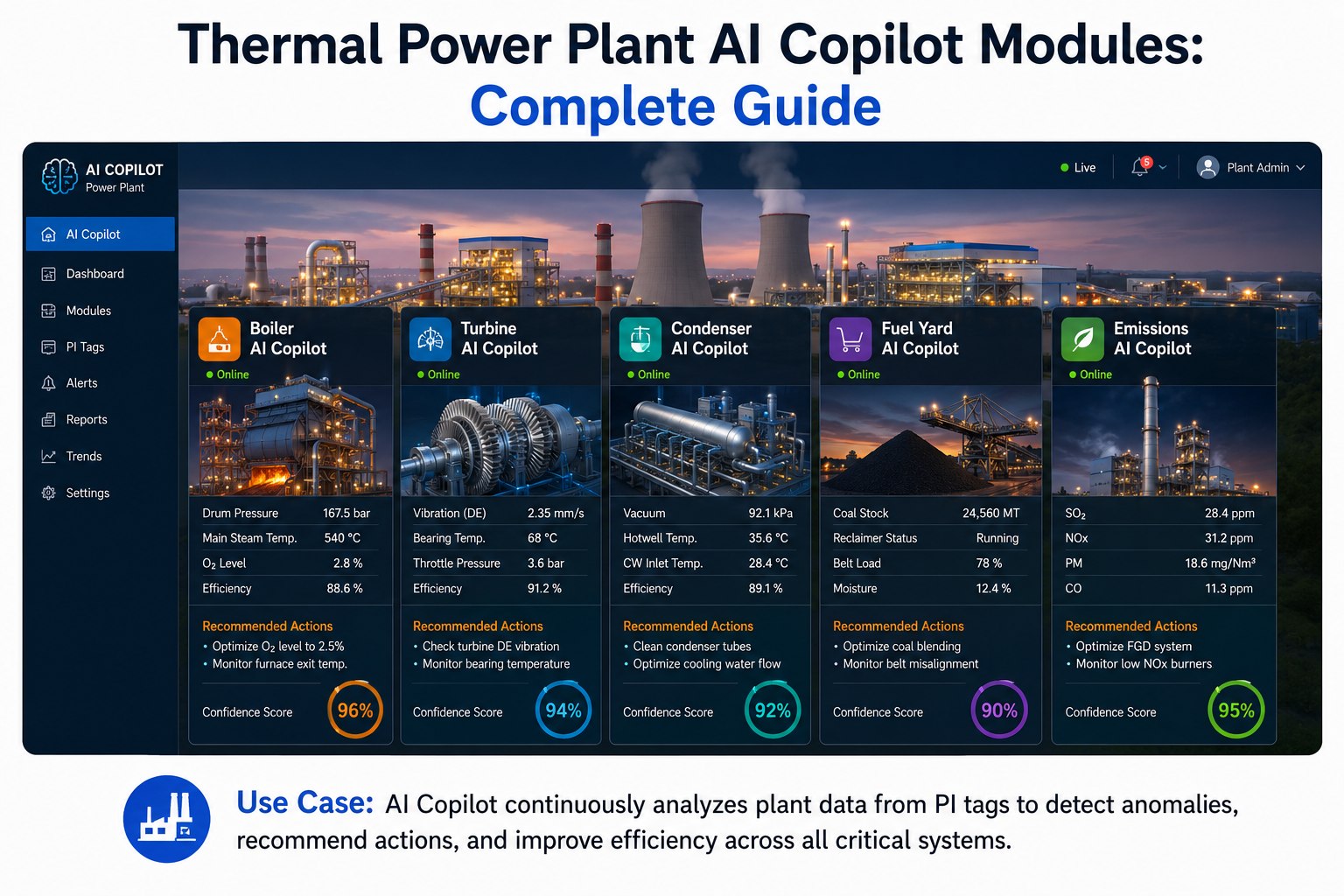
Machine learning models — typically LSTM neural networks or temporal convolutional auto-encoders — fuse acoustic signals, temperature, pressure, water chemistry, and flue gas data into a single anomaly score per tube zone. Trained on each plant's specific operational signature, the model flags deviations that no single sensor would detect alone — and learns to ignore soot blower cycles, load swings, and known noise sources.
Strengths
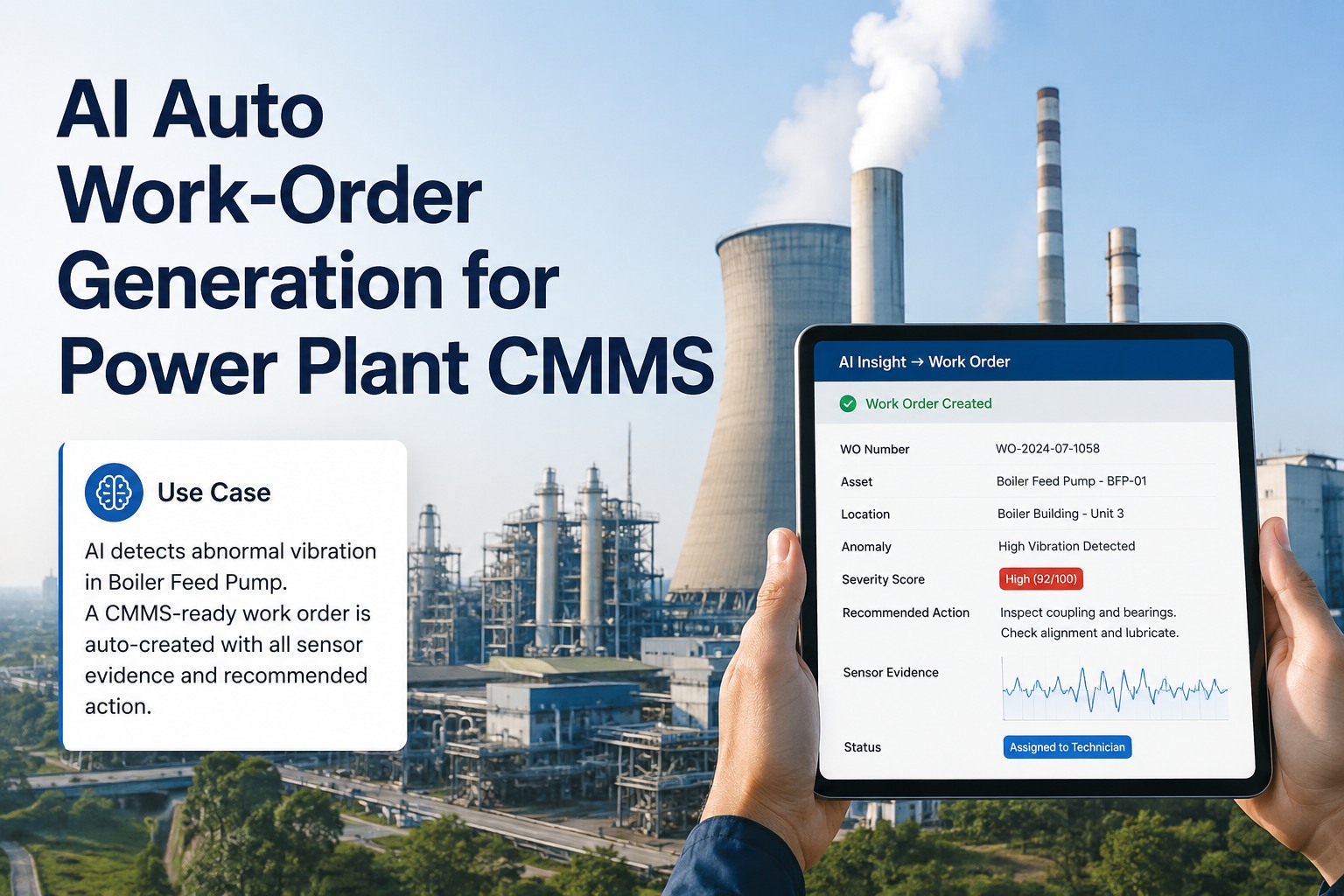
94% sensitivity in lab studies · Filters soot blower noise automatically · Predicts failures days–weeks ahead · Auto-generates work orders
Limitations
Requires 30–60 days baseline learning · Needs sensor data quality discipline · Initial calibration cycle
94%Detection accuracy with AI fusion of acoustic + thermal + operational data
Eliminate 50%+ of Your Forced Outages with Continuous Boiler Monitoring
Oxmaint's AI predictive maintenance platform fuses acoustic, thermal, and operational data into a single boiler health dashboard — with automated work orders, root cause analysis, and integration into your existing CMMS.
The Failure Curve — How a Boiler Tube Goes from Healthy to Rupture
Every boiler tube leak follows the same arc: a slow degradation phase that lasts weeks or months, a transition into pinhole-stage leaking that lasts hours to days, and a catastrophic rupture that happens in minutes. The detection method that wins is the one that catches the earliest stage. Here's the timeline mapped to what each technology can see. Try Oxmaint's continuous monitoring free on your top three boiler tube zones.
Weeks 1–8
Stage 1: Silent Degradation
Internal corrosion, scaling, or fly ash erosion thins tube walls below nominal thickness. No audible signs. No pressure changes. Operators see nothing.
Detected by:ThermographyAI Trending
Days 1–3
Stage 2: Micro-Pinhole Forms
A microscopic breach develops. Steam begins escaping at ultrasonic frequencies. Pressure trends start to drift but stay within normal operating tolerances.
Detected by:Acoustic EmissionAI Anomaly
Hours 1–25
Stage 3: Active Leak Established
Visible steam plume, audible hissing, makeup water consumption rises. By the time operators hear it, the tube has 25 hours or less before rupture.
Detected by:Operator WalkAll Methods
Minutes
Stage 4: Tube Rupture
Catastrophic failure. Forced unit trip. Collateral damage to adjacent tubes from steam jet impingement. 3.6 days minimum to repair on a 500 MW unit.
Outcome:$2M–$10M loss
The detection window collapses geometrically as a tube progresses through stages. Catching at Stage 1 saves 40–80× the cost of catching at Stage 4.
Expert Review — Why Plants Still Lose to Tube Leaks in 2026
The thing that surprises plants when they finally adopt continuous boiler monitoring is how much the alarm signal was already there in their data — they just couldn't hear it through the noise. A coal plant generates dozens of acoustic events per minute from soot blowers, slag fall, and combustion fluctuations. Without AI in the loop, an acoustic emission system flags so many false positives that operators stop trusting it within months. The shift in 2025–2026 isn't really about new sensors — most plants already have the sensor density they need. It's about applying machine learning to separate the actual leak signature from the operating background. Once that filter is in place, plants are catching tube failures with 25-plus-hour lead times consistently, and forced outage rates from boiler tube leaks drop by 50–70% within the first year.
Aging Coal Fleet Magnifies Risk
The capacity-weighted average age of U.S. coal plants is 39 years. Increased cycling between baseload and load-following accelerates fatigue, creep, and thermal stress on tubes never designed for that duty.
Time-Based Maintenance Misses Real Risk
Calendar inspections and scheduled tube replacements waste 20–30% of maintenance budget on healthy tubes while still missing tubes that fail between cycles. Condition-based monitoring inverts that ratio.
75% of Failures Are Preventable
U.S. Department of Energy data shows properly implemented predictive maintenance eliminates 70–75% of equipment breakdowns. For boiler tubes specifically, that translates directly to forced outage reductions.
The Boiler Health Maturity Model — Where Does Your Plant Stand?
Most U.S. power plants sit somewhere between Level 1 and Level 3 on the boiler tube reliability maturity curve. Knowing where your plant currently operates — and what the next step looks like — is the fastest way to build a business case for upgrading. Here's the four-level framework reliability engineers use.
L1
Reactive — Wait for Failure
No continuous monitoring. Tubes inspected only at planned outages. Most leaks discovered when steam plume becomes visible or pressure drops. Forced outage rate from boiler tube leaks: typical 2–4 events per year per unit.
High riskCalendar inspection only
L2
Time-Based Preventive
Periodic NDT inspections — eddy current, ultrasonic thickness testing — on a fixed schedule. Some acoustic monitoring on highest-risk zones. Catches some failures, but still 1–2 unplanned outages per year. Most plants live here.
Moderate riskSchedule-driven NDT
L3
Condition-Based Monitoring
Continuous acoustic emission system across all tube zones, IR thermography on critical sections, integrated with DCS. Tube leaks caught at micro-pinhole stage. Forced outage rate cut by 40–60%. Maintenance moves from calendar to condition.
Lower riskReal-time alerts
L4
AI-Driven Predictive Reliability
Multi-sensor AI fusion model running on plant-specific baselines. Anomaly detection on acoustic + thermal + operational data. Auto-generated work orders into the CMMS. Days-to-weeks lead time on every tube failure. Forced outage rate cut by 70%+. Where best-in-class plants operate today.
Best in classAI + closed-loop CMMS
Move Your Boiler from Reactive to Predictive — In Under 60 Days
Oxmaint's AI predictive maintenance platform integrates with your existing acoustic, thermal, and DCS data — no rip-and-replace. Most power plants see their first prevented tube leak within 30–45 days of deployment.
How early can AI detect a boiler tube leak before it becomes a forced outage?
AI-driven multi-sensor fusion systems typically detect developing tube leaks 25 hours to several weeks before they cause a forced outage, with the lead time depending on which failure stage is being caught. Slow degradation mechanisms — internal scaling, fly ash erosion, long-term overheating — are detectable 2 to 8 weeks in advance through thermal trending and AI baseline comparison. Active pinhole leaks generate ultrasonic acoustic signatures the moment they form, which AI-filtered acoustic emission systems catch within minutes. The critical advantage of AI over standalone acoustic or thermography systems is filtering out false positives from soot blowers, slag fall, and load changes — without that filtering, operators stop trusting alarms within a few months and miss the real signal when it appears.
Why are boiler tube leaks the leading cause of forced outages at coal-fired power plants?
According to National Energy Technology Laboratory data, boiler tube leaks account for over 52% of forced outages at coal-fired power plants, far ahead of balance-of-plant issues at 15%, steam turbine failures at 13%, and generator problems at 12%. Three factors drive this: first, the sheer scale — a typical 500 MW boiler contains tens of miles of tubing, any inch of which can fail; second, the operating environment — tubes face simultaneous high pressure, high temperature, fireside corrosion, waterside chemistry, and fly ash erosion; third, fleet aging — the capacity-weighted average age of U.S. coal plants is 39 years, and many units are now cycled between baseload and load-following operations that accelerate fatigue and creep on tubes never designed for that duty. Together these factors make boiler tubes the single highest-risk asset class in a thermal power plant.
What's the difference between acoustic emission and infrared thermography for tube leak detection?
Acoustic emission and infrared thermography catch different stages of tube failure and are complementary, not competing technologies. Acoustic emission excels at detecting active leaks — once steam or water is escaping a pressurized tube, AE sensors pick up the ultrasonic signature in the 20–100 kHz band immediately and modern systems can localize the leak in 3D within the tube bank. Its weakness is that it can't see degradation before a leak begins. Infrared thermography is the opposite: it visualizes hot spots from internal scaling, creep, and overheating weeks before any leak forms, but it can't pinpoint a pinhole leak that hasn't yet created a temperature anomaly. Plants that catch tube failures earliest combine both — acoustic for the active leak detection layer, thermography for the pre-leak degradation layer, with AI fusing the two signals to produce a single per-zone health score.
Can boiler tube leak detection systems run during normal plant operation, or do they require a shutdown?
Modern continuous monitoring systems run entirely during normal operation — that's the entire point of continuous condition monitoring versus traditional outage-based inspection. Acoustic emission sensors are mounted on the boiler shell exterior and pick up tube signals through the pressure vessel without any process interruption. IR thermography uses fixed cameras at viewing ports or handheld scans that don't disturb operation. AI fusion models run continuously on streaming sensor and DCS data. The only inspection methods that require shutdown are the traditional NDT techniques — eddy current, ultrasonic thickness testing, visual borescope — which are valuable but should be scheduled around AI alerts rather than running on calendar cycles. The shift to AI-driven monitoring is precisely about being able to detect problems without taking the unit off-line first.
What's the typical ROI on AI-driven boiler tube leak detection in a coal or HRSG plant?
For a 500 MW coal-fired unit, preventing a single boiler tube leak forced outage typically saves $2 million to $10 million depending on the leak severity, repair complexity, and grid penalty exposure. With boiler tube leaks driving over half of forced outages and most plants experiencing 1–4 events per year, the annual prevented-outage value can run $4 million to $20 million per unit. AI-driven monitoring system costs run $200,000 to $800,000 for full plant deployment depending on tube zone coverage, putting payback typically inside 3 to 9 months from a single prevented outage. Beyond direct outage avoidance, plants see 40–60% reduction in unplanned tube replacements at scheduled outages, 5–10% improvement in heat rate from earlier detection of scaling and fouling, and reduced contractor and grid penalty exposure. Industry data shows 95% of organizations adopting predictive maintenance report positive ROI, with about 30% achieving full payback within the first year.