Agentic AI for Power Plants: Ranked Recommendations
By Riley Quinn on May 8, 2026
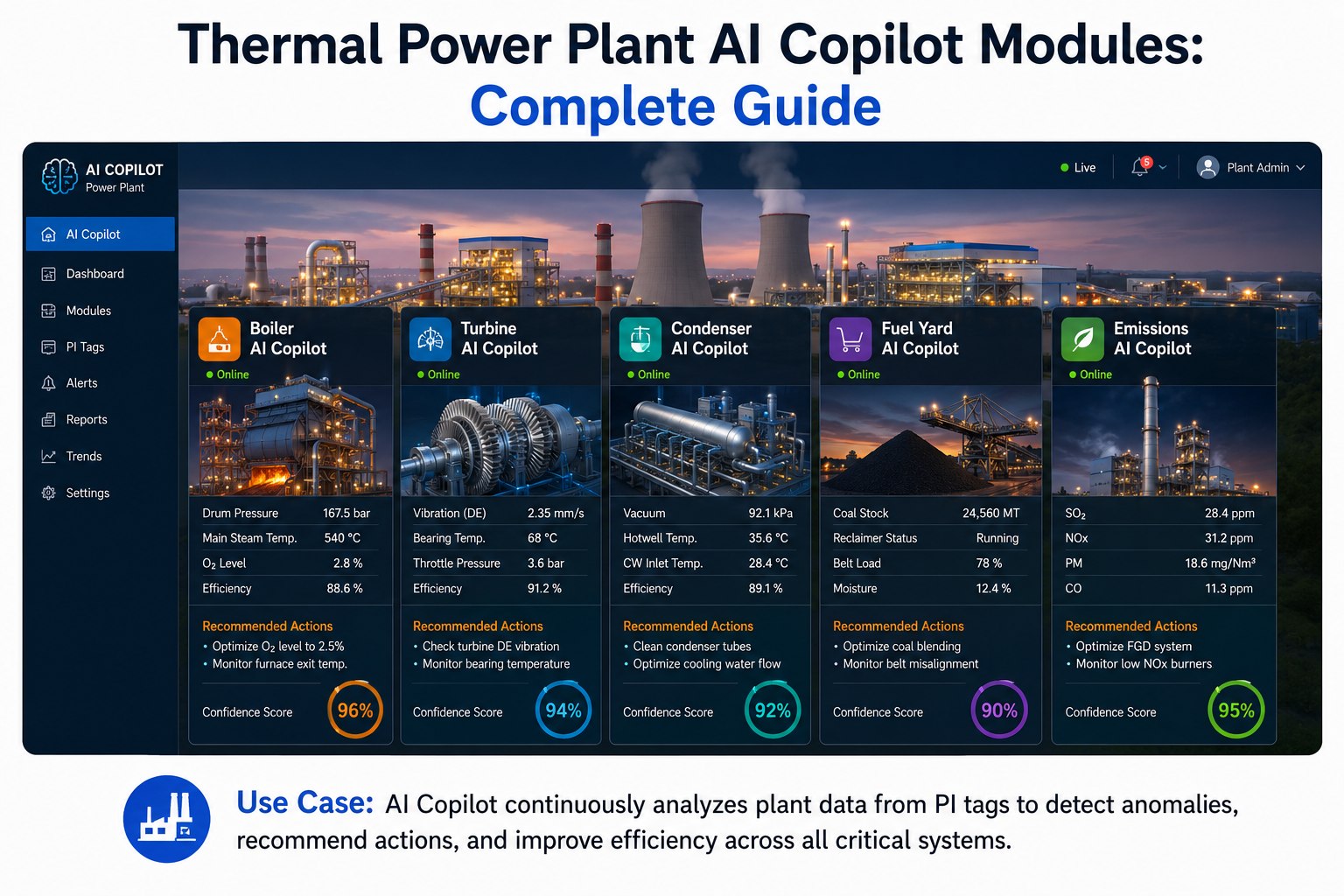
Imagine the operator opens her shift at 6 AM. Seven recommendations are already ranked and waiting on her screen — not alarms, actions. Three are HIGH priority: drum sensor calibration, today's sootblowing pass, the APH cleanliness check. Four are MEDIUM: O₂ trim, PA fan loading, mill differential pressure, soot blower steam. Each carries the agent that found it, a confidence score, and a dollar impact. That's agentic AI on a power plant — not chatbots, ranked decisions. Register for the event to see the recommendation board running live.
MAY 12, 2026 5:30 PM EST , Orlando
Upcoming OxMaint AI Live Webinar — Agentic AI Recommendation Board Live Demo
Live session for plant managers, operations VPs, control room supervisors, and reliability heads running coal-fired and combined-cycle thermal plants. We'll have all seven AI agents running live on the actual on-prem stack — RTX PRO 6000 Blackwell central server plus dual Jetson AGX edge boxes — pushing ranked recommendations onto the operator board with model name, confidence score, and dollar impact for each one. Hands-on time at the screens, walkthrough of the 6–12 week pilot-to-deployment timeline, and on-the-spot quotes.
About the Servers — What's Running Inside Your Plant
Three on-prem boxes per plant. That's the entire stack that produces those seven ranked recommendations every shift. Each one has a clear job — and the agentic system is built so that no recommendation reaches an operator until the model running on the central server is confident enough to push it. Sign up free to spec the right agentic deployment for your plant.
CENTRAL · ~$19K
RTX PRO 6000 Blackwell Server
The brain. Where the agents reason.
A single rack-mount server in your IT room. 96 GB GDDR7 ECC. Runs all seven AI agents in parallel — drum sensor, sootblowing optimizer, APH twin, O₂ trim, PA fan, mill DP, soot blower steam. Each agent has its own model. The central server is what calculates every confidence score and decides which recommendations are good enough to push onto the operator's board.
JOB FOR AGENTIC AI
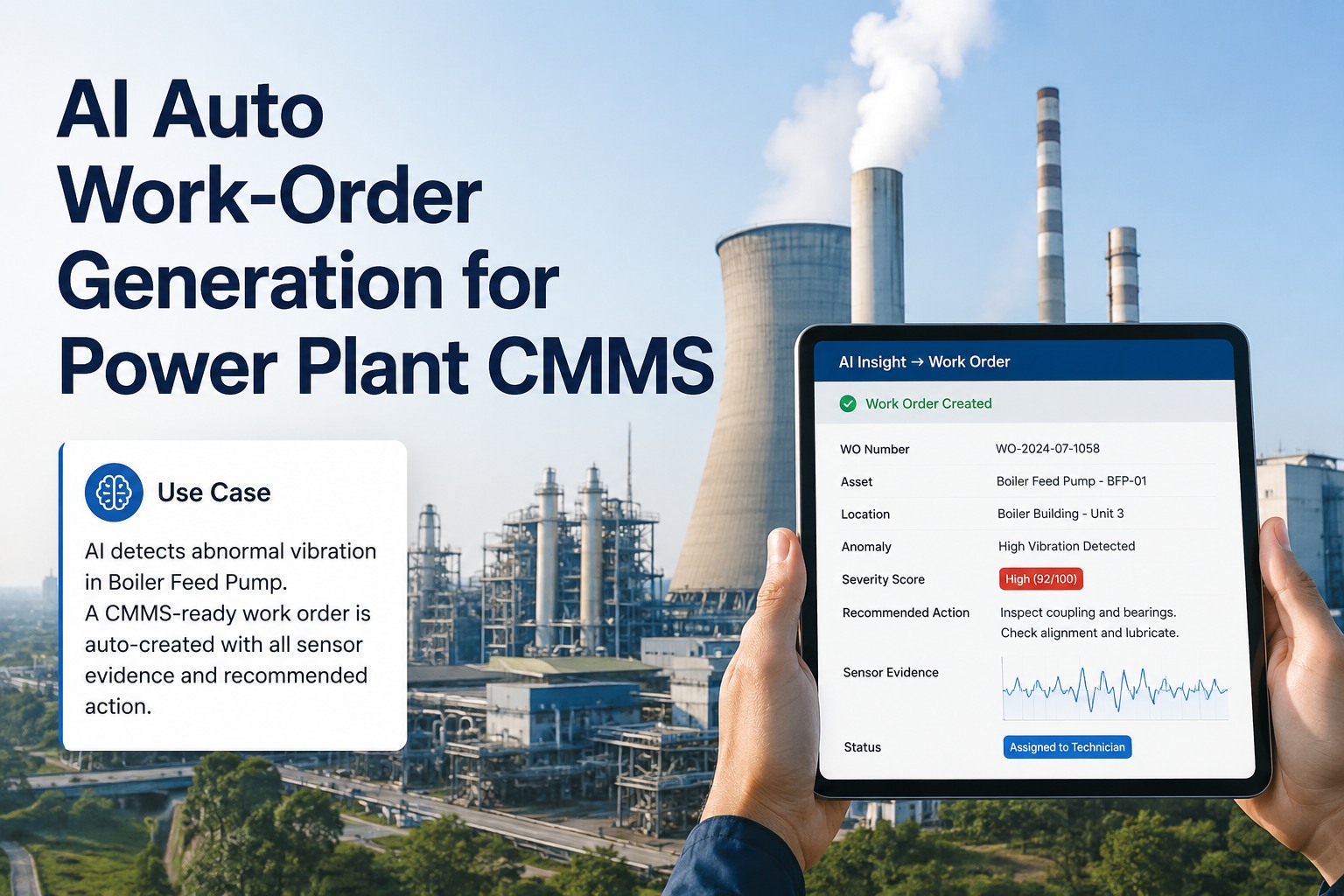
Runs all 7 agent models concurrently. Computes confidence scores. Ranks recommendations by priority. Auto-generates work orders when confidence and dollar impact thresholds are both met.
EDGE · 01 · ~$4K
Jetson AGX · Boiler Island
Streams the process data.
A small edge box near the boiler island. 64 GB unified memory, 275 TOPS. Pulls drum level, drum pressure, sootblowing schedule history, APH inlet/outlet temps, O₂, PA fan loading, and mill DP from the PI Historian every second.
JOB FOR AGENTIC AI
Pre-processes ~50 PI tags into model-ready windows for six of the seven agents. Filters noise. Ships clean time-series to the RTX PRO 6000 over the 10 GbE backplane.
EDGE · 02 · ~$4K
Jetson AGX · Steam & Aux
Watches the support systems.
A second edge box mounted near the auxiliary steam header. Pulls soot blower steam pressure, header temperatures, valve positions, and steam flow data — the slow signals that the seventh agent (soot blower steam) keys on for its recommendation.
JOB FOR AGENTIC AI
Watches steam header and aux equipment data. Detects soot-blower steam pressure drift before it degrades cleaning effectiveness. Feeds the trend to the RTX PRO 6000 for the soot blower steam agent.
~$84.5K
Total per-plant capex including the three boxes, switch, electrical, and the OxMaint AI software stack with all seven agents pre-loaded. No subscriptions. No per-tag billing. Optional NVIDIA DGX Station GB300 Ultra at corporate tier (~$85K) shared across plants for fleet-wide agent training. Buy once, own forever.
Why Agentic AI for a Power Plant Has to Run On-Prem
Agentic AI means the system doesn't just analyze — it reasons, ranks, and acts. For a power plant that means recommendations flowing onto the operator board every shift, with confidence scores that decide whether the action is auto-approved or held for human review. None of that works on cloud latency. The control room is talking to PI tags in milliseconds. The operator is making decisions in seconds. The agents have to live where the data lives — on the on-prem stack, behind your firewall, with zero hyperscaler involvement. Register for the event to see the agents reasoning live on plant data.
7
AI agents running in parallel — each with its own model, confidence score, and dollar impact
<50ms
on-prem inference per agent — fast enough to update the recommendation board every minute
30-40%
drop in maintenance admin workload from auto-generated work orders day one
0%
of your PI tags, fuel data, or operator decisions leave the plant boundary
The Agent Recommendation Board — All 7 Agents, Ranked & Live
Below is what the operator sees the moment she opens her shift. Three HIGH priority recommendations at the top, four MEDIUM below. Each card carries the agent that produced it, the confidence score the model reported, and the dollar impact if the recommended action is taken. Register for the event to see all seven agents updating the board in real time.
Drum level transmitter B-side has drifted 1.4% from A-side over 72 hours. Recommend recalibration before next shift. If left, will trip drum-level protection on next high-load step.
Heat-flux gradient model shows superheater bank 3 fouling has reached threshold. Optimal blow window is 14:00 today at 65% load. Skipping costs ~0.05% heat rate per day until next blow.
AUTO WORK ORDER
03
APH Cleanliness — Cold-End Wash Recommended
APH Performance Twin88% confidence~$336K/yr fuel
APH cleanliness factor has dropped to 0.79 over 30 days. ID Fan B-side current pulling +14A. Cold-end wash during weekend outage will recover 6 kcal/kWh on heat rate.
REVIEW & APPROVE
MEDIUM PRIORITY · 4 ITEMS
04
O₂ Trim — Reduce Setpoint by 0.3% on Burner Row C
Combustion Optimizer82% confidence~$94K/yr fuel
Excess O₂ on row C is running 0.3% above optimum for current load band. Trim and hold for one shift to verify NOx margin. Recovers ~0.08% combustion efficiency.
REVIEW & APPROVE
05
PA Fan Loading — Rebalance A/B Differential
PA Fan Agent79% confidence~$48K/yr aux power
PA fan A is running 8% harder than fan B at the same total flow. Likely uneven duct restriction. Rebalance dampers; if persistent, schedule duct inspection.
REVIEW & APPROVE
06
Mill 4 Differential Pressure — Reduce Loading 5%
Mill DP Agent76% confidence~$30K/yr unburned C
Mill 4 ΔP trending up 4% week-over-week. Reduce loading 5% and shift demand to mill 3 to maintain firing. Inspect mill at next planned outage.
REVIEW & APPROVE
07
Soot Blower Steam Pressure — Verify Header at 14 bar
Soot blower header pressure dropped to 13.2 bar — below the 14 bar effective-cleaning threshold. Verify isolation valve V-204 and reset pressure regulator before next blow cycle.
REVIEW & APPROVE
~$680K/yrcombined dollar impact across all 7
2auto work orders generated this morning
5pending operator review & approve
LIVE AT THE WEBINAR · MAY 12 ORLANDO
Watch the Recommendation Board Update Every Minute
No slides. No marketing pitch. Real PI tag streams flowing into the RTX PRO 6000 server, all seven agents reasoning in parallel, ranked recommendations appearing on the operator board with confidence scores and dollar impact updating live. Walk away with a quote and an order date. Pilot to fully running in 6–12 weeks.
The 3 AM Drum-Level Trip That Should Have Been a Calibration
PROBLEM
Unit trips at 3 AM on drum-level high. Two transmitters disagreed by 1.4% — one was right, one had drifted. By the time the night-shift engineer figured it out, the unit was offline. Cost: $180,000 in lost generation, plus the morning meeting where everyone asks "why didn't we catch the drift?"
ON-PREM SOLUTION
The Jetson AGX edge box on the boiler island streams both drum level transmitters to the RTX PRO 6000 server. The Drum Sensor Agent (96%) runs a residual model on the A/B disagreement. When the gap reaches 1.4% the agent pushes recommendation #01 to the operator board with a HIGH priority tag and auto-generates a calibration work order — three days before the trip would have happened.
RESULT
Calibration done during the next planned shift. Both transmitters back in agreement. Unit stays on the grid. The $180K trip simply doesn't happen. The morning meeting becomes a routine review.
~$180K saved per prevented drum-level trip
02
Sootblowing Schedule Burns $1.2M/yr in Extra Fuel — Nobody Notices
PROBLEM
The plant runs sootblowing on a fixed clock — every 4 hours, regardless of fouling state. Over a year, that means hundreds of unnecessary blows on clean tubes (steam wasted) and dozens of skipped blows on fouled tubes (heat rate degraded). Combined annual cost: roughly $1.2M in extra fuel and steam consumption that nobody on the floor traces back to the schedule.
ON-PREM SOLUTION
The Jetson AGX boiler-island edge box streams heat-flux and tube temperatures to the RTX PRO 6000. The Sootblowing Optimizer Agent (94%) runs a fouling-state model per tube bank. When superheater 3 hits the fouling threshold, the agent pushes recommendation #02 with the optimal blow window — 14:00 at 65% load. Two other banks get held off until they need it.
RESULT
Sootblowing happens when the tubes are actually fouled — not on a wall clock. Fewer unnecessary blows, no skipped ones. Heat rate stays at design across the entire boiler. Steam consumption drops measurably the first month.
~$1.2M/yr fuel and steam saved on a 500 MW unit
03
Maintenance Admin Drowns in Manual Work-Order Creation
PROBLEM
Maintenance planners spend hours every day translating dashboard alarms, operator comments, and sensor anomalies into structured CMMS work orders. The administrative load is so heavy that real planning suffers — assignments slip, parts get ordered late, scheduled work shifts to firefighting. Plants quietly accept this as "how it is."
ON-PREM SOLUTION
When any of the seven agents on the RTX PRO 6000 hits its confidence-and-impact threshold, OxMaint auto-generates a structured work order — assigns priority, recommends parts and labor, sets the optimal scheduling window. Both Jetson AGX edge boxes keep streaming so the agent stays current. Zero manual translation steps. Planner reviews and dispatches.
RESULT
Maintenance admin workload drops 30–40% from day one. Planners spend their day on actual planning. Parts arrive ahead of the work, not after. The team reclaims the bandwidth to do scheduled work instead of firefighting.
30–40% admin reduction · ~$220K/yr in planner capacity
~$1.6M+
Combined yearly savings on a typical 500 MW unit across the three use cases — against a one-time on-prem hardware capex of around $84,500 and zero monthly subscription fees. The first prevented drum-level trip pays for the entire stack.
Why Operations Teams Buy This Stack Instead of Anything Else
Four reasons a plant manager or operations VP picks the OxMaint agentic stack over generic CMMS bolt-ons, single-purpose AI dashboards, or DCS-vendor add-ons. Sign up free to start an agentic AI trial.
01
Ranked recommendations, not raw alarms.
The operator wakes up to a triaged board, not an alarm flood. Three HIGH items at the top, four MEDIUM below. Each one carries the model that produced it, the confidence score, and the dollar impact. Decision-making takes minutes, not hours.
Ranked board · operator-ready
02
Auto work orders above threshold.
When confidence and dollar impact both clear threshold, the system writes the work order itself — assigns priority, recommends parts, sets the scheduling window, routes to the right technician. Maintenance admin workload drops 30–40% from day one.
30–40% admin reduction · zero manual steps
03
Human-in-the-loop where it matters.
Lower-confidence recommendations get held for "Review & Approve" instead of auto-executing. Operators retain full override authority. The agentic system never moves a setpoint your engineer hasn't signed off on.
HITL gating · operator override always
04
Your plant data never leaves the perimeter.
Seven agents, all running on-prem on your RTX PRO 6000. PI tags, fuel data, operator decisions, work-order history — all stay inside your firewall. Compliance and security teams approve in days, not months.
100% on-prem · zero data egress
Expert Review — What the Industry Already Confirmed
Agentic AI for industrial operations isn't theoretical anymore. Peer-reviewed research, hyperscaler frameworks, and McKinsey's own evaluation playbook all converge on the same architecture: ranked recommendations, confidence-gated actions, human-in-the-loop. The OxMaint agentic stack implements exactly that pattern — running on-prem.
"Agentic systems continuously perceive, reason, and act within the operational loop — distinct from traditional static AI pipelines that only provide advisory outputs. Self-awareness includes monitoring performance, spotting distribution changes, and triggering concrete fallback modes when confidence drops below a predefined percentage. Strong frameworks monitor five to seven metrics per workflow, including goal fulfillment rate, escalation frequency, and overall ROI. The key to trust at scale is confidence scoring with transparent guardrails."
— Findings from MDPI Energies (2026), McKinsey QuantumBlack agentic-evaluation framework, and Microsoft Cloud agentic-AI guidance
Confidence thresholds gate the action
High-confidence agent outputs auto-execute. Low-confidence outputs hold for human review. This is the trust pattern every serious agentic deployment uses in 2026.
5–7 metrics per workflow is the norm
McKinsey's evaluation framework recommends 5–7 metrics per workflow — exactly the seven-agent footprint OxMaint runs on a single thermal unit.
On-prem is the only architecture for high-stakes ops
Peer-reviewed power-systems papers and hyperscaler frameworks both note that grid-reliability decisions need explainable behavior with clear guardrails — easier to enforce on-prem than across a hyperscaler region.
Implementation — Pilot to Full Deployment in 6–12 Weeks
RTX PRO 6000 Blackwell racks in your IT room. Two Jetson AGX edge boxes mount near the boiler island and aux header. PI Historian connection live. Tags flowing.
WEEKS 3–5
All 7 Agents Train on Plant Data
Drum sensor, sootblowing, APH, O₂, PA fan, mill DP, and soot blower steam agents each learn your unit's normal-behavior model across the load envelope.
WEEKS 6–9
Shadow Mode + Operator Validation
Recommendation board runs silently on a parallel screen. Operators validate every recommendation against ground truth. Confidence thresholds tune to your unit.
WEEKS 10–12
Board Goes Live + Auto Work Orders
Recommendation board promoted to the main operator screen. High-confidence items auto-generate work orders. Lower-confidence items hold for "Review & Approve". ROI compounds.
What You Get When You Walk Into the Webinar
Hands-on time at every screen. Real plant data flowing. The engineers who built the agents, ready to answer anything. Walk in curious, walk out with a quote and an order date. Register for the event to lock your seat.
Live walkthrough of all seven agents on the actual on-prem hardware — drum sensor, sootblowing, APH, O₂, PA fan, mill DP, soot blower steam, with confidence scores updating in real time on the recommendation board.
Hands-on at the RTX PRO 6000 server with both Jetson AGX edge boxes connected — touch the hardware, ask anything.
1:1 architect time for your specific plant — supercritical, subcritical, single-unit, fleet-wide rollout.
On-the-spot price quote with deployment timeline (6–12 weeks pilot to full).
DCS & PI integration walkthrough for ABB, Emerson, Siemens, Yokogawa via PI Historian, OPC-UA, or direct API.
SEATS LIMITED · MAY 12 ORLANDO
See All Seven Agents Reasoning Live on Real Plant Data
Walk into the webinar. Watch the recommendation board update every minute. See the drum sensor agent flag the calibration drift. See the sootblowing optimizer pick the optimal blow window. Touch the RTX PRO 6000 server. Ask the engineers who built the agents anything you want. Leave with a quote. Pilot to fully running in 6–12 weeks. Buy once, own forever.
What's the difference between agentic AI and a regular AI dashboard?
A dashboard tells you something is wrong. An agentic system reasons about what to do, ranks the actions by priority, attaches a confidence score and a dollar impact to each one, and — when confidence is high enough — writes the work order itself. The seven OxMaint agents don't just monitor PI tags. They produce ranked recommendations the operator can act on directly, every shift. Peer-reviewed research and McKinsey's evaluation framework both define this as the agentic step beyond traditional advisory AI.
Will the agents move setpoints on my DCS without operator approval?
Only when the confidence score and dollar impact both exceed thresholds your operating engineer signs off on before go-live. Lower-confidence recommendations are tagged "Review & Approve" and held for human action. Operators retain full override authority at every moment. Setpoint moves that flow back to the DCS are constrained by hard physical limits and a safety envelope your team configures during the validation phase.
What if an agent's recommendation is wrong?
Agentic systems include explicit fallback modes that trigger when confidence drops below threshold. Lower-confidence recommendations don't auto-execute — they hold for operator review. Every operator override is logged and feeds back into the agent's training. Over the first quarter, the agents become noticeably more accurate as they learn the unit's specific characteristics. The on-prem stack means all of that learning data stays inside your firewall.
Does any of our plant data leave the perimeter?
No. The reference deployment runs entirely on-prem on the RTX PRO 6000 Blackwell server inside your plant network. PI tags, agent reasoning, confidence scores, work orders, and operator decisions never leave your firewall. There is no hyperscaler involvement. The system can run completely cut off from the internet if your security team requires it. This is the architectural pattern thermal plants under regulatory scrutiny default to in 2026.
What's the total cost and what's actually included?
A typical per-plant deployment is around $84,500 — including the RTX PRO 6000 Blackwell server (~$19K), two Jetson AGX edge boxes (~$8K), industrial Ethernet switch and cabling (~$2.5K), local electrical work (~$10K), and the OxMaint AI software stack with all seven agents pre-loaded, integration, and 6–12 week pilot-to-production deployment (~$45K). For multi-plant fleets, an optional NVIDIA DGX Station GB300 Ultra at the corporate level adds $85K–$100K shared across plants for fleet-wide agent training. No monthly subscriptions. No per-tag billing. Source code and modification rights included.