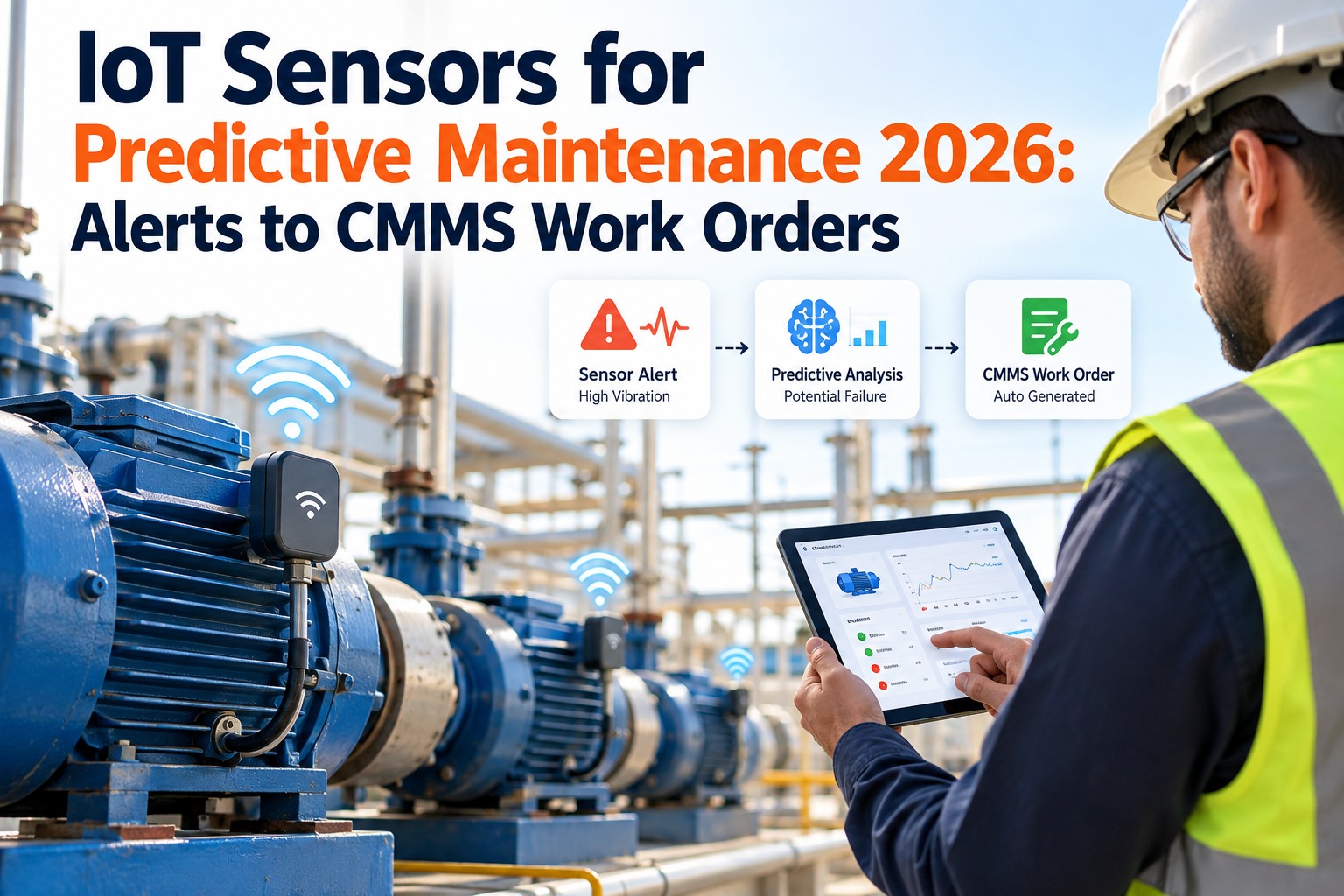
The average maintenance technician spends 28% of their shift hunting for information — digging through paper manuals, calling supervisors, or waiting for engineering input before they can diagnose a fault. OxMaint's AI Maintenance Copilot puts the right information in the right hands at the right moment: failure history, diagnostic steps, part numbers, and repair guidance delivered directly to the technician's mobile device the instant a work order is opened. This page explains what an AI maintenance copilot does, the data behind faster troubleshooting, and how your team can deploy it today.
AI COPILOT
Your Technicians Shouldn't Have to Guess
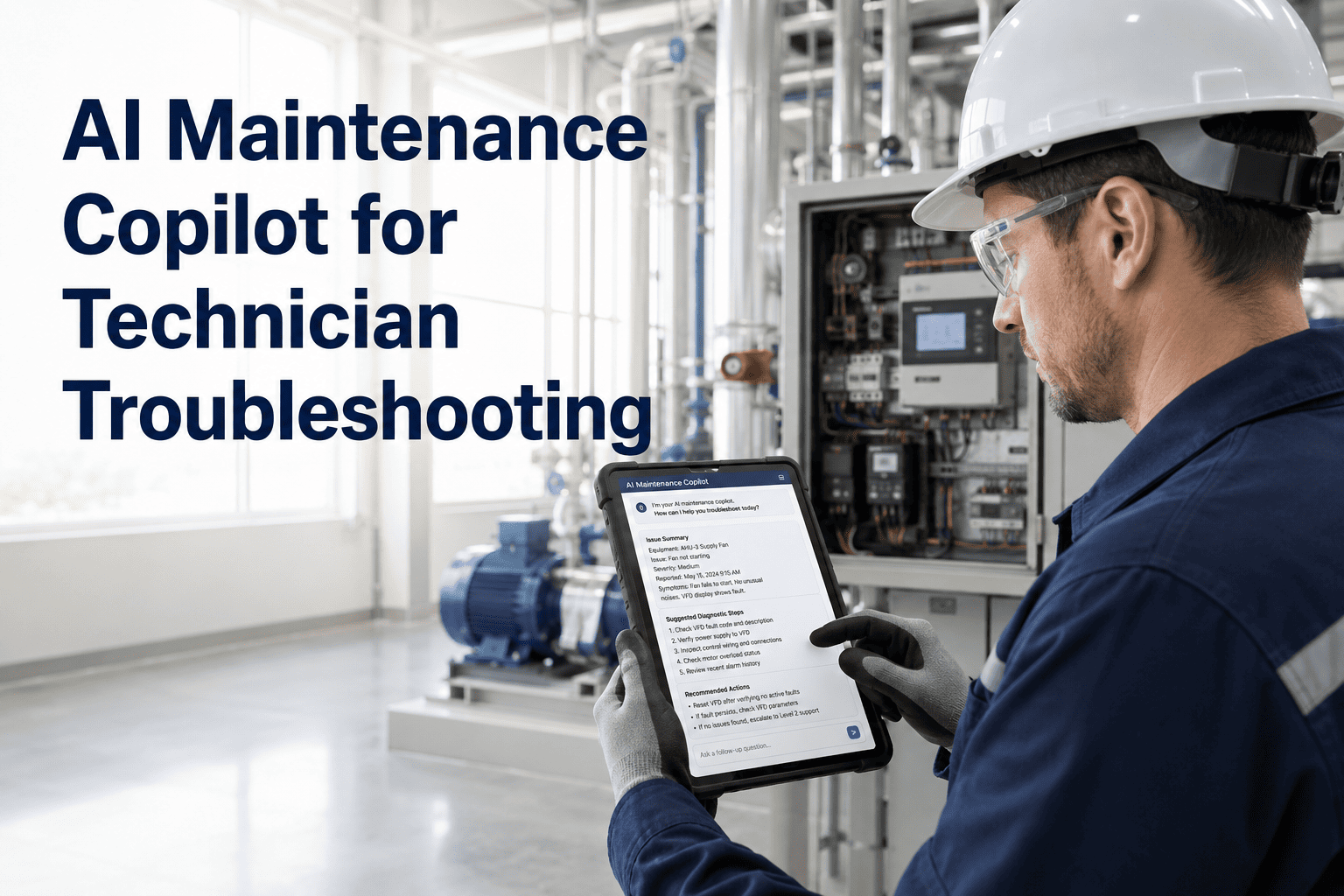
OxMaint's AI Copilot delivers fault diagnosis guidance, asset history, and repair steps in plain language — directly on the mobile work order, right when technicians need it.
28%
Of shift time spent searching for information
2.4x
Faster mean time to repair with AI-guided troubleshooting
61%
Fewer repeat callouts on the same asset failure
THE TROUBLESHOOTING TIME DRAIN
Where a Technician's Diagnostic Time Actually Goes
28%
Searching for manuals, schematics, and part numbers
22%
Waiting for supervisor or engineering guidance
18%
Reviewing prior repair history on the asset
17%
Identifying correct replacement parts and sourcing
15%
Actual hands-on troubleshooting and repair
Source: Aberdeen Group Maintenance Productivity Report; Plant Services Technician Benchmarking Study
WHAT THE COPILOT DELIVERS ON EVERY WORK ORDER
Fault History Summary
The copilot scans the asset's entire maintenance history and surfaces the 3–5 most relevant prior fault events — similar failure codes, past diagnoses, and what fixed it last time.
Step-by-Step Diagnostic Guide
AI-generated troubleshooting steps tailored to the specific fault code, asset model, and current sensor readings — not generic manual pages, but context-specific diagnostic flows.
Parts & Inventory Lookup
The copilot identifies likely replacement parts based on the fault type and checks real-time storeroom inventory, so technicians know before they open the panel whether parts are on hand.
Safety & Lockout Guidance
LOTO procedures, energy isolation steps, and required PPE are surfaced automatically based on the asset type and work type — reducing safety risks on every job, especially for newer technicians.
Photo & Video Documentation
Technicians capture repair photos directly in the work order. The copilot attaches media to the asset history record, building a searchable visual library of past repairs for future reference.
Repair Outcome Feedback Loop
After each repair, technicians confirm the fix and note findings. This data trains the copilot's diagnostic model — every completed work order makes future guidance more accurate for that asset.
Troubleshooting: Without vs. With AI Copilot
| Troubleshooting Task | Traditional Process | With OxMaint Copilot | Time Saved |
|---|---|---|---|
| Accessing asset history | Search paper logs or ERP — 15–40 min | Instant on work order | Up to 40 min |
| Finding repair manual | Locate physical copy or PDF — 10–25 min | AI-linked to fault code | Up to 25 min |
| Identifying likely fault cause | Experience-based guess — variable | AI ranked by probability | 30–90 min |
| Confirming parts availability | Call storeroom — 5–20 min | Live inventory check | Up to 20 min |
| LOTO procedure reference | Safety binder — 5–15 min | Auto-surfaced on work order | Up to 15 min |
EXPERT REVIEW
Maria Vásquez-Reyes
Maintenance Supervisor — 17 Years Industrial Facilities & Utility Operations
The biggest hidden cost in maintenance isn't parts or overtime — it's the knowledge gap between your senior technicians and everyone else. When your most experienced people retire or leave, they take 20 years of troubleshooting knowledge with them, and your MTTR doubles overnight. OxMaint's AI Copilot is essentially a knowledge capture and retrieval engine that embeds your best diagnosticians' logic into every work order. Junior technicians perform like veterans because they have the same information at the same time. We cut our mean time to repair by 55% in the first six months, and that improvement was consistent across all skill levels — not just our senior staff.
Give Your Technicians an AI Expert on Every Job
Book a demo and see OxMaint's AI Copilot guide a live troubleshooting scenario on your equipment types.
FREQUENTLY ASKED QUESTIONS
Does the AI Copilot work offline for technicians in areas with poor connectivity?
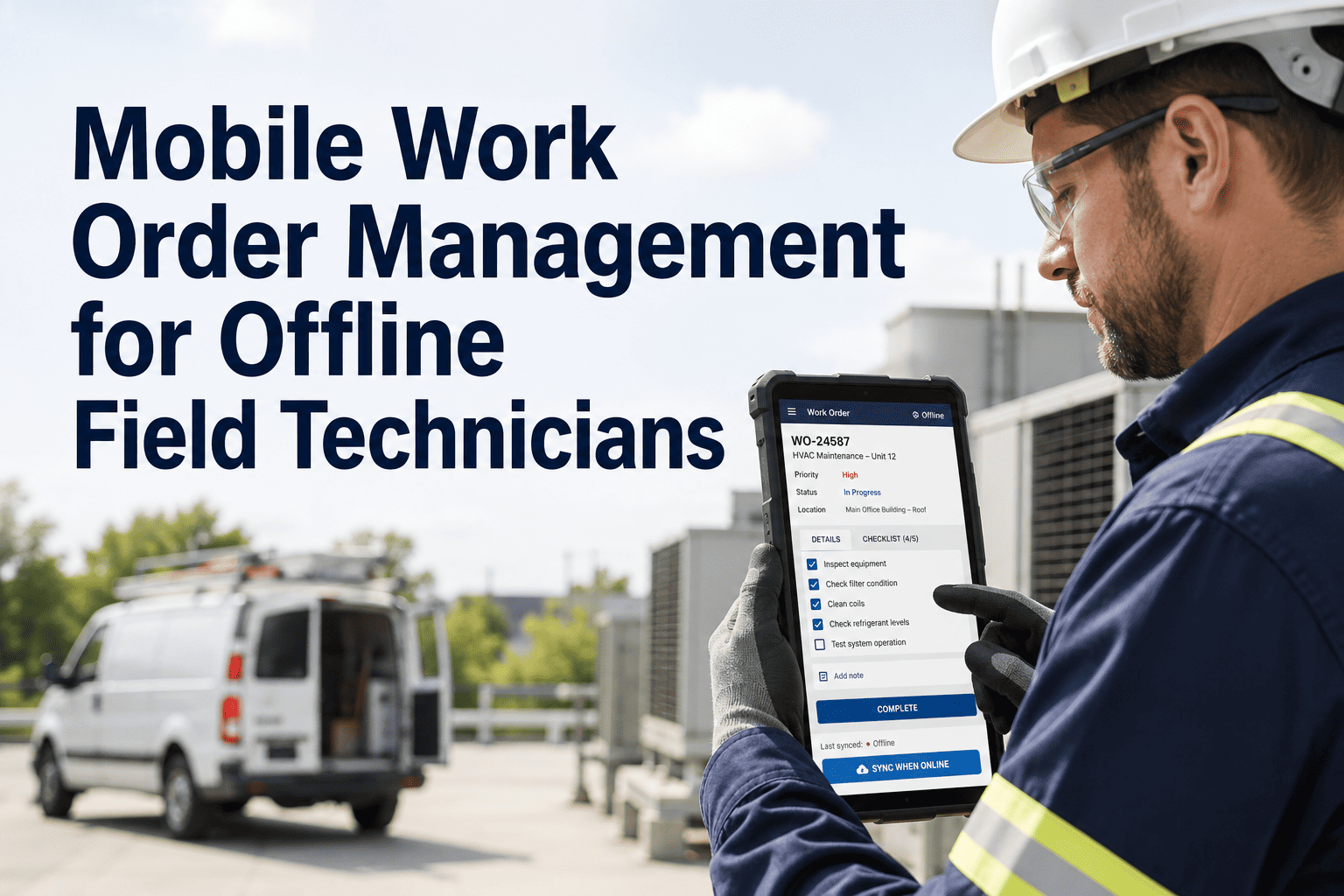
Yes. OxMaint's mobile app supports offline mode, caching the current work order's copilot guidance, asset history, diagnostic steps, and LOTO procedures on the device before the technician goes to the field. This is critical for facilities with limited wireless coverage — basement mechanical rooms, outdoor substations, or remote plant areas. When connectivity is restored, completed work order data and repair documentation sync automatically to the platform. Sign up free to test the offline mobile experience in your environment.
How does the AI Copilot learn from your specific equipment and failure patterns?
The copilot builds its diagnostic knowledge base from three sources: the equipment manufacturer's documentation you upload during asset setup, historical work order records including fault codes, repair actions, and technician notes, and the ongoing feedback loop from completed work orders. Every time a technician confirms a repair finding, that outcome is used to refine the diagnostic ranking model for that asset class. Over time, the copilot becomes increasingly accurate for your specific fleet and operating conditions, not just generic equipment categories. Book a demo to see how the knowledge base is built for your assets.
Can the AI Copilot handle multi-trade work orders that involve electrical, mechanical, and instrumentation skills?
Yes. OxMaint supports multi-trade work orders with trade-specific guidance sections within a single work order. A combined electrical-mechanical fault on a pump motor would display electrical isolation and diagnostics guidance for the electrician section and mechanical bearing inspection steps for the millwright section. Each trade receives guidance relevant to their scope, while the work order tracks completion of each trade's tasks separately. This prevents the coordination gaps that cause repeat callouts when multi-trade work is managed on separate paper tickets.
How does OxMaint protect proprietary maintenance procedures and repair data from leaving the organization?
All maintenance data, equipment manuals, and repair procedures stored in OxMaint are isolated to your organization's tenant environment with role-based access controls. Technicians access only the assets and procedures relevant to their assigned work orders. The AI Copilot's knowledge base is organization-specific — the diagnostic models trained on your equipment data are not shared with other OxMaint customers. Data residency and retention policies are configurable for enterprise and regulated-industry deployments. Book a demo to review OxMaint's data security architecture.