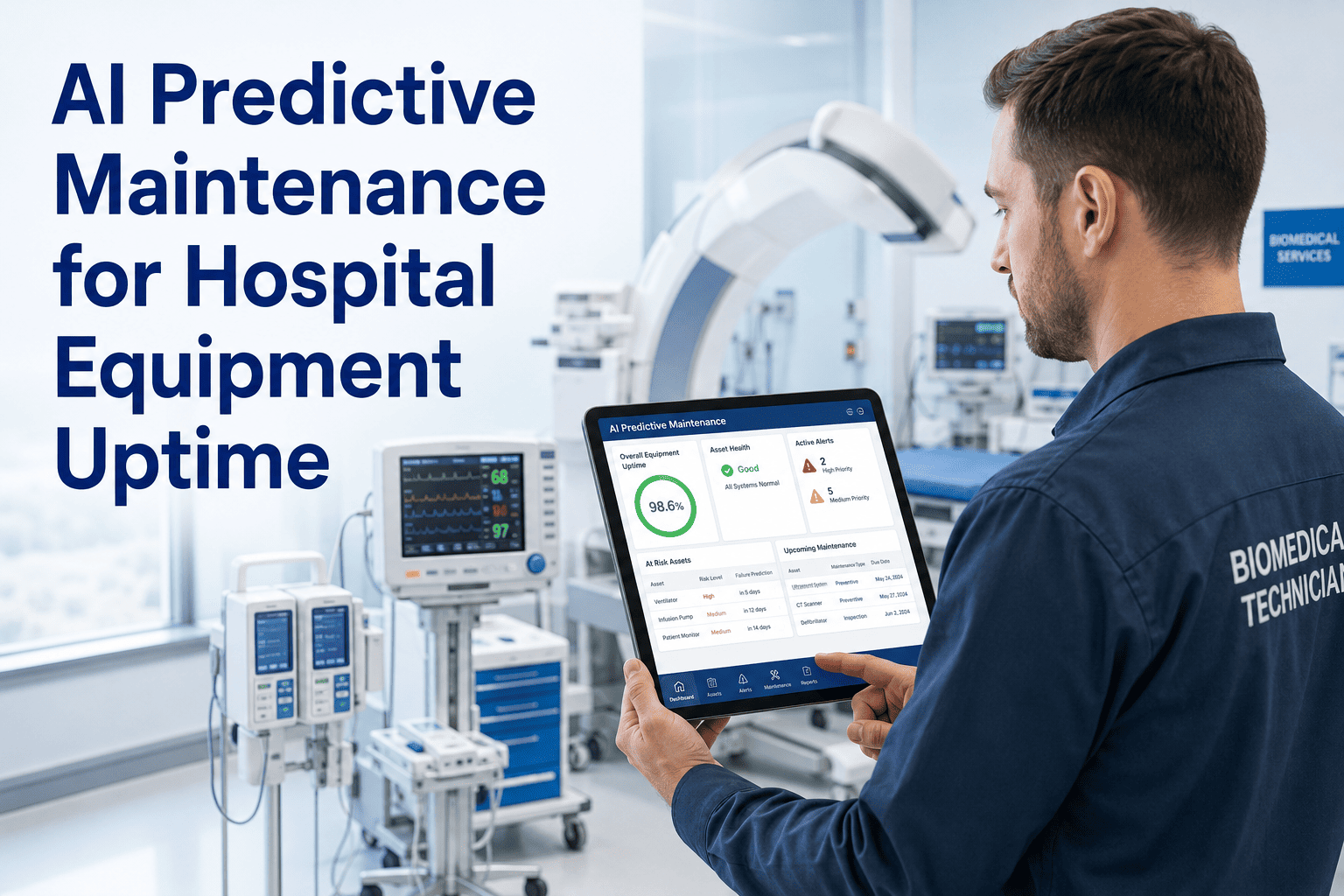
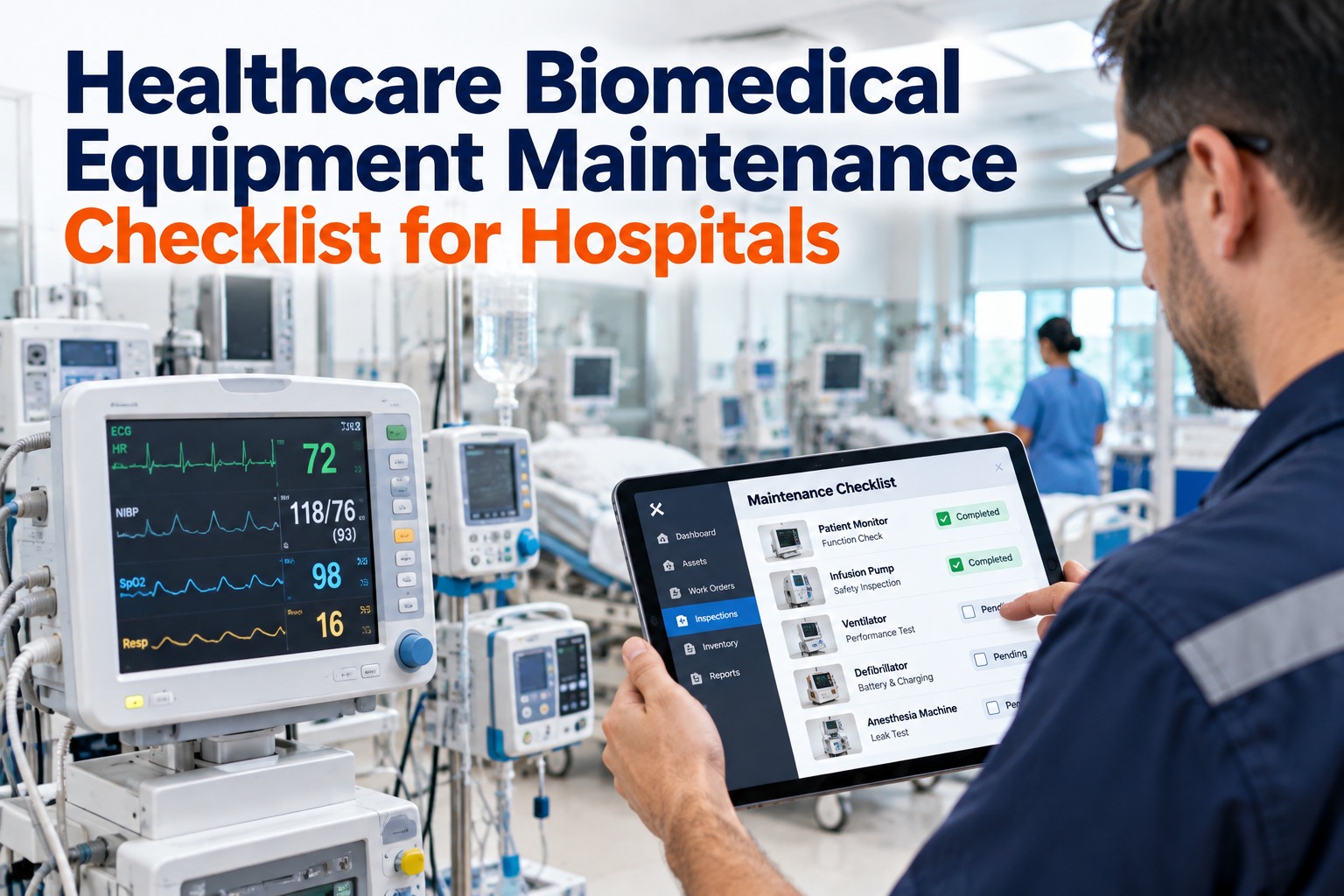
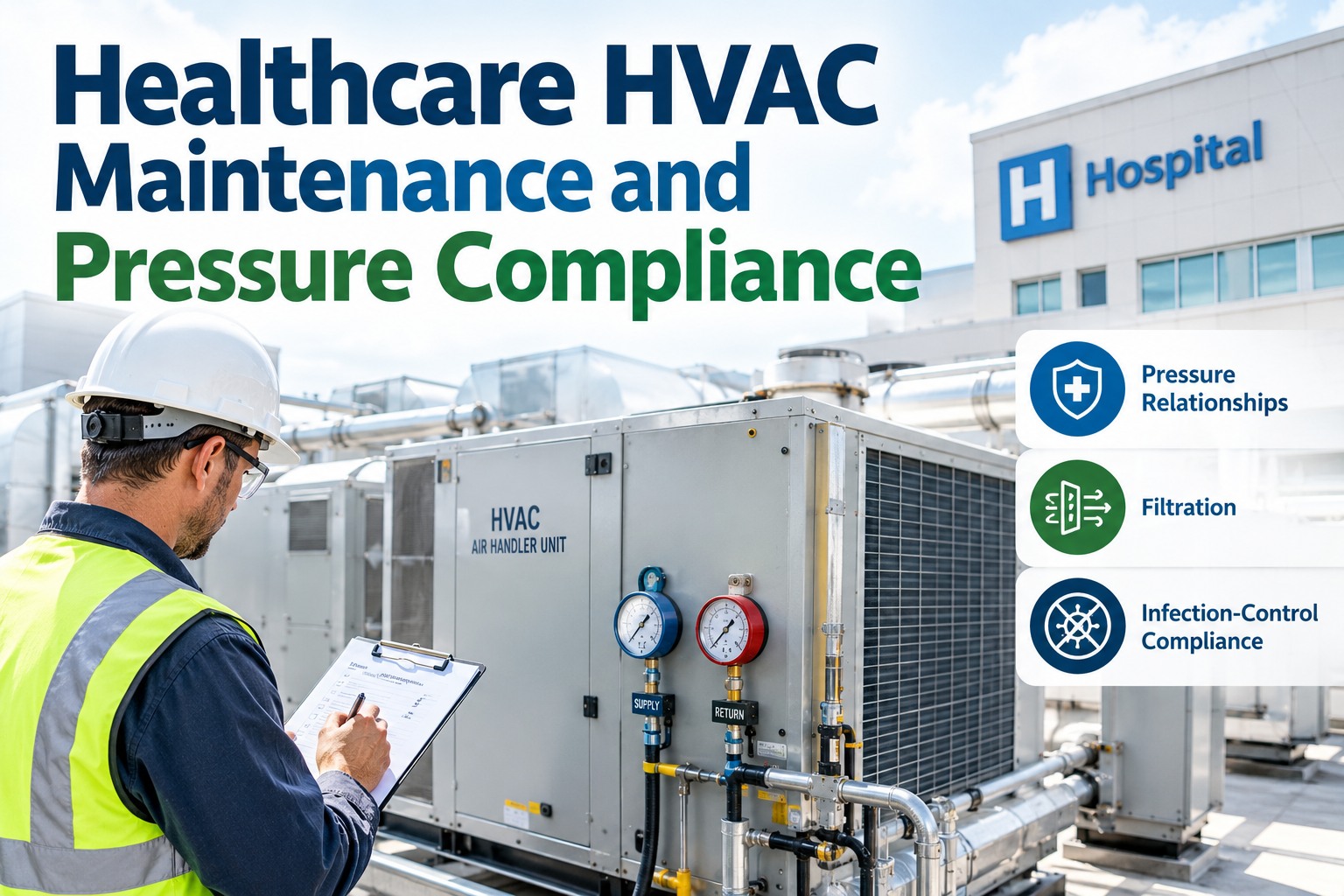
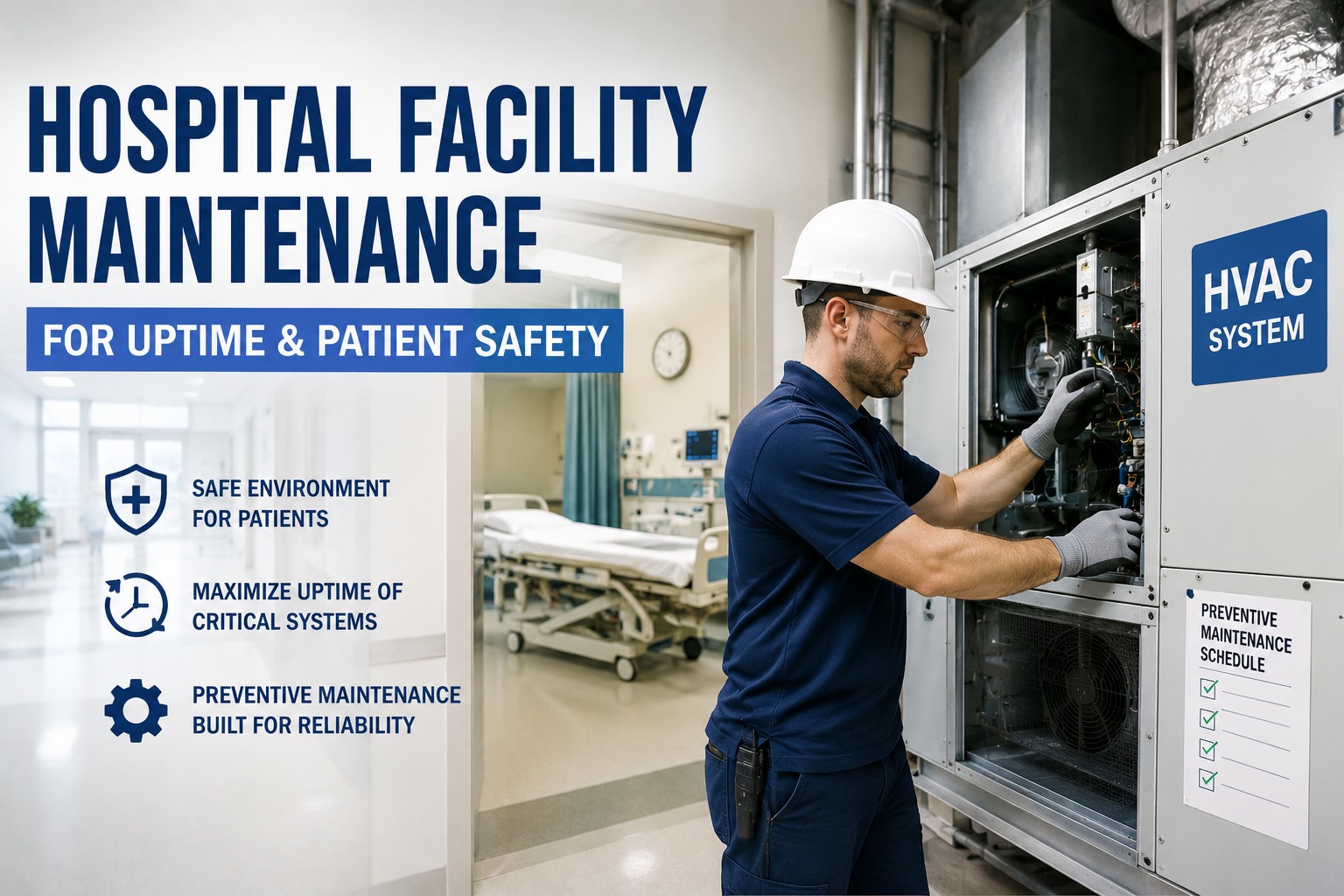
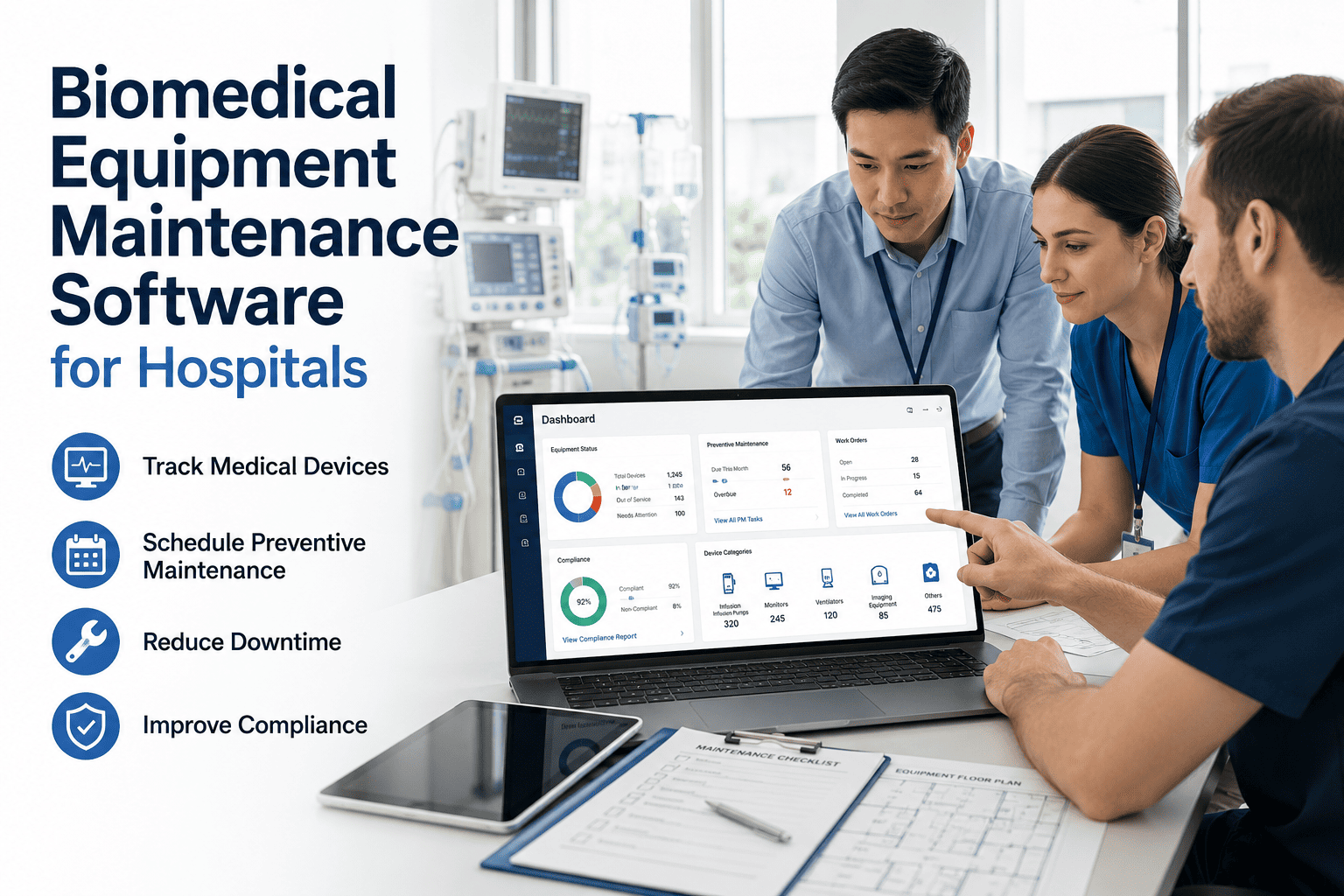
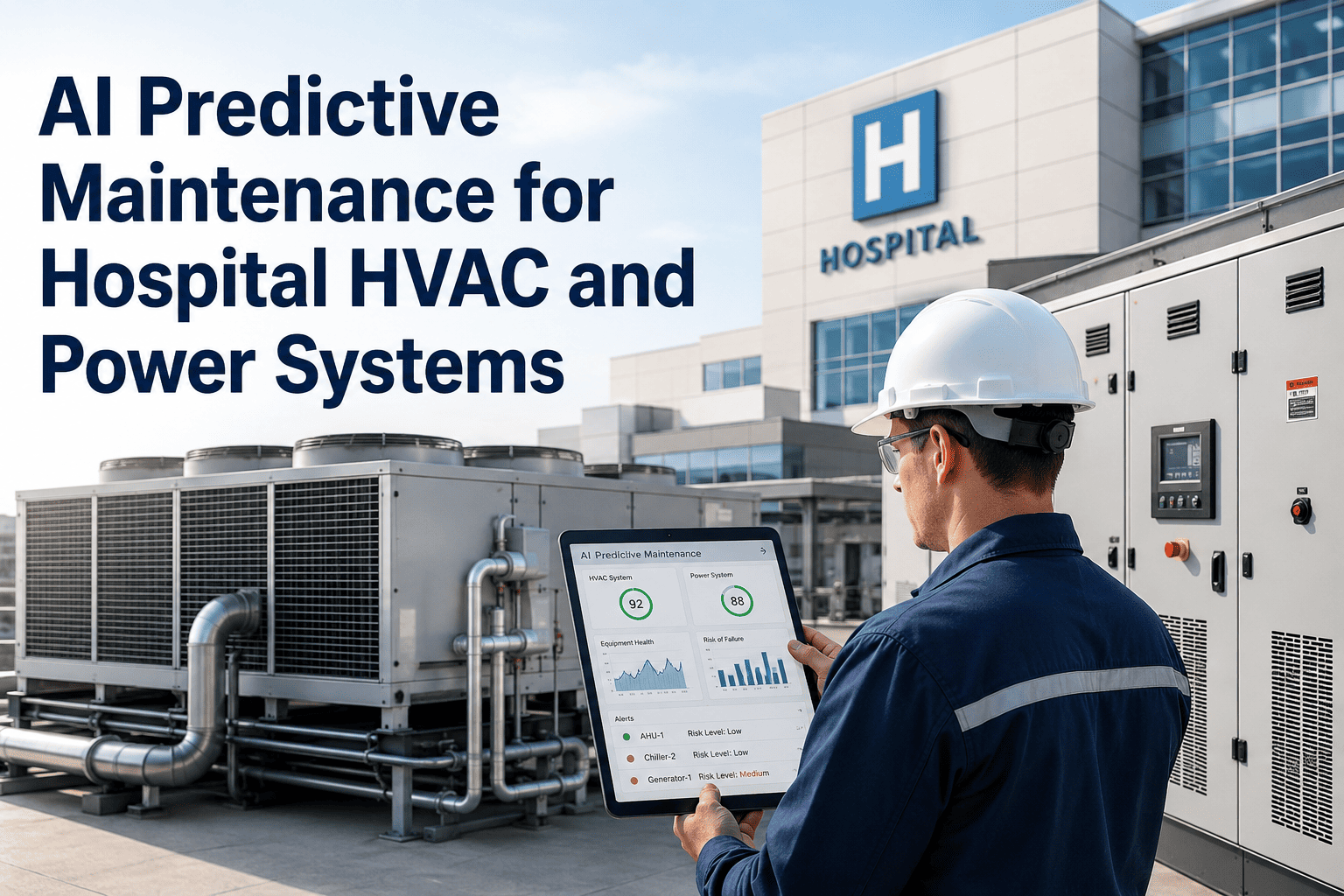
Hospital equipment failure is not a maintenance inconvenience — it is a patient safety event. When a ventilator malfunctions during a critical care procedure, when a sterilizer fails during a high-volume surgical day, or when backup power drops during a storm because a UPS battery was never flagged for replacement, the consequences extend far beyond repair costs. OxMaint's AI predictive maintenance platform monitors hospital HVAC, medical equipment, backup power systems, and sterilization assets continuously — alerting biomedical and facilities teams to degradation patterns weeks before they become failures that reach patients.
Industry Article · Healthcare Maintenance · AI Predictive 2026
AI Predictive Maintenance for Hospital Equipment Uptime
How hospitals use AI maintenance alerts to protect patient safety, meet Joint Commission standards, and reduce biomedical equipment downtime across critical systems.
80%
of hospital equipment failures are preceded by detectable condition signals
$1M+
Annual downtime cost for a mid-size hospital from unplanned equipment failures
25%
Reduction in biomedical equipment downtime with AI-based monitoring programs
4 wks
Average AI failure prediction lead time for HVAC and mechanical systems
Critical Asset Coverage
The 5 Hospital Systems Where AI Monitoring Matters Most
01
HVAC and Infection Control Systems
Surgical suites and ICUs require precise air pressure differentials and filtration performance. AI monitoring tracks blower performance, filter differential pressure, and coil fouling rates — predicting HVAC degradation before air quality falls below required standards for sterile environments. A failing surgical suite air handler caught 3 weeks early converts a potential OR closure into a planned overnight replacement.
Risk if missed: OR closure, infection control violation, regulatory finding
02
Backup Power and UPS Systems
Hospital backup power systems are life-safety infrastructure. Battery voltage trending, UPS load testing records, and generator runtime data feed AI models that predict battery end-of-life and fuel system degradation before a storm reveals the failure. NFPA 110 compliance documentation tracks automatically as each test completes, with the next test date auto-scheduled in OxMaint.
Risk if missed: Power loss during procedures, Joint Commission finding, life-safety system failure
03
Sterilization Equipment
Autoclave and chemical sterilizer performance directly affects surgical instrument availability. AI models tracking cycle time trends, pressure readings, and temperature uniformity detect degrading door seals, heating element wear, and pump performance before a sterilizer fails during peak surgical volume — when the impact on instrument availability is most severe.
Risk if missed: Surgical delay, sterility assurance failure, accreditation risk
04
Medical Imaging Equipment
MRI, CT, and X-ray equipment failures create multi-day revenue loss and patient care disruptions. Vibration signatures from MRI gradient coils, cooling system performance on CT scanners, and tube usage hour tracking feed failure prediction models that schedule maintenance during low-utilization windows rather than at the point of failure during a high-volume imaging day.
Risk if missed: Revenue loss $50K–$200K/day, patient care delays, emergency service contracts
05
Medical Gas Systems
Oxygen, vacuum, and nitrous oxide system pressure and flow monitoring detect compressor wear, pipeline leaks, and valve degradation before clinical staff notice performance issues. AI models watching pipeline pressure trends distinguish between normal demand variation and equipment degradation — triggering work orders without false alarms that cause unnecessary clinical disruptions.
Risk if missed: Clinical care compromise, NFPA 99 violation, emergency shutdown
Healthcare CMMS Specialists
Book a Demo Configured for Your Hospital's Critical Asset Profile
OxMaint's healthcare team will walk you through AI monitoring configuration for your specific mix of biomedical, facilities, and life-safety equipment — showing exactly which failure modes the system would have predicted before your most recent unplanned downtime event.
Compliance Coverage
Joint Commission and Regulatory Standards Supported
| Standard |
Requirement |
OxMaint Coverage |
| Joint Commission EC.02.05.07 |
Medical equipment inspection and maintenance records |
Automated PM scheduling, digital completion records, work order history per asset |
| NFPA 110 |
Emergency power supply system testing and documentation |
Automated EPSS test scheduling, results recording, compliance reporting |
| NFPA 99 |
Medical gas system inspection and maintenance |
Medical gas PM templates, inspection checklists, pressure log tracking |
| CMS Conditions of Participation |
Hospital life-safety system maintenance compliance |
Life-safety PM scheduling, audit trail, compliance status dashboard |
| ISO 13485 |
Medical device maintenance and calibration records |
Device-specific calibration logs, corrective action tracking, risk-based PM |
“
The business case for AI-based predictive maintenance in hospitals is straightforward: a single prevented MRI failure pays for a year of monitoring. A prevented OR HVAC failure during a surgical day prevents the kind of event that gets reviewed at the board level. Healthcare biomedical and facilities teams are perpetually under-resourced relative to their asset base — AI monitoring is not a technology luxury for hospitals, it is the only scalable way to watch hundreds of critical assets with a team that has bandwidth for dozens. The adoption curve is accelerating because the outcomes data from early adopters is compelling and consistent.
Dr. Angela Ford
Healthcare Technology Management Director, AAMI Healthcare Technology Policy Committee — 2025 Annual Review
FAQ
Frequently Asked Questions
How does OxMaint integrate with existing hospital biomedical equipment management systems?
OxMaint connects to existing CMMS data, SCADA, and BAS systems via standard APIs and data import formats. For hospitals already using a biomedical equipment management platform, OxMaint can operate as an AI monitoring layer that supplements existing records — ingesting equipment data and generating predictive alerts that feed back into the existing work order system. For hospitals adopting OxMaint as their primary CMMS, the migration from paper or legacy systems includes full data import of existing asset records and PM history.
Book a demo to discuss your current system landscape and integration options.
Can OxMaint's AI maintenance alerts help hospitals maintain Joint Commission accreditation?
Yes. OxMaint's healthcare module is designed around Joint Commission Environment of Care (EC) standards, specifically EC.02.05.01 through EC.02.05.09 covering utilities management and medical equipment maintenance. The system tracks PM completion rates, flags overdue inspections, maintains the required maintenance records for each device, and generates the compliance reports that surveyors review during Joint Commission visits. AI predictive alerts reduce the number of unexpected equipment failures that generate environment-of-care findings.
Start a free trial to configure OxMaint against your Joint Commission compliance plan.
What sensor data does OxMaint need to generate AI predictions for hospital HVAC systems?
For hospital HVAC systems, OxMaint's AI models work from building automation system (BAS) data — supply and return air temperatures, differential pressure across filters, airflow volume, chiller performance metrics, and coil fouling indicators. Most hospitals already collect this data through their existing BAS; OxMaint connects via standard BACnet or Modbus protocols without replacing or modifying the existing controls infrastructure. For facilities without BAS data on specific assets, low-cost wireless sensors can be retrofitted in a single day.
Book a demo to review your specific HVAC instrumentation against OxMaint's data requirements.
How are AI maintenance alerts prioritized so biomedical teams are not overwhelmed with false alarms?
OxMaint's alert system uses a three-tier severity model — predictive (weeks ahead, plan now), advisory (days ahead, schedule soon), and urgent (immediate action required) — combined with configurable asset criticality rankings. Life-safety and patient-care-critical equipment generates alerts at lower thresholds than non-critical support assets. Alert sensitivity is tunable per asset class based on false alarm tolerance and patient impact risk. Most hospitals report fewer than 10 genuine high-priority alerts per week after the first month of operation, which is a manageable action list for a biomedical team.
Start a free trial to explore OxMaint's alert configuration options for your asset mix.
Protect Patients. Protect Operations.
AI Maintenance Monitoring That Catches Hospital Equipment Failures Weeks Before They Affect Care
OxMaint monitors your HVAC, backup power, sterilization, imaging, and medical gas systems with AI models that detect degradation patterns and auto-generate maintenance work orders — before a failure ever reaches a clinical team or a patient.