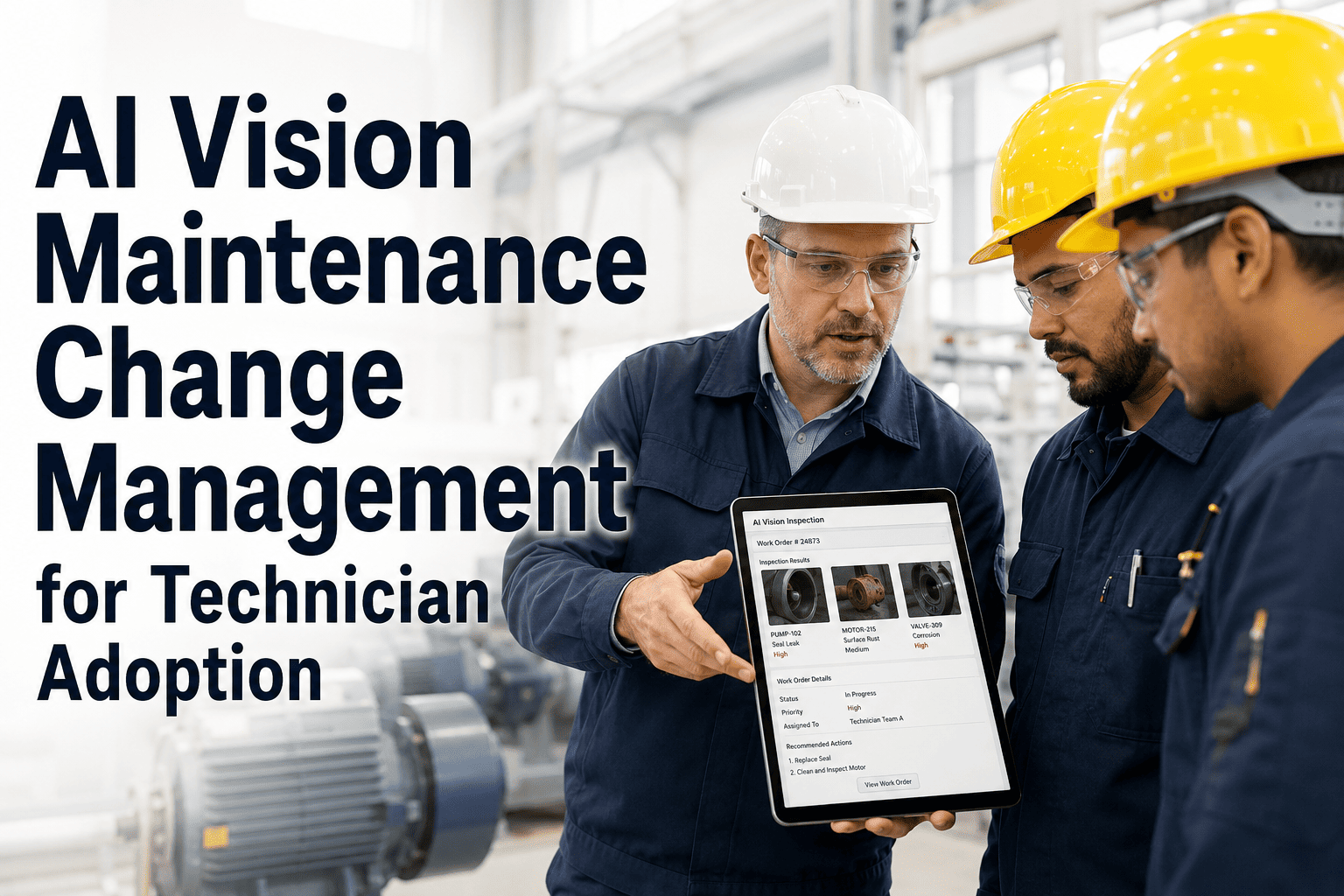
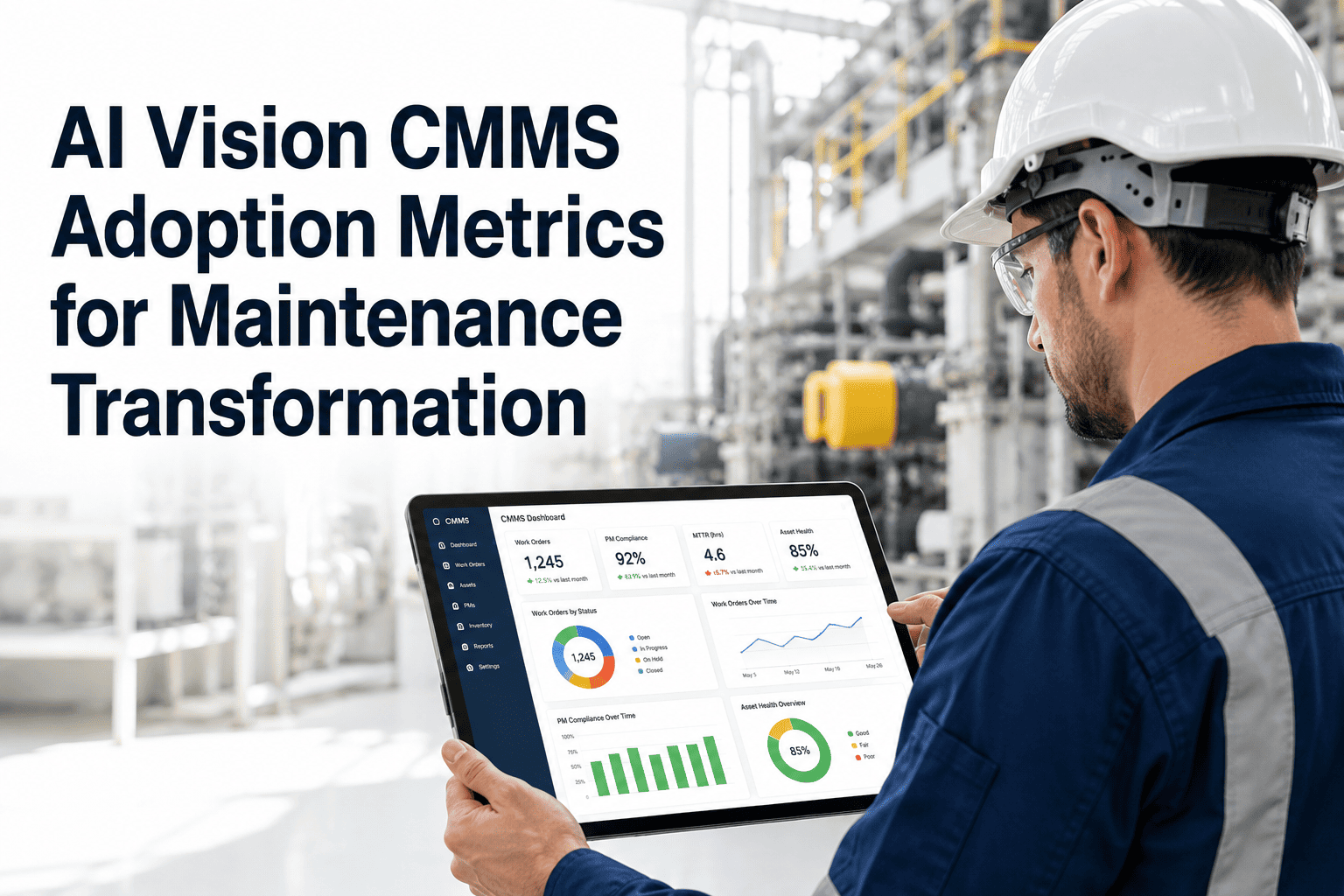
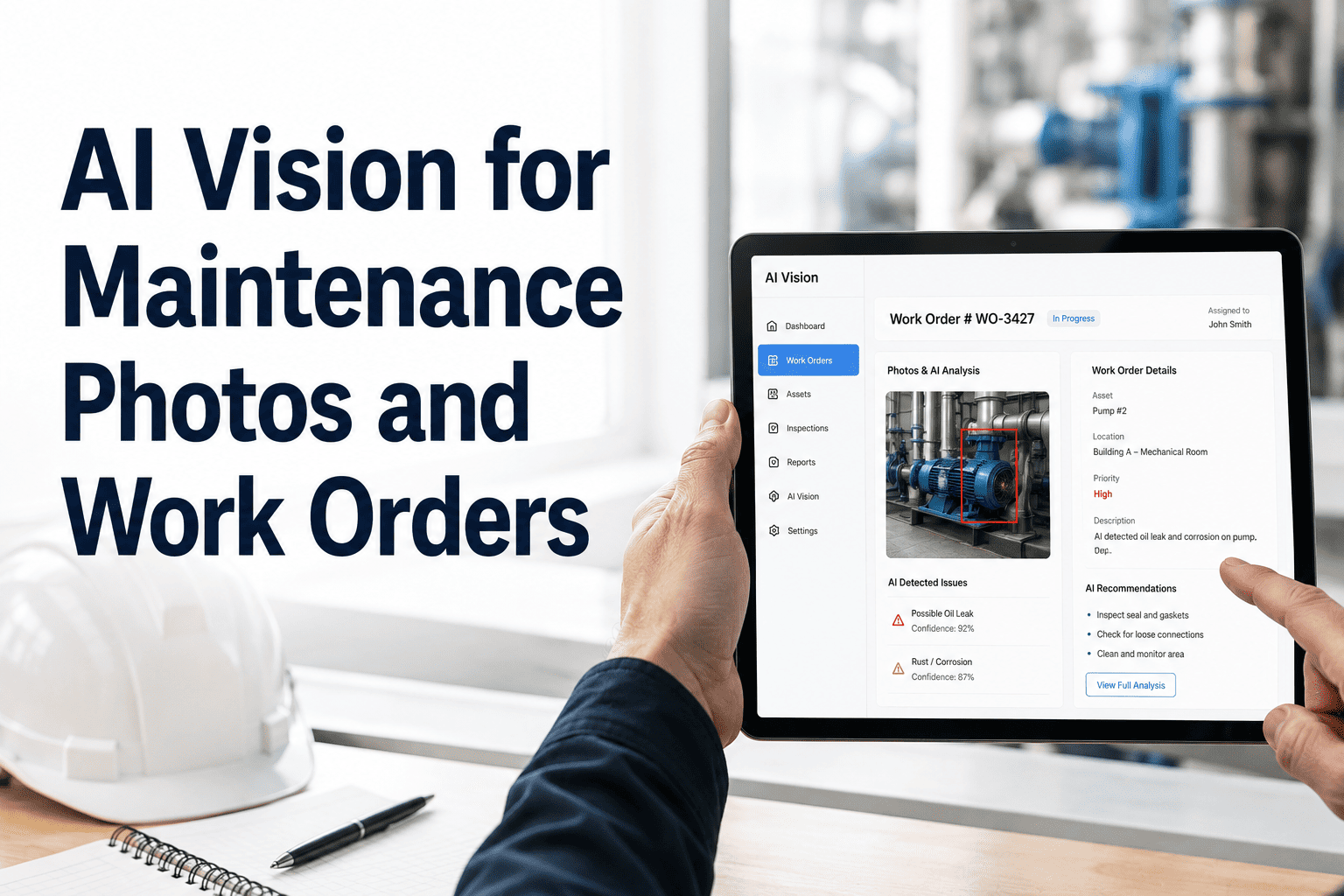
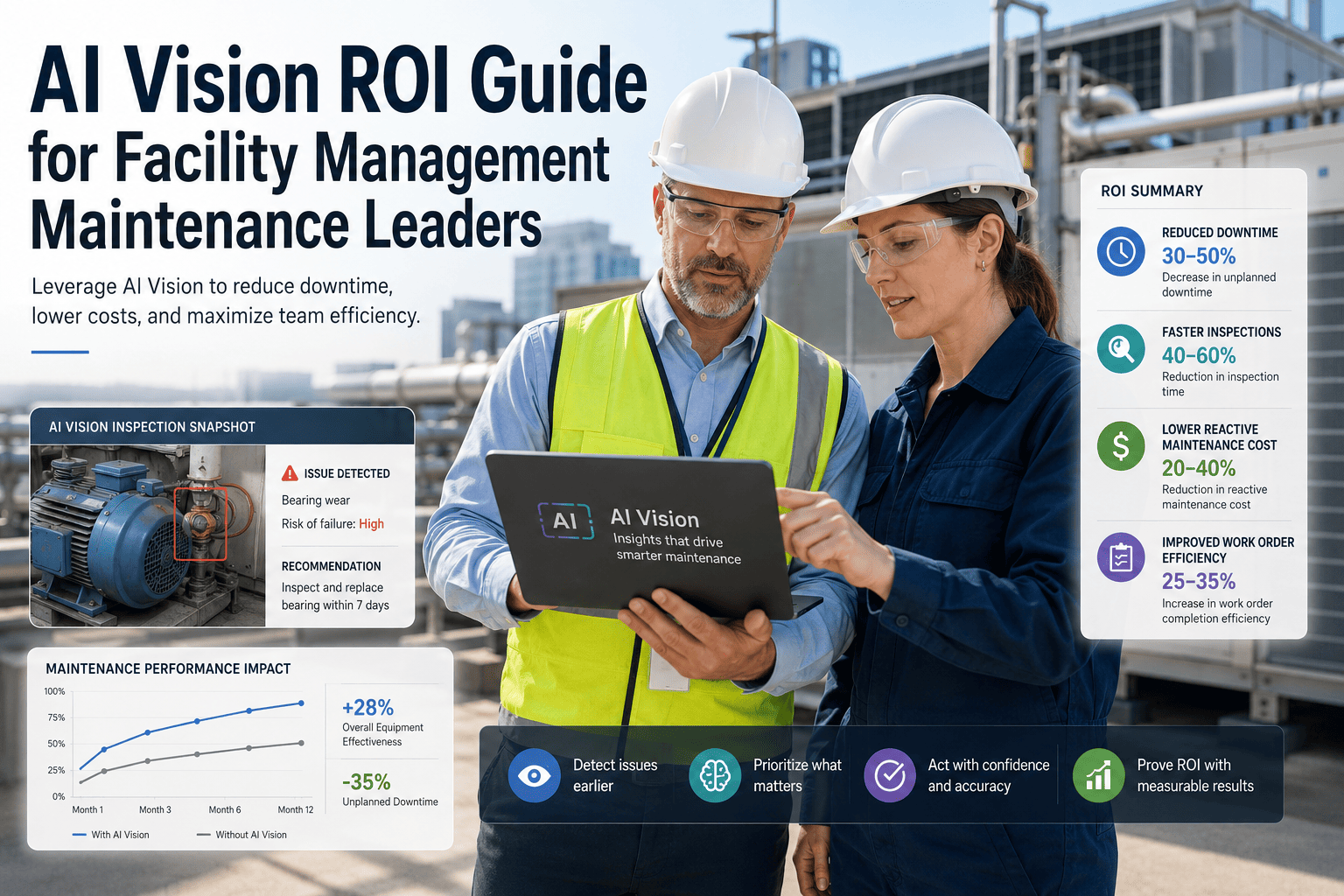
The most sophisticated AI vision CMMS in the world delivers zero ROI if your technicians do not trust it, use it, or believe it makes their job better. The leading cause of failed AI maintenance deployments is not technology — it is change resistance. Technicians who spent years building judgment about asset conditions do not automatically defer to an AI model they cannot interrogate or understand. OxMaint is built for technician adoption — with explainable defect classifications, mobile-first interfaces, and feedback loops that give technicians real agency over how the AI learns. Book a demo to see the technician workflow firsthand and bring your change management questions.
Change Management Guide · AI Technician Adoption
AI Vision Maintenance Change Management: Driving Technician Adoption That Sticks
68%
AI maintenance deployments cited technician resistance as top adoption barrier
90 days
Window in which adoption habits form — or adoption fails permanently
2.3x
Higher ROI in deployments with structured change management vs. feature-only rollouts
Root Cause of Resistance
Why Technicians Resist AI Vision Tools — And What Actually Fixes It
Resistance Reason
What Fixes It
"The AI classifies things I would never flag as a defect."
→
Show technicians the defect heatmap — the AI highlights exactly what it saw. Let them override and that override trains the model. Technicians who improve the AI trust it.
"I have to photograph everything now — it adds time."
→
Demonstrate that photo capture eliminates the post-inspection report. One photo replaces 15 minutes of documentation. Show the net time saved in the first week.
"Management is using this to monitor my performance."
→
Be explicit about data use. Show technicians that the system measures asset condition — not their speed or productivity. Use the first 30 days to demonstrate this in practice.
"The alerts are wrong half the time. I stopped trusting them."
→
A false positive rate above 20% is a model quality problem, not a change management problem. Fix the model — by activating technician feedback retraining — before pushing adoption.
"I do not know which alerts are urgent and which are low priority."
→
Configure AI severity scoring to surface only P1 and P2 alerts during the first 30 days. Introduce lower-severity alerts progressively as technicians build confidence in the system.
30-60-90 Day Plan
The Technician Adoption Roadmap: 30–60–90 Days
Day 1–30
Foundation: Reduce Friction to Zero
Run hands-on mobile workflow training — 90 minutes max, no slide decks
Focus on 3 tasks only: photo capture, alert review, work order close
Activate only P1 critical alerts — no alert fatigue in week one
Assign a field champion per shift to be the first point of contact
Target metric: 80% of inspections completed via mobile app by day 30
Day 31–60
Build Trust: Let Technicians Improve the AI
Activate technician feedback loop — every false positive rated improves the model
Show technicians their feedback influence: "Your 14 corrections reduced false positives by 6%"
Expand to P2 alerts — technicians now have enough context to evaluate them
Hold bi-weekly 15-minute feedback sessions — not training, but listening
Target metric: False positive rate below 15% by day 60
Day 61–90
Lock In Habits: Make AI the Default
Retire the paper inspection form — app is the only inspection record
Share the first ROI dashboard: downtime avoided, labor hours recovered
Recognize field champions publicly — they earned it
Introduce predictive alerts: "This asset is trending toward failure in 14 days"
Target metric: Alert adherence above 88%, AI-generated WOs above 70% of total
See the Technician Workflow That Drives 88%+ Adoption
OxMaint's mobile interface is designed for the shop floor — not the boardroom. Book a demo and bring a technician to the call. Let them evaluate it directly.
Adoption Metrics Table
Benchmark: What Good Adoption Looks Like at 30, 60, 90 Days
| Metric |
Day 30 Target |
Day 60 Target |
Day 90 Target |
Typical Without Change Mgmt |
| Mobile app inspection completion |
80% |
92% |
98% |
31% at day 90 |
| Alert adherence rate |
65% |
78% |
88%+ |
42% at day 90 |
| False positive override rate |
22% |
15% |
< 8% |
28% (stagnant) |
| AI-generated work orders (%) |
40% |
58% |
70%+ |
18% at day 90 |
| Technician satisfaction (NPS) |
+12 |
+28 |
+42 |
-6 at day 90 |
Expert Review
Industry Research on AI Adoption in Maintenance Teams
"Change management in AI maintenance programs is not an HR initiative — it is an engineering requirement. Technician feedback loops are the primary quality mechanism for AI model improvement in operating facilities. Organizations that treat technician adoption as a training problem rather than a model feedback architecture problem consistently underperform on AI ROI benchmarks by 40–60%. The investment in structured adoption pays back in model accuracy within 90 days."
— International Journal of Human Factors in Manufacturing, Vol. 34, 2024
"The 90-day adoption window is real and measurable. Across 140 AI maintenance deployments studied, teams that achieved 80% mobile inspection completion by day 30 had a 91% probability of sustaining adoption at 12 months. Teams that reached only 50% completion by day 30 had a 73% probability of reverting to manual processes by month six. The first 30 days of rollout are the highest-leverage change management investment available."
— Deloitte Future of Maintenance Report, AI Technology Adoption Patterns, 2024
FAQs
Frequently Asked Questions
How do we get senior technicians who distrust AI on board without confrontation?
Make them the architects, not the recipients. Invite senior technicians to review AI defect classifications in the first two weeks and mark errors. Frame it as "you are teaching the AI your expertise" — because that is exactly what the feedback loop does.
OxMaint's demo includes a live walkthrough of the technician feedback interface — show it to your senior technicians before go-live and let them interrogate how corrections influence the model. When they see their expertise reflected in AI outputs, resistance typically converts to advocacy within 3–4 weeks.
What is the right training format for technicians adopting AI vision tools?
Hands-on, short, and repeated. A single 2-hour training session produces 40% retention at 30 days. Four 30-minute hands-on sessions over the first two weeks produce 85% retention. Training should cover only three tasks in week one: how to capture a photo, how to review an AI alert, and how to close a work order.
OxMaint's onboarding module includes pre-built training flows, in-app guided tasks, and a field champion toolkit — all structured around the proven 30-day adoption methodology described above.
How do we measure technician adoption success quantitatively?
Track five metrics weekly: mobile app inspection completion rate, AI alert adherence rate, false positive override rate, percentage of work orders AI-generated, and technician NPS. These five metrics together give a complete adoption health picture and reveal the specific breakdown point — whether it is model accuracy, interface friction, or cultural resistance.
OxMaint's adoption dashboard surfaces all five metrics per technician, per shift, and per site in real time — enabling change management interventions before adoption problems become rollback decisions.
Technician-First AI
Built for Technicians. Adopted in 30 Days. Trusted in 90.
OxMaint's mobile workflow was designed with maintenance technicians, not for them. Book a demo — bring a technician — and let them tell you whether it works for their shift.