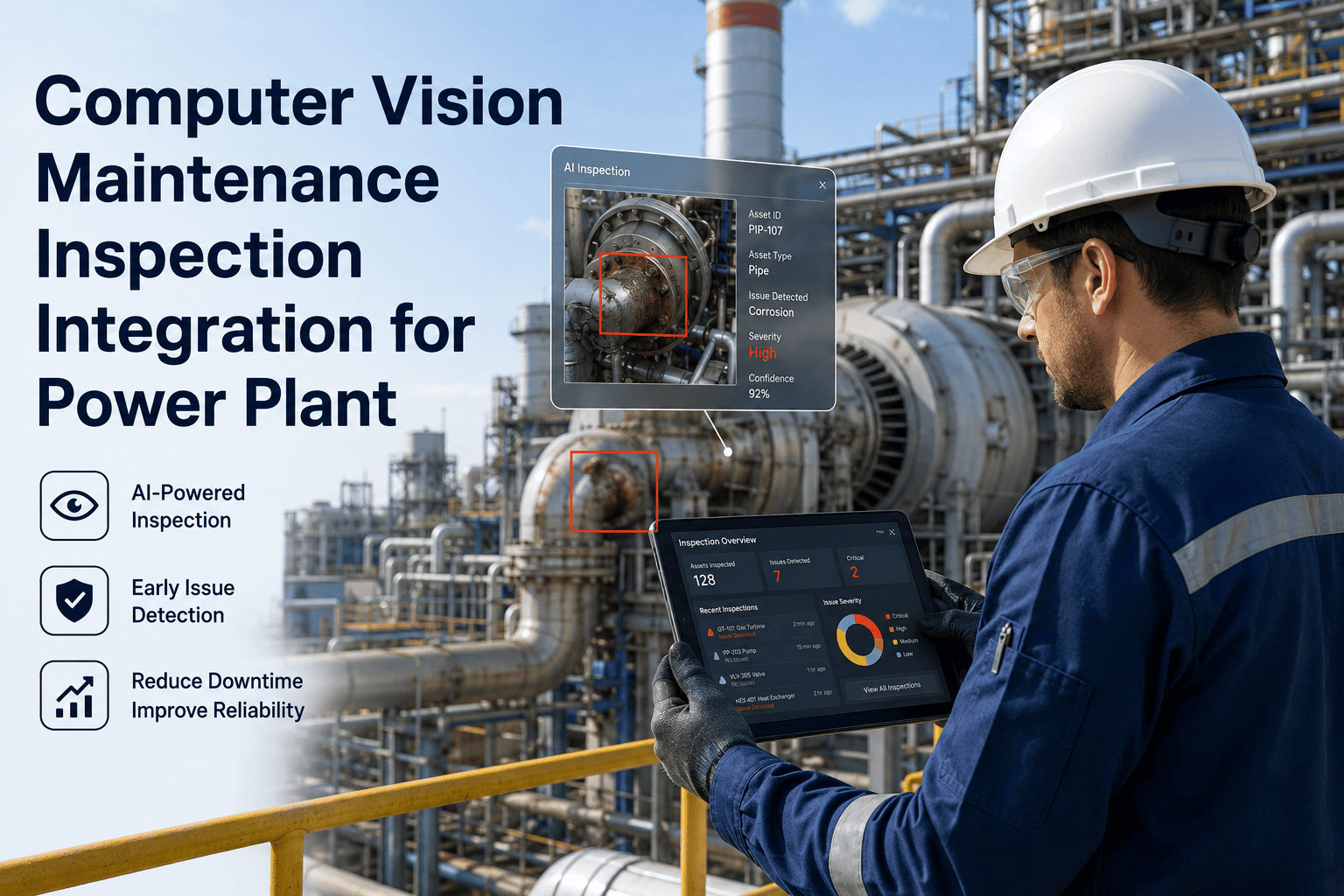
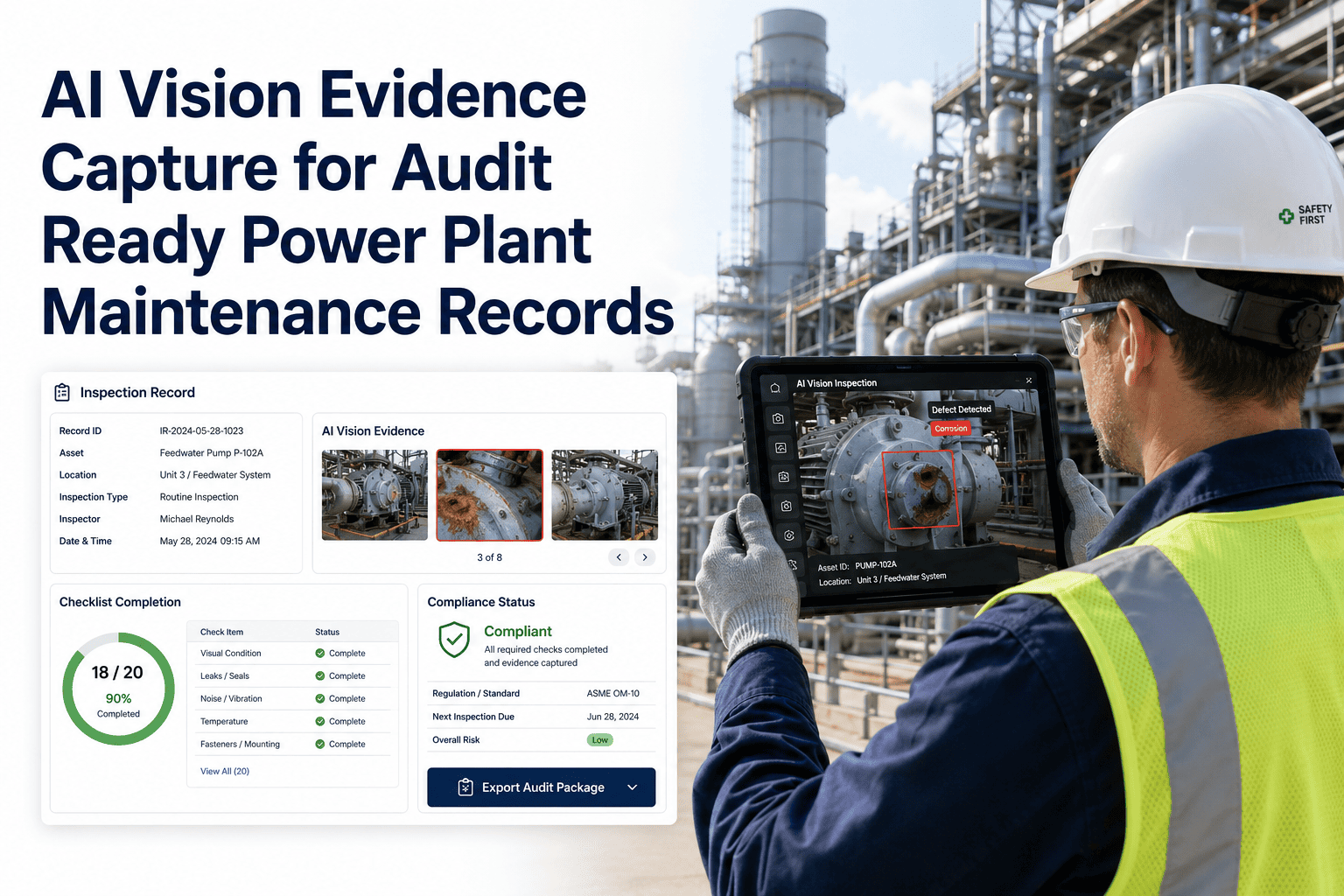
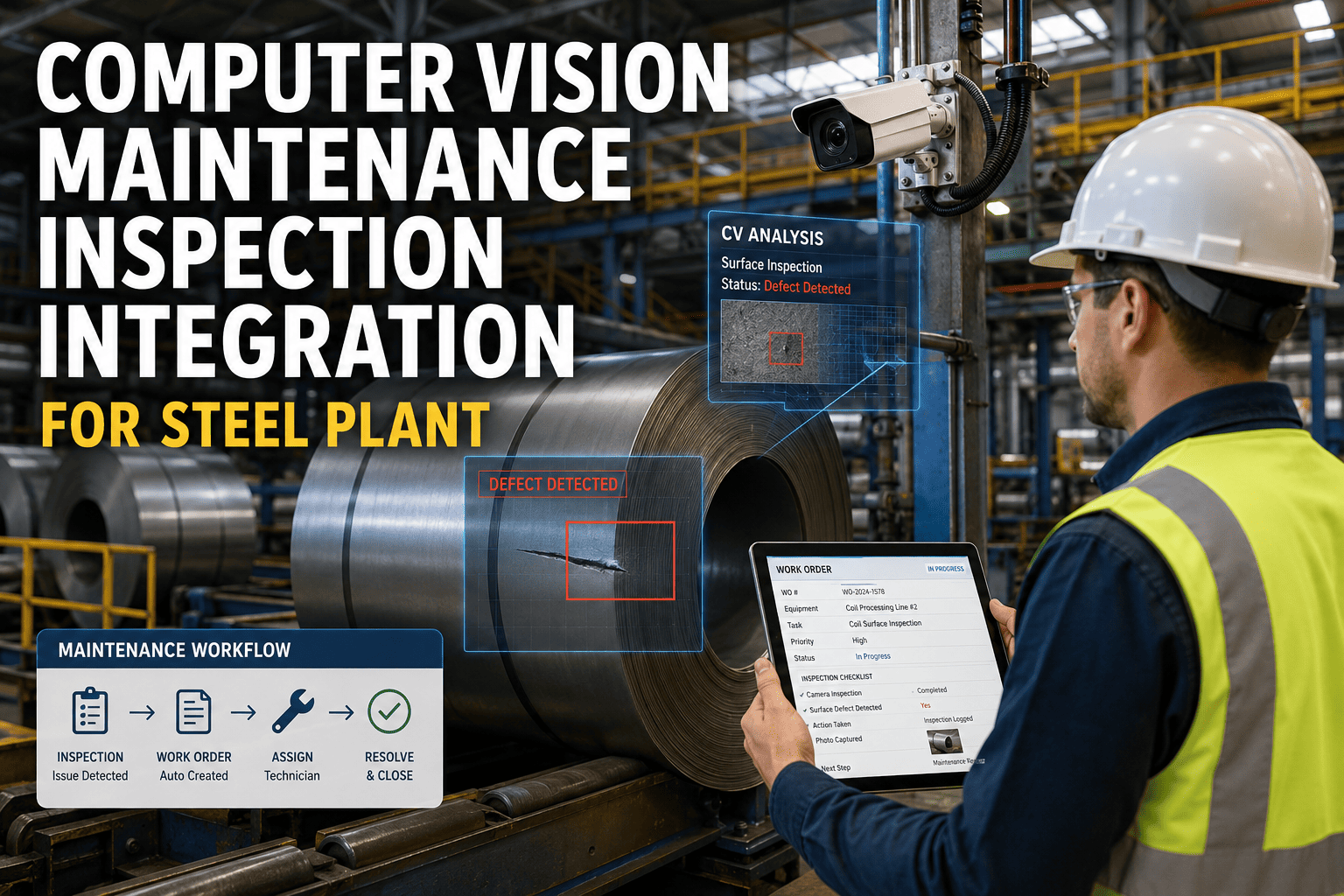
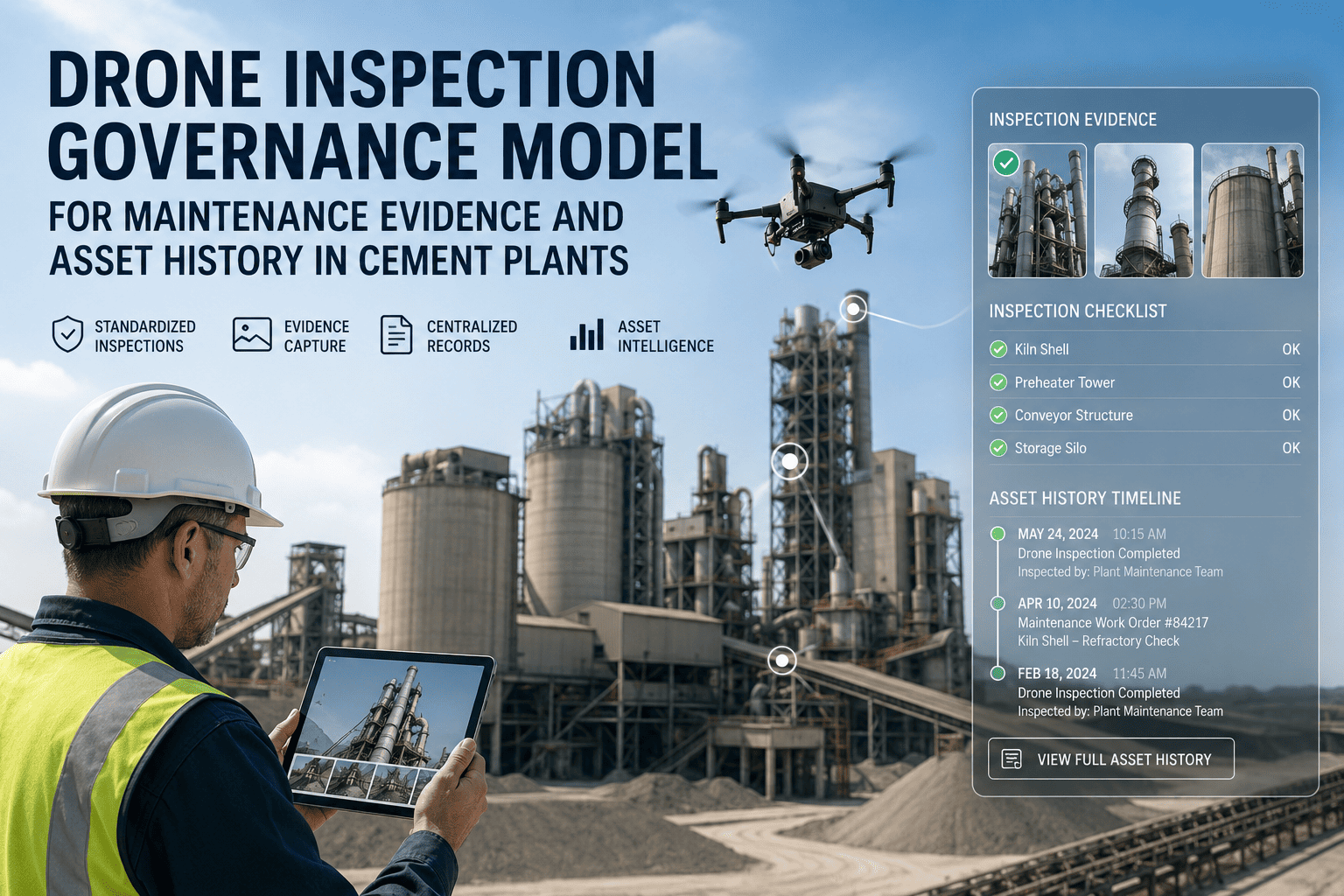
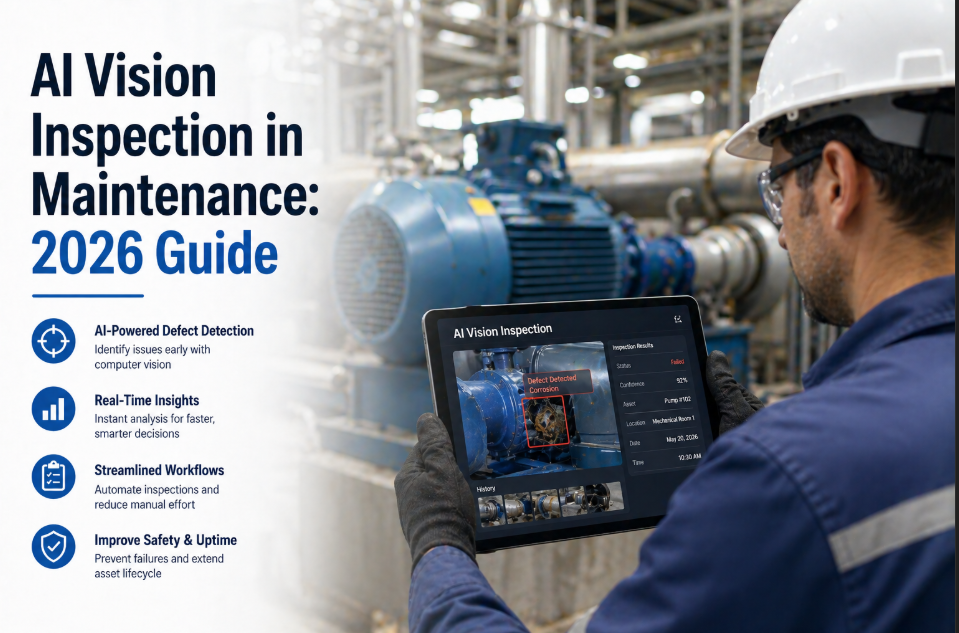
Power plant inspection programs built on human observation alone carry a structural flaw: inspectors can only see what they can safely access, on the shift they're scheduled, with the attention level their fatigue allows. Computer vision maintenance inspection integrated with OxMaint CMMS removes those three constraints entirely — cameras monitor turbine casings, transformer bays, and cooling circuits continuously, without access risk, fatigue, or shift gaps. When the AI camera identifies a developing surface defect or thermal anomaly, OxMaint's AI vision camera workflow captures the image, tags it to the asset record, and routes a work order to the maintenance team — completing in seconds a documentation chain that would otherwise require a supervisor, a paper form, and a dispatcher. For power plant reliability engineers responsible for demonstrating inspection coverage to regulators, this is no longer a future capability — it is the standard their peers are already deploying.
AI Vision Camera · Power Plant · CMMS Integration
Computer Vision Inspection Integration for Power Plant Maintenance
Connect AI camera inspection to OxMaint CMMS — converting continuous visual monitoring into structured asset records, compliance documentation, and work order workflows.
24/7
inspection coverage — cameras never fatigue, miss shifts, or skip confined areas
85%
of power plant defects visible to cameras before causing operational impact
12 sec
average time from visual detection to OxMaint asset record update
How Computer Vision Inspection Connects to OxMaint CMMS
01
Camera Deployment & Zone Mapping
AI cameras are deployed at defined inspection zones — turbine halls, switchgear bays, pump decks. Each camera is mapped to specific asset IDs in OxMaint, establishing the connection between camera location and maintenance record.
02
Continuous Visual Monitoring
Camera AI models run continuously — analysing thermal signatures, surface condition, fluid presence, and structural indicators at configurable scan frequencies. No human schedule required.
03
Detection & OxMaint Ingestion
Detections above severity threshold are pushed to OxMaint via API — image, confidence score, detection category, and asset mapping all transferred in real time without manual intervention.
04
Asset Record & Work Order Created
OxMaint creates an asset condition record and generates a prioritised work order — crew assigned, image attached, asset history updated — in under 15 seconds from initial detection.
Computer Vision Coverage: Power Plant Inspection Matrix
| Zone |
Camera Type |
Detection Capability |
OxMaint Asset Link |
Scan Frequency |
| Gas Turbine Hall |
Thermal + Visible |
Casing cracks, bearing overheating, oil leaks |
GT-01 through GT-04 |
Continuous |
| HV Switchgear Room |
Thermal Infrared |
Connection hotspots, bushing overheating, arc signatures |
SG-Panel A/B/C/D |
Every 15 min |
| Cooling Tower Deck |
Visible + Moisture |
Fill pack condition, fan blade wear, basin fouling |
CT-01 through CT-06 |
Hourly |
| Transformer Yard |
Thermal Infrared |
Radiator hotspots, bushing temp, oil level indicators |
TR-Main, TR-Aux |
Every 30 min |
| BFP / CEP Pump Deck |
Visible + Vibration |
Seal leakage, coupling wear, external corrosion |
BFP-A/B, CEP-A/B |
Every 2 hours |
What OxMaint Captures per Detection
IMAGE
Full-resolution defect image with AI annotation overlay — auto-attached to asset record and work order
ASSET
Asset ID, location zone, and full maintenance history pulled from OxMaint record at time of detection
TIME
Millisecond-precision timestamp — creates unambiguous detection record for compliance documentation
CLASS
Defect classification — category, confidence score, and severity rating assigned by AI model
WO
Auto-generated work order number — priority assigned, crew notified, image pre-attached before manual action
Expert Review — Power Plant AI Vision
Computer vision changes the fundamental economics of power plant inspection. A human inspector covers one zone per walkthrough, once per shift. A fixed AI camera covers that same zone every 15 minutes, 24 hours a day, with better thermal sensitivity than the human eye. When that camera is connected to a CMMS like OxMaint, every detection becomes a structured maintenance record — not a verbal report that depends on someone's memory and handover quality. The reliability uplift is real and measurable within the first operating quarter after deployment.
Director of Plant Reliability, Thermal Power Generation Portfolio
See How Computer Vision Connects to Your OxMaint Maintenance Workflow
OxMaint's AI Vision Camera integration turns continuous visual monitoring into structured work orders, asset records, and compliance documentation — automatically.
96%
detection coverage rate for monitored zones — vs. 60–70% for manual inspection programs
4.1x
more defects identified per operating month with AI camera vs. scheduled human inspection
Zero
missed shift detections — cameras monitor continuously regardless of staffing or access constraints
Frequently Asked Questions
How does computer vision integrate with OxMaint AI Vision Camera for power plant maintenance?
OxMaint's AI Vision Camera module receives detection payloads from connected camera systems via REST API or webhook. Each detection includes an image, defect classification, confidence score, and camera zone identifier — OxMaint maps the zone to the corresponding asset ID and creates a condition record with all data attached. Work orders are generated automatically for detections meeting severity thresholds, with the defect image, asset history, and detection metadata included before any human reviewer sees the task.
Can computer vision inspection reduce OSHA compliance preparation time for power plants?
Yes —
OxMaint creates a timestamped, asset-linked inspection record for every AI camera detection, automatically building the inspection history documentation that OSHA and regulatory bodies require. When compliance review cycles arrive, power plant teams can export a complete inspection history per asset — showing every detection, the work order it generated, and the repair completion record — in minutes rather than days of manual file assembly.
Book a demo to see the compliance export workflow.
What model types does OxMaint's computer vision integration support?
OxMaint's detection ingestion layer is model-agnostic — it receives structured detection output from any AI vision system regardless of the underlying model architecture (YOLO, ResNet, EfficientDet, thermal classification models, and custom trained variants). The only requirement is that the camera system outputs a structured detection payload with image reference, classification, and confidence score via API. OxMaint handles the CMMS-side mapping, work order logic, and compliance record creation without dependency on any specific AI vendor.
How does OxMaint manage work order volume during high-detection periods?
OxMaint's work order engine applies priority scoring and queue management to AI-generated tasks — preventing alert flooding by grouping related detections, applying configurable cooldown periods between repeat detections on the same asset, and routing by crew availability and skill match. During periods of elevated detection (post-maintenance, seasonal load peaks, storm events), supervisors have a prioritised dashboard view that surfaces the highest-severity unactioned tasks first — keeping the maintenance response organised rather than reactive.
Deploy Computer Vision Inspection That Actually Drives Maintenance Action
OxMaint connects your AI cameras to a full power plant CMMS workflow — every detection becomes a record, every critical finding becomes a work order, and every repair closes an audit trail. See it running in your environment.