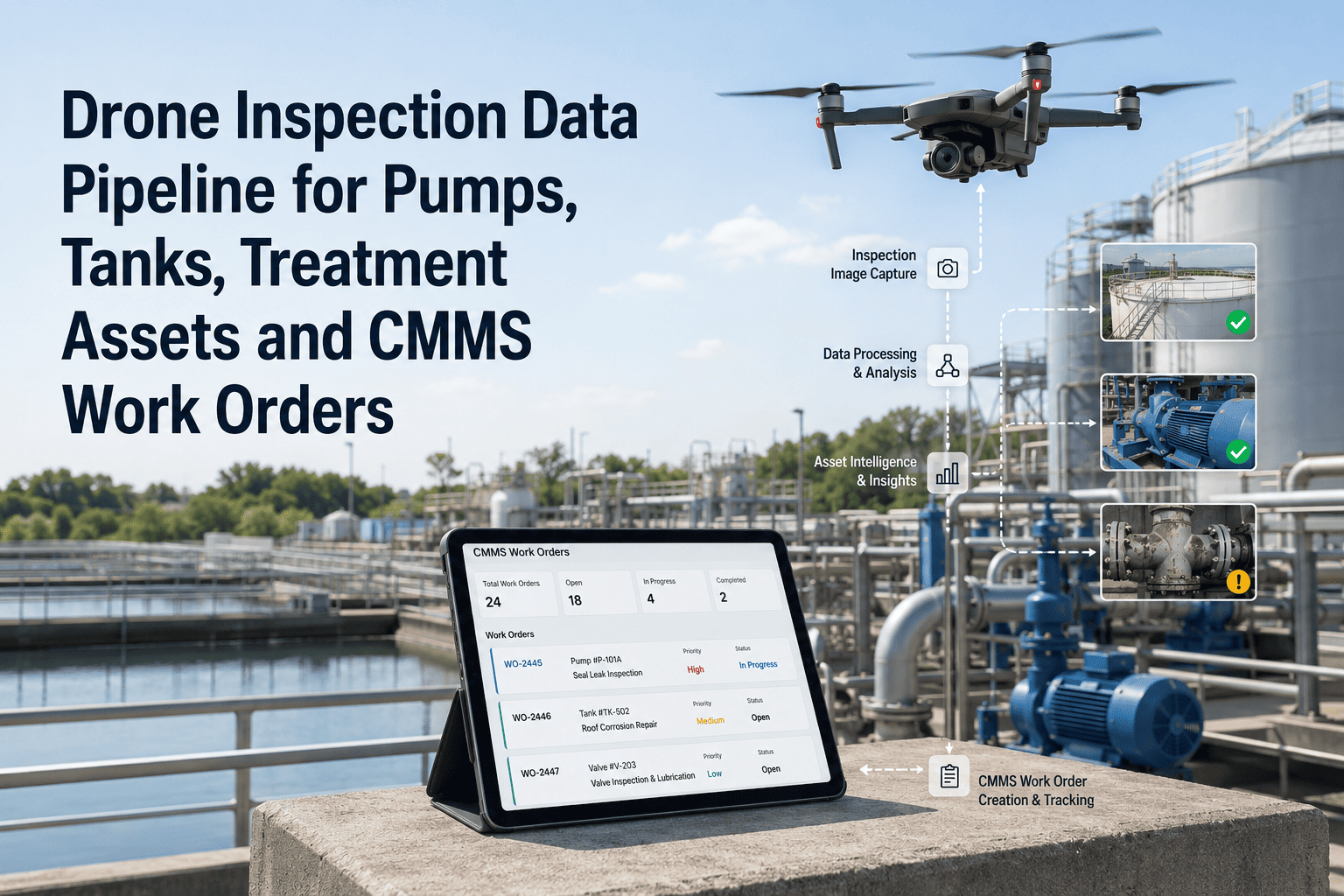
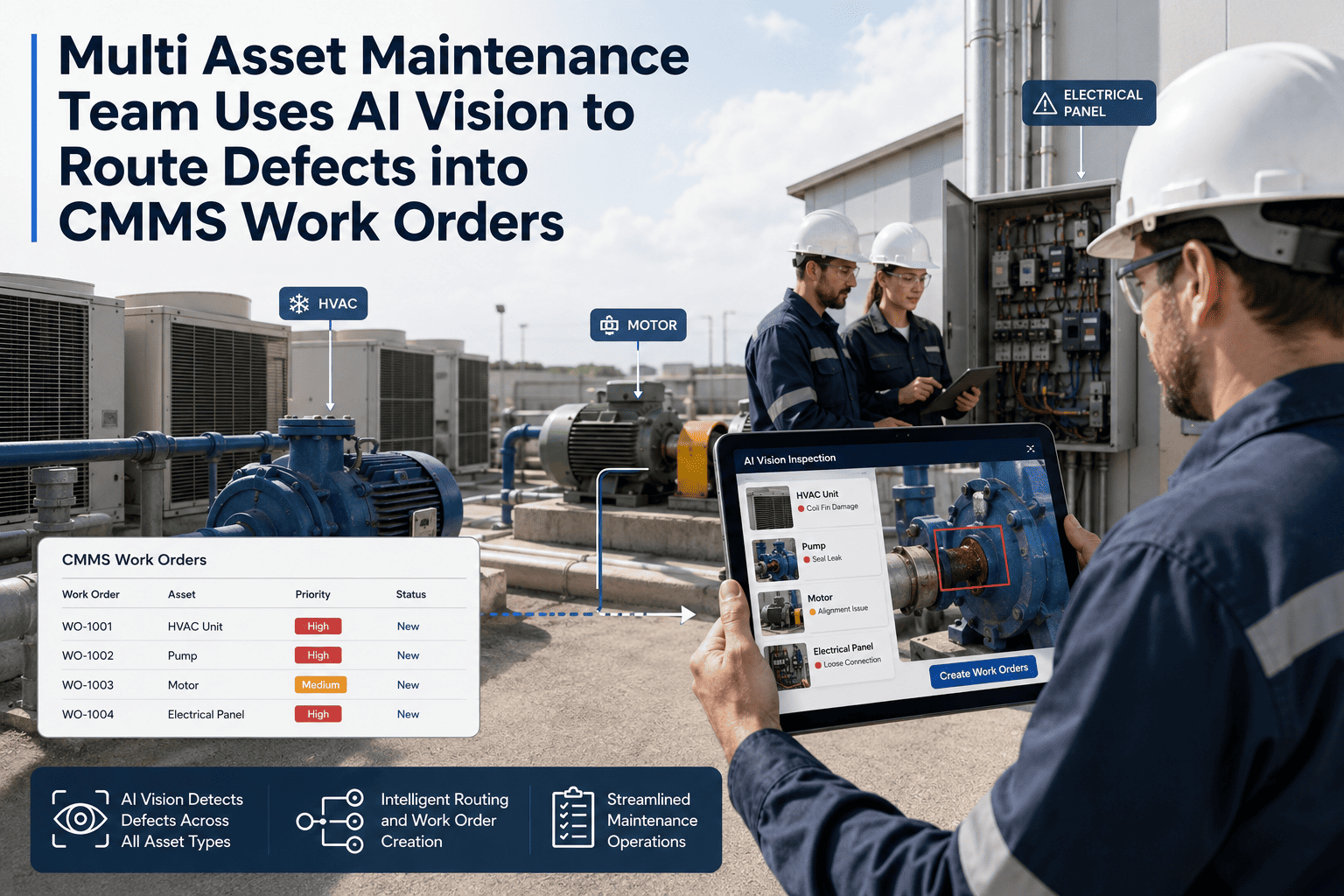
A pump seal rarely fails without warning — it weeps, drips, and stains the baseplate for days before anyone notices on a manual round. By the time a work order gets logged in Maximo, the evidence is gone, the round that caught it may already be hours late, and the seal itself is often past the point of an easy fix. AI vision cameras can catch that early weep the moment it appears and turn it into a work order with photo evidence attached — but only if that detection actually reaches Maximo instead of sitting inside a separate vision tool nobody checks. This article covers how OxMaint syncs AI vision leak detection straight into Maximo work orders, and how a quick demo can show it against your own pump fleet, or explore the integration in OxMaint.
AI Vision / Technical Article
AI Vision Maximo Data Sync for Pump Seal Leak Response
How a camera-detected seal leak becomes a synced Maximo work order, with photo evidence attached, before a manual round would have caught it.
AI vision flags a seal leak from a camera feed, not a manual round
The flagged event syncs into Maximo as a work order automatically
Photo evidence attaches to the record without anyone uploading it
Leak history feeds uptime and reliability analytics over time
Why seal leaks slip through manual rounds
A round that happens once or twice a shift simply isn't built to catch something that starts as a few drops. The gap between when a leak starts and when it's logged is where most of the avoidable damage happens.
| What matters |
Manual rounds |
AI vision + Maximo sync |
| Detection frequency |
Once per shift, at best |
Continuous, every frame |
| Evidence captured |
A verbal note, maybe a phone photo |
Timestamped image attached automatically |
| Time to work order |
Hours, sometimes a full shift |
Minutes from detection |
| Visibility in Maximo |
Only if someone remembers to log it |
Synced automatically every time |
What the camera is actually looking for
A seal leak has a visual signature long before it's a maintenance emergency. The model is trained to recognize that signature, not just motion or moisture in general.
01
Fluid pooling or drippingVisible accumulation at the seal face or baseplate, even in small amounts.
02
Discoloration or stainingA buildup pattern on the baseplate that wasn't there in earlier frames.
03
Mist or vapor near the shaftA visual cue that often precedes visible liquid by hours or days.
From camera flag to Maximo work order
None of these steps need a person watching a monitor — the pipeline runs on its own from the moment a frame is captured.
1
Camera captures the frame
2
AI vision scores the leak signature
3
OxMaint logs the event with evidence
4
Synced to Maximo as a work order
5
Technician dispatched with photo attached
See a leak flagged on your own pump fleet
Bring footage or a live camera feed from one pump and we'll show you exactly what gets flagged and synced to Maximo.
What the integration handles automatically
Automatic work order creation
A flagged leak becomes a Maximo work order without anyone re-typing what the camera already captured.
Photo evidence attached
The frame that triggered the flag attaches to the record automatically, ready for the technician and the audit trail.
Two-way Maximo sync
Status updates made in Maximo flow back to OxMaint, so the asset history stays consistent across both systems.
Uptime & reliability analytics
Every flagged leak rolls into asset reliability trends, not just a one-off ticket.
What faster detection is actually worth
The gap between a manual round and continuous vision monitoring isn't a small efficiency gain — it's the difference between catching a weep and replacing a seized pump.
Manual rounds
Hours late
Detected on the next scheduled walk, often a full shift after onset
VS
AI vision + sync
Minutes
Flagged and logged in Maximo within minutes of the first visible sign
Expert Review
"Reliability teams have run vision pilots for years that detect leaks beautifully and then go nowhere, because the alert lives in a dashboard nobody on the floor opens. The piece that actually changes outcomes is the sync — getting that detection into the same system the technicians already work out of, with evidence attached, so it shows up as a real work order instead of another notification to ignore. Once that connection exists, the camera stops being a science project and starts being part of how the seal actually gets fixed before it fails."
Reviewed by a Reliability Engineering Lead, deploying condition monitoring and vision-based inspection across rotating equipment for 10+ years.
Stop losing the gap between detection and the work order
Walk through AI vision detection, Maximo sync, and evidence capture on a live OxMaint workspace.
Frequently asked questions
What is AI vision and Maximo data sync?
It's an integration where a camera-based AI vision model detects a visual fault — like a pump seal leak — and automatically syncs that event into Maximo as a work order, complete with the image that triggered the flag. See it explained in
OxMaint.
How does it know it's a seal leak and not normal moisture?
The model is trained on the specific visual signature of a leak — pooling, staining patterns, and vapor near the shaft — rather than flagging any moisture in frame, which keeps false positives low.
Book a demo to see detection accuracy on your footage.
Does the Maximo work order include the photo evidence?
Yes. The frame that triggered the detection attaches to the synced work order automatically, so the technician and anyone reviewing the record afterward can see exactly what was flagged. Try evidence capture in
OxMaint.
Can this run on cameras we already have installed?
In most cases, yes — existing fixed cameras pointed at pump seals or other leak-prone equipment can be connected to the vision model without new hardware.
See compatibility in a demo.
Does this replace manual inspection rounds entirely?
Not entirely — it catches what a camera can see continuously, while rounds still cover checks that need a hand, a sound, or a smell. Most teams use it to close the gap between rounds rather than eliminate them. Explore combined workflows in
OxMaint.
How is this data used for reliability analytics?
Every flagged leak, with its timestamp and evidence, rolls into the asset's reliability history, which makes it possible to see recurring seal failures on a specific pump rather than treating each leak as an isolated event. Start with a
free trial.
Catch the weep before it becomes a failure
Sync AI vision leak detection straight into Maximo, with evidence attached and reliability data building behind every flagged event.