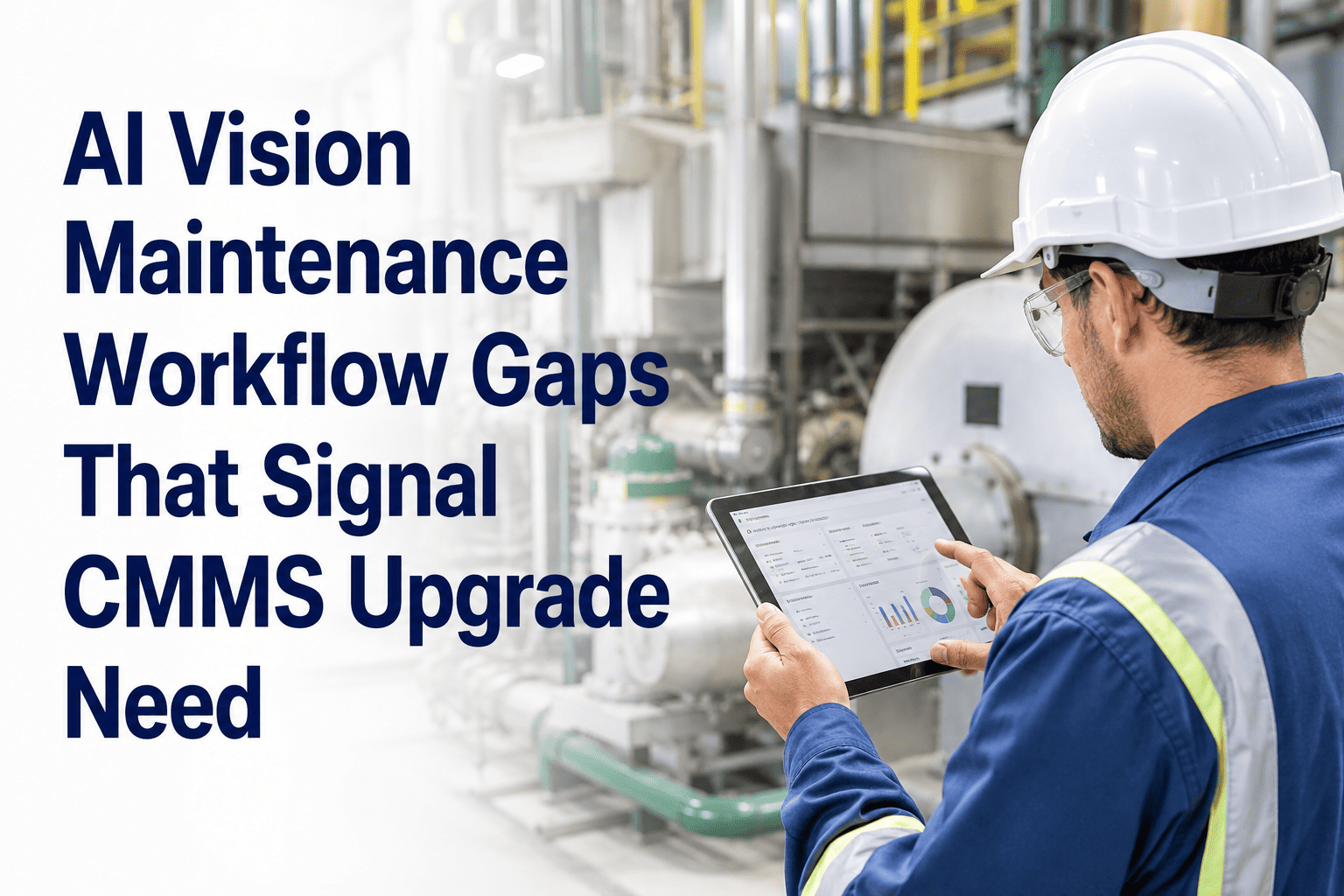
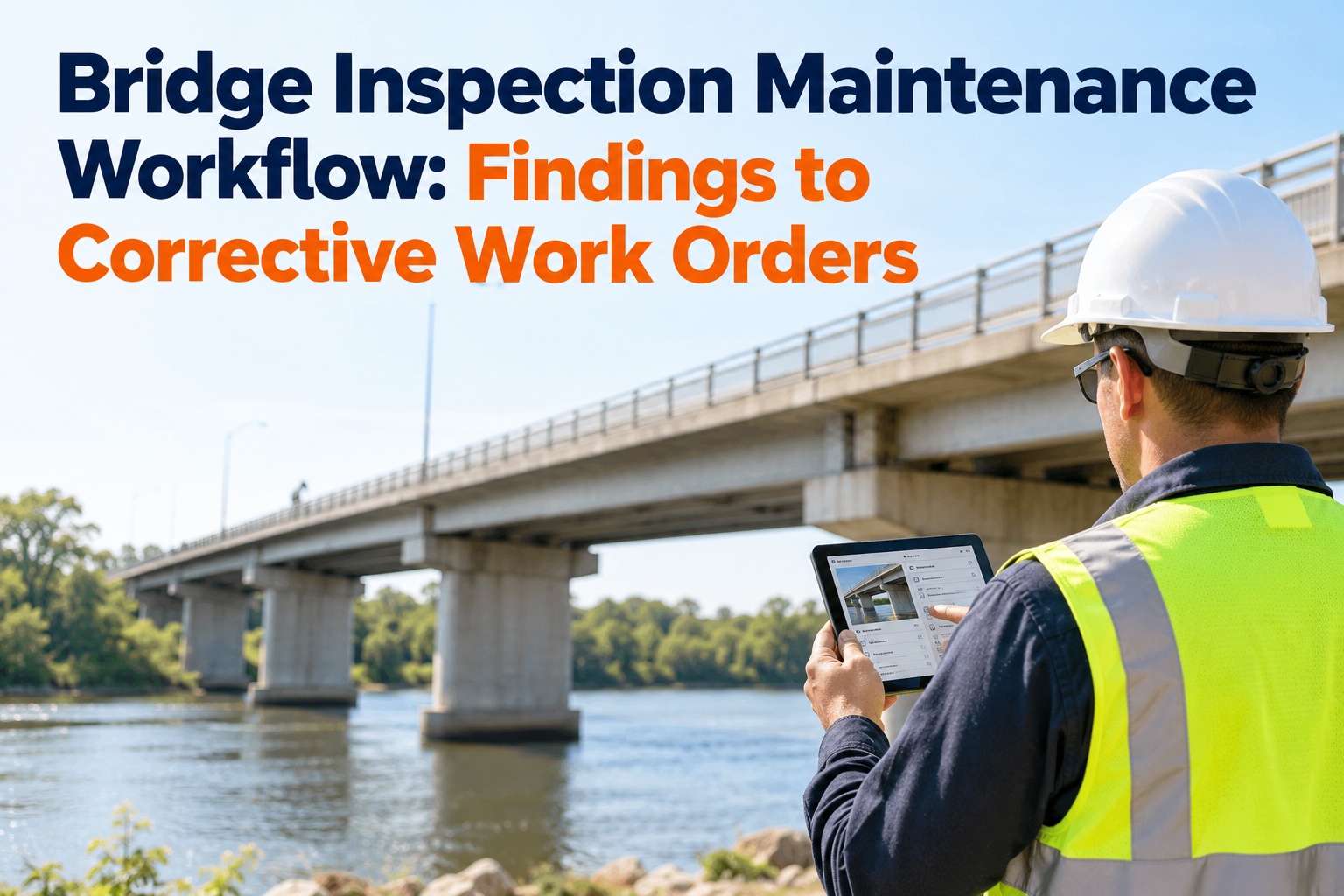
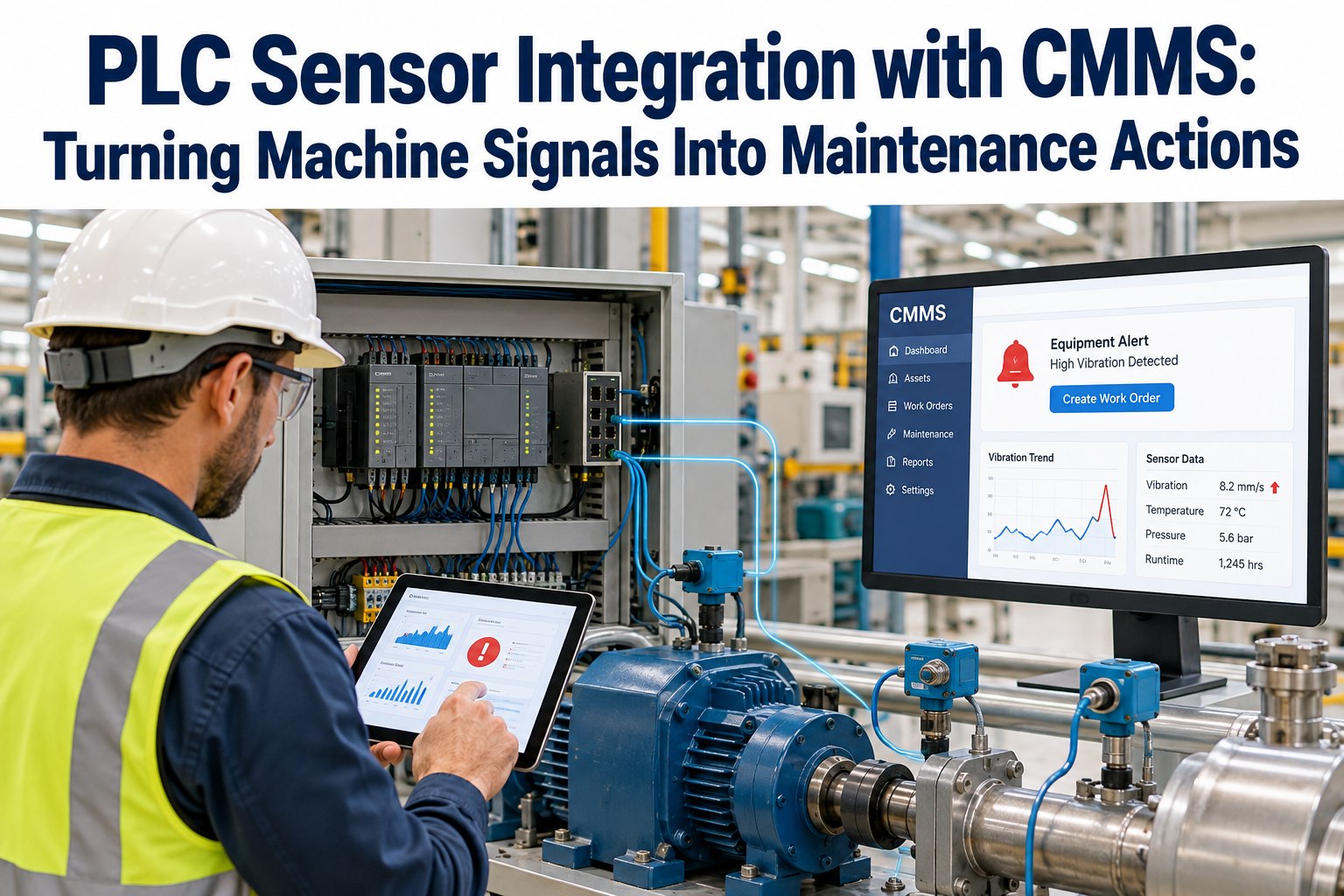
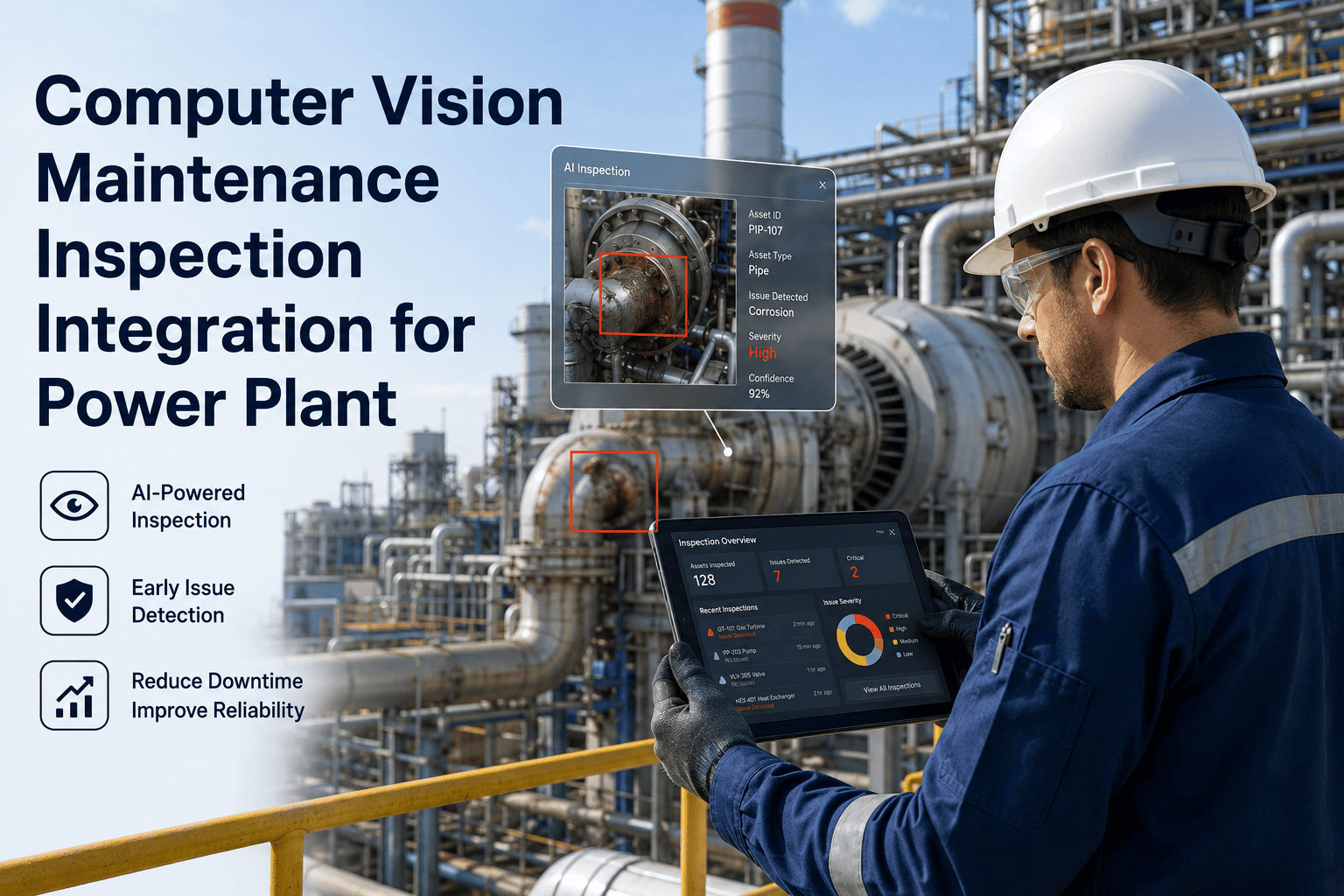
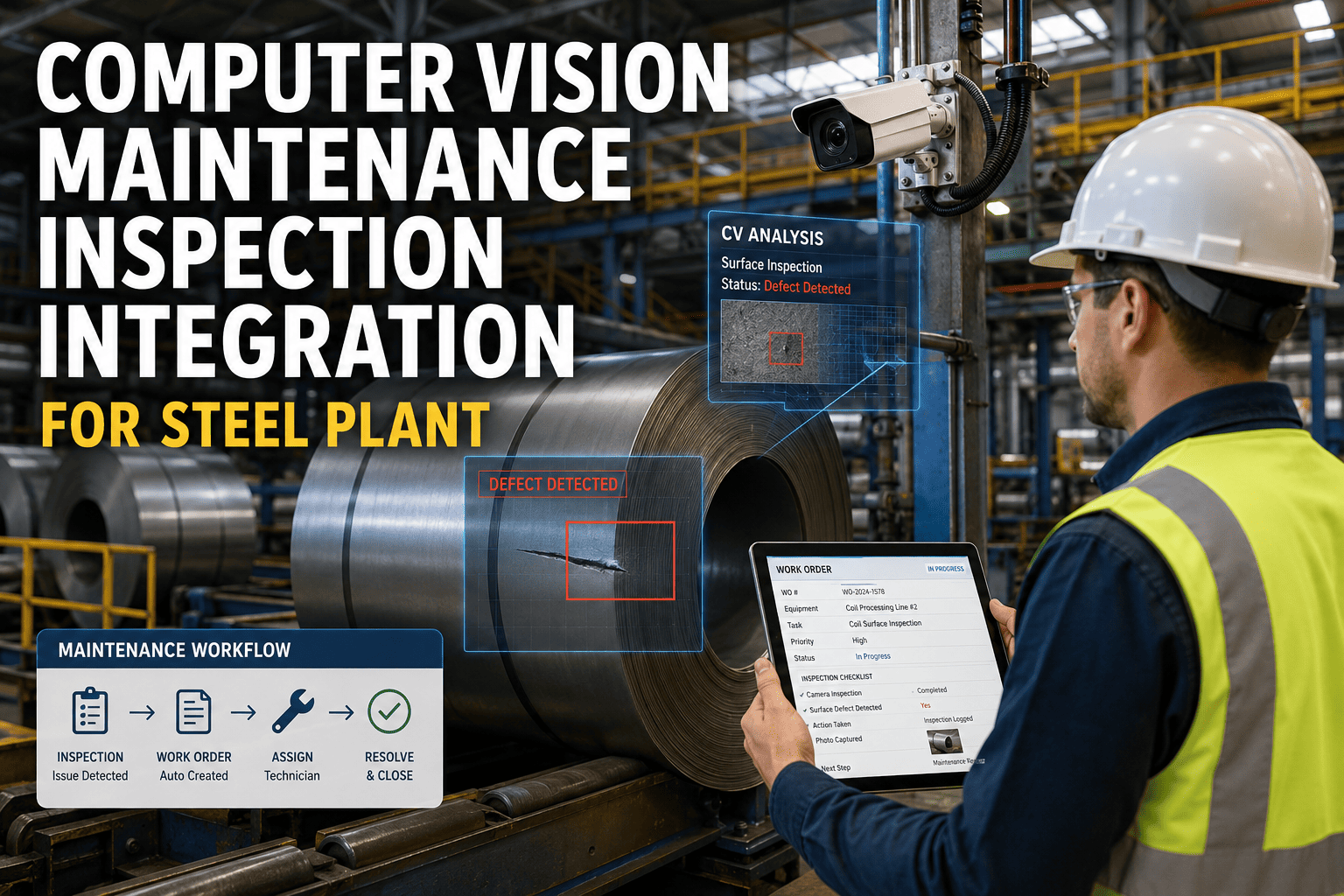
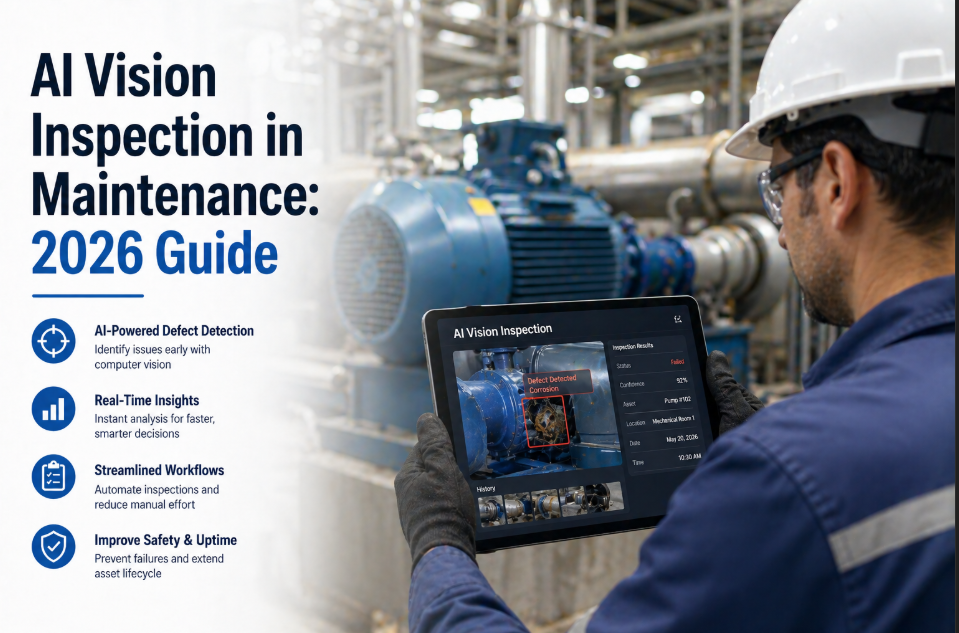
Your maintenance team captures photos of equipment defects — then emails them to a supervisor, who creates a work order manually, which gets lost in a spreadsheet before a technician sees it three days later. This is not a process problem. It is a technology gap — and it is costing your facility thousands of dollars in unplanned downtime every month. OxMaint's AI Vision platform closes every step in that broken chain: photo captured, defect classified, work order created, technician dispatched — in under 30 seconds. If any of the workflow gaps below sound familiar, your CMMS is overdue for an upgrade. Book a free demo to see the full AI vision workflow live.
Diagnostic Guide · AI Vision Maintenance
AI Vision Maintenance Workflow Gaps That Signal Your CMMS Needs an Upgrade
Is Your Maintenance Workflow Leaking Productivity?
Teams often tolerate broken workflows because each gap feels small in isolation. But compounded across hundreds of work orders per month, these gaps translate directly to missed SLAs, repeat failures, and technician frustration. The 7 signals below indicate your current CMMS cannot support AI-driven visual maintenance — and what each gap is costing you.
35%of repeat maintenance visits caused by missing parts at first dispatch
3.2 daysAverage delay between defect photo capture and work order creation in manual workflows
60–80%CMMS deployments that stall at partial adoption due to workflow friction
The 7 Workflow Gaps
Signals Your AI Vision + CMMS Integration Is Broken
01
Photos Captured But Work Orders Created Manually
Technicians photograph defects but then verbally report or email them. A dispatcher manually creates the work order — often hours later. The photo evidence is never attached to the asset record.
Cost: 2–4 hour average defect-to-dispatch delay. Evidence lost.
02
Defect Severity Decided by the Technician On-Site
Without AI classification, severity is a subjective call. The same crack rated "low" by one technician is rated "critical" by another. Priority queues become unreliable and high-risk assets wait.
Cost: 23% of safety-critical defects under-prioritized in manual workflows (Plant Engineering, 2024).
03
No Asset-Linked Visual History
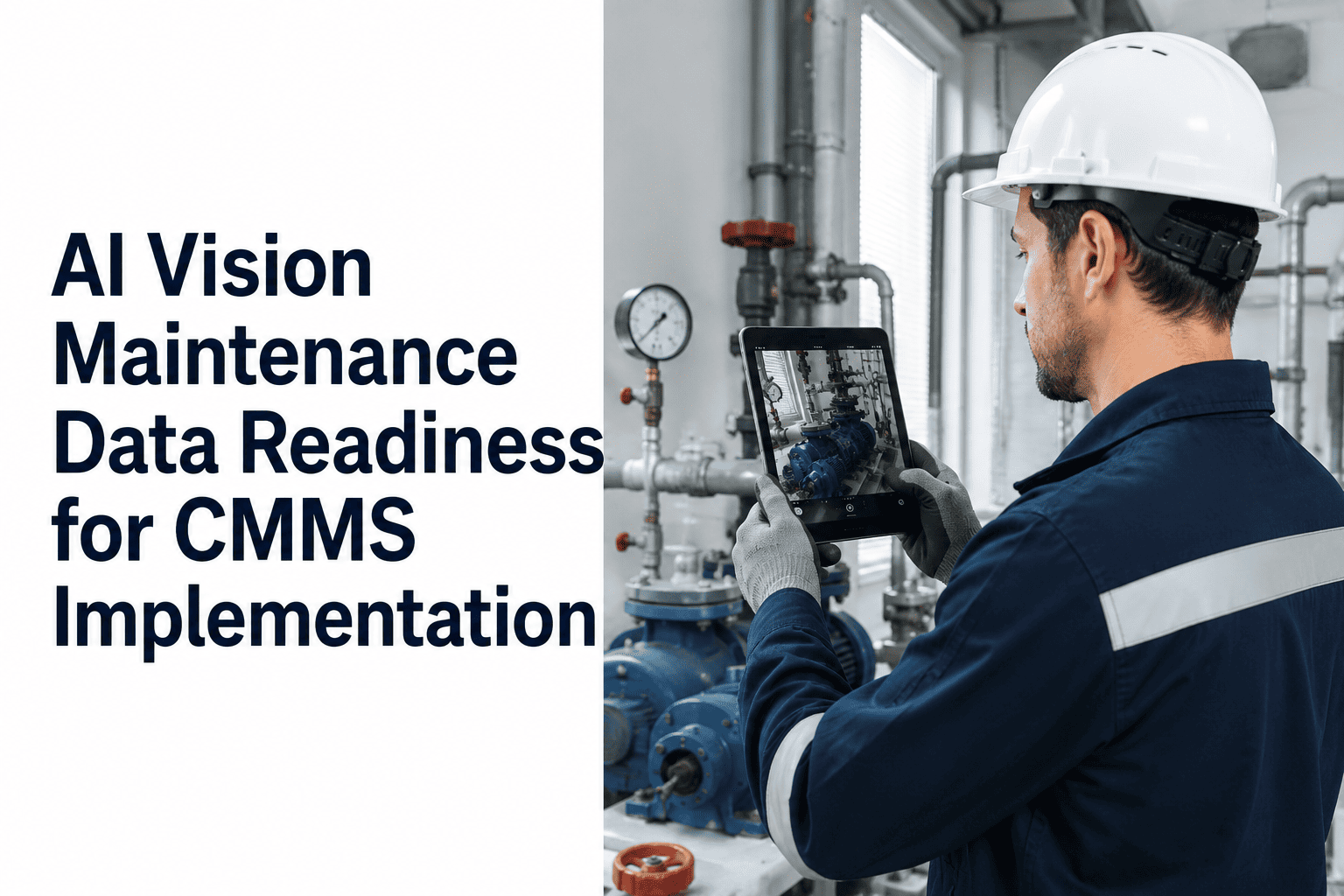
Defect photos from previous inspections are stored in email threads or personal phone galleries — not against the asset record in your CMMS. When an asset fails, there is no visual history to diagnose root cause.
Cost: Root cause analysis takes 4–8x longer without longitudinal visual evidence.
04
Parts Are Looked Up After Dispatch
Technicians arrive on-site, assess the defect, then return to the storeroom for parts — or raise a purchase order. First-time fix rate collapses. Each unnecessary return trip costs 1.5–3 hours of labor.
Cost: 35% of service visits require a second trip due to parts unavailability.
05
Vision Data and CMMS Run as Separate Systems
Your inspection app and your CMMS do not share data. Reports must be exported and re-imported manually. Inspection data never feeds predictive maintenance models because there is no live connection.
Cost: 6–10 hours per week of manual data reconciliation per site.
06
AI Alerts Are Ignored by Technicians
False positive rates above 20% cause technicians to distrust and override AI alerts. The team reverts to manual inspection and the AI investment delivers zero operational value within six months of deployment.
Cost: Every 1% increase in false positives reduces AI alert adherence by 3–4%.
07
No Closed-Loop Reporting From Vision to Outcome
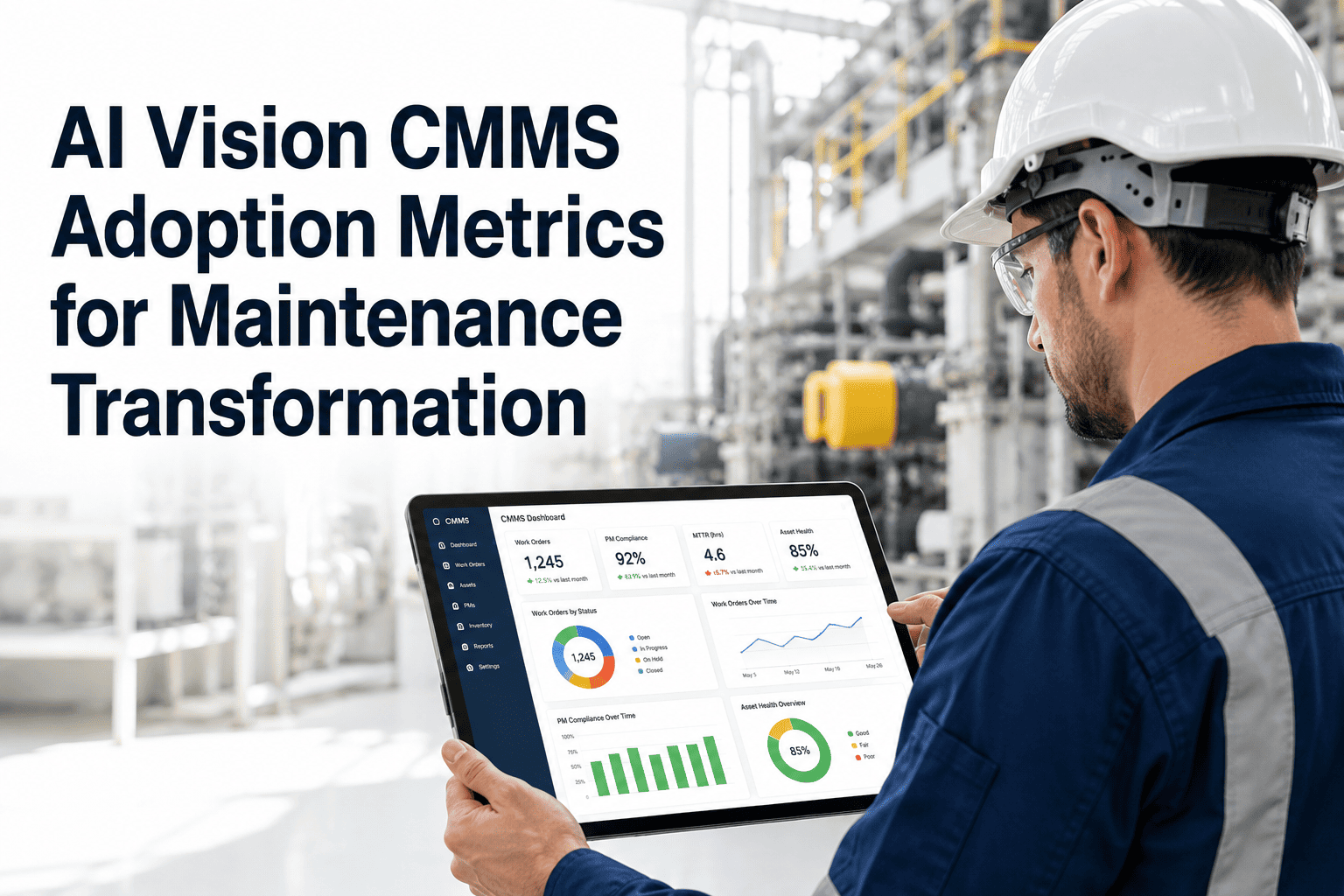
Management cannot see which AI-detected defects led to repairs, which were false positives, or how detection-to-closure time has trended. There is no ROI data and no model for continuous improvement.
Cost: Without closed-loop data, AI model accuracy stagnates — no compounding improvement.
OxMaint Closes All 7 Gaps — See It in 30 Minutes
From photo to closed work order with full audit trail. Book a live demo and we will map OxMaint's workflow against your current gaps — zero obligation.
Gap Severity Matrix
Which Gaps Cost You Most — Ranked by Operational Impact
| Workflow Gap |
Avg. Monthly Cost Impact |
Technician Hours Lost |
OxMaint Resolution |
| Manual photo-to-WO creation |
$4,200–$8,600 |
18–32 hrs |
Auto-WO in <30 sec |
| No parts prediction |
$2,800–$6,400 |
22–40 hrs |
AI parts suggestion at defect time |
| Disconnected vision + CMMS |
$1,600–$3,800 |
6–10 hrs |
Native integration, zero export |
| Subjective severity rating |
$800–$2,400 |
4–8 hrs |
AI severity score per defect type |
| No asset visual history |
$600–$1,800 |
8–16 hrs |
Photo auto-linked to asset record |
| No closed-loop reporting |
$400–$1,200 |
3–6 hrs |
Full detection-to-close dashboard |
Expert Review
What Industry Research Says About Maintenance Workflow Gaps
"The photo-to-work-order gap is the single most expensive workflow failure in maintenance operations today. Facilities with manual handoff between visual inspection and CMMS work order creation lose an average of 2.8 hours per defect event in response latency — time during which asset degradation continues and secondary damage risk compounds. AI vision platforms that eliminate this handoff entirely recover 15–25% of total maintenance labor capacity within the first 90 days."
— Maintenance Technology Magazine, Workflow Efficiency Benchmark Study, 2024
"High false positive rates are the silent killer of AI maintenance programs. When technicians override AI alerts at a rate above 25%, the investment is effectively stranded. The fix is not better hardware — it is continuous model retraining on facility-specific feedback. Organizations that implement closed-loop feedback from technician outcomes to model retraining achieve false positive rates below 8% within six months and see alert adherence rates above 90%."
— Reliability Engineering International, AI Adoption Barriers Study, Vol. 40, 2024
FAQs
Frequently Asked Questions
How do I know if my current CMMS is the problem or my maintenance processes?
Run a simple test: time how long it takes from a technician capturing a defect photo to a work order appearing in your CMMS with the photo attached and a priority assigned. If the answer is anything other than "automatically, in under a minute," the gap is in your tooling, not your process.
Book a workflow assessment demo with OxMaint — we map your current state against best-in-class benchmarks in the first 15 minutes and show you precisely where the friction points sit and what resolving each one is worth in recovered labor and reduced downtime.
What is the fastest workflow gap to close for immediate ROI?
Parts prediction at the point of defect detection delivers the fastest measurable return for most facilities — typically within the first month. When AI identifies a defect and simultaneously suggests the required parts and quantities, first-time fix rate increases by 20–35% immediately, eliminating the labor cost of repeat site visits.
OxMaint's parts suggestion engine activates automatically for every AI-classified defect and integrates with your existing inventory or ERP system to confirm stock availability before dispatch.
Can we fix these gaps without replacing our existing CMMS?
In most cases, yes — OxMaint integrates with existing CMMS platforms including SAP PM, IBM Maximo, and Infor EAM via REST API, enabling AI vision capabilities to be layered onto your current system rather than replacing it. The AI vision module captures images, classifies defects, and pushes structured work order data to your existing CMMS fields.
Book a technical demo to see how OxMaint maps to your current CMMS schema — we handle the integration architecture and target go-live within 3 weeks.
AI Vision Maintenance
Stop Losing Revenue to Workflow Gaps Your CMMS Should Have Closed
OxMaint eliminates every gap on this list — photo to work order in under 30 seconds, AI severity scoring, parts prediction, closed-loop reporting, and continuous model improvement. See it live on your asset types.