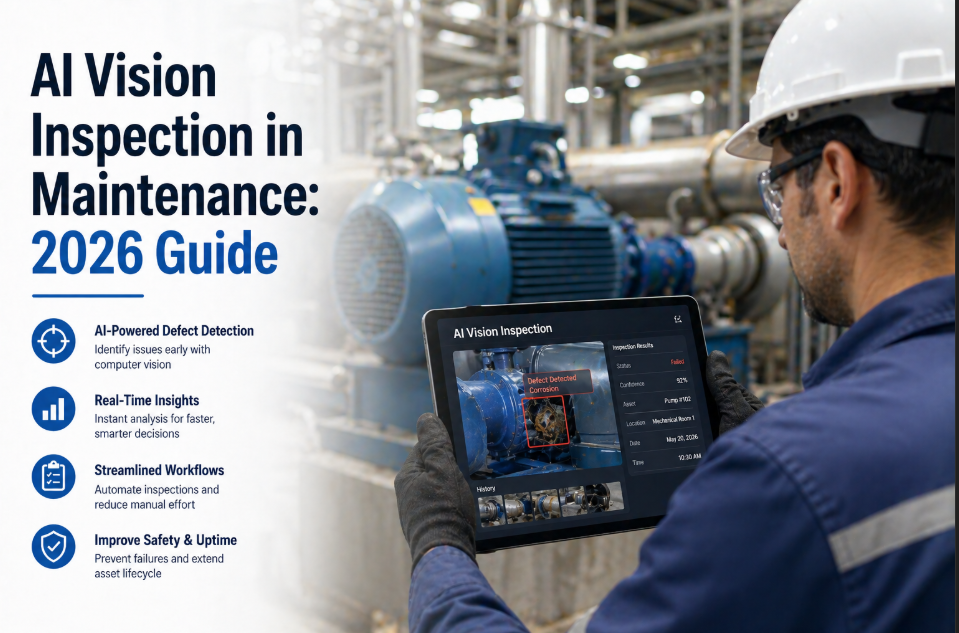
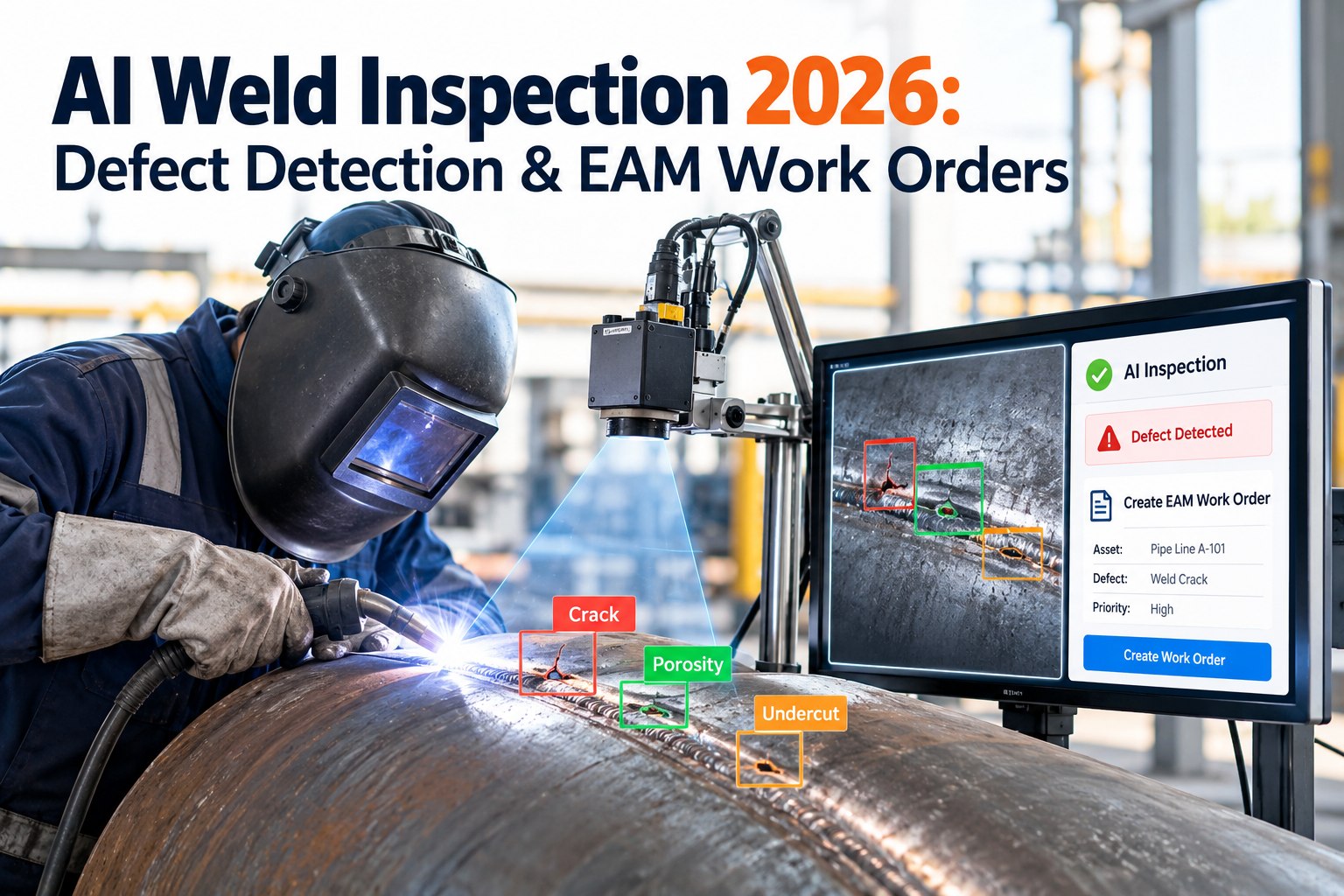
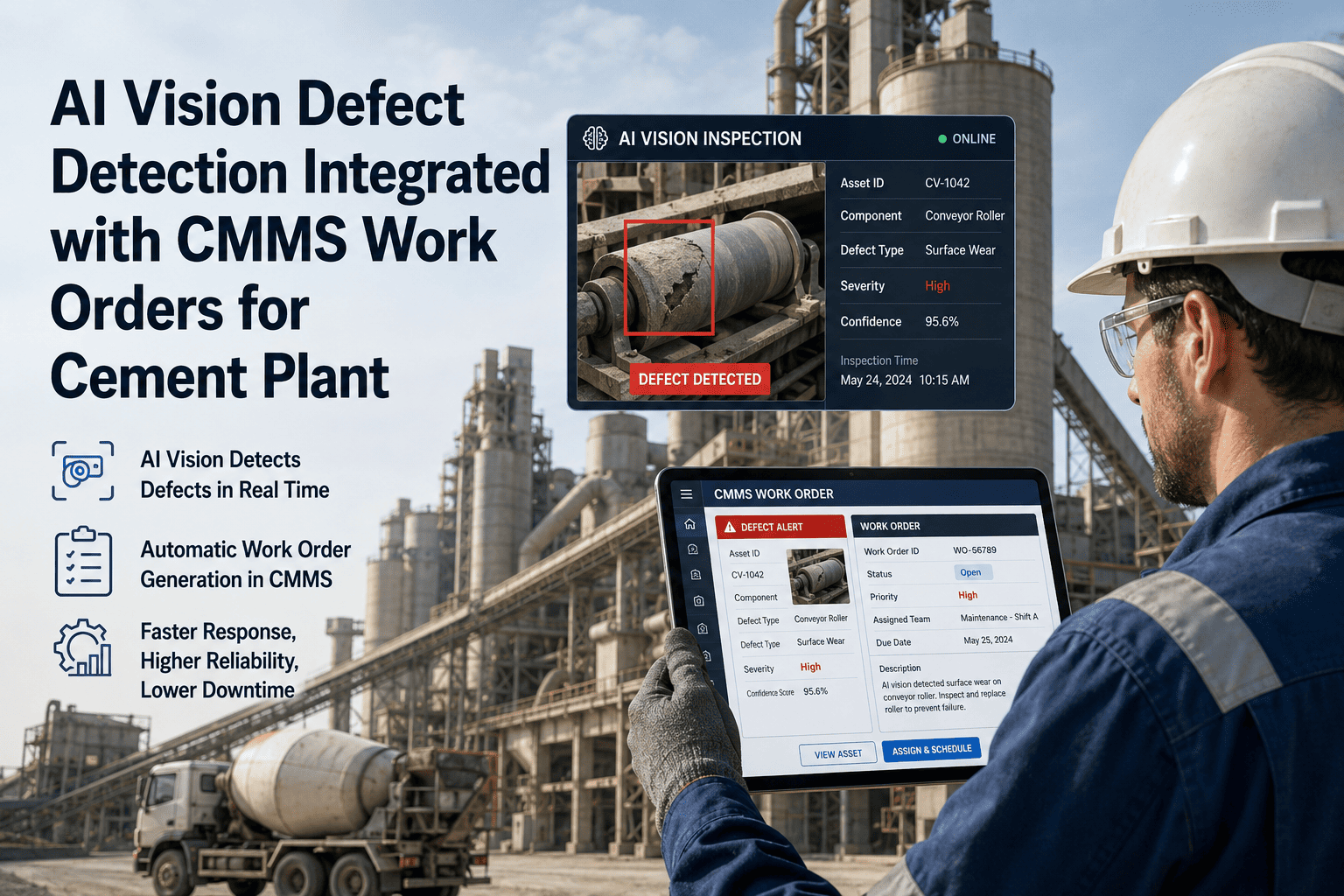
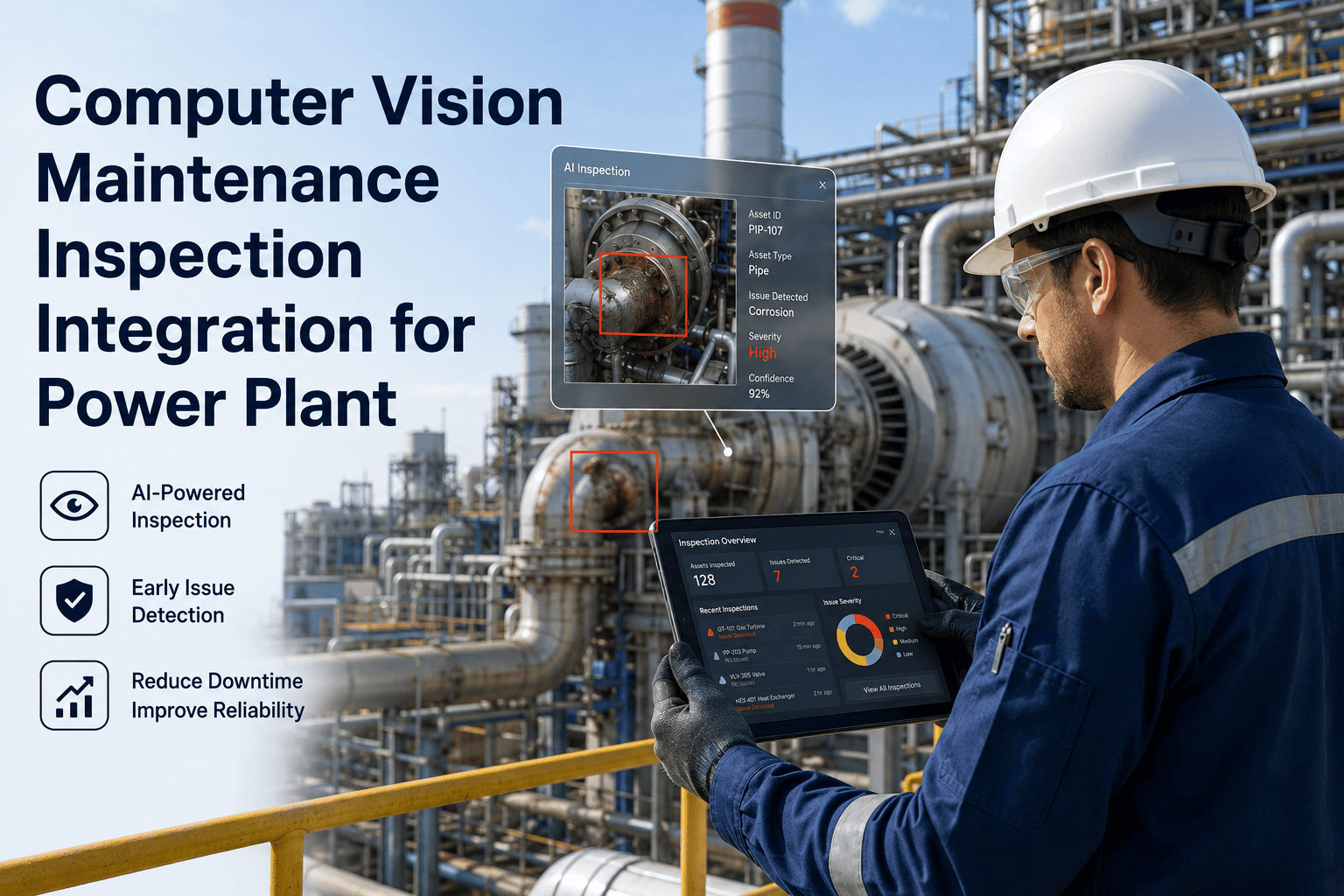
Every maintenance team has walked past a corroded pipe, a worn conveyor belt, or a cracked housing — and missed it. Not because they were negligent, but because human visual inspection at scale is inherently inconsistent. A technician inspecting their 40th asset on a Friday afternoon does not see with the same precision as they did on Monday morning. AI vision inspection changes that equation entirely. In 2026, computer vision models running on a standard smartphone camera can detect surface corrosion, hairline cracks, belt wear, seal degradation, and lubricant leaks with 94% accuracy — matching or exceeding trained inspector performance at 10x the speed. The technology has moved from research labs to production floors. The question is no longer whether AI vision inspection works, but how to deploy it in a way that connects findings to maintenance action. This guide covers the technology, the implementation, the ROI, and the integration architecture that turns a smartphone photo into a prioritized work order. For teams ready to connect AI visual inspection directly to work order generation, start a free trial with OxMaint or book a demo to see AI vision inspection in action.
Trending Topic 2026 AI Vision Inspection Computer Vision for Maintenance
AI Vision Inspection in Maintenance: The Complete 2026 Guide
Computer vision for asset condition assessment, defect detection, corrosion monitoring, and wear analysis — from smartphone capture to automated work order generation.
94%
Defect detection accuracy on trained models using smartphone images
10x
Faster inspection throughput vs. manual visual methods
73%
Reduction in missed defects after AI vision deployment
$0
Additional hardware cost — runs on existing smartphones
OxMaint AI Vision — Snap a Photo, Generate a Work Order
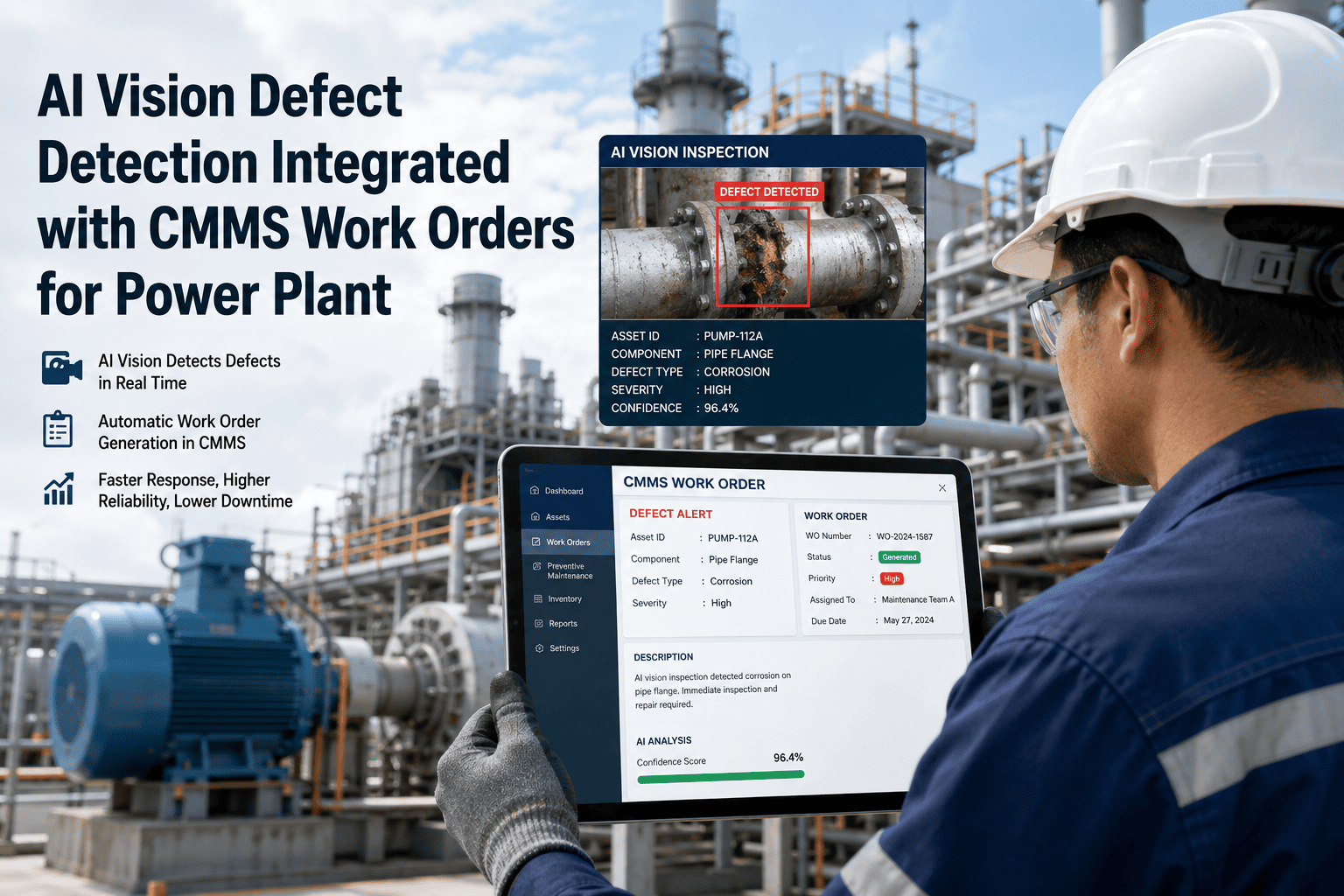
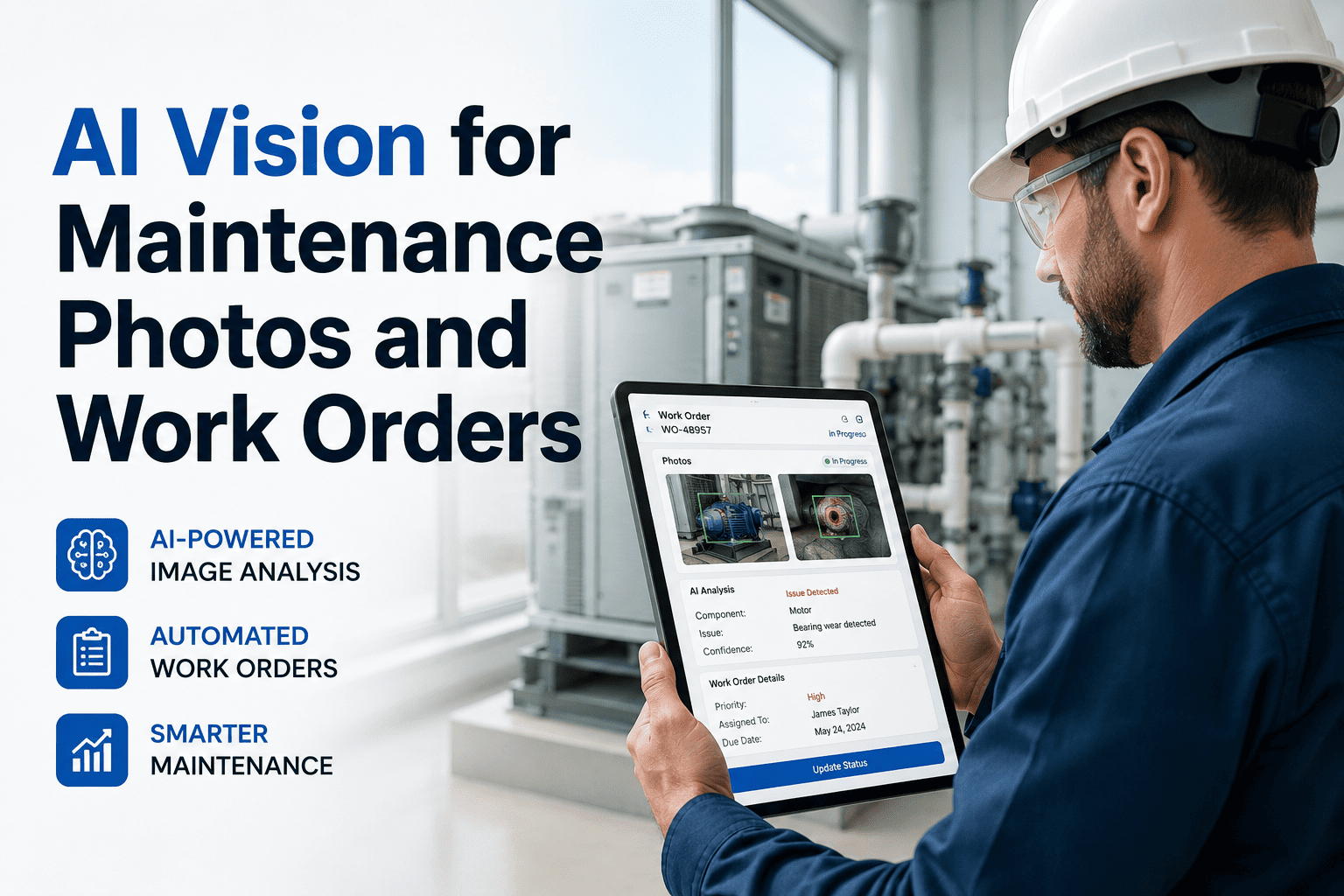
OxMaint's AI vision inspection runs on any smartphone. Capture an image during a routine walk-through — AI identifies defects, scores severity, and auto-generates a prioritized CMMS work order. No separate analytics tool required.
What Is AI Vision Inspection in Maintenance?
AI vision inspection uses computer vision — deep learning models trained on thousands of images of equipment in healthy and degraded states — to automatically detect and classify physical defects from photographs or video feeds. In a maintenance context, this means a technician photographs an asset during a routine round, and an AI model instantly analyzes the image for corrosion, cracks, wear patterns, leaks, misalignment, missing components, and surface degradation. Unlike traditional visual inspection that relies entirely on individual technician expertise and attention span, AI vision inspection delivers consistent, quantifiable, and repeatable results across every inspection — whether it is the first asset or the hundredth. The 2026 generation of vision models runs directly on smartphone hardware with no cloud dependency, processing images in under 2 seconds. The output is not just a pass/fail — it is a severity-scored defect map with location marking, defect classification, and recommended maintenance action. When integrated with a CMMS like OxMaint, that output becomes an automatic work order with full asset context, making AI vision inspection a practical part of daily maintenance operations rather than a standalone technology experiment. Want to see how this works on your equipment? Start a free trial or book a demo to see AI defect detection from a phone camera.
Six Defect Types AI Vision Catches That Humans Consistently Miss
Human inspectors are excellent at detecting obvious, large-scale failures — but research shows they miss 20–30% of early-stage defects during routine visual rounds. AI vision models are specifically trained to catch the subtle, early-stage conditions that lead to breakdowns weeks or months later.
01
Early-Stage Surface Corrosion
AI detects micro-rust formation and pitting invisible to casual observation. Catches corrosion 6–12 weeks before it progresses to structural compromise.
Human miss rate: 35% on early-stage corrosion
02
Hairline Cracks and Stress Fractures
Computer vision identifies sub-millimeter cracks on housings, brackets, and structural members that precede catastrophic fracture events.
AI detection accuracy: 91% on cracks under 0.5mm width
03
Belt and Seal Wear Patterns
Vision AI measures belt edge fraying, surface glazing, and seal lip degradation — quantifying remaining useful life rather than relying on subjective assessment.
Extends belt replacement planning accuracy by 40%
04
Lubricant Leaks and Fluid Seepage
AI identifies oil staining patterns, grease migration, and fluid discoloration that indicate seal failure or over-lubrication — often overlooked on dirty equipment.
Catches 68% of slow leaks missed during manual rounds
05
Fastener and Component Missing/Loose
Vision models trained on equipment baseline images detect missing bolts, loose guards, displaced covers, and altered configurations that indicate tampering or vibration looseness.
Reduces safety guard compliance gaps by 82%
06
Thermal Discoloration and Heat Damage
AI recognizes heat-induced color changes on electrical connections, motor housings, and pipe surfaces — visible signs of overheating that precede insulation failure.
Identifies overheating indicators 4–8 weeks before thermal failure
How AI Vision Inspection Actually Works — The Technical Flow
Understanding the data pipeline from photo capture to work order generation helps maintenance leaders evaluate whether AI vision inspection fits their operation. Here is the step-by-step technical flow used in production deployments.
1
Image Capture
Technician photographs the asset using a smartphone during a scheduled inspection round or ad-hoc walk-through. No special camera, lighting rig, or equipment required — modern smartphone cameras exceed the resolution requirements for industrial defect detection.
2
On-Device AI Processing
The vision model runs locally on the phone or at the edge — no cloud upload required for initial analysis. Processing time: under 2 seconds per image. The model compares the captured image against trained baselines for that asset type and identifies anomalies.
3
Defect Classification and Severity Scoring
Detected anomalies are classified by type (corrosion, crack, wear, leak, missing component) and scored on a 1–5 severity scale. The AI provides confidence percentages and highlights affected regions on the image with bounding boxes.
4
CMMS Work Order Generation
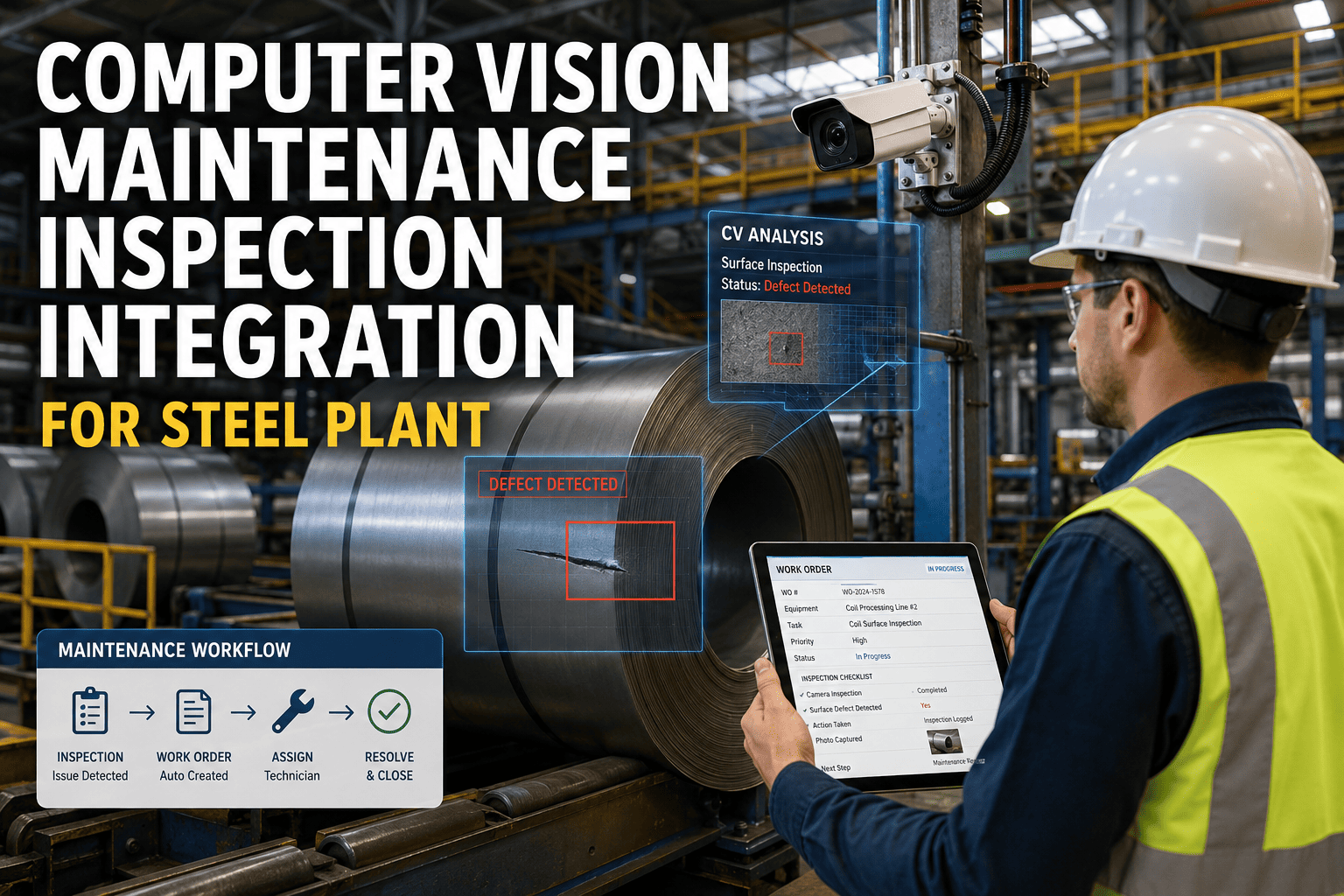
Severity scores above the configured threshold automatically generate a work order in OxMaint with the annotated image, defect classification, asset ID, location, and recommended corrective action. No manual data entry. No separate reporting step.
Why Manual Visual Inspection Fails at Scale
Manual visual inspection has been the foundation of condition monitoring for decades — and it remains valuable. But when measured against the demands of modern multi-site operations, the limitations are clear. Here is where human-only inspection breaks down versus AI-augmented inspection.
| Inspection Factor | Manual Visual Inspection | AI Vision Inspection |
| Consistency | Varies by inspector fatigue, experience, lighting conditions | Identical detection criteria applied to every image, every time |
| Early Defect Detection | Misses 20–30% of early-stage defects | Catches 94% of trained defect types including sub-millimeter anomalies |
| Documentation | Handwritten notes or checkbox forms — rarely photographed | Annotated image with defect map, severity score, and timestamp |
| Throughput | 15–25 assets per technician per shift | 150+ assets per technician per shift with AI-assisted capture |
| Trend Tracking | No quantified progression data between inspections | Image-over-image comparison showing defect progression rate |
| Work Order Link | Separate manual step — findings logged later, if at all | Auto-generated work order at point of detection |
The Real Pain Points AI Vision Inspection Solves
AI vision inspection is not a technology looking for a problem — it addresses specific, measurable operational gaps that maintenance leaders deal with daily.
Inspector Inconsistency Across Shifts and Sites
Different inspectors apply different standards. A defect flagged by the morning shift gets passed by the night shift. Multi-site operations see 40% variance in defect reporting rates between locations — even on identical equipment. AI eliminates this variance entirely.
Inspection Findings That Never Become Work Orders
Research shows 45% of defects noted during manual inspections never result in a maintenance action — they get written on a clipboard, mentioned verbally, or logged in a system nobody checks. AI vision connected to a CMMS closes this gap automatically.
No Quantified Degradation Tracking Over Time
Manual inspection produces binary outcomes — acceptable or not. There is no measurement of how fast a defect is progressing. AI vision compares images over time and calculates degradation velocity, enabling data-driven replacement scheduling instead of guesswork.
Skilled Inspector Shortage and Knowledge Loss
Experienced inspectors are retiring faster than they are being replaced. The average age of a qualified industrial inspector in the US is 54. AI vision models encode inspection expertise into software — preserving institutional knowledge and enabling less experienced technicians to perform expert-level assessments.
How OxMaint Integrates AI Vision Into Daily Maintenance
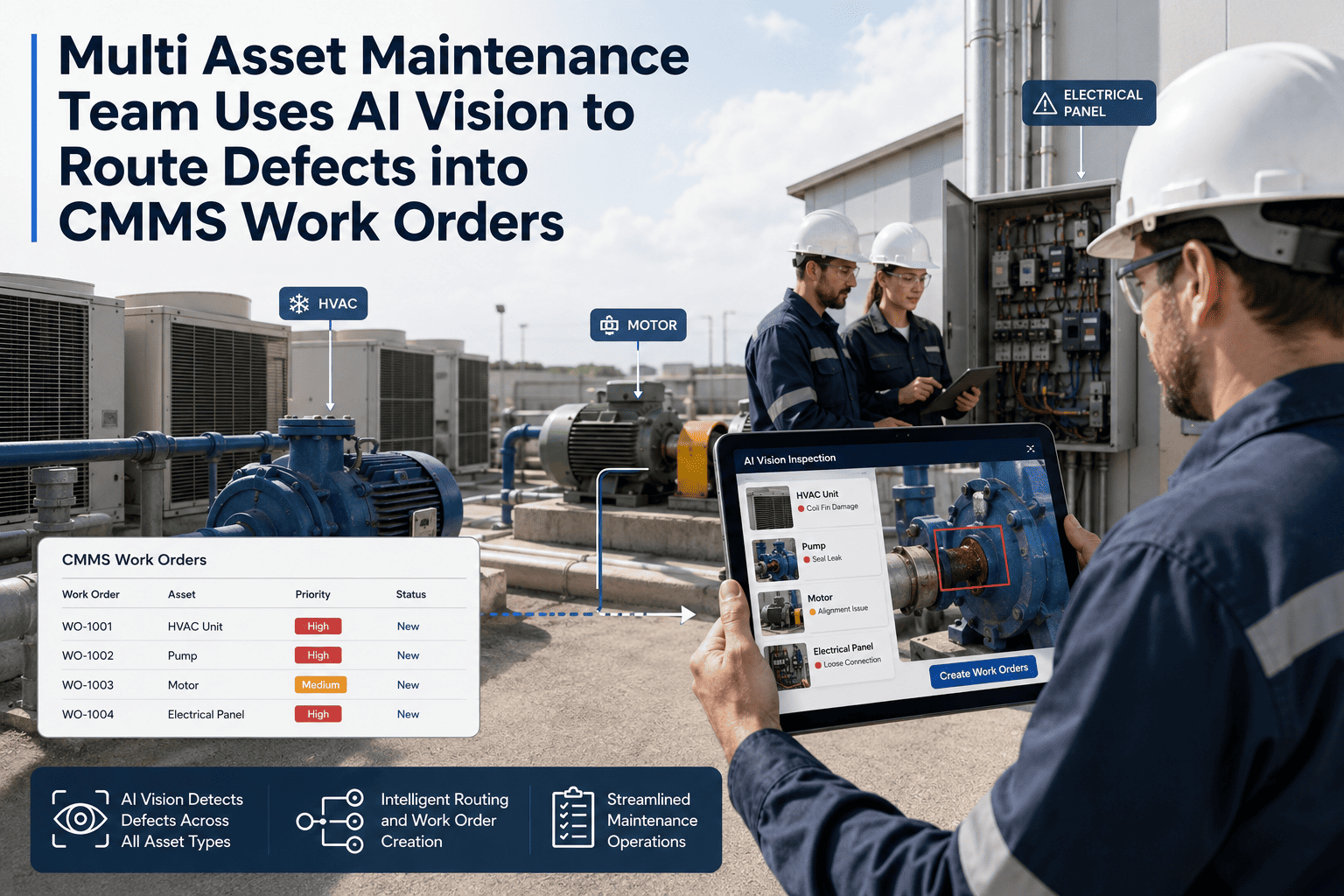
Most AI vision tools produce annotated images. OxMaint produces maintenance action. The difference is the integration between the vision AI output and the CMMS work order engine — eliminating the gap between detection and response that causes most inspection programs to underperform. Teams managing inspection quality across multiple sites can start a free trial or book a demo to see AI vision inspection integrated with work order generation.
Capture
Smartphone-Native Inspection
No dedicated camera hardware. Technicians use OxMaint's mobile app on any iOS or Android device. Photo capture is embedded in the inspection workflow — one tap to capture, AI processes instantly.
Zero additional hardware cost per inspection point
Detect
Multi-Defect Recognition Engine
Trained on industrial equipment images — corrosion, cracks, wear, leaks, missing parts, and thermal discoloration. Models improve continuously as your team captures more images of your specific equipment.
94% defect detection accuracy across six defect categories
Score
Severity-Based Prioritization
Every detected defect receives a 1–5 severity score. Score thresholds are configurable per asset criticality tier. Critical assets trigger immediate work orders — lower-priority assets queue for the next PM cycle.
Eliminates subjective severity assessment — data-driven triage
Act
Auto-Generated Work Orders
Defects above threshold severity auto-generate CMMS work orders with the annotated image, defect type, severity score, asset ID, recommended action, and assigned technician. Detection to dispatch in under 60 seconds.
80% reduction in time from defect detection to maintenance action
Track
Visual Degradation Timeline
OxMaint stores every inspection image chronologically per asset. AI compares current images against historical baselines to calculate degradation rate — enabling predictive replacement scheduling based on measured progression.
Enables condition-based replacement instead of calendar-based replacement
Comply
Audit-Ready Inspection Records
Every AI inspection produces a timestamped, geotagged, annotated record with digital signature. Meets OSHA, ISO 55000, and GMP inspection documentation requirements without additional paperwork or manual record-keeping.
100% inspection traceability for regulatory audits
ROI of AI Vision Inspection — The Numbers That Matter
73%
Fewer Missed Defects
Compared to manual-only inspection programs across 12-month deployments
$0
Hardware Investment
Runs on existing smartphones — no cameras, sensors, or edge devices to purchase
10x
Inspection Throughput
AI-assisted technicians inspect 150+ assets per shift vs. 15–25 manual
2.8x
12-Month ROI
Average return on AI vision inspection deployment across industrial facilities
Industry Applications — Where AI Vision Delivers the Highest Impact
Manufacturing
Conveyor belt wear, motor housing cracks, guard compliance, production line cleanliness verification
Reduces unplanned line stops from visual defects by 45%
Commercial Real Estate
HVAC unit corrosion, rooftop equipment degradation, parking structure concrete spalling, facade inspection
Cuts property inspection labor costs by 60% across portfolios
Oil and Gas
Pipeline corrosion, valve body erosion, flange leak detection, tank shell inspection
Extends inspection intervals by 3x with higher defect capture rates
Food and Beverage
Sanitation verification, gasket wear detection, stainless steel pitting, weld inspection for GMP compliance
Reduces GMP audit findings related to equipment condition by 55%
Implementation Timeline — Live in 30 Days
AI vision inspection deploys faster than any IoT sensor program because there is no hardware to install, no network to configure, and no baseline learning period. The phone your technicians already carry is the entire hardware platform.
Identify 20–50 highest-criticality assets for AI vision inspection
Capture baseline reference images of each asset in known-good condition
Configure defect detection thresholds per asset criticality tier in OxMaint
Train technicians on photo capture best practices — angle, distance, lighting
Run parallel inspections — manual and AI — to validate detection accuracy
Calibrate severity scoring thresholds based on pilot findings
Enable automated work order generation from AI defect detections
Embed AI photo capture in existing PM inspection checklists
Begin tracking defect-to-work-order conversion rate and first-pass resolution
Frequently Asked Questions
Does AI vision inspection require specialized cameras or hardware?+
No. OxMaint's AI vision inspection runs on standard iOS and Android smartphones manufactured after 2020. Any device with a 12MP+ camera provides sufficient resolution for industrial defect detection. No dedicated cameras, edge computing devices, or lighting equipment required. Your technicians already carry the hardware they need.
How accurate is AI vision compared to a trained human inspector?+
On trained defect types, AI vision models achieve 94% detection accuracy — matching top-quartile human inspectors. The critical difference is consistency: AI maintains that accuracy on every inspection, regardless of time of day, fatigue, or environmental conditions. Human inspectors average 70–80% accuracy across a full shift, with significant performance degradation after 4+ hours of continuous inspection work.
Can AI vision inspection work offline in areas without connectivity?+
Yes. OxMaint's AI vision models run on-device — processing happens locally on the smartphone without cloud connectivity. Images and AI analysis results are stored locally and synchronized to the CMMS when connectivity is restored. This makes AI vision inspection fully functional in basements, remote sites, and facilities with restricted network access.
How does AI vision inspection integrate with our existing PM program?+
AI photo capture is added as a step within your existing inspection checklists in OxMaint. It does not replace your PM program — it augments it. When a technician reaches an inspection point that benefits from visual analysis, they capture a photo. AI processes it and either confirms acceptable condition or flags a defect and auto-generates a work order. The entire process adds under 15 seconds per inspection point.
Book a demo to see how it maps to your existing inspection workflows.
AI Vision Inspection with OxMaint
Turn Every Smartphone Into an Expert Inspector.
OxMaint's AI vision inspection runs on any smartphone, detects six categories of equipment defects at 94% accuracy, and auto-generates prioritized CMMS work orders — with zero additional hardware cost. Deploy in 30 days. Measure results in 30 days.
94%
Defect detection accuracy
30 Days
From setup to live inspections
2.8x
Average 12-month ROI
$0
Hardware investment required