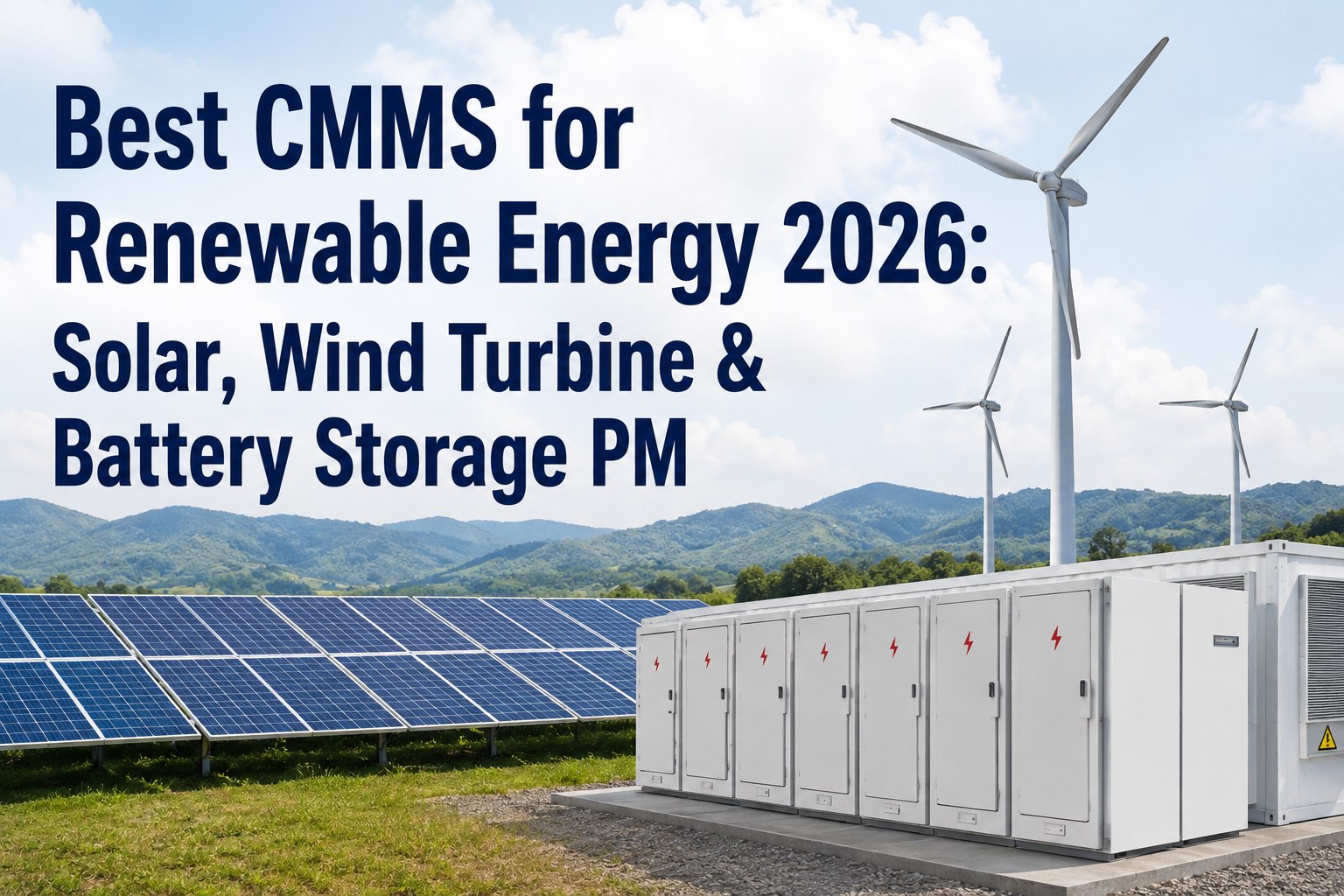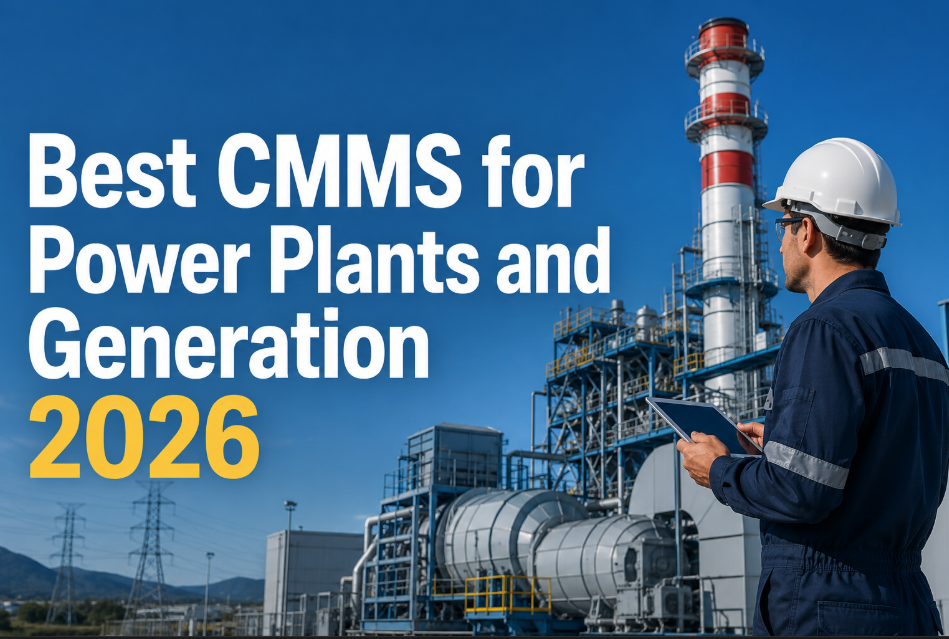
Power generation is the industry where maintenance decisions have the broadest consequences — a single turbine failure does not just cost the plant operator money, it removes megawatts from the grid that hospitals, data centers, water utilities, and entire communities depend on. The stakes are unlike any other manufacturing sector. A gas turbine forced outage costs $500,000-$2 million per event when you combine lost generation revenue, replacement power purchases on the spot market, and restart expenses. A coal plant boiler tube failure results in 3-7 day outages costing $1.5-$4 million. Nuclear plants operate under NRC regulations where maintenance documentation failures can result in plant shutdowns and regulatory penalties exceeding $100,000 per day. Wind farms spread across hundreds of square miles face the opposite challenge — maintaining thousands of identical assets across remote locations where technician travel time routinely exceeds repair time. Each generation technology has distinct maintenance requirements, failure modes, and regulatory frameworks, and the CMMS that works for a 500MW gas combined cycle plant does not work for a 200-turbine wind farm, a nuclear facility, or a hydroelectric station with 100-year-old civil infrastructure. The maintenance complexity is not just technical — it is regulatory, operational, and financial simultaneously. A missed NERC protection relay testing interval is not just a maintenance failure; it is a potential civil penalty and grid reliability concern. An overdue wind turbine gearbox oil change is not just a maintenance oversight; it is a $400,000 gearbox replacement waiting to happen. A deferred coal plant boiler inspection is not just schedule slippage; it is a forced outage with $2 million consequences accumulating with every day of continued operation. Oxmaint provides power generation asset libraries covering gas turbines, steam turbines, generators, boilers, transformers, wind turbines, and solar inverters — with NERC CIP compliance documentation, production-based maintenance triggers (equivalent operating hours, starts, MWh produced), and multi-site portfolio management that serves everything from single-plant utilities to distributed renewable portfolios spanning multiple states. The platform gives maintenance teams the industry-specific tools they need while maintaining the simplicity that keeps technicians actually using it in the field. See how it works for your generation assets — book a demo or start a free trial.
Best CMMS for Power Plants and Generation 2026: Gas, Coal, Nuclear, Wind, Solar, and Hydro
Power plant CMMS comparison covering gas turbine EOH tracking, boiler management, nuclear maintenance rule compliance, wind farm operations across distributed portfolios, solar asset management, and NERC CIP documentation. Every generation technology evaluated against its specific maintenance requirements.
Generation-Specific CMMS With Compliance Built In
Oxmaint includes power generation asset libraries, NERC CIP compliance documentation, equivalent-operating-hour-based PM triggers, multi-site portfolio management, and IoT integration for SCADA and condition monitoring data. From single gas turbines to 200-turbine wind farms to nuclear station balance-of-plant — the platform scales to your generation portfolio without requiring a different system for each technology.
Why Power Generation Maintenance Is Uniquely Demanding
Power generation maintenance operates under a combination of pressures that no other industry faces simultaneously — grid reliability obligations, safety-critical systems with regulatory oversight, extreme equipment operating conditions, and financial consequences that scale with every megawatt-hour lost. Generic CMMS platforms address none of these realities adequately.
Generation facilities committed to capacity markets or power purchase agreements have contractual availability obligations. Unplanned outages trigger capacity penalties, replacement power purchases at spot prices, and potential contract termination. A 500MW plant losing 100 hours of forced outage annually at $50/MWh spot differential pays $2.5 million in replacement power costs alone — separate from equipment repair costs.
Power plants contain layers of safety systems — protection relays, emergency diesel generators, safety instrumented systems, fire suppression, radiation monitoring (nuclear), and dam safety systems (hydro) — each with mandatory inspection and testing requirements enforced by NERC, NRC, FERC, and state regulators. Missing a single mandatory test interval creates regulatory exposure and potential civil penalties.
Gas turbines do not wear at a constant rate per clock hour. Start cycles age the hot section more than steady-state operation. Liquid fuel operation creates more deposits than gas operation. Trip events create thermal shock damage. The CMMS must calculate equivalent operating hours (EOH) — a composite metric that accounts for all these factors — to trigger maintenance at the right time, not the wrong time.
Renewable portfolios may span 50-500 turbines or panels across hundreds of square miles, with maintenance crews spending 30-60% of their time in travel rather than performing maintenance. The CMMS must optimize work order sequencing geographically, support mobile access in remote locations with limited connectivity, and integrate SCADA data that identifies which assets need attention before technicians leave the office.
Gas turbines operate for 30-40 years. Hydroelectric turbines operate for 50-100 years. Wind turbines are designed for 25-year lifecycles now routinely being extended to 30-35 years. The CMMS must support lifecycle management over these extended horizons — tracking cumulative wear, predicting component end-of-life, and supporting major overhaul planning decades into the future.
Gas turbine major overhauls are $5-15 million events involving OEM specialists, specialized tooling, and components with 24-52 week lead times. Nuclear refueling outages involve thousands of work orders executed in 25-45 days with zero tolerance for schedule overruns. Coal plant boiler tube replacements require coordinating refractory crews, welding teams, tube bending equipment, and NDT inspection firms simultaneously. The CMMS must manage this complexity without adding it.
CMMS Requirements by Generation Technology
Each power generation technology has distinct maintenance patterns, failure modes, and regulatory requirements. A CMMS selection must account for the specific generation technology — or portfolio of technologies — that the organization operates. Here is a detailed breakdown of what each technology requires and how Oxmaint addresses those requirements. Book a demo or start a free trial to see technology-specific configuration.
Gas turbine maintenance is defined by equivalent operating hour (EOH) intervals — combustion inspections every 8,000 EOH, hot gas path inspections every 24,000 EOH, and major overhauls every 48,000 EOH. Each start cycle adds 10-30 EOH depending on ramp rate, and each trip event adds 30-100 EOH from thermal shock. CMMS must calculate cumulative EOH from actual operating hours, start counts, trip events, and fuel type hours, and trigger PM at the correct EOH threshold — not the calendar date that corresponds to average utilization. Combined cycle plants add HRSG tube inspection scheduling (steam drum, high-pressure, intermediate-pressure, and low-pressure sections each with different inspection intervals), steam turbine valve testing (actuated quarterly), and cooling tower maintenance to the gas turbine scope.
Boiler tube leak prevention is the primary maintenance objective — boiler tube leaks cause 37% of all coal plant forced outages, making them the single highest-impact maintenance priority. CMMS must track tube wall thickness measurements by zone and circuit (from ultrasonic testing data), soot blower operation and wear (retractable versus long-retractable versus rotary), pulverizer classifier wear and bowl mill condition, air heater basket fouling and leakage trends, ESP and baghouse maintenance (critical for regulatory compliance), and FGD system chemical handling equipment. Coal plants also require comprehensive documentation of emissions control equipment maintenance for EPA MACT compliance, creating a dual maintenance tracking obligation — operational equipment for reliability and environmental control equipment for regulatory compliance.
Nuclear maintenance operates under NRC 10 CFR 50.65 (Maintenance Rule) requiring documented reliability monitoring for all safety-significant systems. CMMS must support NUCLEAR safety classification tagging on every asset and work order (safety-related, augmented quality, non-safety), mandatory hold-point documentation with QC sign-off before proceeding, post-maintenance testing requirements with results documentation, configuration management preventing unauthorized modifications, and refueling outage work order planning for 25-45 day outages involving 5,000-15,000 individual work orders. Every work order in a nuclear plant is audit-ready from creation — pre-job briefings, parts traceability, post-job documentation, and post-maintenance test results are all integral to the work order record, not optional additions.
Wind farm CMMS must manage fleets of 50-500 identical assets across geographic areas where technician travel time dominates the maintenance cost equation. Gearbox oil analysis tracking (particle counts, viscosity, water content — analyzed quarterly with trending that predicts remaining useful life), blade inspection scheduling (visual and thermal inspection by section — trailing edge, leading edge, tip, root — with defect documentation by severity), yaw bearing and yaw motor maintenance, pitch bearing wear tracking by blade, SCADA alarm management for condition-based maintenance triggering, and offshore-specific considerations for J-tube seal integrity and inter-array cable maintenance. Travel time optimization — sequencing maintenance tasks to minimize technician drive time within the wind farm — is as important as the maintenance content itself. A poorly sequenced maintenance day can mean 2 hours of maintenance and 6 hours of driving.
Solar maintenance is dominated by inverter reliability, tracker mechanism maintenance, panel cleaning scheduling, and substation transformer oil analysis. CMMS must manage thousands of string-level and inverter-level assets, track inverter replacement history and failure mode patterns (identifying systematic failure trends across an inverter fleet), schedule tracker linear actuator and slew drive maintenance, manage vegetation clearing programs, and document performance ratio trends by block — declining performance ratio identifies underperforming sections for targeted maintenance. String-level performance data integration identifies shading, soiling, connection degradation, and panel failures that are invisible from inverter-level monitoring but account for 15-25% of production loss at typical utility-scale plants.
Hydro assets have exceptionally long lifecycles requiring multi-decade maintenance planning and civil infrastructure inspection obligations alongside conventional electromechanical equipment maintenance. CMMS must track turbine runner cavitation wear (measured in mm of material loss from laser scanning data), wicket gate bushing condition and leakage, generator winding insulation resistance trending (Polarization Index trending over years identifies winding deterioration), governor hydraulic system condition, dam gate mechanical system maintenance, penstock inspection scheduling, and FERC Part 12 Independent Consultant inspection documentation. Civil structure inspection — dam face, spillway, foundation drainage, seepage monitoring, embankment condition — generates documentation that FERC requires for dam safety compliance. A hydro CMMS must handle both a turbine bearing replacement scheduled on operating hours and a dam face inspection scheduled on a five-year regulatory calendar within the same system.
PM Triggering: Calendar vs. EOH vs. Condition — The Power Plant Decision
The choice of maintenance triggering method in power generation is not a platform configuration preference — it is a decision with multi-million dollar financial consequences. Here is how each approach performs across generation technologies and why hybrid triggering delivers the best outcomes across the portfolio.
| Trigger Type | Best Suited For | Power Generation Limitation | Financial Impact of Wrong Trigger |
|---|---|---|---|
| Calendar-Based | Regulatory inspections with fixed intervals (NERC PRC-005, NRC surveillance tests) | Ignores actual utilization — a peaker turbine at 10% CF ages slower than a baseload unit | Premature overhaul costs $5-15M on a peaker turbine that has 30% of EOH life remaining |
| Operating Hours | Balance-of-plant equipment with constant-rate wear | Misses start-cycle and trip-event aging that calendar hours underestimate | Hot section failure between intervals costs $8-25M in forced outage and emergency repair |
| Equivalent Operating Hours | Gas turbines, steam turbines, any equipment with cycling damage mechanisms | Requires accurate data on starts, trips, and fuel type — manual entry error is significant risk | EOH calculation error of 15% = PM timing error of 1,200 EOH = premature or overdue overhaul |
| Condition-Based | Rotating equipment with vibration/temperature monitoring, oil-filled equipment | Requires sensor investment and integration — cannot substitute for interval-based regulatory requirements | Undetected degradation between sensor readings can still cause failures — sensors must be integrated, not checked manually |
| Hybrid (Oxmaint) | All generation types — EOH or production baseline with condition override alerts | None — requires accurate data inputs which Oxmaint facilitates through SCADA integration | Highest accuracy = lowest risk of both premature and overdue maintenance across portfolio |
NERC CIP and Regulatory Compliance Documentation
Power generation facilities connected to the bulk electric system must comply with NERC Critical Infrastructure Protection (CIP) standards and NERC Reliability Standards that impose specific maintenance testing and documentation obligations. The CMMS must not just schedule this maintenance — it must produce the audit-ready evidence that NERC compliance auditors evaluate. Facilities that cannot produce this documentation during an audit face civil penalties up to $1 million per violation per day. Here is how Oxmaint structures regulatory compliance documentation for power generation. Ready to see compliance automation? Book a demo or start a free trial.
Mandatory testing intervals for protection relays, circuit breakers, batteries, and communication systems that protect the transmission system. Maximum intervals are 6 years for most protective relays, 6 years for trip coils, and 4 years for batteries. CMMS schedules each component to its maximum interval, documents test results with pass/fail and quantitative measurements, and generates compliance reports showing 100% of components tested within their required intervals. Missing intervals generate automatic escalation notifications to compliance personnel.
Transmission facilities must maintain vegetation clearances and conduct periodic facility ratings verification. CMMS manages vegetation management work orders with GPS-located work documentation, tracks right-of-way inspection schedules, and documents facility ratings verification activities that demonstrate compliance with FAC-002 and FAC-003 requirements during NERC audits.
Maintenance of cyber assets — SCADA systems, energy management systems, protection relay firmware, and communication networks — including patch management, port and service review, and security event monitoring. CMMS tracks cyber asset maintenance schedules and documents compliance activities with responsible personnel identification and completion timestamps that satisfy CIP-007 evidence requirements.
Continuous emissions monitoring system (CEMS) maintenance, SCR catalyst management and replacement scheduling, activated carbon injection system maintenance, particulate control equipment (baghouses, ESP) PM, and FGD system maintenance. Each maintenance activity generates compliance documentation tied to the specific EPA permit condition it satisfies — creating an evidence package that environmental compliance auditors can access directly from the CMMS.
Mechanical integrity programs for pressure vessels, piping, relief devices, and safety instrumented systems at plants with covered chemicals or processes. CMMS documents inspection intervals, inspection findings, corrective actions, and equipment test results for PSM compliance. The mechanical integrity element of PSM has been cited in 34% of all EPA Risk Management Program enforcement actions — comprehensive CMMS documentation is the primary defense.
Hydroelectric facilities under FERC jurisdiction must conduct periodic safety inspections by independent consultants (typically every 5 years) and maintain ongoing monitoring programs for dam safety indicators. CMMS tracks the ongoing monitoring — seepage measurement, settlement surveys, piezometer readings, crackmeters — as scheduled inspection work orders and documents findings that feed into the FERC-required Annual Dam Safety Report.
NERC audits, NRC inspections, EPA reviews, and OSHA PSM evaluations all require documented evidence that maintenance was performed on schedule by qualified personnel using approved procedures. Oxmaint generates this evidence automatically from daily maintenance operations — no special compliance reports, no end-of-year documentation sprints, no audit preparation panic. Compliance tags on assets and work orders link every maintenance activity to the regulatory requirement it satisfies. When an auditor asks for evidence of protection relay testing compliance, the answer is available in seconds — not days of record-searching through filing cabinets.
Major Outage and Overhaul Management for Power Plants
Planned outages and major overhauls in power generation are among the most complex and highest-stakes maintenance events in any industry. A gas turbine major overhaul is a $5-15 million event. A nuclear refueling outage involves 5,000-15,000 work orders in 25-45 days. A coal plant boiler tube replacement coordinates dozens of specialized contractors simultaneously. Here is how Oxmaint supports power plant outage management across all generation technologies.
Throughout the operating period, all maintenance items requiring an outage are flagged in the CMMS with consequence-of-deferral ratings, estimated duration, and resource requirements. At outage planning time, the complete scope is ranked and filtered by available outage window duration — a 10-day maintenance window handles different scope than a 30-day planned outage. The CMMS eliminates the scramble to identify what needs to be done by maintaining the growing scope list in real time.
Gas turbine overhauls involve OEM field service engineers with specialized tooling and proprietary procedures. Nuclear outages involve hundreds of specialized contractors each with specific qualification requirements. The CMMS manages contractor qualification tracking, work assignment, safety documentation, and completion verification alongside internal work orders — maintaining a unified view of all outage work regardless of who performs it.
Gas turbine combustion liners: 16-24 weeks. Nuclear reactor coolant pump seals: 26-52 weeks. Hydro turbine runner runners: 18-36 months. The CMMS connects outage scope to procurement lead times, identifying items that must be ordered 12-24 months before the outage to avoid being on the outage critical path waiting for parts. This single function prevents 60-70% of outage schedule overruns.
Every completed outage is a learning database — actual duration vs. planned, scope additions discovered during execution, technical findings that change future maintenance intervals, and contractor performance assessments. Oxmaint captures this data in the outage record and makes it available for future outage planning. Plants that systematically apply post-outage learning reduce subsequent outage duration by 12-18% per cycle.
Multi-Site Portfolio Management for Generation Companies
Independent power producers and utilities operate diverse portfolios — multiple gas turbines across different markets, wind farms in several states, solar plants under various PPAs, and legacy coal or hydro assets in various stages of lifecycle. Each asset has different maintenance programs, different compliance requirements, and different financial profiles. A CMMS that requires separate instances for each technology or each site fails this portfolio reality. Oxmaint manages the entire generation portfolio in a single platform while maintaining technology-specific and site-specific maintenance programs. Book a demo or start a free trial to see portfolio-level management.
Different CMMS for gas plants, wind farms, and solar creates data silos that prevent portfolio-level visibility, duplicate maintenance cost tracking across systems, require separate training for each platform, and make portfolio-level reporting impossible without manual data consolidation. Corporate leadership cannot see true total maintenance cost across the portfolio.
One CMMS manages gas turbines, wind turbines, solar inverters, and hydro turbines simultaneously with technology-specific asset templates for each. Portfolio dashboard shows fleet-wide availability, maintenance backlog, and cost metrics across all generation types. Maintenance cost per MWh is comparable across technologies on a consistent basis. Corporate leadership has the unified view that drives capital allocation decisions.
NERC compliance tracked in spreadsheets, EPA documentation in filing cabinets, NRC records in plant-specific systems. Compliance status is only known after manual compilation — typically discovered to be incomplete during audit preparation rather than ongoing monitoring. Regulatory violations are found by auditors rather than prevented by internal systems.
Every compliance-tagged PM across all sites is tracked in real time. Portfolio compliance dashboard shows which sites have upcoming NERC deadlines, which assets have overdue regulatory inspections, and which compliance programs are falling below required completion rates. Violations are prevented by early warning rather than discovered during audits.
Power Plant CMMS Implementation: From Decision to Operational
Power plant CMMS implementations succeed when they focus on high-impact, high-visibility assets first and build outward — not when they try to document every valve and instrument simultaneously. Here is the implementation timeline that delivers operational value within 30 days while building toward full compliance and condition-monitoring integration over 3-6 months.
Configure the 15-25 most critical assets — gas turbines, major transformers, protection relay systems, cooling water pumps, and auxiliary boilers. Begin routing all maintenance requests for these assets through the CMMS with work order number tracking, technician assignment, and completion documentation. First work orders in the system within 3 days of deployment start.
Build PM schedules for all NERC PRC-005, NRC surveillance, and EPA-required maintenance activities with appropriate intervals and compliance tags. Import current compliance status — when was each relay last tested, what is the current battery voltage trend, when was the last EPA stack test — to initialize the system at the correct point in each compliance cycle. The compliance dashboard begins showing upcoming deadlines within the first week.
Configure EOH calculation for gas turbines using OEM maintenance manual multipliers. Import historical start, trip, and fuel-hour data from operating logs to initialize cumulative EOH at the correct value. Begin SCADA and condition monitoring system integration — connecting vibration, temperature, and process data to the CMMS for condition-triggered work order generation. First automated work orders generated from sensor data within 60 days.
With critical assets and compliance programs active, complete the balance-of-plant asset registry and transition the next planned outage to CMMS-managed execution. Configure outage scope management, critical path tracking, contractor assignment, and parts pre-staging workflows. The first CMMS-managed outage typically executes 1-2 days shorter than the previous manually-managed outage — a $1-4 million production value recovery on the first event.
Power Plant CMMS ROI: The Financial Case
The financial justification for power generation CMMS investment is among the strongest of any industry because the consequence of maintenance failures is so large and so immediate. Here are the documented performance improvements that power plants consistently achieve after deploying structured, generation-specific CMMS platforms.
Frequently Asked Questions
Can Oxmaint manage both thermal and renewable generation assets in one platform?
How does the platform calculate equivalent operating hours for gas turbines?
Does the platform support nuclear plant maintenance rule (10 CFR 50.65) compliance?
How does Oxmaint handle wind farm maintenance across remote locations?
Keep Your Generation Portfolio Running at Maximum Availability
Every megawatt-hour lost to unplanned downtime is revenue gone, grid reliability compromised, and capacity market obligations exposed. Every missed regulatory maintenance interval is a civil penalty waiting to be assessed. Every poorly managed outage is 1-2 days of production lost unnecessarily. Power plant CMMS with generation-specific asset libraries, EOH-based PM triggers, NERC CIP compliance documentation, outage management tools, and multi-site portfolio visibility gives your maintenance team the platform to deliver 92-96% fleet availability consistently — across every technology in your portfolio. Try Oxmaint free and see how it works for your specific generation mix.