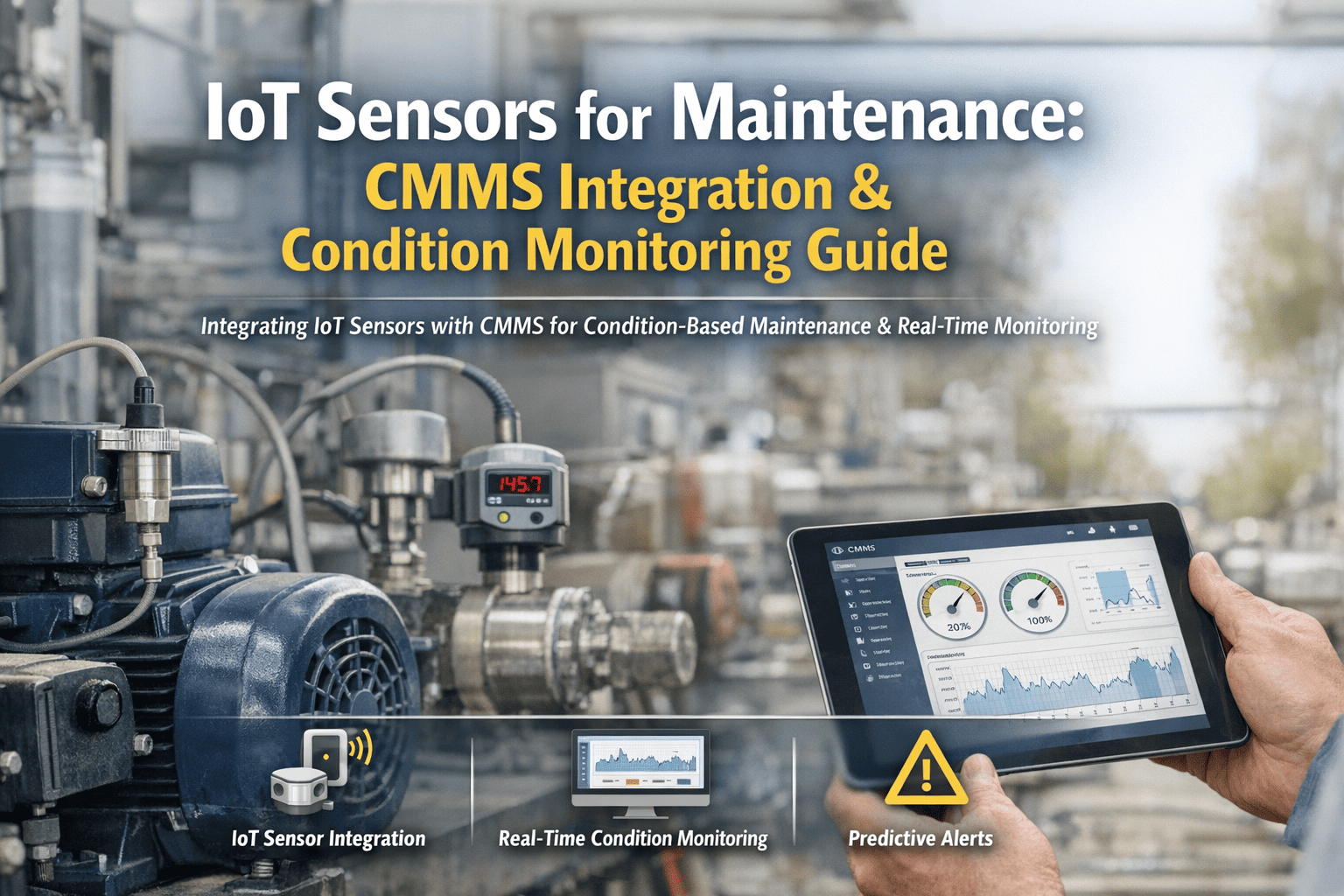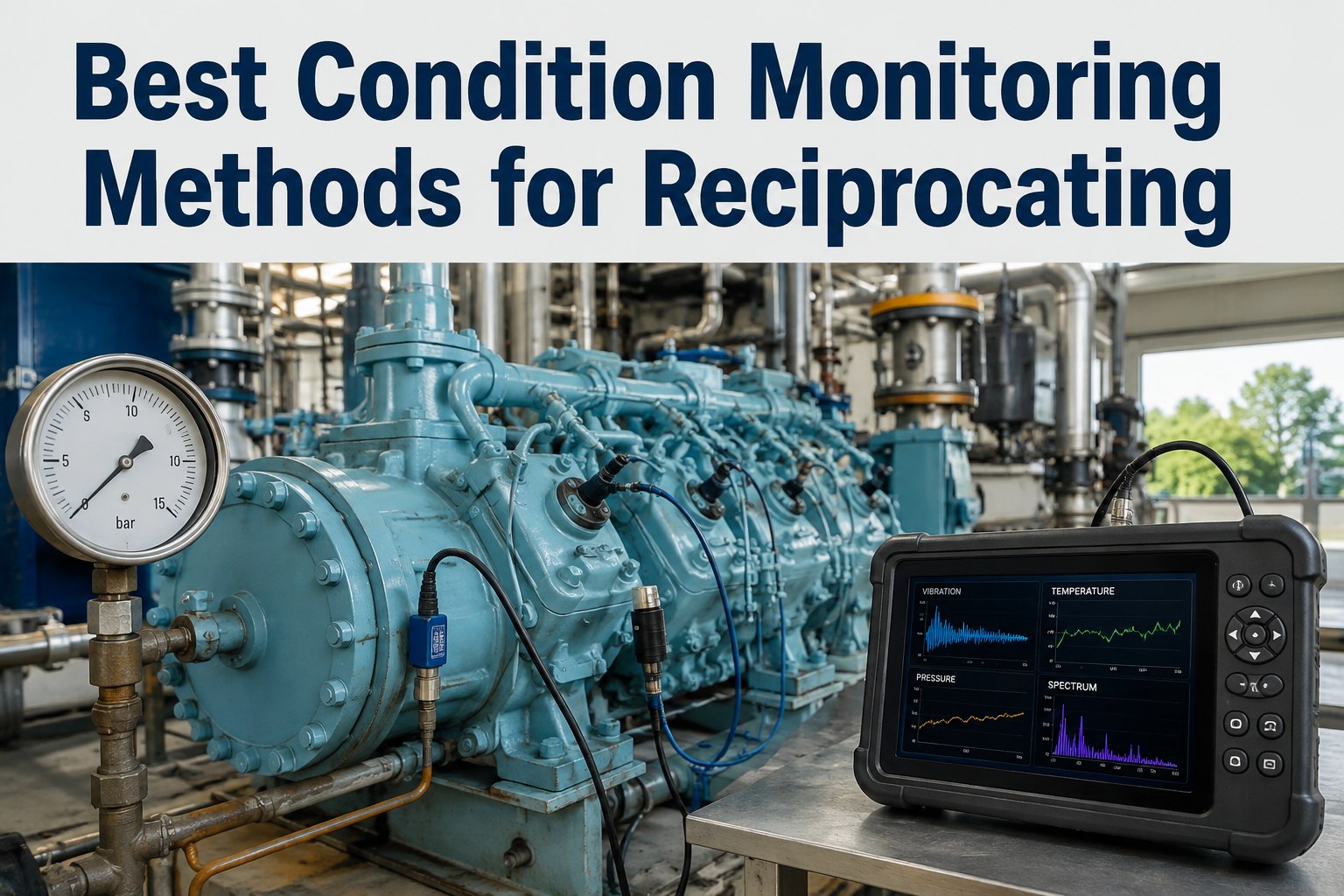
Condition monitoring for reciprocating compressors is the practice of tracking vibration, temperature, and oil degradation to detect mechanical faults weeks before they cause catastrophic failures. Because reciprocating compressors operate under extreme cyclic loads, even minor valve leaks or piston ring wear can escalate into major breakdowns, causing unplanned downtime that costs industrial facilities tens of thousands of dollars per day. By implementing the right monitoring sensors and trending data effectively, maintenance and reliability teams can shift from reactive firefighting to true predictive maintenance. OxMaint's AI-powered CMMS closes the loop by automatically converting abnormal sensor readings into prioritized work orders—schedule a demo to see how it works, or Start Free Trial to test it on your assets today.
RECIPROCATING COMPRESSOR RELIABILITY
Are you catching compressor faults weeks before they shut down your plant?
Reciprocating compressors fail through valve wear, ring degradation, and crosshead friction. Without continuous condition monitoring, these hidden faults become unplanned outages. Build a defensible, data-driven monitoring program that turns sensor data into scheduled repairs.
70%
of unplanned reciprocating compressor failures can be prevented with early fault detection and trending data
CORE MONITORING TECHNIQUES
Top condition monitoring techniques for reciprocating compressors
A robust reciprocating compressors health monitoring strategy relies on four primary data streams. Each technique targets specific failure modes, from impact friction to fluid degradation.
1. Vibration & Dynamic Pressure Monitoring
Reciprocating compressors vibration monitoring captures high-frequency impacts from crossheads, piston rods, and cylinder valves. Dynamic pressure sensors plot P-V diagrams to detect cylinder leaks and valve flutter. Accelerometers must be mounted firmly on the crosshead and cylinder frame to capture mechanical looseness and wear before it damages the crankshaft.
2. Temperature Monitoring
Reciprocating compressors temperature monitoring is the first line of defense against valve and ring failure. A 10–15°C rise in discharge temperature over baseline indicates a leaking discharge valve or worn piston ring. RTDs and thermocouples should be placed on discharge nozzles, cooling water inlets, and bearing housings to track heat generation trends.
3. Oil & Lubricant Analysis
Spectrometric oil analysis detects trace metals (iron, copper, lead) stripped from cylinder liners, bearings, and piston rings. Particle counting identifies abrasive wear. Sampling every 500–1,000 operating hours and trending ferrography data provides early warning signals for reciprocating compressors before vibration amplitudes even shift.
4. Rod Drop & Packing Monitoring
Rod drop sensors measure piston rod position relative to the cylinder bore, detecting rider-band wear continuously. As the rod drops beyond preset thresholds, maintenance teams can schedule ring replacements during planned turnarounds. Packing leak detection also monitors vent flow rates to identify escalating fugitive emissions.
SENSOR PLACEMENT & THRESHOLDS
Optimal reciprocating compressors sensor placement and alarm thresholds
Sensor placement dictates data quality. Mounting an accelerometer on a thin-walled flange will yield noise, not signal. Use ISO 10816 standards as a baseline, but tailor thresholds to your specific machine baseline and historical failure data.
| Monitoring Point | Sensor Type | Warning Threshold | Alarm Threshold | Target Failure Mode |
|---|---|---|---|---|
| Crosshead & Frame | Accelerometer (Velocity / Acceleration) | 4.5 mm/s RMS | 7.1 mm/s RMS | Mechanical looseness, bearing wear |
| Cylinder Discharge | RTD / Thermocouple | +10°C above baseline | +15°C above baseline | Valve leak, broken piston ring |
| Piston Rod | Proximity Probe (Rod Drop) | 0.2 mm drop | 0.4 mm drop | Rider-band / wear ring degradation |
| Main Bearing | RTD / Vibration Velocity | 85°C / 3.5 mm/s | 95°C / 5.5 mm/s | Journal bearing friction, lubrication loss |
| Lubricating Oil | Spectrometric Analysis (Lab) | Fe > 50 ppm | Fe > 100 ppm | Liner scuffing, crosshead pin wear |
FAULT DETECTION WORKFLOW
From abnormal reading to scheduled repair: The monitoring workflow
Reciprocating compressors fault detection only delivers ROI when abnormal readings trigger immediate action. Manual logbooks and spreadsheet tracking fail because they rely on humans to notice a trend. Here is the 5-step closed-loop workflow that modern reliability teams use to prevent failures.
Continuous Data Acquisition
Reciprocating compressors online monitoring sensors stream vibration, temperature, and pressure data to a central gateway at 1–5 minute intervals, establishing a dynamic baseline for healthy operation.
Automated Threshold Screening
Trending data is screened against ISO 10816 limits and asset-specific historical baselines. If a valve temperature drifts 10°C above its 30-day rolling average, the system flags an early warning signal.
Automated Work Order Generation
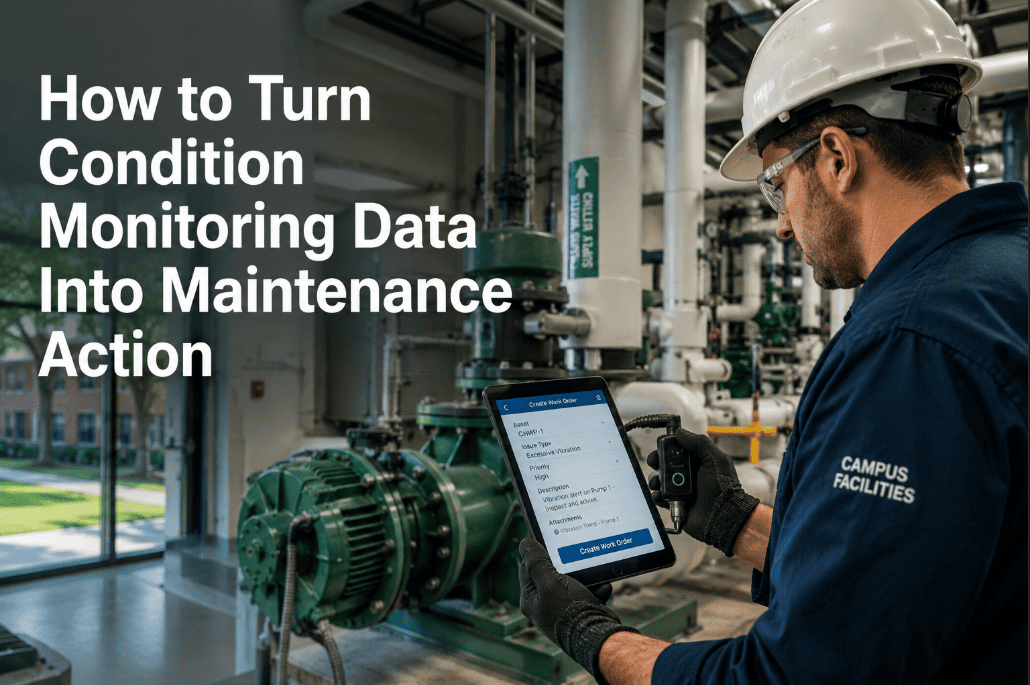
OxMaint intercepts the alarm and automatically generates a conditional work order, attaching the trend chart, sensor ID, and recommended diagnostic task—no manual data entry required.
Root Cause Diagnosis & Repair
Technicians arrive with context. Instead of investigating blind, they verify the flagged valve, inspect the crosshead, and replace the worn component before secondary damage occurs.
Reliability History Logging
Every intervention is logged against the asset's history. This closes the loop, refining future alarm thresholds and providing defensible compliance data for ISO 55000 audits.
Stop reacting to compressor failures. Start predicting them.
See how OxMaint turns raw sensor data into automated, preventive work orders. Book a 30-minute demo with our reliability engineering team today.
HOW OXMAINT HELPS
How OxMaint powers your condition-based maintenance program
A real-world example: A midstream gas plant operating 12 reciprocating compressors was losing $48,000 per unplanned outage and averaging 14 failures annually. By integrating their sensors with OxMaint, they automated their condition-based maintenance workflow and cut unplanned downtime by 38% in the first year. Here is how OxMaint makes that happen.
Automated Trend-to-Work-Order
OxMaint integrates with your existing sensors and SCADA systems. When temperature or vibration thresholds are breached, a work order is generated automatically with attached trend graphs and recommended actions, cutting admin time by 90%.
Complete Asset Reliability History
Every alarm, diagnosis, and repair is permanently linked to the specific compressor's asset profile. Identify recurring valve wear or ring degradation patterns to optimize PM frequencies and extend mean time between failures.
Predictive Parts & Inventory
When the system flags a developing fault, OxMaint checks spare parts inventory for the required valves or rings. If stock is low, a purchase request is triggered automatically—ensuring parts are ready before the machine fails.
ROI & PAYBACK
What is the ROI of reciprocating compressors condition monitoring?
Condition monitoring shifts maintenance from reactive to predictive, yielding measurable financial returns. Use this standard reliability formula to estimate your annual savings from preventing catastrophic compressor failures.
ANNUAL MONITORING ROI
ROI = (Prevented Downtime Cost + Reduced Repair Costs) / (Monitoring System Cost + Software & Labor Cost)
38%
Reduction in unplanned downtime
$50K+
Average cost saved per prevented major failure
8mo
Typical payback period for monitoring + CMMS integration
"A 180-asset petrochemical plant spending $42K annually on reactive reciprocating compressor repairs implemented OxMaint's condition-based maintenance module. Within 12 months, they reduced catastrophic valve failures by 45% and recovered $210,000 in avoided production losses."
— OxMaint Reliability Engineering Case Study
FREQUENTLY ASKED QUESTIONS
Common questions about reciprocating compressors monitoring
What is the best condition monitoring method for reciprocating compressors?
The most effective method is a hybrid approach combining vibration monitoring for mechanical impacts, temperature monitoring for valve and ring leaks, and oil analysis for trace metal wear. Because reciprocating compressors have complex kinematics, no single sensor catches every fault—crosshead looseness shows up in vibration, while ring wear often appears in rod drop and oil analysis first. Integrating these data streams into a CMMS like OxMaint ensures every anomaly is tracked and acted upon.
How does vibration monitoring differ for reciprocating vs. centrifugal compressors?
Reciprocating compressors generate high-frequency impact forces from piston strokes and valve closures, requiring accelerometers that measure both velocity and high-frequency acceleration (up to 10 kHz). Centrifugal compressors typically use proximity probes to measure shaft vibration and phase. Sensor placement on reciprocating machines focuses on the crosshead and cylinder, whereas centrifugal monitoring targets journal bearings. To see how OxMaint configures these different sensor profiles, Book a Demo with our team.
What are the early warning signals of valve and ring wear in a reciprocating compressor?
Early warning signals include a gradual 10–15°C increase in discharge temperature, shifting P-V diagram area, dropping rod drop measurements, and increasing iron particles in oil analysis. Vibration trending data may also show increased high-frequency energy in the cylinder region. Catching these early warning signals allows teams to schedule valve or ring replacements during planned downtime rather than emergency outages.
Can OxMaint integrate with our existing condition monitoring sensors?
Yes, OxMaint integrates with industry-standard sensors, PLCs, and SCADA gateways via OPC-UA, MQTT, and REST APIs. The platform ingests vibration, temperature, pressure, and oil analysis data, automatically trending it against configurable warning and alarm thresholds to generate conditional work orders without manual data entry. You can start connecting your assets when you Start Free Trial.
How often should oil analysis be performed for reciprocating compressors?
For continuous-duty reciprocating compressors, oil sampling should occur every 500 to 1,000 operating hours, or at minimum quarterly. High-criticality machines in severe duty environments may require monthly sampling. The key is consistency—trending oil analysis data over time is far more valuable than a single snapshot, as it establishes the baseline needed to detect abnormal wear rates before they become functional failures.
Ready to modernize your reciprocating compressor maintenance?
Join the reliability teams using OxMaint to predict failures, automate work orders, and extend asset life. Start your free trial today or book a personalized demo to see the platform on your equipment.
Free 14-day trial · No credit card required