Condition monitoring for power transformers is the practice of continuously tracking mechanical, thermal, and chemical indicators — vibration, temperature, dissolved gases, and partial discharge — to detect internal faults weeks before they escalate into catastrophic failures. Power transformers health monitoring shifts maintenance teams from reactive firefighting to controlled reliability by catching insulation and winding degradation in its earliest stages, when a targeted intervention costs a fraction of an emergency rewind. A single forced outage on a large generator-step-up transformer can exceed $2M in lost revenue and replacement power, yet studies show that over 60% of these failures are preventable with the right early warning signals and trending data. By combining the right monitoring sensors with a CMMS platform that automates work orders and predictive analytics, reliability teams can extend asset life by 10–15 years and drastically cut unplanned downtime. Ready to modernize your transformer reliability program? Start Free Trial with OxMaint and turn sensor data into automated maintenance decisions.
Is your most critical transformer one fault away from a $2M outage?
Power transformers operate at the intersection of production pressure and asset complexity. A systematic condition monitoring approach — vibration, temperature, oil quality, and trending data — catches winding degradation and insulation failure before they cascade. OxMaint turns that sensor data into automated work orders and predictive alerts.
Power transformers condition monitoring techniques that catch faults early
No single sensor tells the full story. The most reliable programs layer four complementary monitoring techniques — each catching a different failure mode at a different stage of degradation. Here is how they work together.
Vibration Monitoring
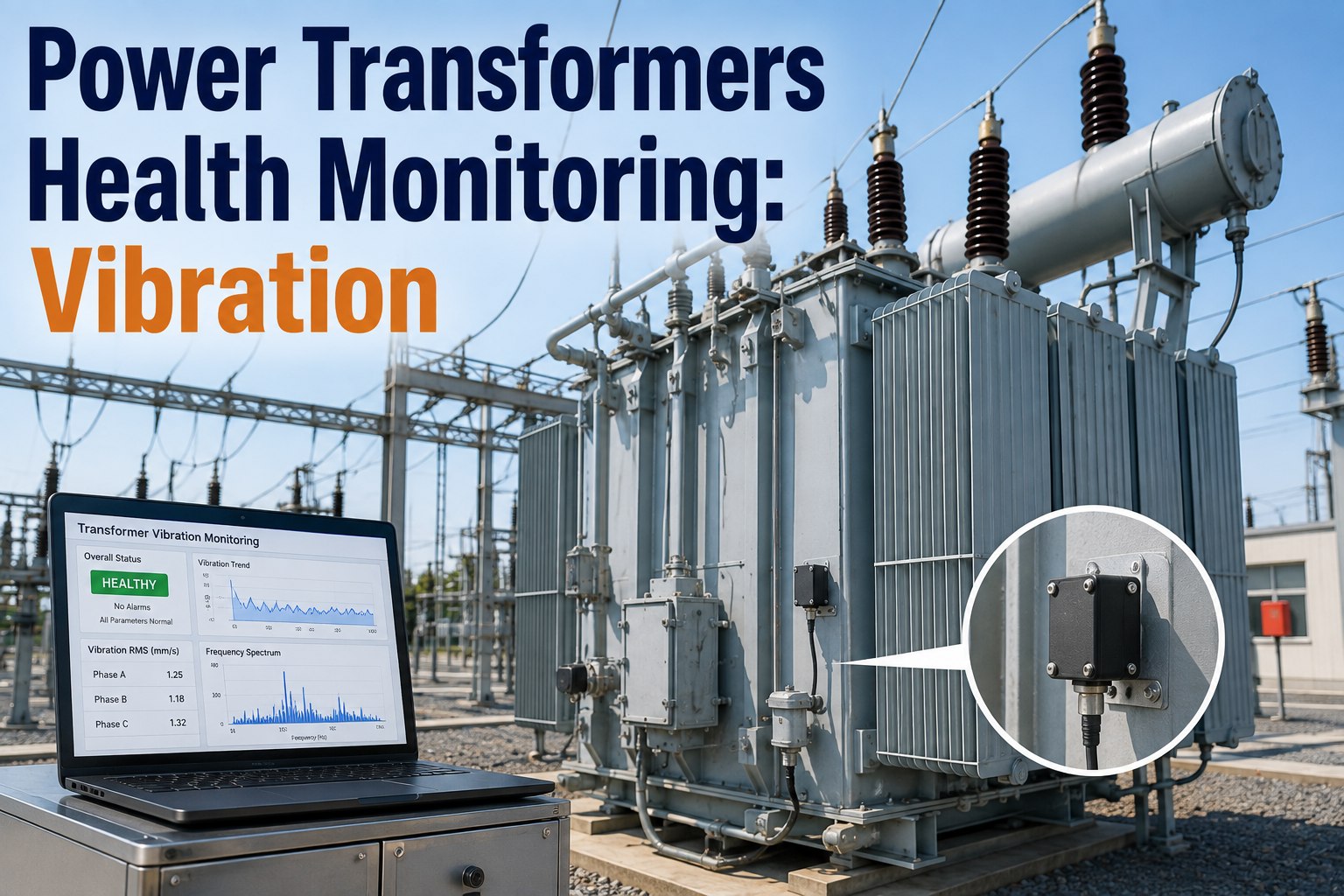
Accelerometers on the tank wall detect mechanical looseness, core clamping failure, and winding deformation. Baseline FFT signatures are trended over time; a shift in dominant frequency peaks signals internal mechanical change long before electrical parameters drift. Recommended sampling: continuous online or monthly walk-around.
Temperature Monitoring
Fiber-optic or RTD sensors track top-oil and hot-spot temperature against IEC 60076-7 load models. Sustained over-temperature accelerates insulation aging — every 6°C above rated hot-spot halves remaining life. Real-time trending enables dynamic load management without sacrificing transformer longevity.
Dissolved Gas Analysis (DGA)
Oil sampling detects key gases — acetylene, ethylene, hydrogen, methane — generated by thermal and electrical faults inside the tank. Roger's and Duval's triangle methods correlate gas ratios to fault type: arcing, corona, or overheated cellulose. Online DGA monitors provide 24/7 trending vs. monthly lab draws.
Partial Discharge (PD)
UHF and acoustic PD sensors locate insulation voids and delamination within bushings and windings. PD activity under rated voltage is the earliest indicator of insulation and winding degradation, often detectable 12–18 months before dielectric failure. Permanent online PD is now standard for GSU transformers above 100 MVA.
Power transformers sensor placement: where to mount for maximum fault coverage
Even the best monitoring sensors underperform if poorly placed. Optimal coverage requires a mapped sensor topology aligned to the transformer's internal geometry and failure modes. Below is a reference placement matrix used by reliability teams managing fleets of 50+ large power transformers.
| Sensor Type | Optimal Placement Location | Fault Mode Detected | Recommended Sampling Rate |
|---|---|---|---|
| Accelerometer (vibration) | Tank wall — 3 axes at top, mid, bottom near core/winding clamps | Winding looseness, core clamping failure, transport damage | Continuous online; 25 kHz sampling |
| Top-oil RTD | Top of tank near oil duct outlet | Overloading, cooling system failure, insulation aging | Continuous; 1-second logging |
| Fiber-optic hot-spot | Directly on HV winding — embedded during manufacture or retrofit | Hot-spot deviation, dynamic loading limits | Continuous; per IEC 60076-7 |
| Online DGA monitor | Oil loop — between radiator and main tank, upstream of filter | Internal arcing, partial discharge, thermal decomposition | Hourly multi-gaseous trend |
| UHF PD sensor | Dielectric windows on tank wall or oil-valve sensor probe | Insulation voids, bushing delamination, winding degradation | Continuous; event-triggered capture |
| Acoustic emission | 4+ sensors arrayed around tank perimeter for triangulation | PD source localization, mechanical impact, tap-changer faults | Continuous or monthly walk-around |
Power transformers early warning signals your team must trend
Faults do not appear overnight — they develop over weeks and months, leaving a trail of deviation in the trending data. The challenge is distinguishing a genuine degradation trend from normal load-cycle variation. These are the five highest-priority signals reliability teams must flag and auto-route to a work order.
Rising top-oil temperature at constant load
If top-oil temperature trends upward by more than 5°C over 30 days while MVA loading stays flat, the cooling system is degrading — blocked radiators, failed pumps, or fouled heat exchangers. Left unchecked, insulation aging accelerates exponentially. Auto-trigger a cooling-system inspection work order.
Acetylene appearing in DGA results
Acetylene (C2H2) is produced only by high-energy arcing above 700°C. Even trace amounts (> 5 ppm) indicate an active internal arc. This is a red-alert condition — the transformer should be removed from service for internal inspection. Any detection must immediately trigger an emergency work order and notification chain.
Vibration frequency shift at 100 Hz / 120 Hz
A new peak or amplitude increase at the core vibration frequency (100 Hz for 50 Hz systems) signals loosening of core clamping plates or winding compression. Trend the FFT baseline monthly; a 20% amplitude rise over three consecutive readings warrants an internal inspection scheduling.
Increasing partial discharge pulse count
A 50% or greater rise in PD pulse count over a 60-day window indicates progressive insulation degradation. Cross-reference with acoustic triangulation to localize the source. Plan a planned outage for bushing replacement or winding repair within 90 days to avoid dielectric failure.
Moisture ingress in oil (ppm rising)
Moisture content above 20 ppm in free-breathing transformers (or 10 ppm in sealed units) reduces dielectric strength and accelerates cellulose aging. If moisture trends upward, inspect gaskets, silica gel breather, and conservator seals. Auto-schedule a desiccant replacement and oil reclamation job.
The cost of reactive vs. predictive transformer maintenance
Consider a 150-MVA generator-step-up transformer at a mid-sized industrial plant. Under a reactive maintenance regime, a winding fault goes undetected until dielectric failure. Under a predictive regime with OxMaint, the same fault is caught 90 days early by vibration and DGA trending. Here is the side-by-side cost reality.
Undetected winding fault → dielectric failure
Early DGA + vibration alert → planned rewind
Book a 30-minute demo and see OxMaint on your transformer fleet
See how vibration, DGA, and temperature data flows into automated work orders, predictive alerts, and audit-ready compliance reports — all in one platform. Walk away with a custom monitoring-to-maintenance workflow for your transformers.
How OxMaint turns transformer monitoring data into maintenance decisions
Sensors generate data — but data alone does not prevent failures. OxMaint bridges the gap between condition monitoring and maintenance execution, automatically converting threshold breaches and trend anomalies into prioritized work orders, spare-parts reservations, and compliance records.
Automated predictive alerts
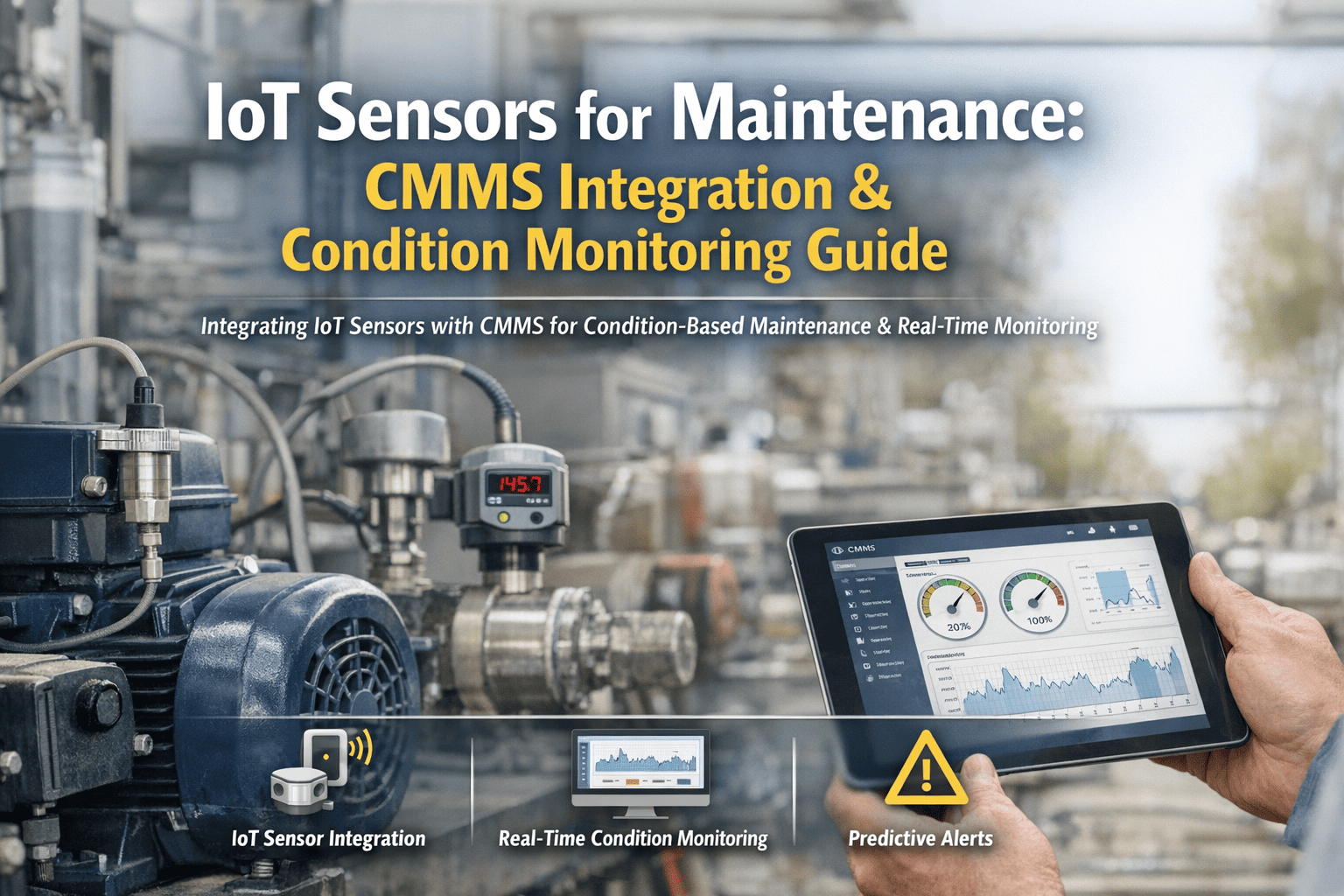
OxMaint ingests vibration, DGA, and temperature thresholds via API or manual entry. When a trend crosses a rule-based limit, the platform auto-generates a priority work order with the affected asset, fault type, and recommended action — no manual triage required.
Asset hierarchy and history
Model every transformer down to the bushing, tap-changer, and cooling pump. OxMaint maintains a full maintenance history per component — every DGA result, vibration reading, and work order is traceable and audit-ready for ISO 55000 and regulatory reviews.
Mobile work order execution
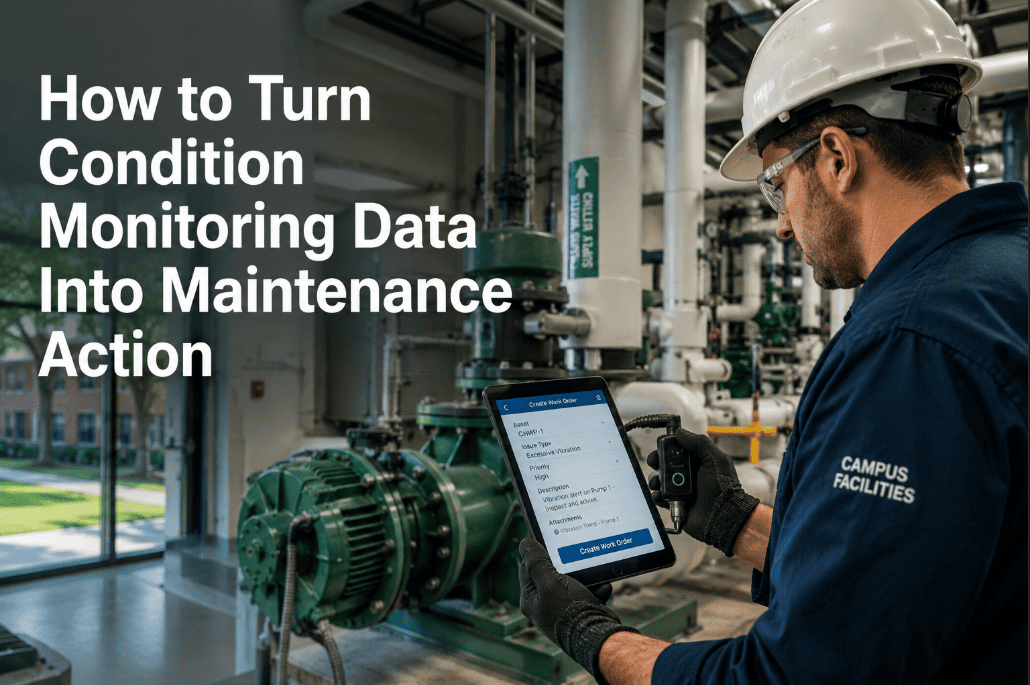
Technicians receive fault-triggered work orders on the OxMaint mobile app — complete with asset location, safety procedures, required spare parts, and the monitoring data that triggered the alert. Close out with photo evidence and digital sign-off in the field.
Reliability analytics dashboard
OxMaint's analytics engine consolidates trending data across your entire transformer fleet into live KPIs — MTBF, availability, PM compliance, and fault-mode heat maps. Spot degradation patterns across similar assets and prioritize capital replacements with data, not guesswork.
Power transformers health monitoring: frequently asked questions
What is the most effective condition monitoring technique for power transformers?
No single technique is sufficient — the most effective approach combines dissolved gas analysis (DGA) for internal arcing and thermal faults, vibration monitoring for mechanical integrity, temperature tracking for insulation aging, and partial discharge sensing for early insulation degradation. Together, these methods provide overlapping coverage so no fault mode goes undetected. OxMaint integrates all four data streams into a single asset health score and auto-triggers work orders when any indicator breaches its threshold.
How does vibration monitoring detect transformer winding faults?
Vibration monitoring uses accelerometers mounted on the transformer tank to capture mechanical signatures generated by the core and windings under electromagnetic force. A healthy winding produces a stable frequency spectrum dominated by 100 Hz (for 50 Hz systems). When winding clamping loosens or conductors shift, new frequency peaks appear and existing amplitudes rise — often detectable 3–6 months before electrical parameters change. Trending these signatures in OxMaint lets reliability teams schedule planned interventions before dielectric failure occurs.
How often should power transformer oil be sampled for DGA?
For critical transformers above 100 MVA, online DGA monitors provide continuous multi-gas trending and are now the industry standard. For smaller or less critical units, manual oil sampling every 3–6 months is typical, with increased frequency if any gas exceeds IEEE C57.104 attention limits. You can automate DGA sampling schedules and threshold alerts in OxMaint — book a demo to see a live DGA-to-work-order workflow.
What are the early warning signs of insulation and winding degradation?
The earliest indicators include rising moisture content in oil (above 20 ppm), increasing partial discharge pulse counts, acetylene appearing in DGA results, top-oil temperature trending upward at constant load, and vibration amplitude shifts at core frequency. Each signal points to a specific degradation mechanism — cellulose aging, void formation, internal arcing, cooling degradation, or mechanical loosening. OxMaint flags all five signal types and routes them to the correct maintenance workflow automatically.
Can online monitoring systems replace manual transformer inspections?
Online monitoring significantly reduces the frequency and scope of manual inspections but does not fully replace them. Visual checks of bushings, conservator oil level, silica gel color, radiators, and external connections still require a trained technician on-site at least annually. The ideal program uses online sensors for continuous early warning and OxMaint to schedule risk-based manual inspections informed by the actual condition data — reducing unnecessary visits while ensuring no critical check is missed.
Transform your transformer reliability program with OxMaint
Stop reacting to transformer failures. Deploy OxMaint to automate condition-based maintenance, track trending data, and catch faults before they become outages. Your team gets a full CMMS, predictive analytics, and mobile work orders — live in days, not months.
Free 14-day trial · No credit card