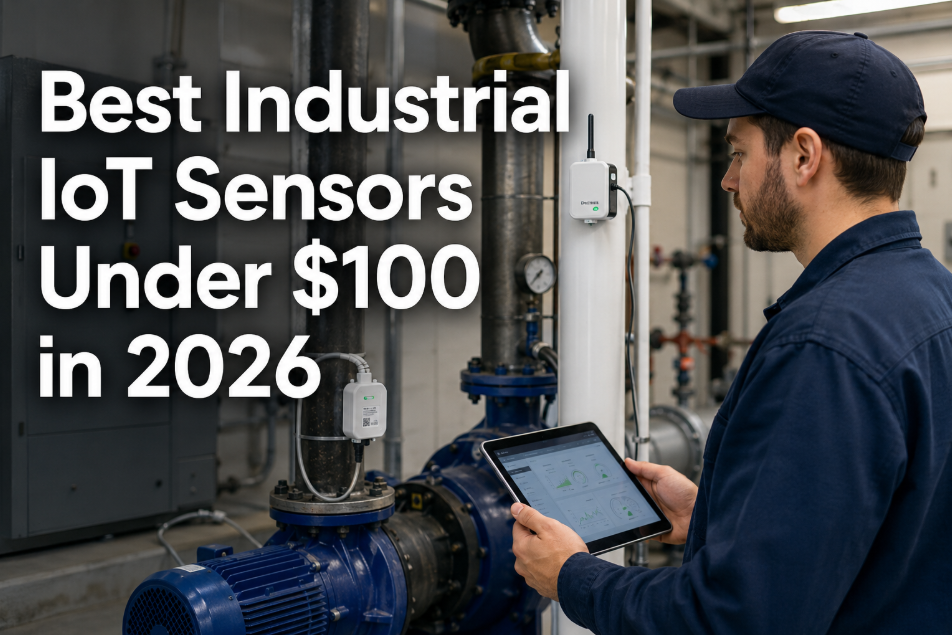
The average industrial facility spends between $15,000 and $40,000 on a single predictive maintenance sensor deployment — and most of that budget goes to proprietary hardware that locks you into one vendor's ecosystem. But the sensor market has shifted dramatically. In 2026, wireless vibration sensors cost $47, industrial temperature probes run $29, and current monitoring clamps sit at $65. The barrier to entry for condition-based maintenance is no longer cost — it is integration. Facilities using platforms like OxMaint's CMMS with IoT integration are connecting sub-$100 sensors directly to automated work order generation, achieving 90% of the predictive maintenance value at 15% of the traditional cost. The real question is no longer whether you can afford IoT sensors — it is whether you can afford to keep running without them when a single unplanned motor failure costs $7,500 on average.
Best Industrial IoT Sensors Under $100 in 2026
A practical, no-hype guide to affordable industrial sensors — covering vibration, temperature, current, and humidity monitoring — with real pricing, integration specs, and how each connects to automated maintenance workflows.
Why 2026 Changed the Industrial Sensor Market
Three converging forces made affordable industrial IoT sensors viable for mainstream maintenance teams — not just R&D labs and pilot programs.
Micro-electromechanical systems that cost $200 in 2020 now cost under $8 per chip. This collapse in component pricing means a complete vibration sensor module — including wireless radio, battery, and enclosure — ships for under $50. The same MEMS accelerometers used in $3,000 enterprise sensors are now in $47 open-market units.
LoRaWAN, NB-IoT, and LTE-M eliminated the need for expensive Wi-Fi infrastructure in industrial environments. A single gateway covers an entire 50,000 sq ft facility. Sensor battery life extends to 3-5 years because LPWAN radios consume 90% less power than traditional wireless protocols.
MQTT, REST APIs, and webhook-based alerting mean affordable sensors no longer need proprietary software. Platforms like OxMaint accept data from any sensor via standard protocols — eliminating vendor lock-in and letting maintenance teams mix sensor brands across their asset fleet.
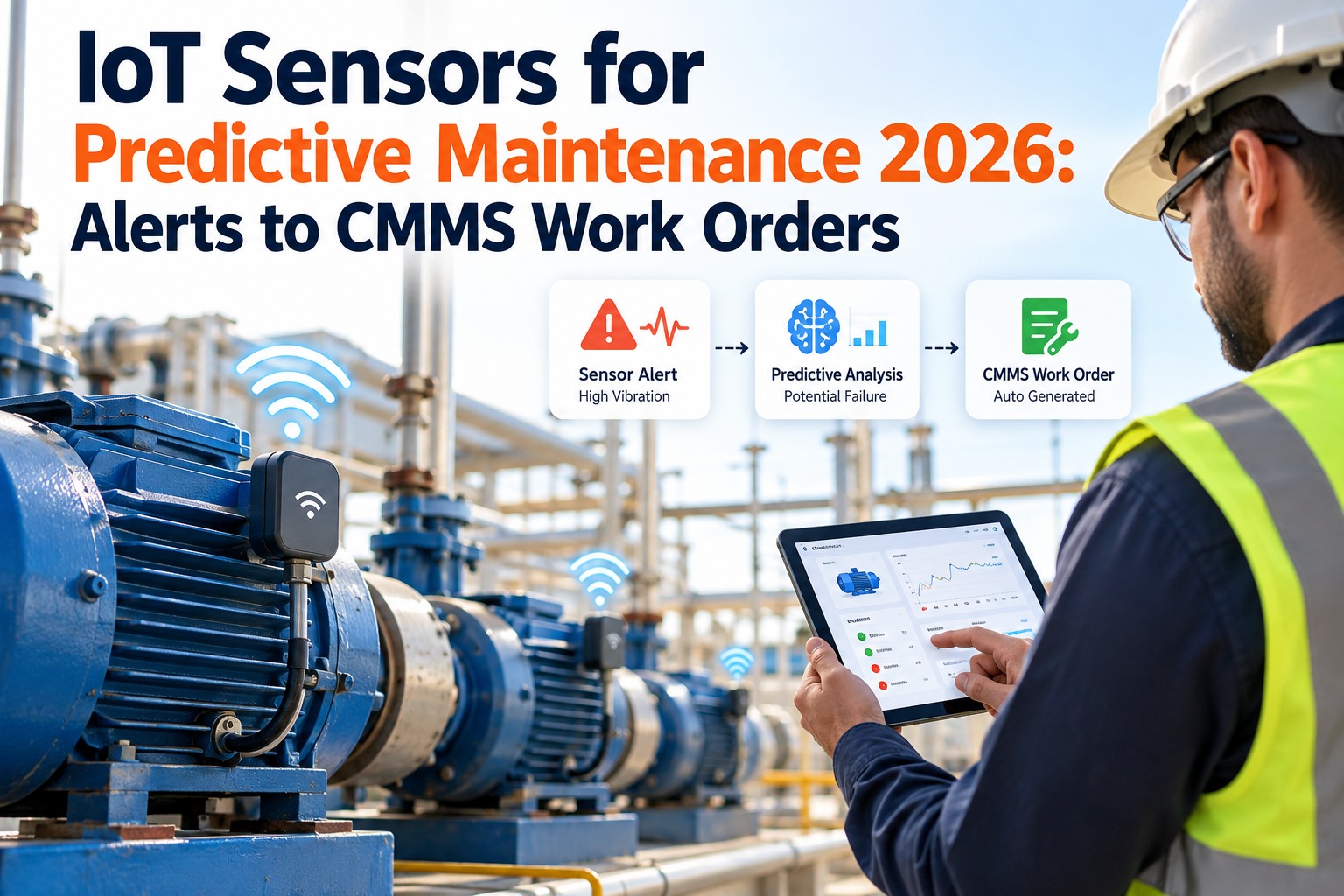
Modern gateways perform threshold analysis locally — no cloud round-trip required. This means a $65 current sensor can trigger an automatic work order in OxMaint within 8 seconds of detecting an anomaly, without needing an expensive analytics platform in between.
The 2026 Sensor Landscape: What to Buy and Why
We evaluated 34 sub-$100 industrial sensors across four critical measurement categories. Here are the standout performers in each category — rated on accuracy, durability, battery life, and CMMS integration readiness.
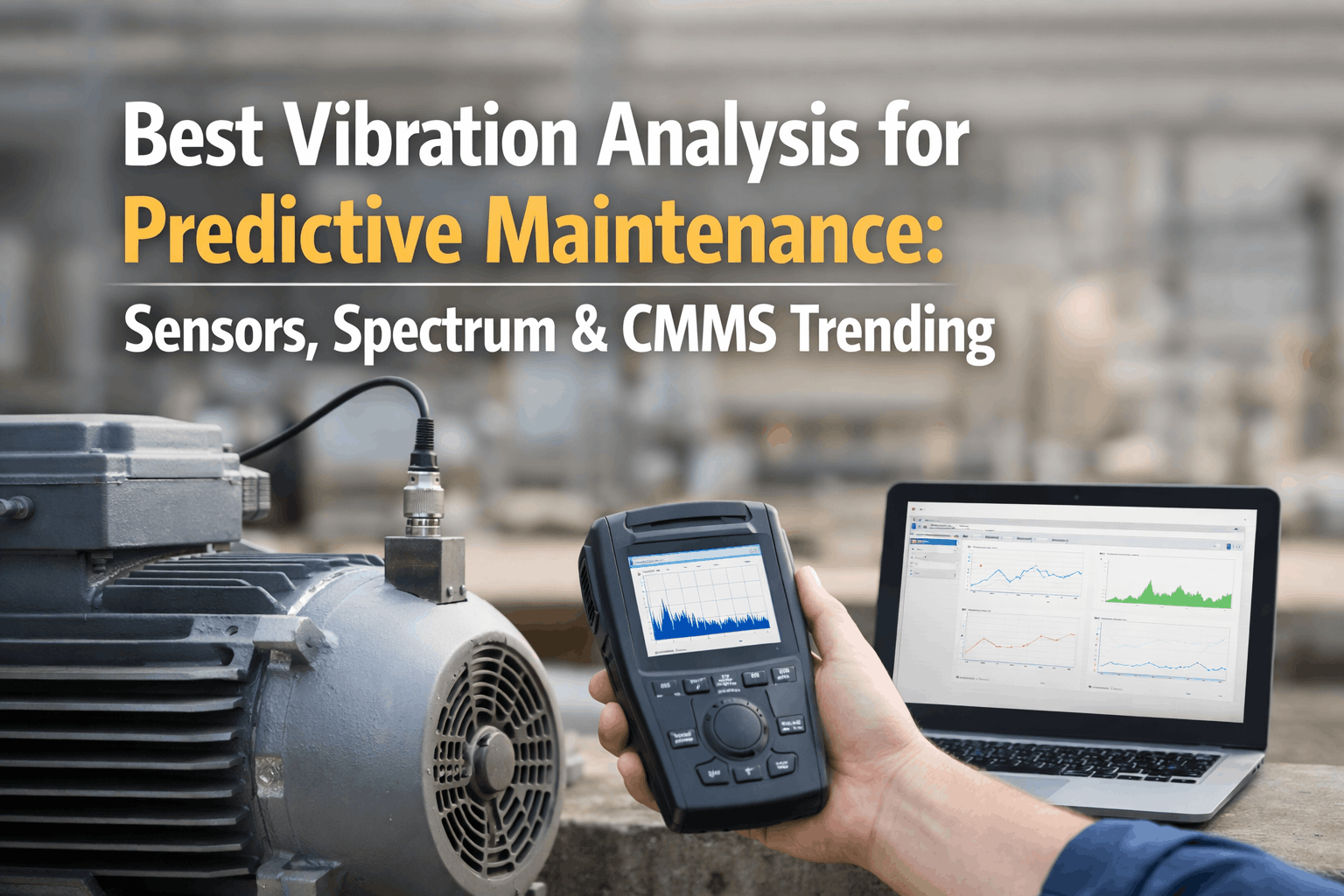
Vibration monitoring catches 78% of rotating equipment failures before they become catastrophic. These sensors detect bearing wear, imbalance, misalignment, and looseness — the four failure modes responsible for 92% of motor and pump breakdowns.
Abnormal temperature is the second most reliable failure indicator after vibration. A 15-degree rise in bearing temperature precedes failure by an average of 14 days — enough time for planned intervention if monitoring is continuous.
Current draw anomalies detect 65% of motor winding failures, phase imbalances, and mechanical overload conditions. A non-invasive current clamp installs in under 2 minutes with zero downtime.
Environmental conditions cause 23% of premature equipment degradation in industrial settings. Excessive humidity accelerates corrosion; particulate matter clogs filters and reduces heat exchange efficiency.
The Integration Gap: Where Cheap Sensors Fail Without CMMS
Buying sensors is the easy part. The hard part — and where 67% of IoT pilot projects fail — is turning sensor data into maintenance action. Raw alerts without workflow context create alarm fatigue, not predictive maintenance.
The difference between a $47 sensor that delivers ROI and one that becomes shelfware is not the sensor itself — it is the maintenance platform behind it. Want to see how OxMaint connects your sensors to automated workflows? Start a free trial and experience the integration firsthand, or book a demo for a guided walkthrough.
Deployment Cost Calculator: What a 20-Asset Sensor Network Actually Costs
The total cost of a sensor deployment is not just hardware. Here is a realistic breakdown for monitoring 20 critical rotating assets — the typical starting scope for a mid-size facility.
| Component | Qty | Unit Cost | Total |
|---|---|---|---|
| 3-Axis Vibration Sensors | 20 | $47 | $940 |
| Temperature Sensors (combo) | 20 | $29 | $580 |
| Current Monitoring Clamps | 10 | $65 | $650 |
| LoRaWAN Gateway | 2 | $120 | $240 |
| Mounting Hardware and Cabling | 1 kit | $150 | $150 |
| Installation Labor (in-house) | 16 hrs | $45/hr | $720 |
| Total Deployment Cost | $3,280 | ||
| Equivalent Proprietary System | $22,000 - $38,000 |
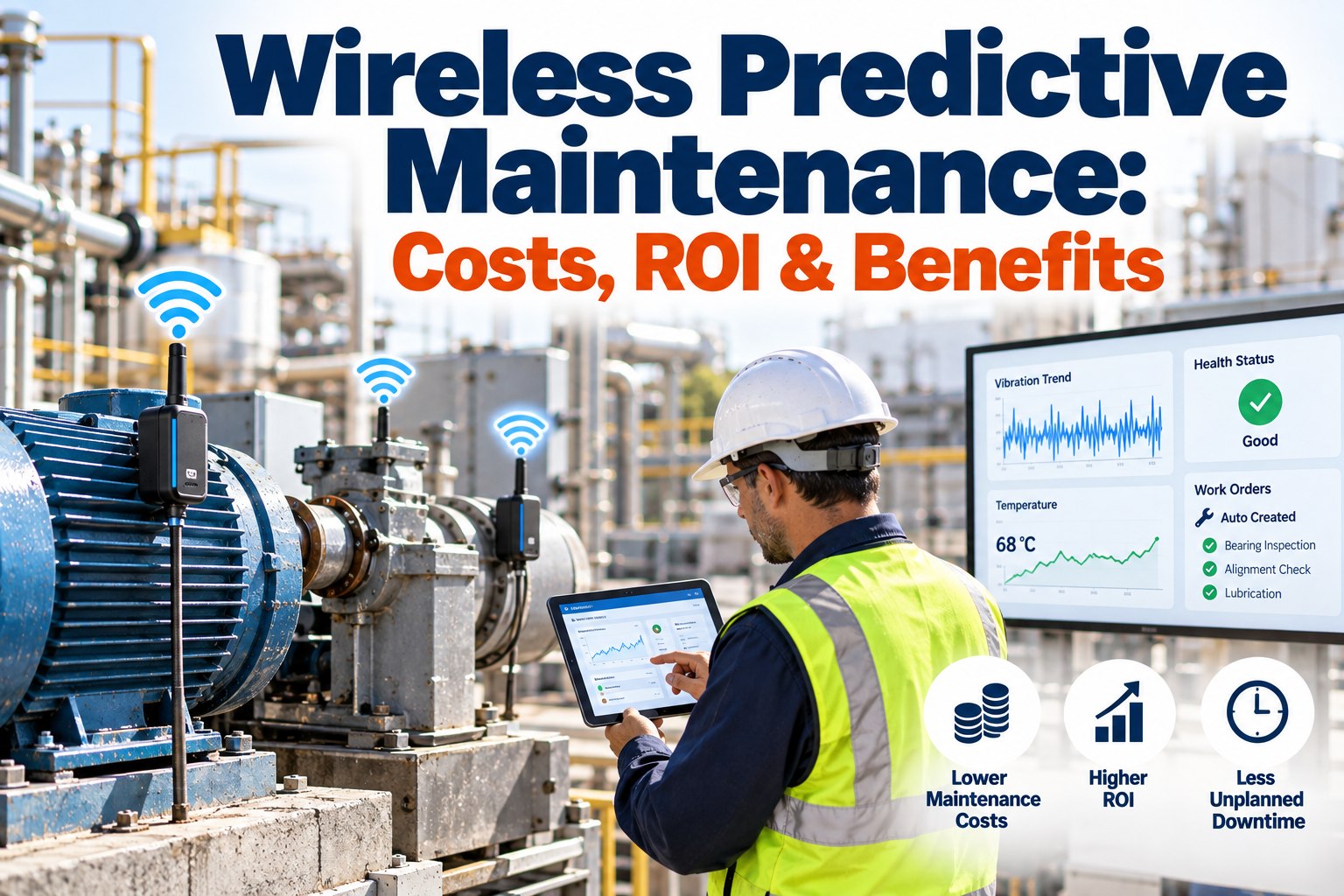
At $3,280 total deployment cost and an average prevented failure value of $7,500, the payback on this sensor network occurs with the very first prevented breakdown — typically within 90 days of deployment.
How OxMaint Turns Sensor Data Into Maintenance Action
OxMaint is not a sensor analytics platform — it is a maintenance execution platform that uses sensor data as one of its scheduling triggers. Here is how the integration chain works from sensor reading to completed repair.
OxMaint accepts data from any MQTT, REST API, or webhook-enabled sensor. No proprietary connectors required. 94% of sub-$100 sensors on the market support at least one of these protocols natively.
Set vibration, temperature, or current thresholds by individual asset — not by sensor type. A 50HP motor and a 200HP compressor get different alarm profiles because they have different failure signatures.
When a threshold is breached, OxMaint creates a work order automatically — pre-populated with asset details, failure history, recommended parts, and standard repair procedures. No human decision required to initiate the response.
Auto-generated work orders are assigned based on technician skills, current workload, and proximity. The assigned tech receives a mobile push notification with everything needed to start the repair immediately.
OxMaint tracks sensor readings against each asset's historical baseline to build a condition score. Assets trending toward failure get flagged for PM schedule adjustment — shifting from calendar-based to condition-based intervals.
Every sensor-triggered work order is tagged as "condition-based" in reporting. Compare prevented failure cost against sensor investment to calculate exact ROI per asset, per sensor type, per facility.
Sensor Selection Decision Matrix
Not every asset needs every sensor type. Use this matrix to determine which sensors deliver the highest maintenance value for your specific equipment categories. Focus your initial deployment on the top-left quadrant — high failure cost, high detection reliability.
| Equipment Type | Vibration | Temperature | Current | Humidity | Priority Deploy |
|---|---|---|---|---|---|
| Electric Motors (25HP+) | Essential | Essential | Recommended | Optional | Week 1 |
| Centrifugal Pumps | Essential | Recommended | Recommended | Optional | Week 1 |
| HVAC Compressors | Recommended | Essential | Essential | Optional | Week 2-3 |
| Conveyor Systems | Essential | Optional | Recommended | Optional | Week 2-3 |
| Electrical Panels | Optional | Essential | Essential | Essential | Week 1 |
| Air Handling Units | Recommended | Recommended | Optional | Essential | Week 2-3 |
Frequently Asked Questions
Are sub-$100 sensors accurate enough for real predictive maintenance?
How many sensors should we deploy to start seeing maintenance ROI?
Does OxMaint require specific sensor brands or models?
What is the total cost including CMMS software for a mid-size facility?
Connect Your Sensors to Real Maintenance Workflows
Affordable sensors are everywhere. What turns them into a predictive maintenance system is a CMMS that automatically converts sensor alerts into assigned, tracked, and completed work orders. OxMaint integrates with every major sub-$100 sensor family — no custom development, no middleware, no vendor lock-in. See it working with your asset types in a 30-minute walkthrough.