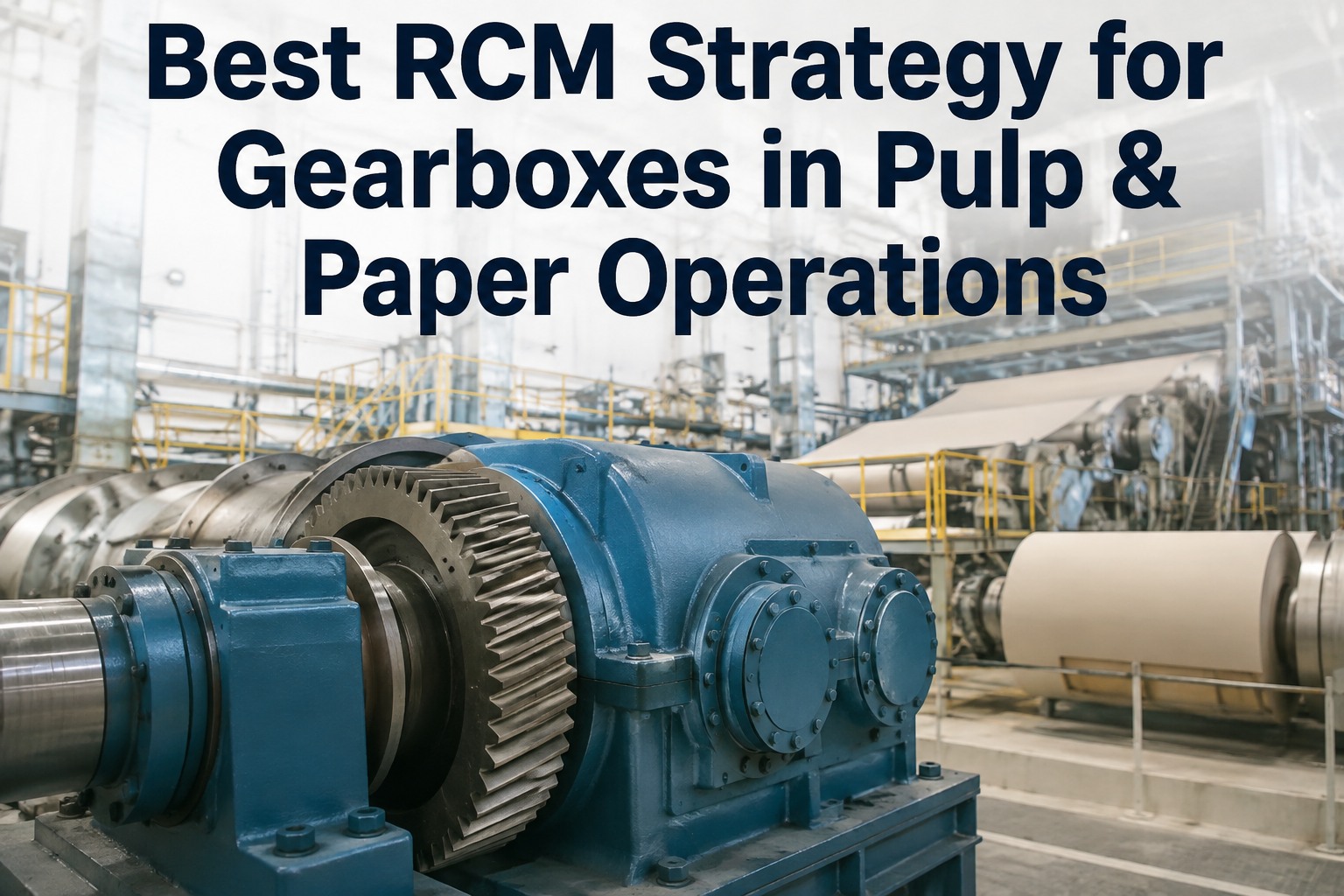
Reliability-Centered Maintenance (RCM) for gearboxes in pulp & paper operations is the systematic process of identifying specific failure modes—like gear tooth pitting, bearing spalling, and lubrication degradation—and matching them to the right predictive, preventive, and run-to-failure strategies. In an industry where a single paper machine gearbox failure can halt production for 48 to 72 hours and cost upwards of $25,000 per day in lost output, moving from reactive firefighting to a structured RCM strategy is essential for protecting asset availability and profit margins. By mapping failure modes to condition monitoring techniques and automated PM schedules, maintenance teams can detect anomalies weeks before catastrophic failure. OxMaint's AI-powered CMMS and EAM platform is built to operationalize this exact transition, turning complex RCM frameworks into daily maintenance workflows across your plant. You can Start Free Trial today to see how quickly you can digitize your gearbox reliability program.
Is a Single Gearbox Failure Costing Your Mill $25K+ Per Day in Lost Production?
Pulp and paper gearboxes operate under extreme loads, moisture, and contamination. A structured Reliability-Centered Maintenance strategy shifts your team from reactive crisis management to predictive precision—stopping gearbox failures weeks before they trigger catastrophic downtime.
Gearboxes Failure Modes in Pulp & Paper: What RCM Must Address
Over 60% of gearbox failures in pulp & paper operations stem from three preventable root causes: lubrication degradation, misalignment, and undetected bearing wear. An effective RCM strategy starts by mapping these specific failure modes to their early warning signs.
In pulp mills, steam, water ingress, and paper dust frequently contaminate gearbox oil. Water levels above 200 ppm accelerate micro-pitting on gear teeth. Without oil analysis, wear progresses invisibly until the lubricant film collapses, causing scuffing and surface fatigue.
Heavy radial and axial loads on press section and refiner gearboxes cause bearing raceway fatigue. Vibration analysis can detect bearing defect frequencies (BPFO, BPFI) up to 12 weeks before catastrophic seizure, but only if monitoring is continuous and trended.
Cyclic loading and shock events degrade gear tooth profiles. Macro-pitting and tooth breakage often follow uncorrected micro-pitting. Ultrasonic thickness testing and vibration trend analysis are critical for staging planned replacements before tooth fracture occurs.
Thermal growth and foundation settling alter shaft alignment between motors and gearbox drives. Misalignment imposes severe axial loads, degrading seals and bearings. Laser alignment checks during PM cycles prevent the cascade of secondary failures.
Pulp and Paper Gearboxes Condition Monitoring & PM Schedule
Condition monitoring is the backbone of pulp and paper gearboxes reliability. Matching the right inspection technology to each failure mode eliminates unnecessary preventive maintenance while catching defects early enough to plan downtime.
| Monitoring Technique | Target Failure Mode | Inspection Frequency | RCM Task Type |
|---|---|---|---|
| Vibration Analysis (FFT) | Bearing wear, misalignment, gear mesh issues | Monthly route / Continuous online | Predictive (On-Condition) |
| Oil & Wear Debris Analysis | Lubricant degradation, water ingress, particle wear | Every 3 months / 500 hours | Predictive (On-Condition) |
| Thermography (IR Camera) | Overheating, friction, low oil levels | Monthly | Predictive (On-Condition) |
| Laser Shaft Alignment | Misalignment-induced bearing & seal failure | Quarterly & after motor changeouts | Preventive (Time/Cycle-Based) |
| Ultrasonic Thickness Testing | Gear tooth thinning, casing erosion | During planned outages | Predictive (Inspection) |
Gearboxes RCM Strategy in Pulp and Paper: Implementation Timeline
Building an RCM strategy for gearboxes takes 3 to 4 months of focused effort. This timeline walks your maintenance and reliability team through the critical phases of data gathering, FMEA, and software rollout.
Map all critical gearboxes (press drives, refiners, winder sections) into a structured asset hierarchy. Record OEM specs, oil types, historical failure data, and operating context to establish your reliability baseline.
Conduct Failure Mode and Effects Analysis for each gearbox type. Identify functional failures, their effects on production, and the probability of occurrence. Prioritize assets by criticality and risk.
Assign predictive and preventive tasks to mapped failure modes. Digitize these tasks into OxMaint to automate PM triggers, lubrication routes, and condition-monitoring work orders without spreadsheets.
Deploy mobile work orders to technicians, log inspection data in real-time, and review KPIs. Adjust PM frequencies and monitoring intervals based on actual asset condition data rather than guesswork.
Stop Reactive Firefighting and Start Predicting Failures
A single unplanned gearbox failure wipes out months of maintenance budget. See how OxMaint automates your RCM strategy, condition monitoring, and PM schedules to keep your paper machines running.
How OxMaint Operationalizes Gearboxes Maintenance in Pulp and Paper
An RCM strategy is only as strong as the software executing it. OxMaint bridges the gap between theoretical reliability engineering and daily maintenance execution, cutting unplanned downtime by 30–50%.
Feed vibration and oil analysis data into OxMaint to auto-generate predictive work orders when thresholds breach. Catch bearing defects 12 weeks before failure and eliminate manual data entry.
Map parent-child relationships from the paper machine down to the specific refiner gearbox. Filter PMs and spares by criticality to ensure your most valuable assets receive priority reliability focus.
Attach critical spares—like bearings and replacement gear sets—directly to asset records. OxMaint tracks stock levels and auto-reorders, ensuring parts are available for planned overhauls without overstocking.
Equip technicians with the OxMaint mobile app to access gearbox manuals, log inspection data, and close out PMs from the mill floor. Digitize 100% of paper work orders and improve audit readiness.
The Cost of Reactive vs. Proactive Gearbox Maintenance
Consider a mid-sized paper mill operating 180 critical gearboxes across its stock prep, paper machine, and finishing areas. Here is the tangible financial difference between reactive maintenance and an OxMaint-driven RCM strategy.
- 6 major gearbox failures per year (avg. 48 hrs downtime each)
- $42K spent on emergency freight and expedited spares
- 15% OEE drag from unplanned press section stoppages
- 1 unplanned failure per year (detected early, fixed in planned outage)
- 70% reduction in expedited parts spend via inventory sync
- ROI achieved in under 4 months on CMMS software investment
Pulp & Paper Gearboxes RCM: Common Questions
RCM for gearboxes in pulp & paper is a structured methodology to identify how gearboxes fail, the impact of those failures on production, and the specific predictive or preventive tasks needed to prevent them. It moves maintenance away from generic time-based overhauls toward condition-based interventions.
Critical paper machine gearboxes should undergo monthly vibration analysis routes, quarterly oil sampling, and annual internal inspections during planned outages. OxMaint automates these inspection schedules based on run-hours and calendar triggers, ensuring no asset is missed. You can Start Free Trial to set up automated PM schedules instantly.
The most common failure modes are bearing fatigue (spalling and surface degradation), lubrication contamination (water and particle ingress), gear tooth pitting from cyclic loads, and shaft misalignment. Each of these has distinct early warning signs detectable via vibration, oil analysis, and thermography.
A CMMS like OxMaint provides a central repository for asset hierarchies, automates PM work order generation, tracks spare parts inventory, and digitizes inspection data. This allows reliability teams to trend condition-monitoring data over time and prove audit readiness without managing paper logs.
Yes. RCM implementation begins with data gathering and FMEA during normal operations, with physical task changes phased in during existing planned downtime. To see a seamless transition plan mapped to your mill's outage calendar, Book a Demo with our reliability experts.
See OxMaint on Your Assets — Book a 30-Min Demo
Discover how OxMaint digitizes your gearbox RCM strategy, automates condition monitoring alerts, and eliminates reactive maintenance. Your dedicated specialist will build a custom workflow using your actual asset data.
Free 14-day trial · No credit card required



-optimizing-your-maintenance-strategy.png)