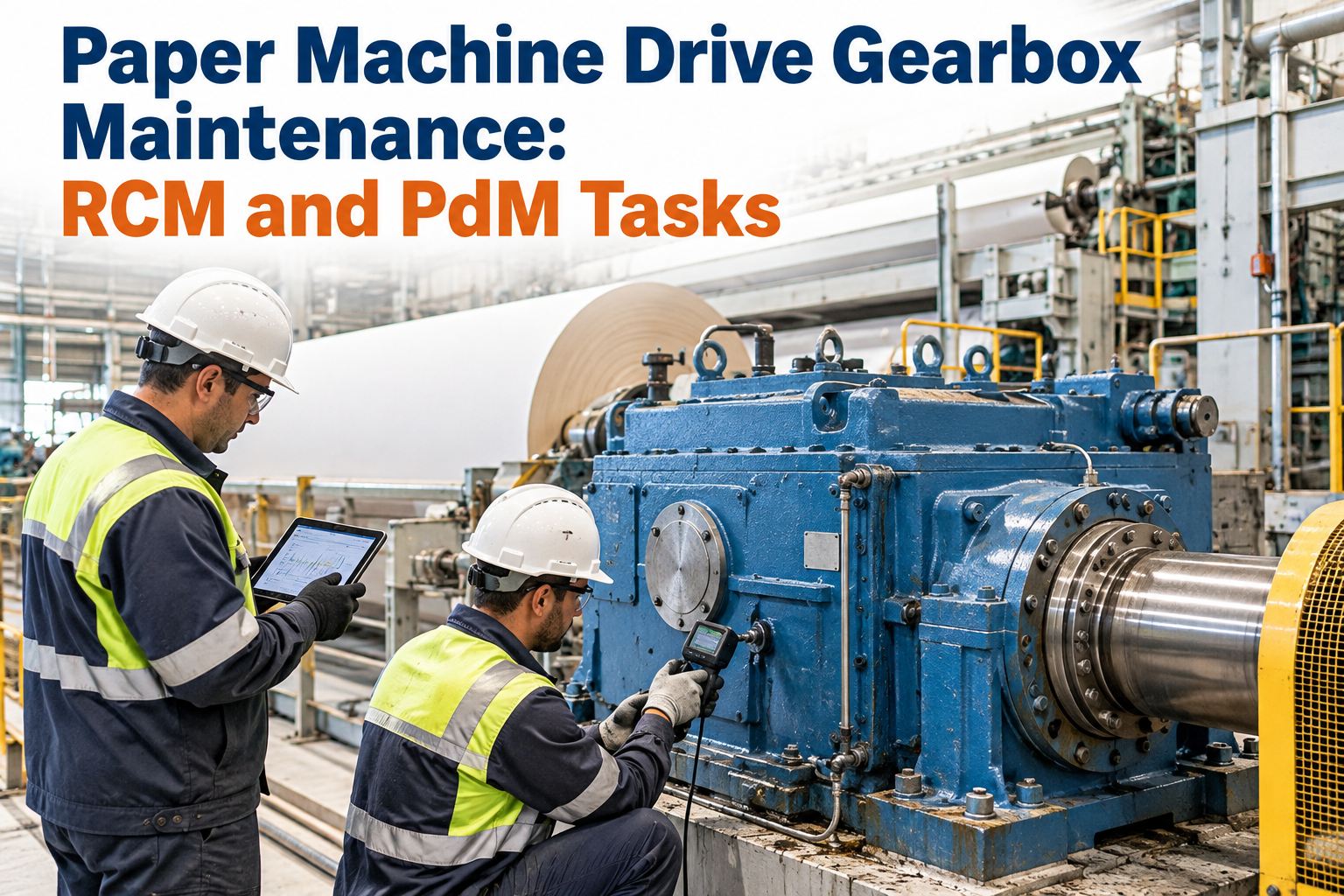
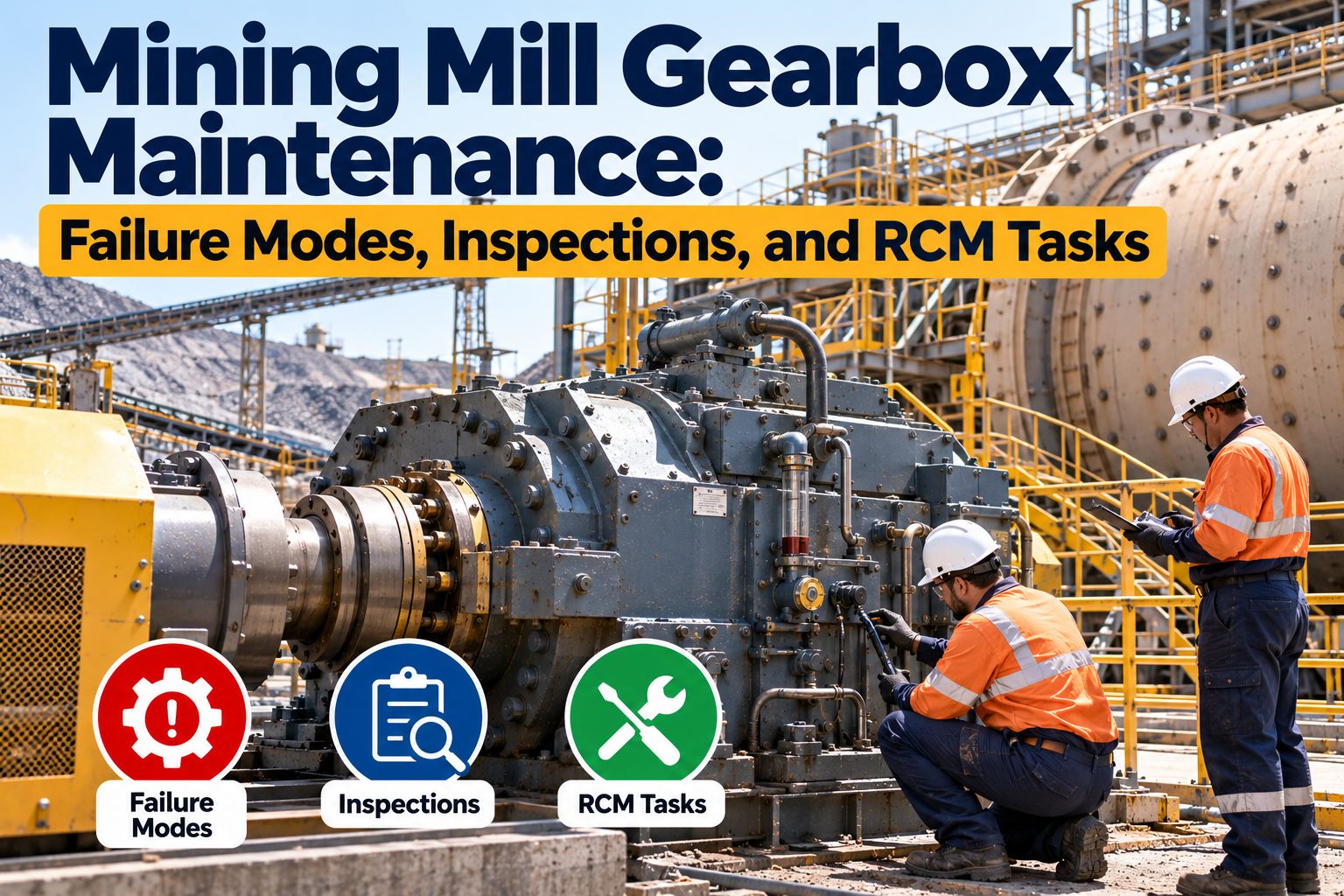
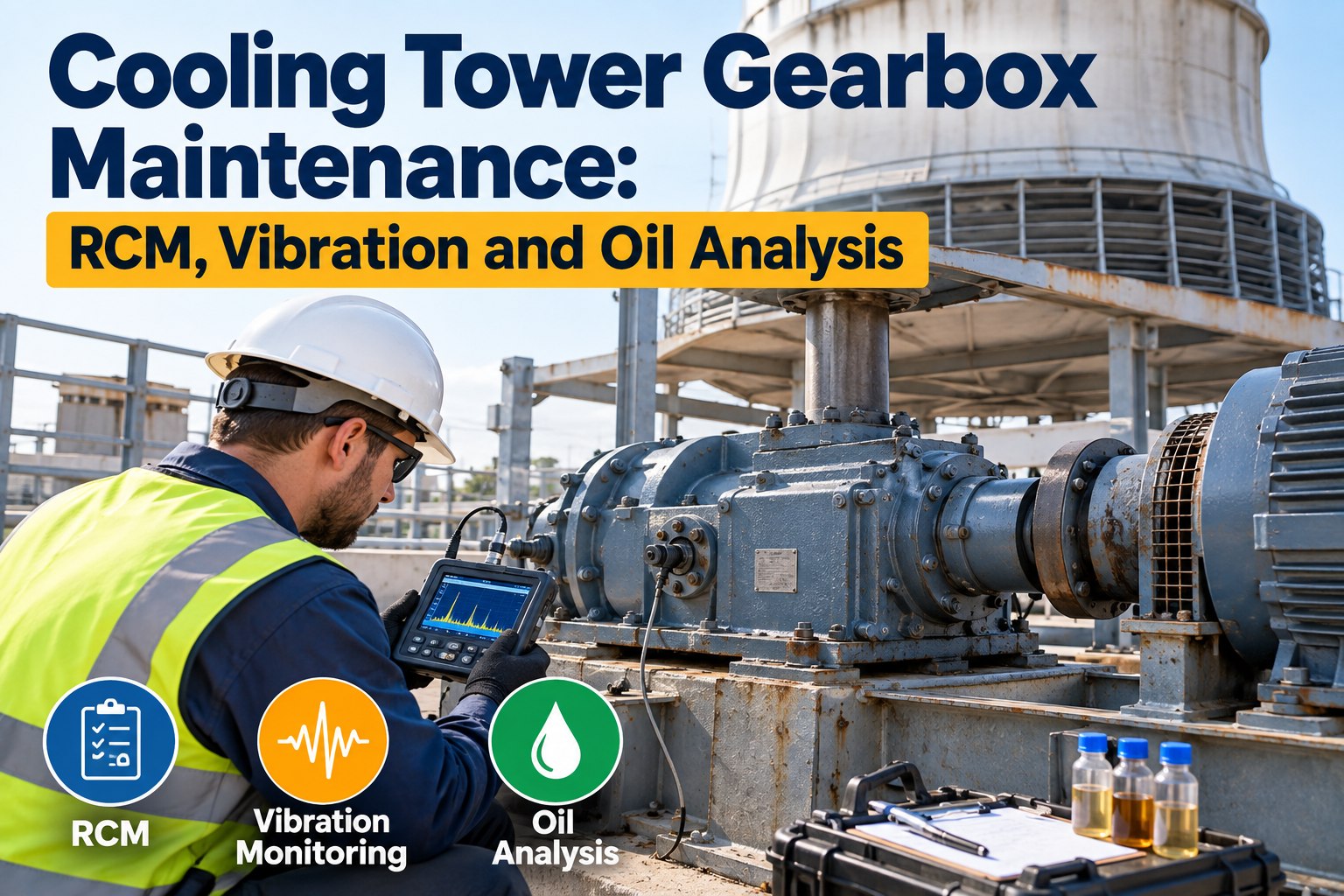
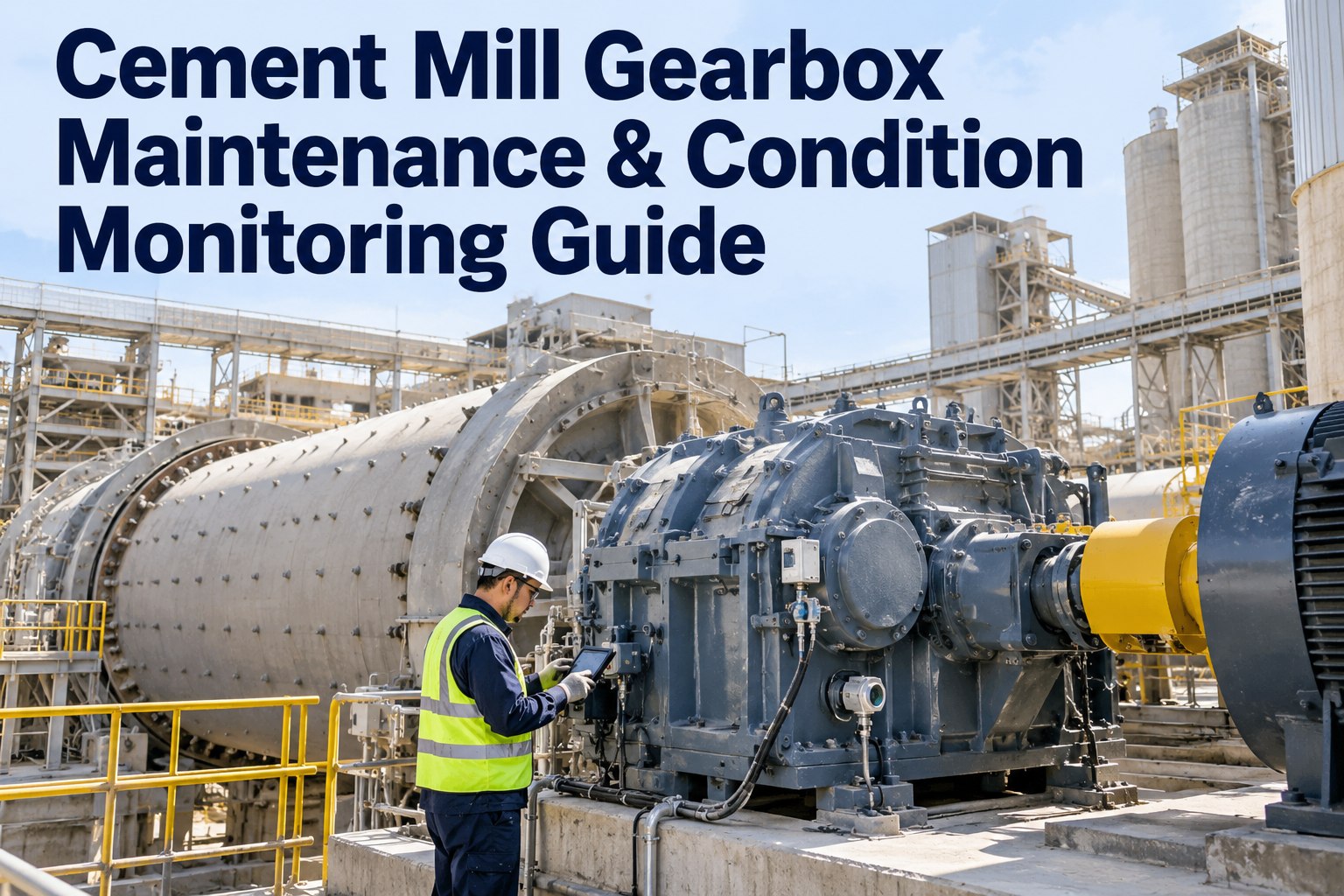
A sectional drive gearbox rarely fails without leaving evidence — but that evidence can disappear inside normal speed changes, felt loading, steam conditions, and machine vibration. On night shift, a new gear-mesh tone, rising bearing temperature, unstable section load, or oil at the guard may mark the start of a P-F interval that ends in a web break, loss of draw control, a protective trip, or a locked drive section. Oxmaint AI connects historian, vibration, oil, inspection, and work-history evidence and drafts a planner-ready work order inside the existing Maximo, SAP, or CMMS workflow.
Paper Machines · RCM Overlay · Drive Gearbox · 2026
Paper Machine Drive Gearbox Maintenance: Fault vs. Variability
Oxmaint AI is an AI RCM overlay on Maximo, SAP, or your CMMS — it separates a developing mechanical fault from the normal variability of production, ranks hypotheses, and drafts a planner-ready work order. Not a second system of record.
1 Timeline
historian, vibration, oil, inspection & EAM aligned
5 Modes
failure modes drive the planner queue
5 Signals
evidence families fused per diagnosis
90 Days
pilot the overlay without replacing systems
Maintenance Starts With Operating Context
Sectional drives transmit motor torque to forming, press, dryer, size press, calender, reel, and auxiliary sections — and a degraded gearbox can disturb draw, tension, sheet quality, and synchronization before it loses torque. Nameplate, ratio, bearing numbers, lubricant spec, backlash, and alarm settings must be verified against OEM docs across Valmet, Voith, ANDRITZ, and legacy Beloit trains. Start free on your current stack — no rip-and-replace.
Isolated Alarm / Calendar Route
The Way It Fails
✕ Evidence lost inside normal speed & load changes
✕ Each alarm treated as an isolated event
✕ Mesh tone blamed, not throughput or grade
✕ Bearings substituted on dimensions alone
✕ Alignment scheduled on a calendar
✕ One signal carrying the whole diagnosis
✕ Warning window closes before a decision
Oxmaint AI Overlay
The Way It Works
✓ Signals normalized for speed, grade & load
✓ Evidence aligned on one asset timeline
✓ Load change confirmed after normalization
✓ Parts verified against OEM documentation
✓ Alignment driven by phase & evidence, not the clock
✓ Three-way confirmation before the call
✓ Ranked WO drafts pushed into Maximo/SAP
What One Timeline Shows
Oxmaint AI aligns gearbox evidence with machine operating context instead of treating each alarm as an isolated event. Timestamps and limits come from connected plant systems — Oxmaint AI preserves their source rather than manufacturing a universal threshold. Book a demo to see one section drive's timeline live.
02:10 → 02:26
The Sequence
02:10 section drive load increased at comparable speed and grade; 02:18 output-bearing envelope trend crossed the site alert; 02:26 operator logged a new cyclic growl at steady production.
History
Prior Work
Previous route: oil debris elevated but below the site action limit. Recent history: coupling work and lubricant additions appear beside the condition trend.
Ranking
Signal → Confidence
Localized bearing or gear distress may rank above an isolated process disturbance when speed-referenced vibration, wear debris, and normalized section load agree. Misalignment and transmitted machine vibration stay open alternatives.
Suggested WO
Planner Draft
Converts the evidence into a planner-review draft with lubrication checks, speed-referenced vibration, operating context, coupling inspection, shutdown criteria & attached spectra — planners retain scope, priority, coding, parts & scheduling.
Overlay Positioning — Not a Second CMMS.
Asset masters, cost centers, inventory, and settlements stay in your EAM. Oxmaint AI owns living failure-mode history, JA1011-style task selection, and ranked WO drafts that push into Maximo or SAP. The existing EAM's approved hierarchy, failure codes, workflows, permits, and master data remain authoritative.
Drive Gearbox Failure Modes
A useful RCM program establishes the required function first: transmit torque, maintain ratio and synchronization, support shafts and gears, deliver lubricant, exclude contaminants, dissipate heat, and provide reliable condition evidence. Book a demo to map these five modes to your queue.
Priority 1 or controlled-shutdown conditions include loss of lubrication pressure or flow, smoke, severe leakage near hot surfaces, rapidly accelerating vibration or debris, shaft movement, repeated protective trips, or credible evidence that safe torque transmission is no longer assured. A stable, low-severity deviation may be monitored only with a named owner, next inspection date, operating limits, and documented stop criteria.
RCM and PdM Task Intervals
There is no defensible universal monthly interval. Establish intervals from criticality, detectability, operating hours, and demonstrated P-F history. The ≤1/2 P-F rule applies only after the P-F interval has been demonstrated — until then, use conservative provisional intervals. Sign up free and set intervals from your P-F history.
Signals That Support a Maintenance Decision
No single signal should carry the diagnosis when other evidence can be obtained. A practical three-way target combines condition, process, and inspection evidence — helping distinguish gear damage from motor forcing, local bearing defects from transmitted roll vibration, and lubrication heat from process heat. Book a demo to see the fusion on your tags.
Speed-Referenced Vibration
Actual input/output shaft speed, order tracking, time-synchronous averaging, gear-mesh frequency, harmonics, sidebands, cepstrum, envelope & phase.
Oil Condition & Wear Debris
Viscosity, water, oxidation, acid number, cleanliness, ferrous density, elemental spectroscopy & particle morphology. Verify sample point, flushing, top-ups & filter work.
Process & Drive Context
Compare section load, motor current, speed error, grade, draw, steam conditions, felt loading & machine speed.
Inspection Evidence
Leakage, coupling condition, foundation movement, torque marks, seal condition, shaft runout & indexed borescope images.
Temperature & Lubrication Delivery
Evaluate rate of change against load, ambient, oil supply temperature, pressure & flow. Validate suspect sensors with an approved contact measurement.
Three-Way Confirmation
Condition, process & inspection evidence together separate misalignment from imbalance or looseness — no single signal carries the diagnosis.
From Detected Signal to Maximo or SAP Work Order
Oxmaint AI supports an overlay flow without displacing established maintenance controls. The existing EAM's approved hierarchy, failure codes, workflows, permits, and master data remain authoritative. Sign up free and run the flow on one section drive.
01
Connect Evidence
Align historian tags, route measurements, lab reports, operator rounds, alarms & maintenance history by asset and time.
02
Normalize State
Compare readings at equivalent speed, grade, draw, load & thermal condition.
03
Rank Hypotheses
Preserve confirming and contradictory evidence for gear, bearing, lubrication, alignment & integrity failure modes.
04
Apply RCM Logic
Identify whether the response is PdM, inspection, on-condition restoration, failure-finding, or an operating decision — then draft the work package.
05
Review & Dispatch
Maintenance & operations approve scope before the WO moves to Maximo/SAP. Completion evidence & the post-maintenance baseline return to the timeline.
A Practical 90-Day Pilot
Start with a small number of critical sectional drives rather than a machine-wide transformation. Any cost, savings, or downtime estimate should use the site's actual labor rates, production consequences, parts scope, and outage duration — Oxmaint AI does not rely on fabricated ROI claims. Sign up free and pilot a few critical drives.
Days 1–30 · Baseline
Verify gearbox model, ratio, bearings, lubricant, sensors & coupling; map available Maximo/SAP history and condition-data sources.
Days 1–30 · Define Normal
Define normal operating states and approved alarm references; identify missing speed references, sample points or inspection access.
Days 31–60 · Map RCM
Map functions, functional failures & dominant failure modes; define evidence requirements & differential-diagnosis checks.
Days 31–60 · Configure
Set provisional route intervals & event-driven triggers; configure planner-reviewed Suggested WO fields & escalation rules.
Days 61–90 · Operate
Review live Timeline and Signal→Confidence cases; confirm source quality & eliminate nuisance correlations; dispatch through the existing EAM.
Days 61–90 · Validate
Capture findings, as-left condition & run-in baselines; adjust intervals using demonstrated plant evidence.
"
A new gear-mesh tone and a rising bearing temperature at steady production weren't just a note for dayshift — they marked the start of a P-F interval that could end in a web break or a locked drive section. What we needed was to preserve the operating context, confirm the signal against speed and grade, and turn it into an actionable maintenance decision before the warning window closed.
Reliability Engineer · Paper Machine Night Shift
Frequently Asked Questions
Which vibration measurements are most useful on variable-speed drives?
Use actual shaft-speed reference, order tracking, waveform, envelope analysis, gear-mesh frequency, sidebands, and phase where applicable. Overall velocity alone may miss localized tooth or early bearing defects.
Can oil analysis identify a cracked gear tooth?
It can support the diagnosis when debris rate and morphology indicate fatigue or severe sliding, but it should not stand alone. Confirm with vibration, repeat sampling, borescope inspection, and operating evidence.
Should paper machine drive alignment be scheduled periodically?
Usually not. Alignment is most useful after drive-train disturbance or when phase, coupling temperature, seal wear, foundation movement, or bearing evidence indicates a centerline problem. Account for validated thermal growth.
When should the section be shut down?
Follow approved asset-specific limits. Immediate escalation is warranted for lost lubrication flow, smoke, severe leakage, rapid vibration or debris acceleration, shaft displacement, repeated trips, or credible tooth, shaft, or bearing failure.
Does Oxmaint AI replace Maximo, SAP, or our CMMS?
No. Oxmaint AI overlays the current environment to connect evidence, apply RCM logic, and draft planner-ready work. Maximo, SAP, or the plant CMMS remains the single system of record.
Build Drive Reliability Around Evidence — Not Isolated Alarms.
See this failure cluster on your asset and connect condition evidence to planner-ready decisions. Start free to build a paper machine drive reliability workflow — without replacing your system of record.