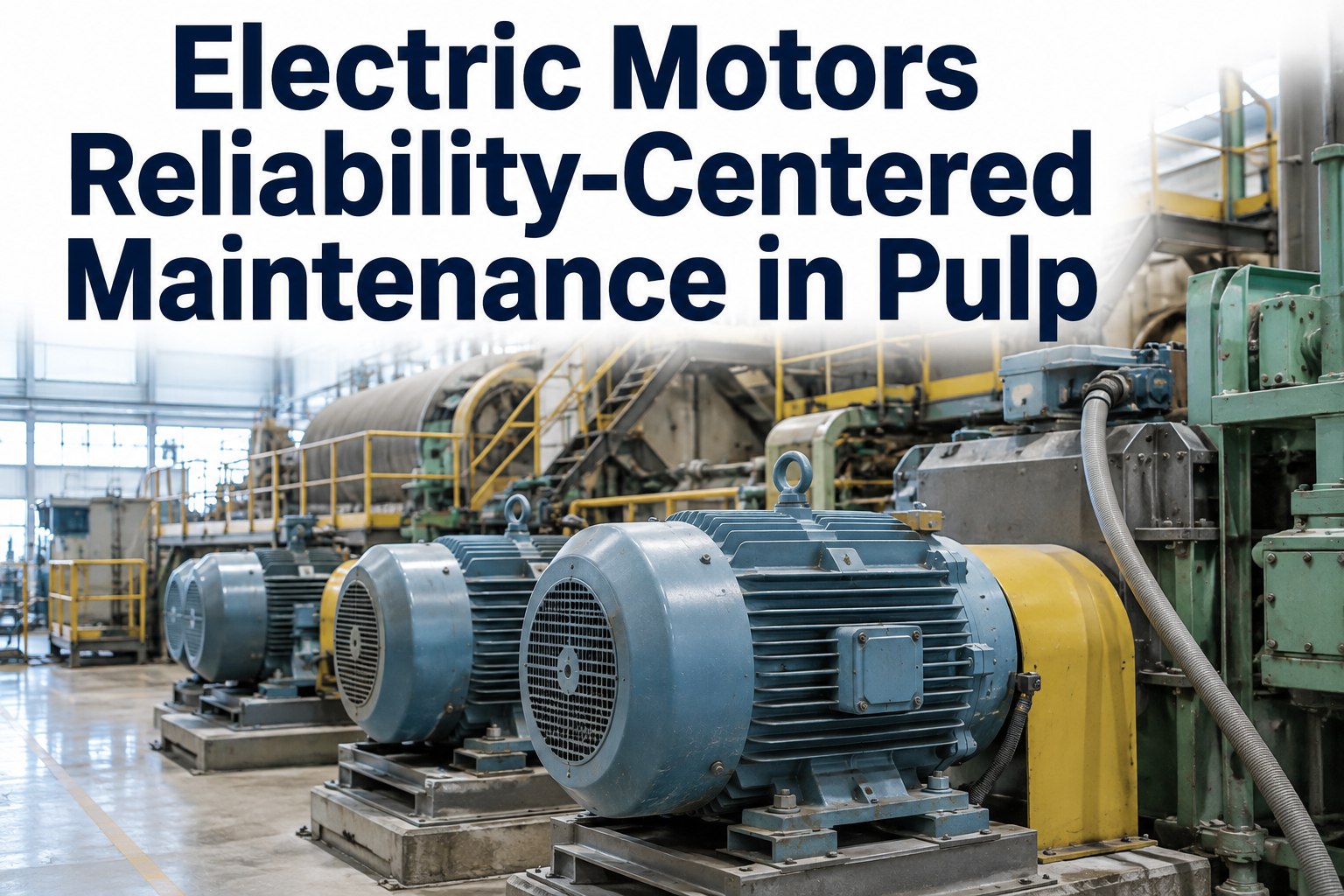
Reliability-centered maintenance for electric motors in pulp & paper mills is the difference between predictable OEE and million-dollar unplanned outages. Electric motors in pulp & paper operations face some of the harshest duty cycles in heavy industry — high humidity, chemical exposure, continuous duty, and volatile load spikes — making a structured RCM strategy essential for preventing bearing failures, insulation breakdown, and stator faults. This guide breaks down the industry-specific failure modes, proven condition monitoring techniques, and PM scheduling best practices that top-tier pulp and paper reliability teams use to push motor availability above 98%. OxMaint's AI-powered CMMS puts these RCM frameworks into daily practice — automating preventive maintenance, tracking asset health, and turning maintenance data into decisions. Ready to stop firefighting? Start Free Trial and see the difference on your assets today.
RCM Strategy for Pulp & Paper
Is reactive maintenance eating your motor availability?
A single 1,500 HP refiner motor failure can halt a paper line for 36 hours and cost over $180,000 in lost production. Reliability-centered maintenance shifts electric motors in pulp & paper from reactive firefighting to predictive control — cutting unplanned downtime 30–50%.
Failure Modes
Electric motors failure modes in pulp and paper mills
Industry studies by the Electric Power Research Institute (EPRI) show that 43% of motor failures in pulp & paper originate from bearing-related issues, 25% from stator winding insulation breakdown, and 17% from rotor or external contamination. Understanding these failure modes at the asset level is the first step of any RCM electric motors pulp & paper strategy.
Bearing Wear & Lubrication
The dominant failure mode. In paper mills, high loads and wash-down contamination degrade grease fast. Without vibration analysis and auto-lubrication scheduling, outer race spalling occurs in 8–14 months on heavy-duty motors.
Stator Winding Insulation
Moisture, chemical vapors, and thermal stress degrade winding insulation. Incomplete discharge (PD) and thermal aging accelerate failures in motors cycling through wet-end environments without space heaters or IR testing.
Rotor Bar & Contamination
Broken rotor bars and airborne fiber/chemical contamination cause torque ripple and overheating. Current signature analysis (MCSA) catches rotor faults weeks before the motor seizes, but requires scheduled tracking.
Condition Monitoring
Pulp and paper electric motors condition monitoring best practices
Effective electric motors monitoring in pulp and paper requires layering predictive technologies. The right mix catches 80–90% of failures days or weeks before catastrophic breakdown. Below is the tiered monitoring approach high-performing reliability teams deploy across critical motor populations.
Vibration Analysis & Ultrasound
Route-based monthly vibration monitoring with continuous wireless sensors on critical 500+ HP motors. Detects bearing defect frequencies, misalignment, and looseness. Ultrasound catches early-stage lubrication issues before vibration spikes. Reduces bearing failures up to 65%.
Infrared Thermography & Partial Discharge
Quarterly IR scans on motor control centers (MCCs), junction boxes, and motor frames identify hotspots from loose connections and overloaded circuits. PD testing on medium-voltage motors (4kV+) catches insulation degradation months before failure.
Motor Circuit Evaluation (MCE) & Oil Analysis
Offline MCE tests measure resistance, inductance, and capacitance to find phase imbalances and ground wall faults. Combined with quarterly oil analysis on lubricated bearings, this layer prevents 90% of electrical and mechanical surprise failures.
PM Schedule & RCM Strategy
Electric motors PM schedule pulp and paper: the RCM framework
Building an electric motors RCM strategy in pulp and paper means moving from time-based greasing to condition-based intervention. The framework below maps the 6-month PM cycle for a typical critical motor, aligning failure modes to specific tasks, intervals, and the OxMaint automation that triggers them.
| PM Task | Failure Mode Addressed | Interval | Monitoring Tech |
|---|---|---|---|
| Visual inspection, frame cleaning, seal check | Contamination, moisture ingress | Weekly | Visual / Thermography |
| Vibration route data collection | Bearing wear, misalignment | Monthly | Accelerometer / Wireless |
| Re-greasing & lubrication check | Lubrication breakdown | Quarterly | Ultrasound |
| Electrical resistance (Megger) test | Insulation degradation | Semi-annual | Megger / MCE |
| Oil analysis (if applicable) & thermography | Bearing wear, connection faults | Quarterly | Spectrometry / IR Camera |
| Full tear-down, rewind evaluation, alignment | Systemic fatigue, rotor faults | Annual / Condition-based | MCSA / Laser Alignment |
How OxMaint Helps
How OxMaint powers electric motors reliability in pulp and paper
A paperless RCM strategy lives or dies on execution. OxMaint translates the failure modes, PM schedules, and condition monitoring data above into automated workflows — connecting your maintenance technicians, spare parts, and analytics in one AI-powered platform. Here is how OxMaint turns your motor reliability framework into measurable results.
Automated PM Scheduling
Auto-generate weekly, monthly, and quarterly work orders for electric motors based on runtime hours or calendar intervals. Never miss a Megger test or vibration route again. Cuts manual planning time by 70%.
Predictive Condition Triggers
Integrate vibration, temperature, and oil analysis thresholds directly into asset records. When a bearing's RMS velocity trends out of spec, OxMaint auto-triggers a corrective work order before failure occurs.
Spare Parts & Motor Inventory
Track spare motors, bearings, and lubricants with automatic reorder points. Ensure critical spares are always in stock without overcapitalizing. Link parts directly to motor work orders for closed-loop cost tracking.
Mobile Maintenance Execution
Technicians receive digital work orders on mobile devices, complete with motor history, manuals, and safety procedures. Capture vibration readings and photos on the floor — no paper, no rekeying, full audit trail.
Worked Example
The cost of inaction: a 180-motor paper line
Consider a typical pulp & paper facility running a 180-asset motor population on a critical paper machine line. Operating reactively, this plant averages 14 unplanned motor failures per year — each costing an average of $12,000 in emergency repair and $26,000 in lost production. By implementing an RCM strategy with OxMaint, the math shifts dramatically.
Annual Reactive Cost (Status Quo)
14 failures × $38,000 (repair + downtime) = $532,000 / year
By moving from 14 catastrophic failures to 8 — and shifting the remaining 8 to planned, scheduled interventions during outages — this plant saves $228,000 annually. The OxMaint platform cost is a fraction of that, paying for itself in under 6 months while freeing maintenance teams for proactive reliability engineering.
See OxMaint on your assets — book a 30-min demo
Discover how OxMaint automates your RCM strategy, prevents motor failures, and maximizes pulp & paper uptime. Our specialists will build a live view of your asset hierarchy.
FAQ
Electric motors RCM in pulp & paper: frequently asked questions
What is RCM for electric motors in pulp & paper?
Reliability-centered maintenance (RCM) for electric motors in pulp & paper is a structured framework that identifies critical failure modes — like bearing wear and winding insulation breakdown — and applies targeted condition monitoring and PM tasks to prevent them. Instead of time-based greasing alone, RCM uses vibration analysis, thermography, and oil analysis to trigger maintenance only when needed, maximizing motor availability.
How often should electric motors be inspected in a paper mill?
Critical electric motors in pulp & paper should undergo weekly visual inspections, monthly vibration route monitoring, quarterly regreasing and thermography, and semi-annual Megger resistance testing. OxMaint automates this entire PM schedule, auto-generating work orders at the correct interval so nothing falls through the cracks. Book a Demo to see how.
What are the most common electric motors failure modes in pulp and paper?
The most common failure modes are bearing wear and lubrication breakdown (43%), stator winding insulation degradation (25%), and rotor bar faults or contamination (17%). High humidity, chemical wash-downs, and volatile loads in the wet-end accelerate these failures, making condition-based monitoring essential for reliability.
How does condition monitoring improve electric motors reliability in pulp and paper?
Condition monitoring catches 80–90% of motor failures days or weeks before catastrophic breakdown. Technologies like vibration analysis identify bearing defect frequencies early, while infrared thermography and partial discharge testing catch electrical faults. This allows teams to plan repairs during scheduled downtime instead of reacting to emergencies.
Can OxMaint CMMS integrate with our existing motor monitoring sensors?
Yes. OxMaint integrates vibration, temperature, and oil analysis data directly into motor asset records. When sensor thresholds breach spec, the platform auto-triggers corrective work orders, linking the condition data to the exact motor, spare parts needed, and technician assignments. Start Free Trial to connect your assets.
Stop firefighting motor failures — start your RCM journey today
Join the pulp & paper reliability teams using OxMaint to cut unplanned downtime 30–50%, automate PMs, and predict failures before they happen. Your 14-day free trial is ready.
Free 14-day trial · No credit card


-optimizing-your-maintenance-strategy.png)
