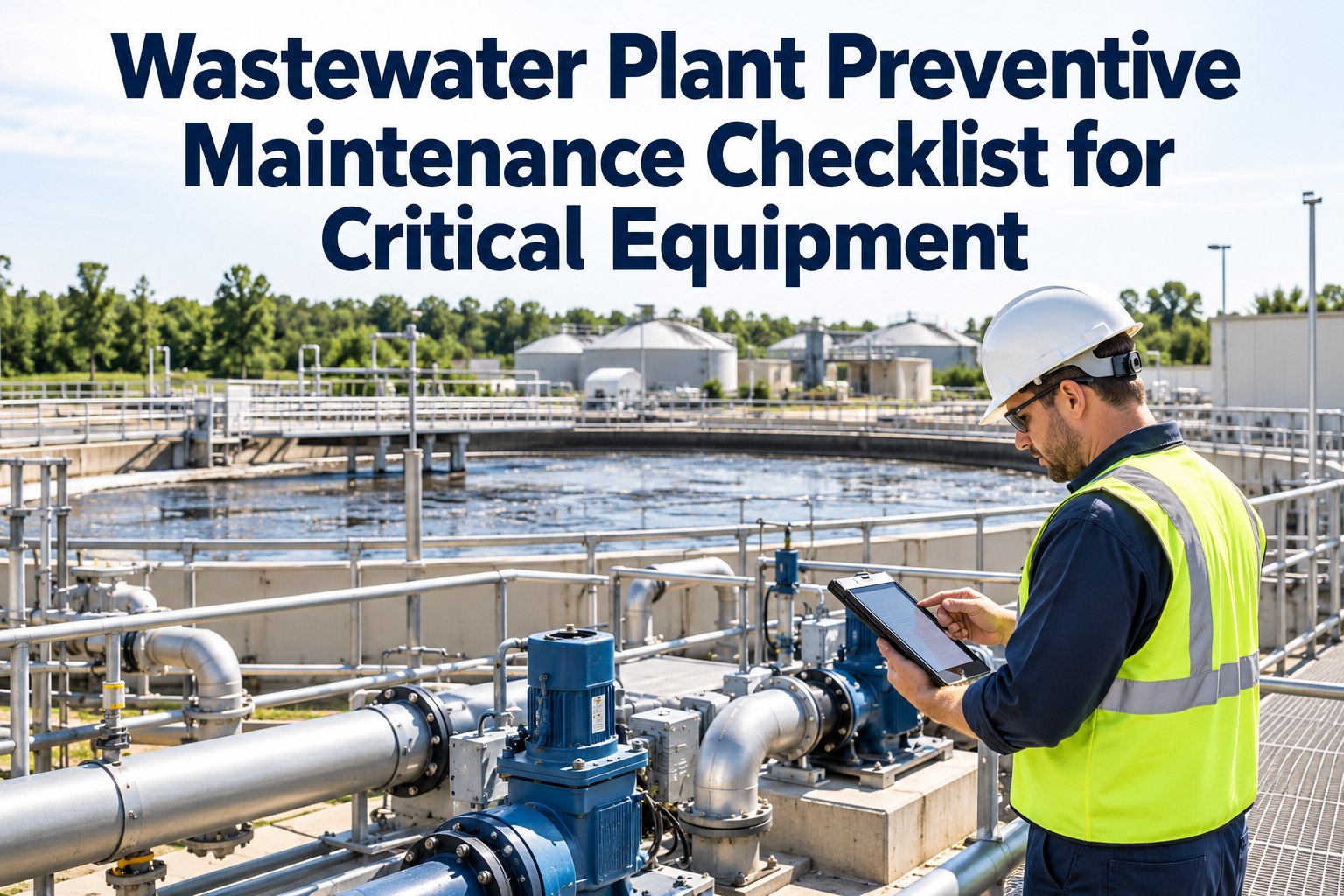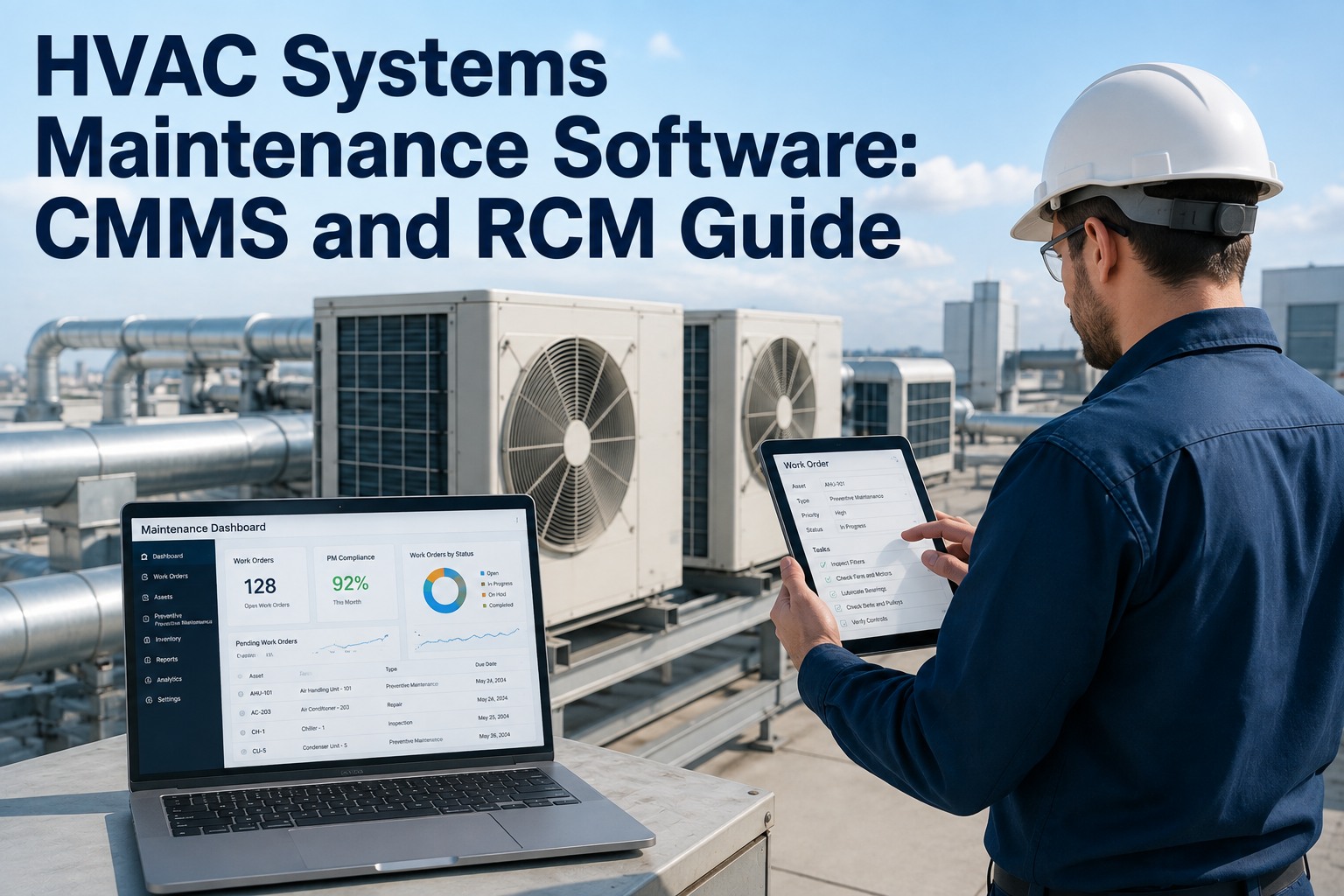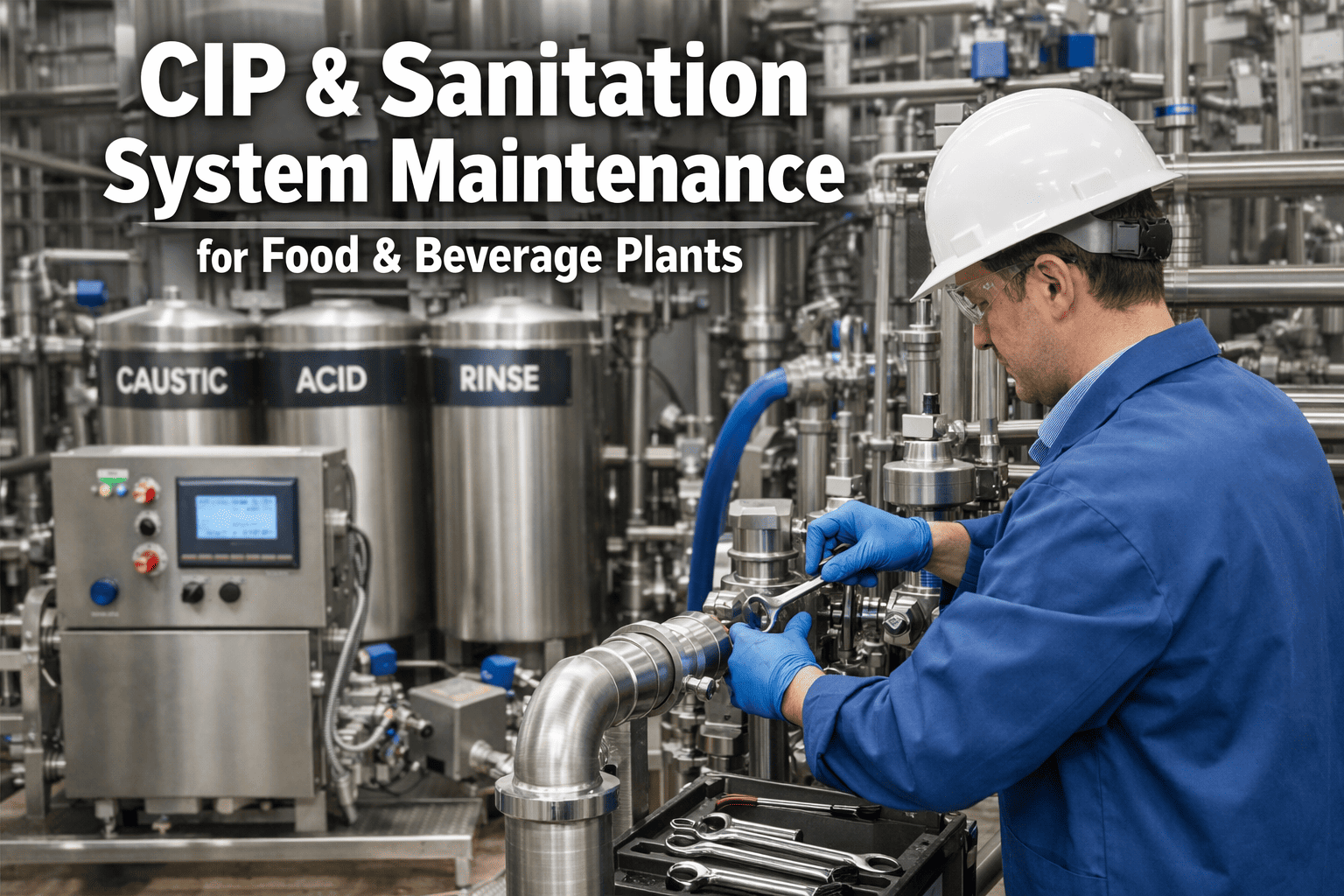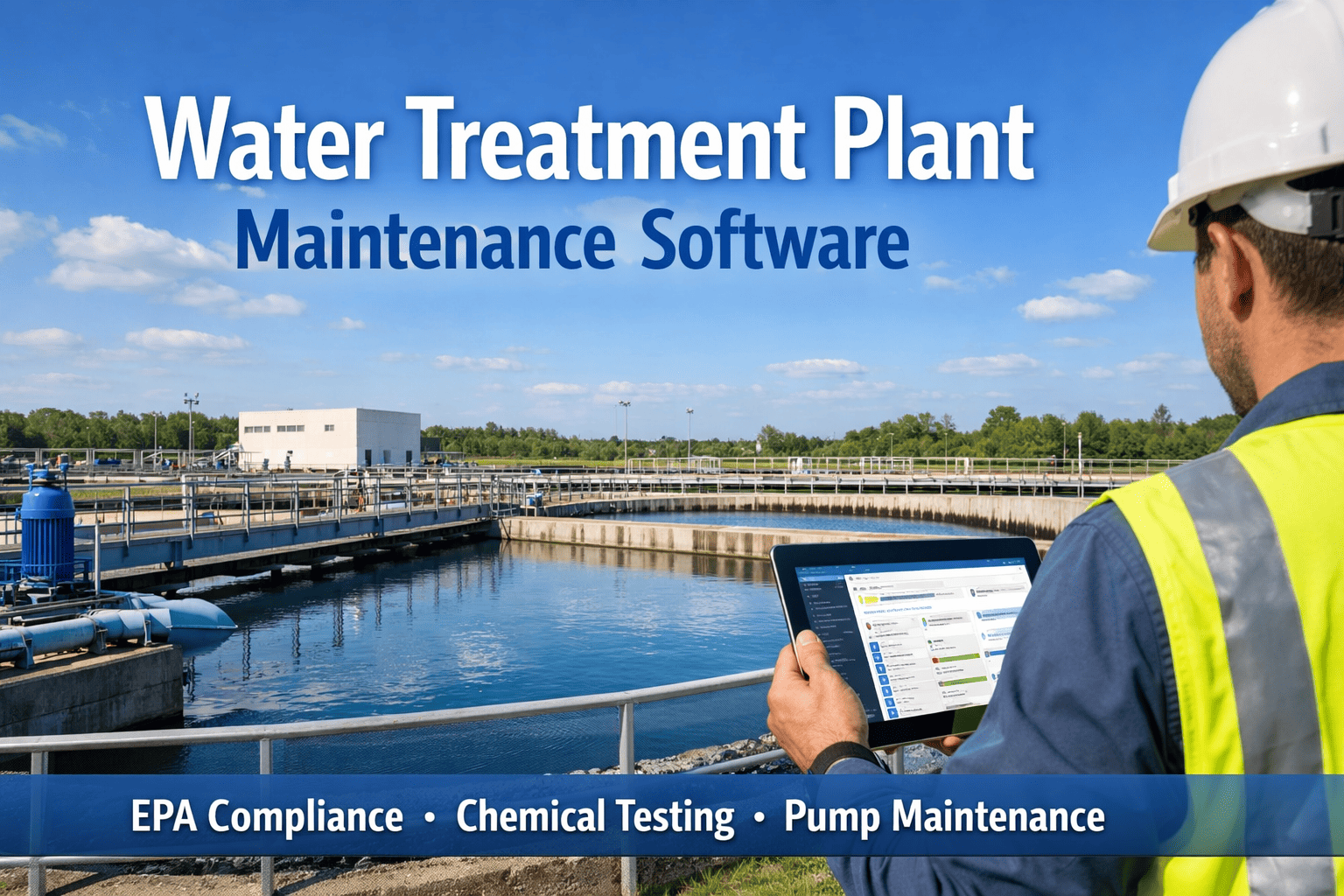
In a beverage plant, water is not a utility that supports production — it is the primary ingredient by volume, the blank slate every soft drink, bottled water, and beer is built on. That reframes the water treatment plant entirely: it is an ingredient-production line, and its maintenance is food safety maintenance. The train is a multi-barrier chain — pretreatment, reverse osmosis, UV, ozone, deaeration — where each stage removes a different threat and each has its own signature failure. An RO membrane fouls and salt passage climbs. A UV lamp keeps glowing while its dose quietly falls below the level that inactivates pathogens. A fouled quartz sleeve blocks that dose even with a brand-new lamp. None of these stops the line; each degrades the ingredient. And because the finished water feeds product directly, a lapse here is a recall risk and an FDA audit finding, not just a maintenance ticket. This shorter guide covers the PM that keeps the barrier train dependable: RO, UV, ozone, and deaeration. Start a free Oxmaint trial and schedule every treatment barrier on its own cadence, or book a demo to see water-quality sensors auto-raise corrective work orders.
Food & Beverage · Water Treatment · FDA Compliance
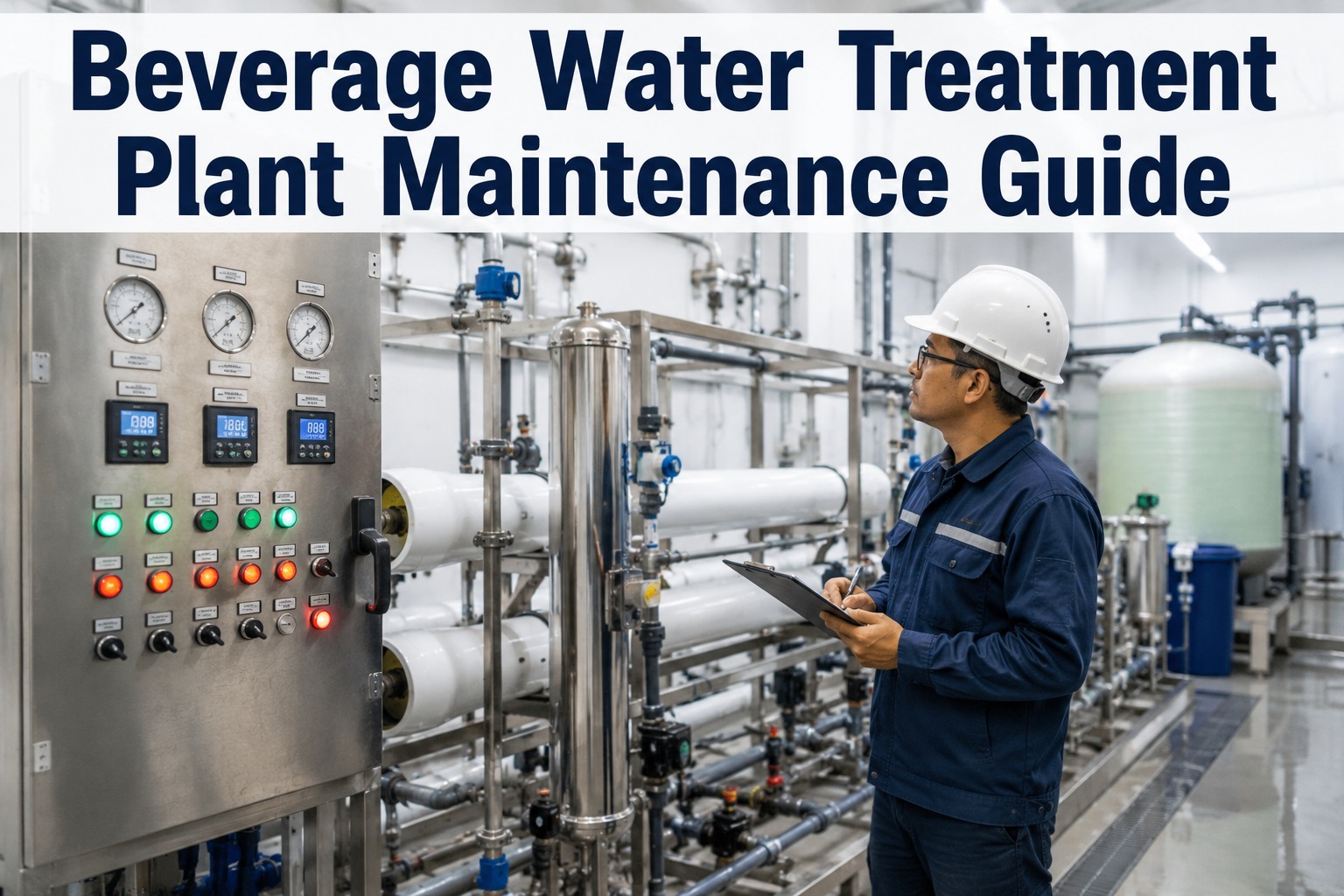
Beverage Water Treatment Plant Maintenance Guide
RO system PM, UV sterilizer maintenance, ozone systems, and deaeration tower upkeep — the maintenance that keeps beverage-grade water inside spec, because the water is the product.
-
70%
UV output floor before a lamp must be replaced
-
9–12k hrs
UV lamp life, roughly 12–16 months at 24/7
-
99.8%
RO membrane salt rejection when maintained
-
Monthly
dosing-pump output check against calibration drift
The Barrier Train
Every Stage Removes a Different Threat
Water moves through the plant as a sequence of barriers, each guarding against a specific failure. Read the train this way and the maintenance priorities fall out of it — a weak barrier passes its threat straight into the product.
-
1
Pretreatment protects the membrane
Multimedia filters drop turbidity below 1 NTU; carbon removes chlorine before it oxidizes the RO membranes. Undersized or exhausted carbon lets chlorine slip through and destroy the core of the system. -
2
Reverse osmosis strips TDS
The highest-value, most failure-sensitive asset in the plant — up to 99.8% rejection. Watch for the fouling signature: rising salt passage, rising pressure drop, falling permeate flow. Clean by validated CIP before it compounds. -
3
UV inactivates pathogens
Chemical-free, no byproducts — but only at validated dose. Lamps degrade to ~70% output by 9,000–12,000 hours while still lit, and a fouled quartz sleeve blocks dose even with a new lamp. Replace on hours, verify on intensity. -
4
Ozone & deaeration finish the water
Ozone gives residual protection in storage against biofilm; the deaeration tower strips dissolved oxygen so it cannot degrade flavor or drive corrosion. Both need dosing accuracy and instrument calibration to hold.
The classic catastrophic failure is a CIP backflow — hot sanitation water reaching the membrane housings warps the polyamide layers in seconds, so isolation valves between the CIP loop and the RO skid are themselves a maintained safeguard. Book a demo to see each barrier tracked against its failure signature.
The PM Cadence
What to Check, and How Often
Water treatment PM runs on condition and validated intervals together — because some failures announce themselves in a reading and others only in a lab result. These are the load-bearing tasks.
| Task | Interval | Guards Against |
|---|---|---|
| RO CIP cleaning | On fouling signature | Salt passage, pressure loss |
| Carbon media check | Scheduled | Chlorine breakthrough to membrane |
| UV lamp replacement | 9,000–12,000 hrs | Dose below validated level |
| Quartz sleeve cleaning | Recurring | Transmittance loss, blocked dose |
| Dosing pump output test | Monthly | Calibration drift, exceedance |
| CIP isolation valve check | Recurring | Hot backflow, membrane warp |
Distribution matters as much as production: keep velocity above 3 ft/s and eliminate dead legs, because treated water that has lost its chlorine is prone to biofilm. Sign up for Oxmaint to run validated intervals and condition triggers together.
Oxmaint for Beverage Water
How Oxmaint Runs Water Treatment PM
-
Sensor Triggers
Out-of-Spec to Work Order
Integrate conductivity, pH, turbidity, UV transmittance, and chlorine residual so an out-of-spec reading auto-generates a corrective work order — with advisory, corrective, and critical alert tiers routing by severity.
-
RO Health
Fouling Before Failure
Trend salt passage, pressure drop, and permeate flow per stage to catch membrane fouling early, and schedule validated CIP with logged chemistry, temperature, and flow so cleaning never voids the warranty.
-
UV Dose
Hours and Intensity
Track UV lamp operating hours for replacement and log intensity-sensor verification at changeout, with recurring quartz-sleeve cleaning so a new lamp is never undone by a fouled sleeve.
-
Dosing Control
Monthly Verification
Schedule monthly graduated-cylinder output tests on ozone and chemical dosing pumps to catch diaphragm wear and crystallization drift before it becomes a water-quality exceedance.
-
Audit Trail
FDA-Ready by Default
Every test result, task, corrective action, and deviation logged with timestamp and responsible person — producing the audit-ready documentation an FDA, HACCP, or GFSI review expects on demand.
-
One Register
The Whole Train
Filters, membranes, UV units, ozone generators, deaeration towers, and instruments in one asset register with condition and history — plus quarterly KPI review to catch assets nearing end of life.
Frequently Asked
Beverage Water Treatment Questions
How often should UV lamps be replaced in a beverage plant?
UV lamps degrade to about 70% of initial output after 9,000–12,000 operating hours — roughly 12–16 months at 24/7 operation — even while they remain physically lit. Replacement should be driven by that hours-based schedule but confirmed with validated intensity readings, since real degradation varies with feed-water chemistry, temperature, and cycling. Critically, mineral or biofilm fouling on the quartz sleeve reduces transmittance independently of lamp age, so a new lamp in a fouled sleeve still delivers insufficient dose. Book a demo to see lamp hours and sleeve cleaning tracked together.
What are the signs an RO membrane needs cleaning?
Three parameters signal fouling: increased salt passage, increased pressure drop across the stage, and reduced permeate flow. Monitoring these lets you clean before performance collapses. Cleaning is done by Clean-in-Place with validated chemistry, temperature, and flow — using the wrong solution or protocol can damage the membrane and void the warranty. Pretreatment matters just as much: exhausted carbon lets chlorine through to oxidize the membrane, the single fastest way to destroy an RO core.
Why do beverage plants use ozone and deaeration?
Ozone is a broad-spectrum sterilant that provides residual protection in storage tanks and distribution, where treated water that has lost its chlorine is vulnerable to biofilm. Deaeration towers strip dissolved oxygen from the water, which protects flavor stability and prevents oxygen-driven corrosion downstream — important for both product quality and equipment life. Both depend on dosing accuracy and instrument calibration, so they belong on the same maintenance and verification cadence as the rest of the train. Sign up for Oxmaint to schedule ozone and deaeration PM.
What makes water treatment an FDA compliance issue?
Because the treated water is a direct product ingredient, its quality is a food-safety control point under FDA rules, HACCP plans, and GFSI-benchmarked audit schemes. That means every water-quality test result, maintenance task, corrective action, and deviation must be documented with timestamp and responsible personnel, and produced as audit-ready reports on demand. Out-of-spec readings on product-contact water must route immediately to qualified personnel with defined response times — which is why sensor-triggered work orders and a complete audit trail matter as much as the equipment itself. Book a demo to keep water compliance audit-ready.
Pretreat · Purify · Disinfect · Document
The Water Is the Product. Maintain It Like One.
Every fouled membrane, aged UV lamp, clouded quartz sleeve, and drifting dosing pump is an ingredient going out of spec inside the plant. Oxmaint gives beverage water teams one platform to schedule every barrier on its cadence, trend RO health and UV dose, verify dosing monthly, trigger corrective work orders from water-quality sensors, and hold the FDA-ready audit trail — so the water that becomes the product is as controlled as the recipe.