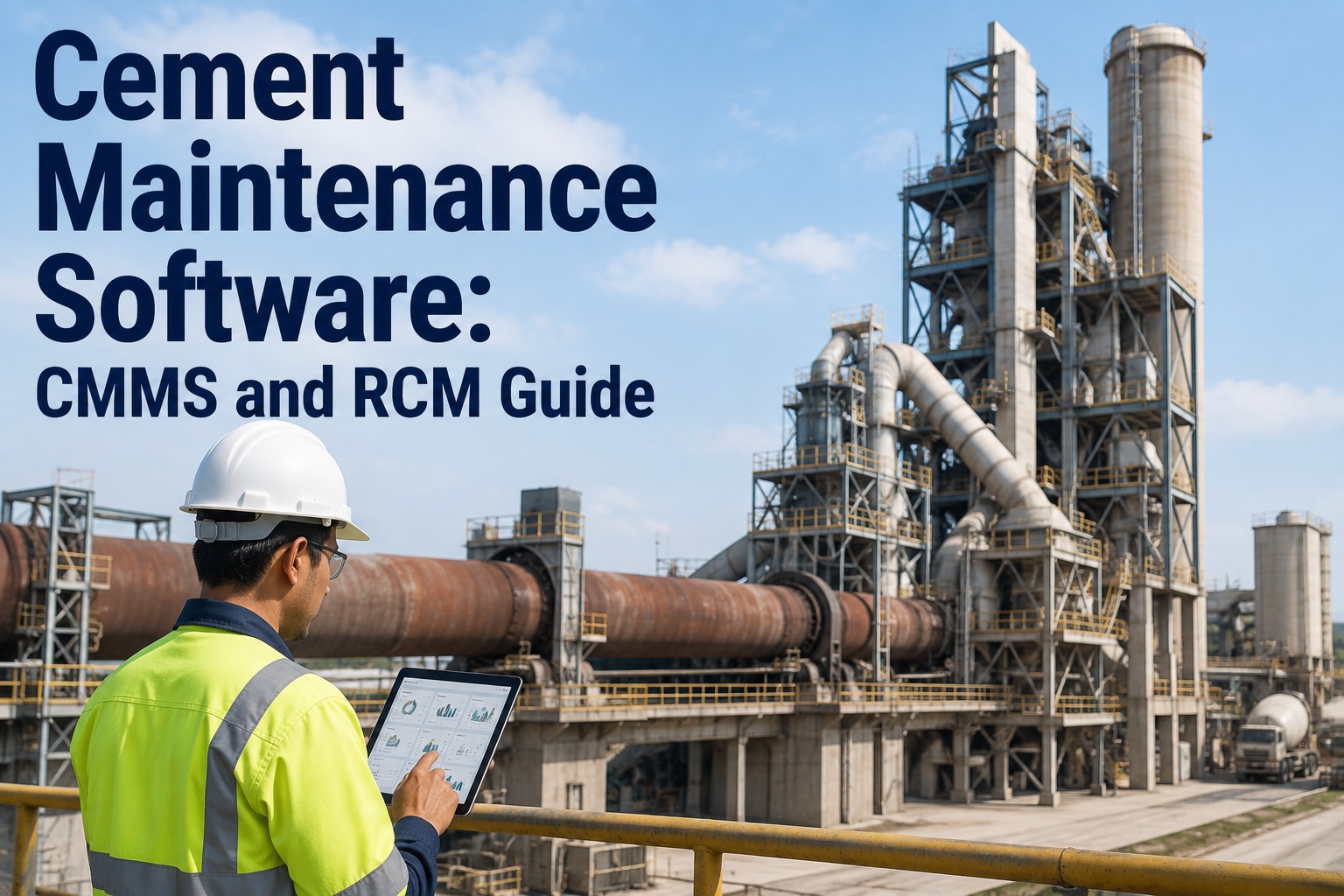
Reliability-Centered Maintenance (RCM) is the difference between a cement maintenance software operation that reacts to breakdowns and one that engineers them out. By integrating a modern CMMS with RCM principles, cement plants can automate work orders, track critical KPIs, and link every asset failure mode directly to a specific preventive task. Top-performing facilities use this approach to reduce unplanned downtime by up to 30%, extend the life of high-value equipment like kilns and mills, and lower total maintenance costs. Ready to see how OxMaint handles your plant's reliability program? Start Free Trial and deploy your first RCM asset hierarchy today.
CMMS RCM FOR CEMENT
Are You Engineering Out Breakdowns, or Just Reacting Faster?
Reliability-Centered Maintenance shifts your cement plant from firefighting to failure prevention. When integrated with a powerful CMMS, RCM ties every failure mode on your critical assets to an automated, data-driven task. Stop paying for unplanned downtime and start building a plant-wide reliability program that actually works.
A typical cement plant loses 15–25% of its annual production capacity to unplanned downtime and reactive maintenance. RCM implemented through a CMMS is how you get that back.
THE 7 RCM QUESTIONS
How to Map RCM to Cement Maintenance Software
Reliability-Centered Maintenance for cement plants requires asking seven standard questions to build an effective maintenance strategy for each critical asset. OxMaint's cement maintenance system turns the answers into automated triggers.
Define Operating Context
What is the asset's function and operating context in your plant? A raw mill operating at 95% capacity has different performance standards than a backup conveyor. OxMaint captures asset hierarchy and performance baselines.
Identify Functional Failures
In what ways can the asset fail to perform its intended function? Documenting functional failures in your cement CMMS setup ensures you track why a kiln stops, not just that it stopped.
Determine Failure Modes
What causes each functional failure? Pinpoint specific failure modes like bearing seizure or refractory wear. OxMaint links these failure mode libraries directly to work order templates.
Describe Failure Effects
What happens when the failure occurs? Quantify the production loss, safety risk, and environmental impact to prioritize resources effectively in your cement digital maintenance strategy.
Assess Failure Consequences
Does the failure matter? Evaluate operational, safety, and non-operational consequences to determine if proactive maintenance is even economically justified for the asset.
Select Maintenance Tasks
What should be done to predict or prevent the failure? Choose between condition monitoring, time-based PMs, or run-to-failure, and set automated PM triggers in OxMaint.
Execute Default Actions
If no proactive task is suitable, what happens? Default to redesign or run-to-failure. OxMaint schedules these secondary actions and tracks their long-term effectiveness via KPI analytics.
CMMS RCM FOR CEMENT
Choosing the Right Cement Maintenance Strategy for Each Failure Mode
Not every asset deserves a time-based PM. A true RCM analysis categorizes failure modes into four strategy buckets, ensuring your maintenance team spends time where it impacts the bottom line the most.
Run-to-Failure (RTF)
Used for low-criticality assets where downtime doesn't halt production and replacement is cheaper than maintenance (e.g., auxiliary fans, minor sensors). OxMaint tracks RTF assets and automatically triggers a work order upon failure detection.
Time-Based PM
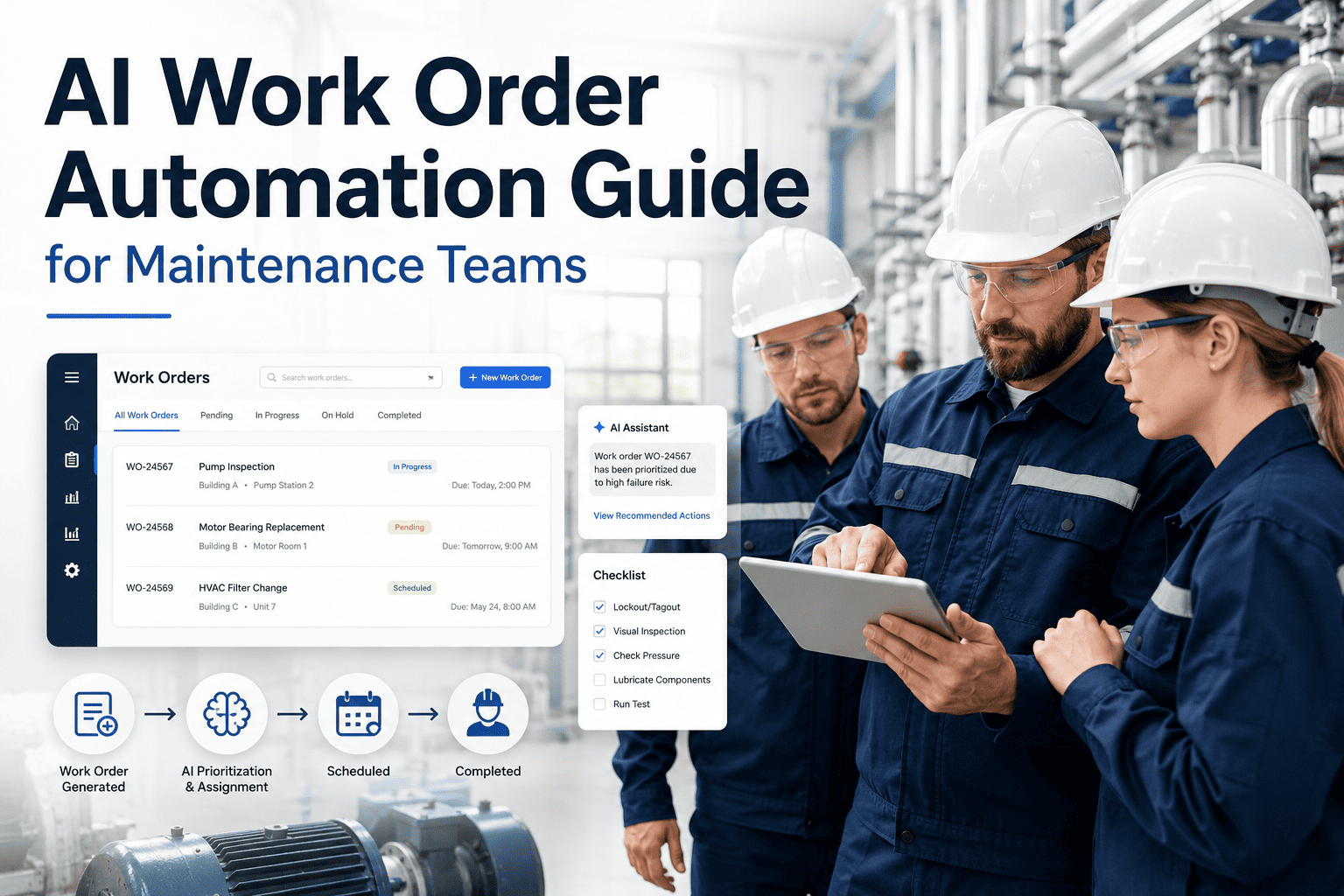
Scheduled inspections and component replacements based on calendar time or production cycles. Ideal for gearboxes and conveyors. OxMaint's cement work order automation schedules these PMs and enforces checklists via mobile.
Condition-Based Monitoring
Trigger maintenance only when sensor data indicates degradation. By integrating vibration and temperature data, OxMaint creates predictive work orders before a failure escalates on critical kilns and mills.
Redesign / Modification
When a failure mode is too frequent or dangerous, the asset must be redesigned. OxMaint tracks modification projects, captures new failure modes, and measures post-redesign reliability improvements.
CMMS KPI TRACKING
How OxMaint Drives Cement Reliability and Digital Maintenance
Implementing RCM without the right software is just theory. OxMaint translates your cement reliability strategy into automated workflows, giving you measurable ROI across your plant's most critical equipment.
Asset Hierarchies That Mirror Your Plant
Map your entire cement plant from the kiln down to individual bearings. OxMaint structures assets so failure modes and work orders roll up into accurate OEE and downtime reports.
Outcome: Cut MTTR by 25% with faster fault isolation.
Automated Work Order Triggers
Link failure modes directly to task templates. OxMaint's cement automated maintenance triggers work orders based on runtime hours, calendar dates, or condition-monitoring thresholds.
Outcome: Eliminate 90% of manual PM scheduling effort.
Predictive Maintenance Integration
Connect sensor data to your CMMS. OxMaint analyzes trends in vibration and temperature to predict failures on crushers and mills before they cause unplanned outages.
Outcome: Reduce unplanned downtime by 30–50%.
Real-Time KPI Analytics
Prove your RCM program works. Track MTBF, MTTR, and planned maintenance compliance with dashboards designed for maintenance and reliability managers in the cement industry.
Outcome: Audit-ready compliance with ISO 55000 standards.
CEMENT CMMS BEST PRACTICES
The Real Cost of Reactive Cement Maintenance vs. RCM
Consider a 180-asset cement plant spending $42,000 annually on emergency reactive maintenance for a single kiln line. By shifting to an RCM-driven approach within OxMaint, the plant slashes emergency repair costs, avoids massive production losses, and optimizes spare parts inventory.
| Maintenance Metric | Reactive (Spreadsheets) | RCM via OxMaint CMMS |
|---|---|---|
| Unplanned Downtime | 15–25% of capacity | Under 5% |
| Maintenance Cost as % of Sales | 8–12% | 3–5% |
| Work Order Compliance | Untrackable / Paper-based | 95%+ Automated Tracking |
| Mean Time Between Failures (MTBF) | Stagnant or Declining | Continuously Improving |
| Spare Parts Availability | Frequent Stockouts | Predictive Reordering |
See OxMaint on Your Assets — Book a 30-Min Demo
Stop losing production to preventable failures. Discover how easy it is to deploy an RCM framework and automate your cement maintenance system with OxMaint.
FAQ
Cement Maintenance Software and RCM FAQs
What is CMMS RCM for cement plants?
CMMS RCM for cement plants is the integration of Reliability-Centered Maintenance principles with a Computerized Maintenance Management System. It allows cement facilities to identify critical asset failure modes and automatically trigger preventive work orders, moving the plant from reactive breakdowns to engineered reliability. Start Free Trial to see it in action.
How long does it take to deploy a cement CMMS?
A focused cement CMMS deployment for an RCM pilot on your most critical assets can be completed in 4 to 6 weeks. OxMaint simplifies this by offering pre-built asset hierarchies and failure-mode libraries tailored to cement equipment like kilns, mills, and crushers.
Which cement maintenance KPIs should I track?
The most important KPIs for cement reliability include Mean Time Between Failures (MTBF), Mean Time to Repair (MTTR), Overall Equipment Effectiveness (OEE), and Planned Maintenance Compliance. Tracking these in a cement maintenance system proves whether your RCM strategy is actually reducing downtime.
Can OxMaint integrate with existing plant sensors?
Yes. OxMaint is built for cement digital maintenance and integrates with condition-monitoring sensors (like vibration and temperature analysis). This allows the CMMS to automatically generate predictive work orders when assets deviate from normal operating thresholds.
Is run-to-failure a valid RCM strategy in cement?
Yes. In RCM, run-to-failure is a deliberate strategy for low-criticality assets where the cost of prevention exceeds the cost of failure. OxMaint helps identify these assets and ensures that spare parts are stocked and replacement work orders are generated immediately upon failure.
Launch Your Cement Reliability Program Today
Join the cement plants using OxMaint to automate work orders, track KPIs, and engineer out downtime. Set up your RCM asset hierarchy in minutes.
Free 14-day trial · No credit card