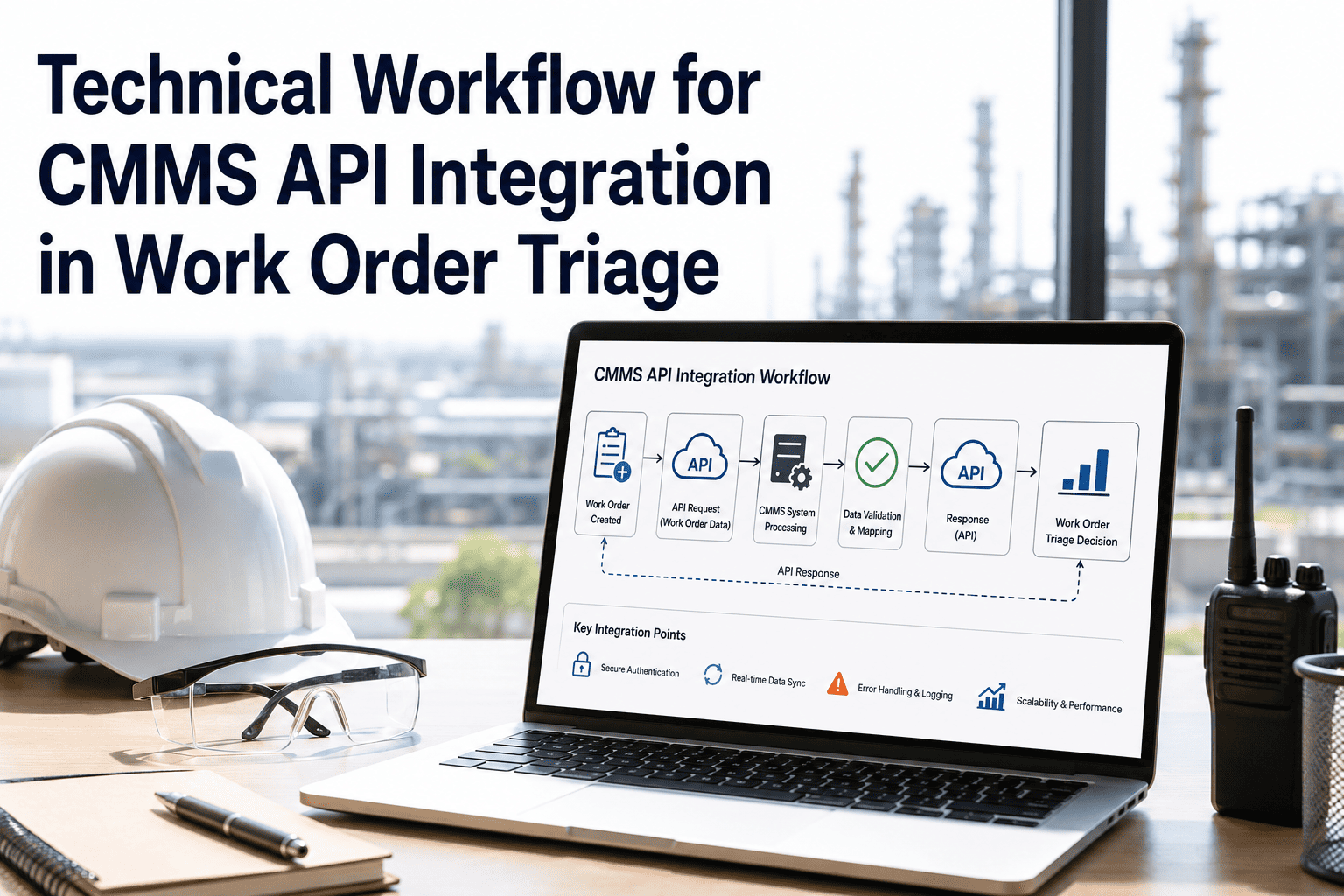
A digital twin that feeds maintenance decisions can cut unplanned downtime by half — but only if there's a direct path from the twin's health predictions to an actual work order in the hands of a technician. Most digital twin deployments stall here: the model runs, the risk scores update, and then nothing happens because there's no integration layer connecting the simulation output to the maintenance management system. This integration blueprint covers exactly how OxMaint connects to your digital twin platform, consumes health state data, applies maintenance triage logic, and dispatches work orders that arrive with full asset context and priority justification. Facilities running this blueprint report a 48% reduction in emergency maintenance spend within six months. To deploy this at your site, start a free trial or book a 30-minute digital twin integration session.
Digital Twin · Predictive Work Orders
Integration Blueprint: Digital Twin Maintenance in Work Order Triage
Your digital twin already knows which asset will fail next. OxMaint turns that prediction into a scheduled work order before the failure happens.
What the Integration Unlocks
▲
Risk-Based Work Order Priority
Twin-generated failure probability scores become the triage priority in OxMaint — so work orders are ranked by actual risk, not queue order.
◆
Failure Mode Context
The work order arrives with the twin's predicted failure mode, allowing technicians to bring the right tools and parts rather than diagnosing from scratch on site.
◯
Maintenance Window Optimization
Twin health trajectories let OxMaint schedule work in the next planned production window instead of triggering emergency shutdowns.
▼
Post-Repair Model Update
Work order closure data feeds back to update the twin's baseline, so the model stays calibrated to the asset's actual post-maintenance state.
48%Emergency maintenance cost reduction within 6 months of digital twin + OxMaint integration
21 daysAverage advance warning on high-risk failure predictions from production twin models
90%Of twin-triggered work orders in OxMaint include predicted failure mode at time of creation
The Integration Blueprint
| Blueprint Layer |
Digital Twin Side |
OxMaint Side |
Data Exchanged |
| Health State |
Publishes asset health score (0–100) and predicted RUL |
Ingests via REST API every polling interval |
Asset ID, health score, RUL estimate, confidence |
| Failure Prediction |
Emits failure mode prediction when probability exceeds threshold |
Converts prediction to high-priority work order |
Failure mode, probability %, predicted window |
| Maintenance Signal |
Receives maintenance completion event |
Posts work order closure to twin API on WO sign-off |
Repair type, parts replaced, technician, timestamp |
| Model Calibration |
Updates asset baseline using post-maintenance state |
Provides before/after sensor snapshot on WO close |
Sensor readings at repair + 24h post-repair |
Close the Gap Between Your Twin and Your Technicians
Most digital twin programs generate risk scores that nobody acts on. OxMaint provides the action layer — work orders, dispatch, and proof — that makes the twin's predictions count.
Supported Digital Twin Platforms
Expert Review
Reviewed by an Asset Performance Management Consultant
Digital twin programs stall for one consistent reason: the model team and the maintenance team never share the same system. Risk scores sit in a dashboard that technicians don't open. The integration blueprint that actually works treats the twin as a data source, not a decision-maker — the twin publishes a health state and OxMaint makes the maintenance decision and issues the work order. Keeping those responsibilities separate, with a clean API boundary between them, is what lets both systems evolve independently without breaking the workflow.
Frequently Asked Questions
Does OxMaint work with physics-based or data-driven digital twins?
OxMaint integrates with both. The integration layer consumes health state and failure prediction outputs via API, regardless of whether the underlying twin uses physics equations, machine learning models, or a hybrid approach. The key requirement is a published API endpoint that delivers asset health scores and predicted failure modes.
Book a walkthrough and bring your twin's API documentation — we'll scope the integration in the session.
How does OxMaint handle conflicting signals between the twin and direct sensor alarms?
When both a twin prediction and a direct sensor alarm exist for the same asset, OxMaint consolidates them into a single work order with both signals listed as evidence. The higher of the two severity scores becomes the work order priority. This prevents duplicate work orders for the same root cause while ensuring no signal is silently discarded.
Start a free trial to see how the signal consolidation rules are configured.
What work order data does OxMaint send back to the digital twin after repair?
On work order closure, OxMaint can post a structured maintenance event payload to the twin's webhook endpoint including: repair type, components replaced, technician ID, closure timestamp, and optionally post-repair sensor readings captured in the mobile app. This closes the calibration loop so the twin's next health prediction starts from the asset's actual post-repair state rather than a pre-maintenance baseline.
Can OxMaint suppress work orders when the twin predicts low failure risk?
Yes. OxMaint's triage rules can reference twin health scores to defer or deprioritize PM work orders on assets the twin rates as healthy. For example, a lubrication PM scheduled by calendar can be pushed forward two weeks if the twin's bearing health score is above 85. This dynamic scheduling approach reduces unnecessary PMs by 20–30% without increasing failure risk in most facilities.
Book a demo to configure risk-based PM deferral for your program.
Your Digital Twin Predicts. OxMaint Acts.
Connect the two and turn your simulation output into scheduled, evidenced, closed-loop maintenance — automatically.