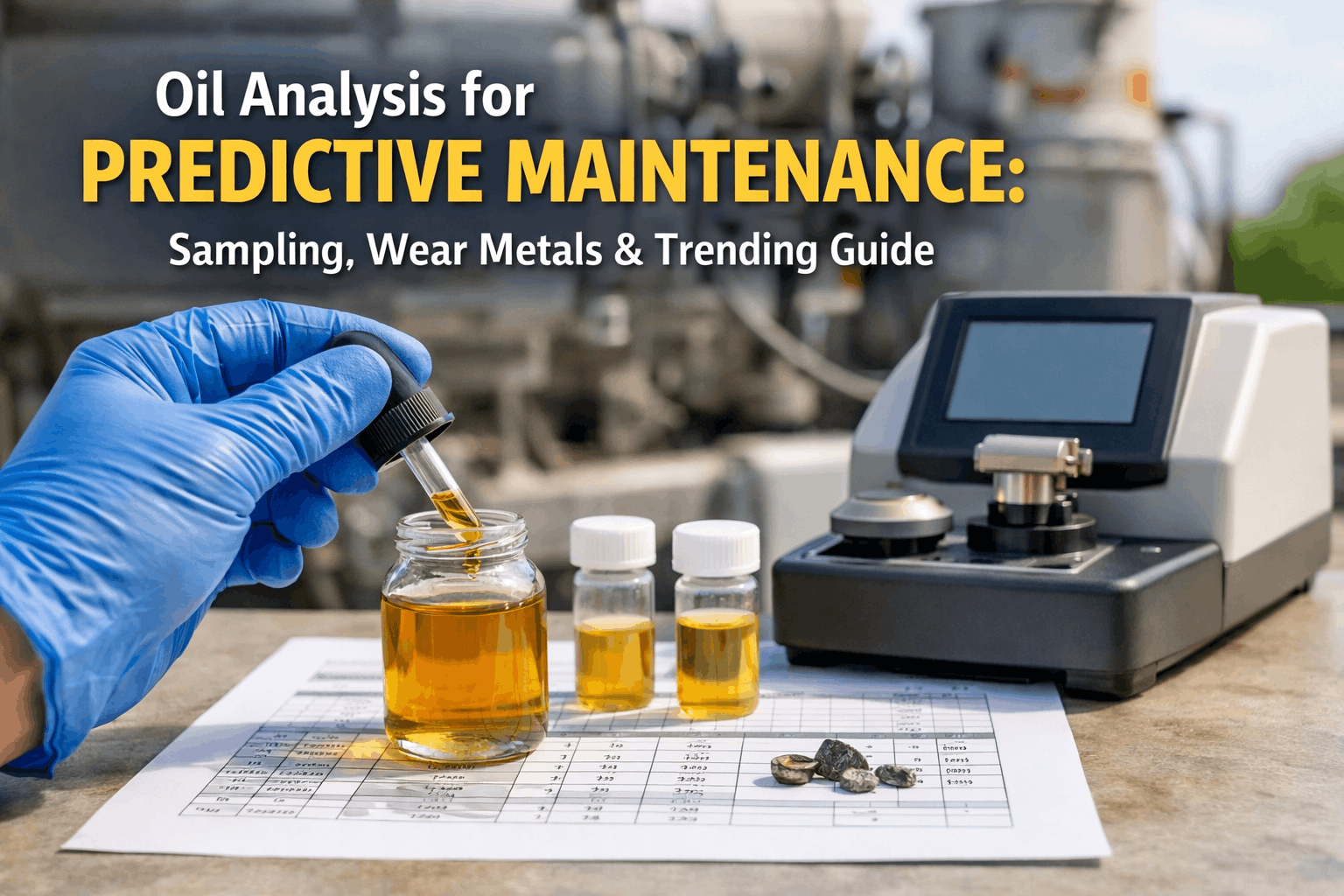
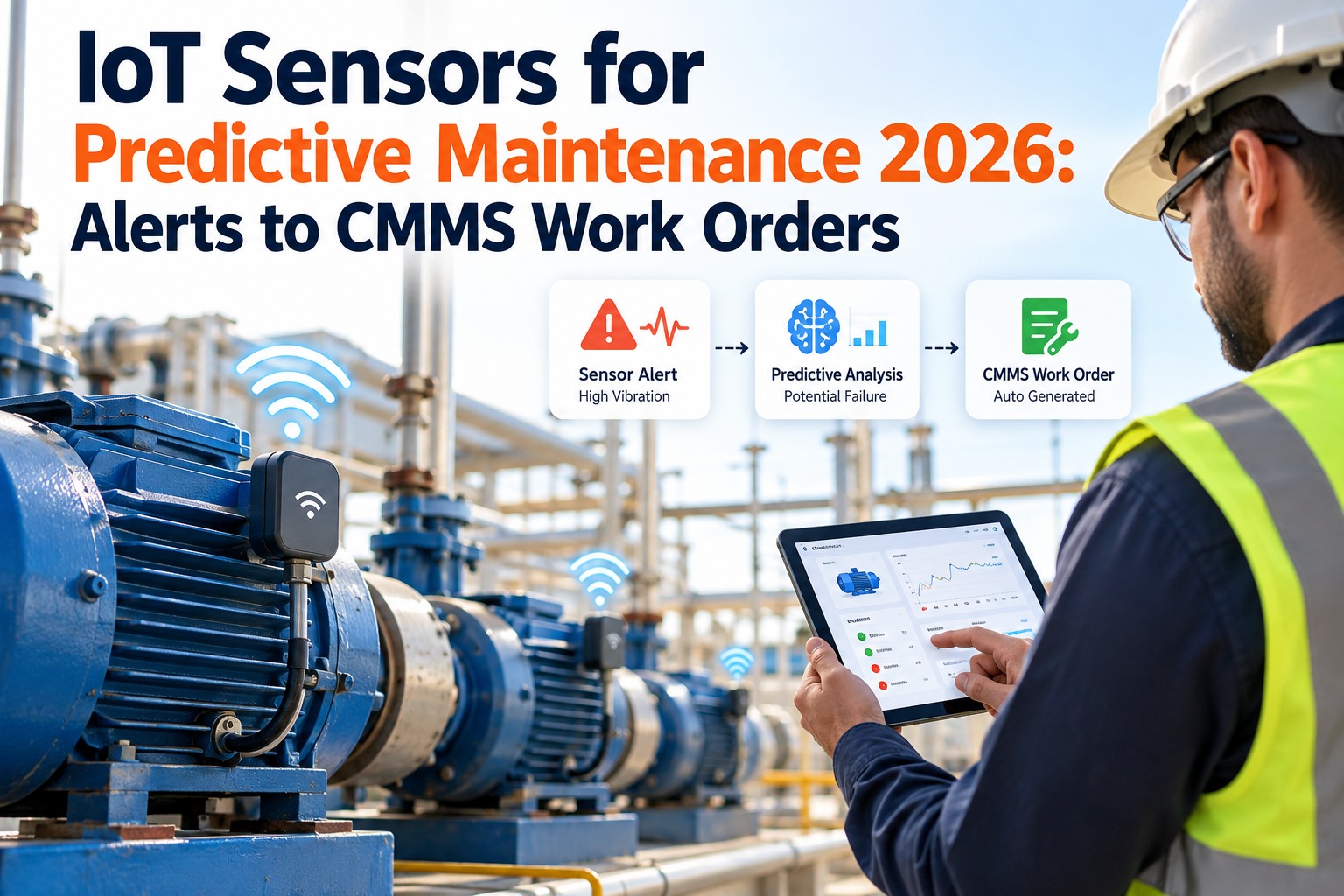
When a reliability engineer asks, "Did we catch the bearing wear on the main extruder?" and the maintenance manager responds, "The lab emailed a report saying iron levels were critical two weeks ago, but it got buried in my inbox," the integration gap becomes catastrophic. Having an oil analysis program is not enough; having an environment where fluid chemistry and wear metal data mirror physical reality in real-time is the standard. If your lubrication management relies on isolated PDF reports, manual data entry, and reactive oil changes, maintenance dollars are bleeding through invisible cracks in your machinery. The difference between reactive facilities and those with optimized uptime is the depth of their Predictive Maintenance Strategy—a seamless integration of oil sampling, lab analysis, and automated CMMS workflows. Talk to our team about closing the gap between your oil analysis lab and your actual maintenance execution.
Reduction in catastrophic bearing failures via early wear detection
3x
Extension of safe oil drain intervals, reducing fluid costs
10x
ROI achieved by catching contamination before secondary damage
100%
Traceability of fluid health when integrated with a modern CMMS
Why Unified Oil Analysis Drives Reliability
Every piece of rotating equipment—from hydraulic presses to heavy-duty gearboxes—relies on clean, chemically stable lubricating oil. Without deep CMMS integration, lab results sit in filing cabinets, abnormal wear goes unnoticed, and machines silently destroy themselves from the inside out. Unified predictive maintenance transforms oil analysis from a disjointed chemistry experiment into a strategic reliability asset, ensuring that microscopic wear metals trigger immediate, automated work orders before catastrophic failure occurs.
What Oil Analysis Integration Enables
Early Wear Detection
Spotting microscopic iron, copper, and lead particles long before vibration or heat signatures appear.
Optimized Drain Intervals
Transitioning from calendar-based oil changes to condition-based changes, saving thousands in lubricant costs.
Contamination Control
Identifying dirt (silica) and water ingress instantly, allowing technicians to replace faulty seals and breathers.
Automated Trending
Plotting elemental data over time in the CMMS to forecast the exact point when a component will fail.
Fluid Chemistry Tracking
Monitoring Total Acid Number (TAN), viscosity, and additive depletion to ensure the oil is still protecting the asset.
Root Cause Identification
Matching specific metal alloys in the oil to the exact gear or bearing that is shedding material.
Core Oil Analysis Metrics: The Diagnostic Stack
No single test handles the complexity of equipment health. A proper oil analysis program tests for Wear Metals (the machine), Contaminants (the environment), and Fluid Properties (the oil itself). A comprehensive integration strategy unifies these distinct metrics into a cohesive CMMS workflow. By synchronizing this data, facilities eliminate blind spots and create a single source of truth for asset reliability.
Key Analysis Points
Wear Metals (Spectroscopy)
Iron (Fe) - Gears/CylindersCritical
Copper (Cu) - Bearings/BushingsHigh
Lead (Pb) - Babbitt BearingsHigh
Usage: Component Wear Rates
Value: Failure Prediction
Contamination
Silicon (Si) - Dirt/DustHigh
Water (H2O) - Ingress/CondensationHigh
ISO Particle CountMedium
Usage: Seal & Breather Integrity
Value: Root Cause Avoidance
Fluid Chemistry
Kinematic ViscosityHigh
TAN/TBN (Acidity/Basicity)High
Oxidation/NitrationMedium
Usage: Oil Degradation
Value: Drain Optimization
Additive Depletion
Phosphorus (Anti-wear)High
Zinc (ZDD/Oxidation inhibitor)High
Calcium (Detergent)High
Usage: Lubricant Lifespan
Value: Asset Protection
CMMS Alerting
API IntegrationHigh
Auto-Work Order TriggersHigh
Historical Trending LimitsHigh
Usage: Execution & Workflow
Value: Actionable Speed
Mobilize Your Predictive Data
Oxmaint's integration layer connects your oil lab results directly to your maintenance workflows—allowing staff to receive automatic work orders for filtration, oil changes, or bearing inspections the moment contamination limits are breached.
The 1-5 Integration Maturity: Standardizing Operations
To prioritize predictive transformation, facilities must assess their lubrication integration maturity. A standardized 1-5 scale translates complex lab data into a roadmap for maintenance leadership. This allows directors to move from "Reactive Firefighting" (Level 1) to "Predictive Excellence" (Level 5) systematically.
Oil Analysis Integration Maturity Scale
5
Optimized — Inline Sensors & CMMS AI
Inline real-time sensors monitor viscosity and particles continuously. CMMS AI correlates vibration, temperature, and oil data to predict precise failure dates.
Action: Continuous innovation & machine learning
Goal State
4
Managed — Real-Time Integrated
Lab results sync to CMMS automatically via API. Warning/Critical limits trigger instant work orders. Planners use historical trend graphs for decision making.
Action: Focus on root cause elimination
High Efficiency
3
Defined — Routine Lab Testing
Samples taken at defined intervals using proper techniques. Lab reports emailed as PDFs. Planners manually review PDFs to decide if work is needed.
Action: Automate data transfer to CMMS
Standard
2
Repeatable — Time-Based Drains
Oil changes happen on calendar intervals regardless of condition. Very few samples taken. High waste of healthy fluid and blind to internal wear.
Action: Establish baseline lab testing
Inefficient
1
Ad-hoc — Run-to-Fail
Reliance on visual "looks dirty" checks or waiting until the machine breaks. High rates of catastrophic failure and secondary component damage.
Action: Implement immediate PM schedules
High Risk
The Cost of Disconnection: Compounding Damage
Ignoring a lab report is not just an administrative oversight; it is a financial drain. A simple silica ingress (dirt) problem compounds into abrasive wear, which destroys bearings, which misaligns shafts, eventually requiring expensive complete rebuilds. The cost of addressing contamination at the source is minimal compared to the cost of project stoppage. The "Cost of Disconnection" model illustrates why real-time CMMS integration is an operational imperative.
Cost of Ignored Oil Anomalies over Time
Cost multiplier relative to immediate proactive correction
5 Contamination
$50 (Change Breather Filter)
1x
4 Fluid Degradation
$250 (Full Oil Flush/Change)
5x
3 Abrasive Wear
$1,200 (Replace Worn Bearings)
24x
2 Collateral Damage
$8,500 (Replace Scored Shafts/Seals)
170x
1 Asset Failure
$65k+ (Total Gearbox Replacement)
1300x
Investing in real-time integration (Level 4-5) prevents the exponential costs of operational failure (Level 1).
Turn Fluid Data into Actionable Intelligence
Oxmaint helps maintenance teams track wear metals, automate oil change schedules, and visualize contamination trends—ensuring that your lab data leads to real-world reliability, not just another unread PDF.
A robust oil analysis program follows a disciplined lifecycle—from establishing asset baselines to CMMS deployment. This cycle ensures that sample data is statistically valid and workflows are streamlined for the end-user. Systematic execution of these phases builds user adoption and ensures long-term equipment health.
Predictive Lubrication Lifecycle
1
Asset Selection & Baselines
Identify critical rotating assets. Establish baseline metallurgy profiles and clean-oil reference samples so the lab knows exactly what "normal" looks like for your specific lubricants.
Preparation Phase
2
Proper Sampling Procedures
Install pitot tubes or dedicated sample ports on active fluid lines. Train technicians to take samples under normal operating conditions to prevent "bottom-of-the-sump" false readings.
Design Phase
3
Lab Testing & Limits
Configure ISO particle count goals and define Marginal and Critical thresholds for wear metals (e.g., Fe > 50ppm = Warning). Establish testing frequency based on asset criticality.
Build Phase
4
CMMS Trending & Alerts
Integrate the lab's API with the CMMS. Set up automated condition-monitoring triggers so that an elevated Copper reading instantly generates a "Check Thrust Bearing" inspection work order.
Validation Phase
5
Root Cause Resolution
Don't just change the oil; fix the problem. Use historical trend charts to identify if contamination is due to failed breathers, poor top-off practices, or operating environment changes.
Continuous
Expert Perspective: The "Blood Test" Philosophy
"
Think of oil analysis exactly like a human blood test. If your doctor tells you your cholesterol is critically high, you don't just put the paper in a drawer and hope you don't have a heart attack. Yet, maintenance teams do this every day. They pay for lab testing, get a report showing dangerous silica ingress, and do nothing until the pump binds up. Integrating your fluid analysis directly into a CMMS removes the human bottleneck. When the lab flags high water content, the CMMS generates the work order before the shift even starts. That is the essence of predictive reliability.
— Reliability Manager, Heavy Manufacturing
60%
Reduction in lubricant spend via condition-based changes
40%
Increase in rotating asset lifespan
Zero
Missed critical lab alerts after CMMS integration
The facilities achieving true operational excellence share a common trait: they view lubrication not as a consumable commodity, but as a diagnostic tool. By leveraging fluid analysis, strict contamination limits, and automated CMMS trending, these organizations turn chemistry into logic. When the system acts on real-time wear data, production runs uninterrupted. Start building your predictive framework with the tools that drive visibility and results.
Empower Your Reliability Team
Oxmaint provides the digital interface for modern predictive maintenance—syncing seamlessly with your lab data to centralize trends, automate work orders, and track the health of every asset to ensure total uptime.
What is the correct way to take an oil sample for accurate analysis?
Consistency is everything. Samples should be taken while the machine is operating at normal temperature and load, or within 30 minutes of shutdown. Never take a sample from the very bottom of a sump or drain port, as accumulated sludge will heavily skew the results. The best practice is to install dedicated primary sampling valves (like pitot tubes) on active fluid lines before filters, ensuring the sample represents the true condition of the circulating oil.
How do I interpret wear metals in an oil analysis report?
Wear metals are measured in parts per million (ppm). A sudden spike in Iron (Fe) typically points to cylinder, gear, or shaft wear. Copper (Cu) often originates from bronze bearings, bushings, or oil cooler leaching. Lead (Pb) and Tin (Sn) usually indicate babbitt bearing wear. The key isn't just the absolute number, but the *rate of change* (trending). A slow, steady climb is normal wear; an exponential spike is a predictive failure indicator.
What are the critical contamination limits I should monitor?
The two most destructive contaminants are dirt (measured as Silicon, Si) and Water (H2O). Even microscopic silica acts as a lapping compound, accelerating abrasive wear exponentially. Water degrades the oil's viscosity, promotes rust, and destroys additives. Facilities should strictly enforce ISO particle count limits (e.g., ISO 16/14/11 for hydraulics) and take immediate action—such as deploying a kidney-loop filtration cart—if limits are breached.
How does integrating oil analysis with a CMMS improve reliability?
Without a CMMS, oil analysis relies on someone reading a report, remembering to create a work order, and scheduling it. A modern CMMS like Oxmaint can ingest data via API directly from the lab. If the iron ppm crosses the "Critical" threshold, the system automatically generates a prioritized work order, attaches the lab report, and routes it to the reliability team. It closes the loop between diagnostics and execution.
What is the ROI of implementing a dedicated oil analysis program?
The ROI is multi-faceted. First, it eliminates the cost of replacing perfectly good oil by shifting from time-based to condition-based changes. Second, it identifies minor issues (like a $20 failed breather seal causing dirt ingress) before they destroy a $50,000 gearbox. Finally, predicting wear allows planners to schedule repairs during planned outages rather than suffering costly, mid-shift emergency downtime.