Shutdown scope creep is the single most common reason turnarounds run over budget and over schedule. Sign up for Oxmaint to plan shutdown work with defined scope, parts readiness checks, job sequencing, and safety verification — so your next outage finishes on time and within budget.
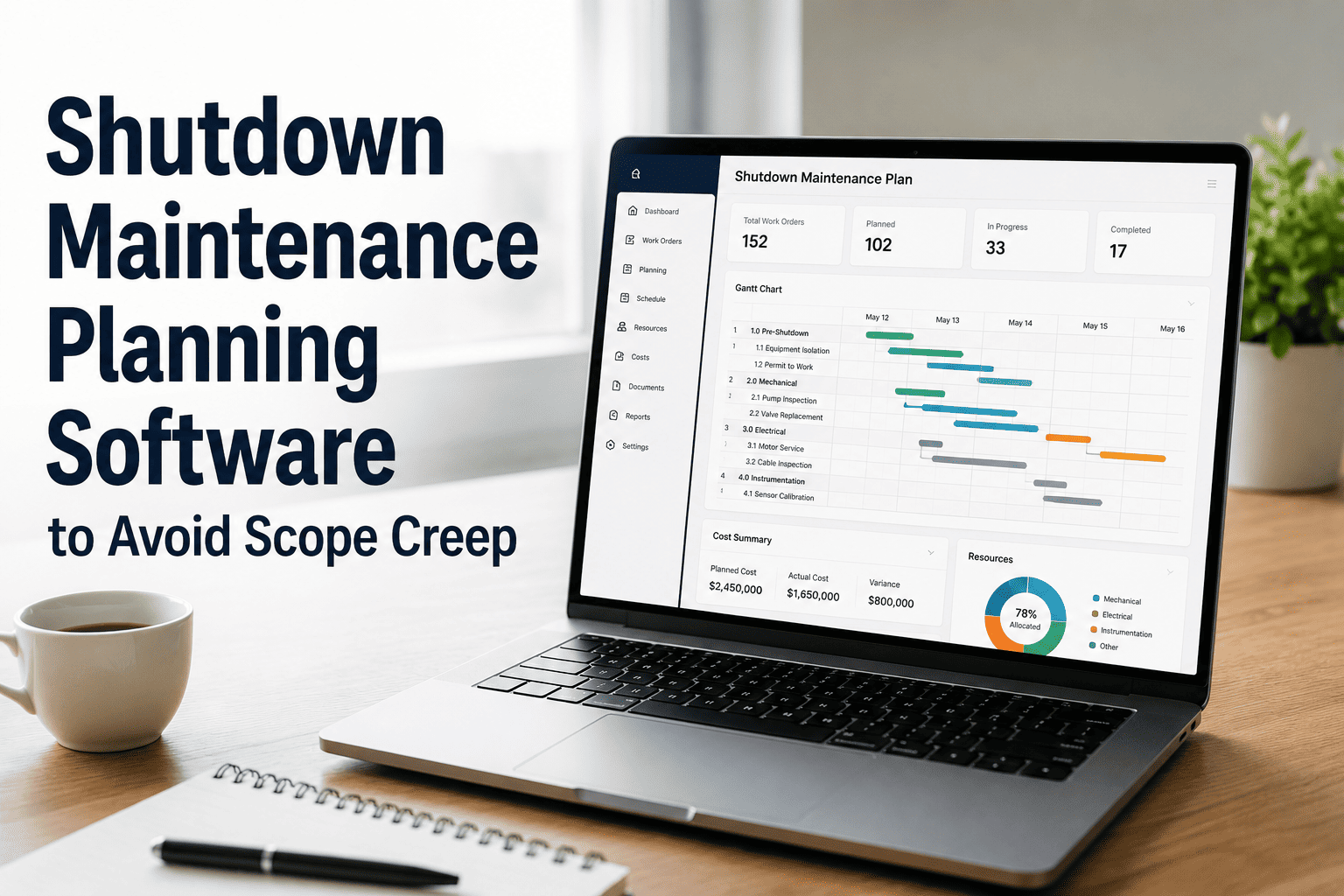
Shutdown Maintenance Planning: How to Avoid Scope Creep
Every hour of unplanned shutdown extension costs more than the original scope ever justified. This guide walks through the five disciplines that keep shutdown work within scope — and what happens when each one breaks down.
The Five Triggers That Expand Shutdown Scope Without Plan
Technicians open equipment and find additional defects. Without a formal scope change authorization process, these additions enter the work list informally — expanding duration and cost without any approval or schedule adjustment.
Jobs arrive on-site without confirmed parts availability, tooling, or contractor scope. Work halts while missing items are sourced. The idle time drives schedule extension — which then gets used to add more scope rather than restart original work.
Without a formal scope freeze cutoff — typically 3 to 6 weeks before shutdown — requests keep arriving until the day of outage. Late scope additions are always the most disruptive because sequencing and resource allocation are already locked.
The shutdown window presents access to normally running equipment. Teams add opportunistic maintenance tasks without pre-approving the resource, parts, and time impact. Each small addition looks low-impact individually but compounds to days of extension.
Without a central progress dashboard, shutdown coordinators cannot identify which jobs are behind until the overall schedule is already at risk. Late detection of delay means recovery options are expensive — more contractors, more overtime, more scope deferral.
Shutdown Readiness Checklist — Before Outage Begins
Plan Your Next Shutdown in Oxmaint
Scope management, parts readiness, job sequencing, and real-time progress — all in one shutdown planning module. Book a demo to see a live shutdown configured with full pre-outage readiness tracking.
How to Handle Discovery Work Without Losing Schedule Control
Any discovery item must be logged as a separate work request — not added informally to the existing job. The request includes estimated time, parts needed, and safety implications.
The coordinator assesses schedule impact of adding the discovery item — does it affect the critical path? Is the required part in stock? Is a technician available without pulling from another job? This takes under 10 minutes with a proper shutdown management system.
Safety-critical discovery items are approved regardless of schedule impact. Non-critical items are deferred to a planned maintenance window. The decision is logged with the reason — creating an auditable record and preventing informal scope additions.
Any approved addition updates the shutdown schedule automatically. If the critical path extends, stakeholders are notified immediately — not discovered at the next daily coordination meeting when recovery is already too late.
Metrics That Define Shutdown Performance
| KPI | Target | What It Measures | Warning Signal |
|---|---|---|---|
| Schedule Adherence | Within 5% of plan | Actual completion time vs planned duration | Scope additions after freeze date |
| Budget Variance | Within 8% of estimate | Final cost vs approved shutdown budget | Discovery work volume exceeding 10% of total |
| Work Order Completion Rate | 95% or above | Planned jobs completed during outage | Parts or contractor shortfalls |
| Scope Change Rate | Under 8% of job count | Jobs added after scope freeze as percentage of total | Inadequate pre-shutdown inspection regime |
| First-Time Start Success | 98% or above | Percentage of assets starting cleanly after outage | Post-maintenance verification gaps |
What Shutdown Planning Specialists Say About Scope Control
Shutdown Planning — Common Questions
Oxmaint's shutdown module includes a formal scope change request workflow. Discovery items or opportunity additions are submitted as change requests with time, parts, and safety impact noted. The shutdown coordinator reviews and approves, defers, or escalates each request — and the decision is logged with timestamp and reason. Approved changes update the schedule automatically and notify affected team leads. No informal additions can enter the active work list without this process. Sign up to see the scope change workflow.
Yes. Each work order in an Oxmaint shutdown plan links to the parts required for that job. The parts readiness dashboard shows, for every job in the shutdown scope, whether parts are in stock, on order with an expected delivery date, or at risk of shortage. Shutdown coordinators review this view in the final weeks before the outage to identify and resolve parts gaps before the equipment is taken offline — not after. Book a demo to see the parts readiness dashboard live.
Oxmaint allows shutdown coordinators to define dependencies between work orders — job B cannot start until job A is complete, or both jobs require the same isolation point and cannot run simultaneously. The scheduling view shows the full job sequence with critical path highlighted. Any change to a job's estimated duration automatically adjusts downstream jobs. This sequencing logic is what prevents the common failure mode where two contractor teams arrive at the same access point at the same time and both are blocked.
During an active shutdown, Oxmaint provides a real-time progress dashboard showing percentage completion by work area, jobs behind schedule, work orders awaiting parts or clearance, and overall critical path status. The dashboard updates as technicians close out individual tasks on mobile devices in the field. Shutdown coordinators see the full picture without physically walking every work area — and can redistribute resources to jobs at risk before the delay becomes a schedule extension. Start free to configure the shutdown progress view.
Your Next Shutdown Deserves Better Scope Control
Oxmaint shutdown management gives planners the scope freeze tools, parts readiness visibility, job sequencing, and real-time progress tracking to finish on time and within budget. Book a demo to see your outage planned from pre-shutdown to first-time start.