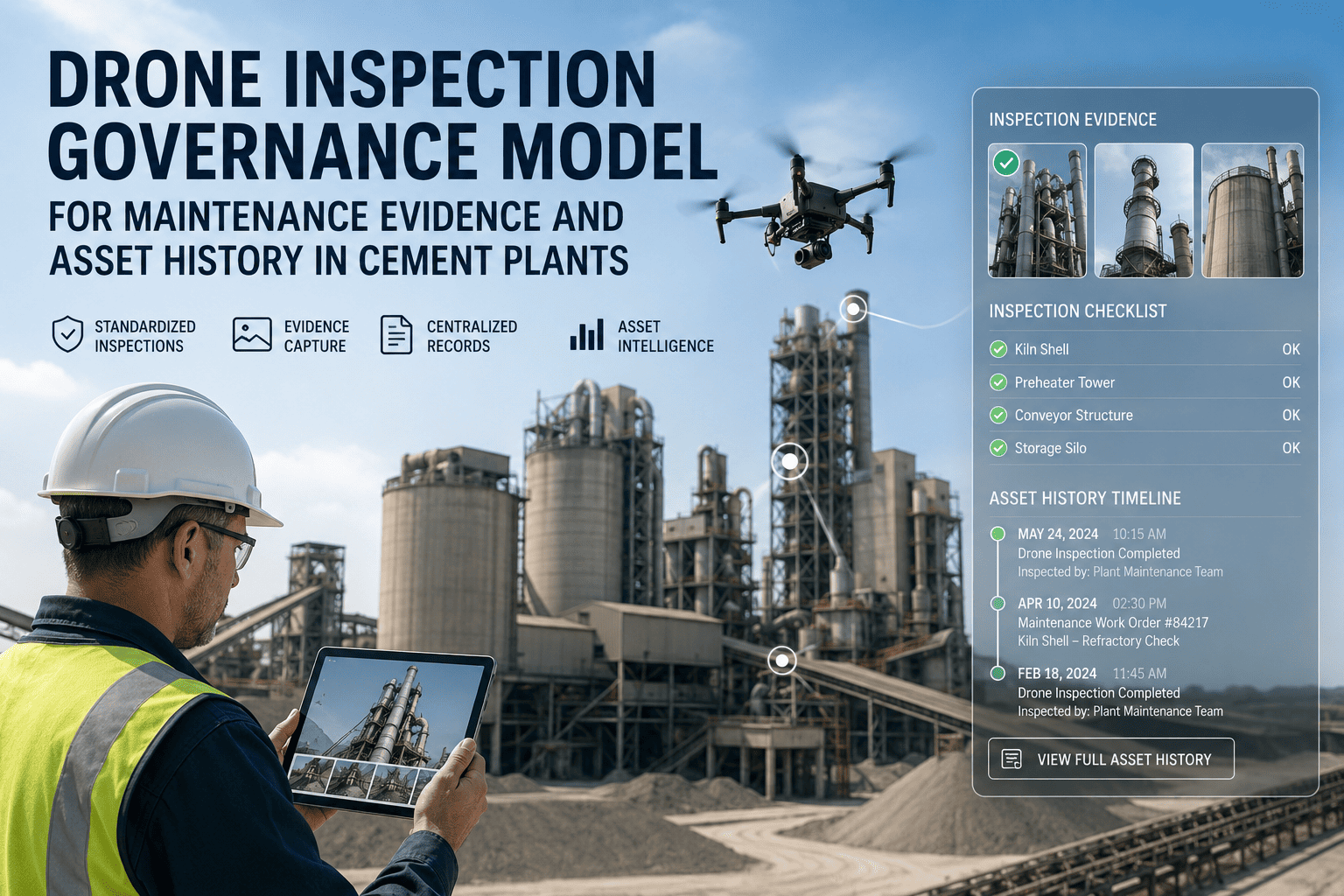
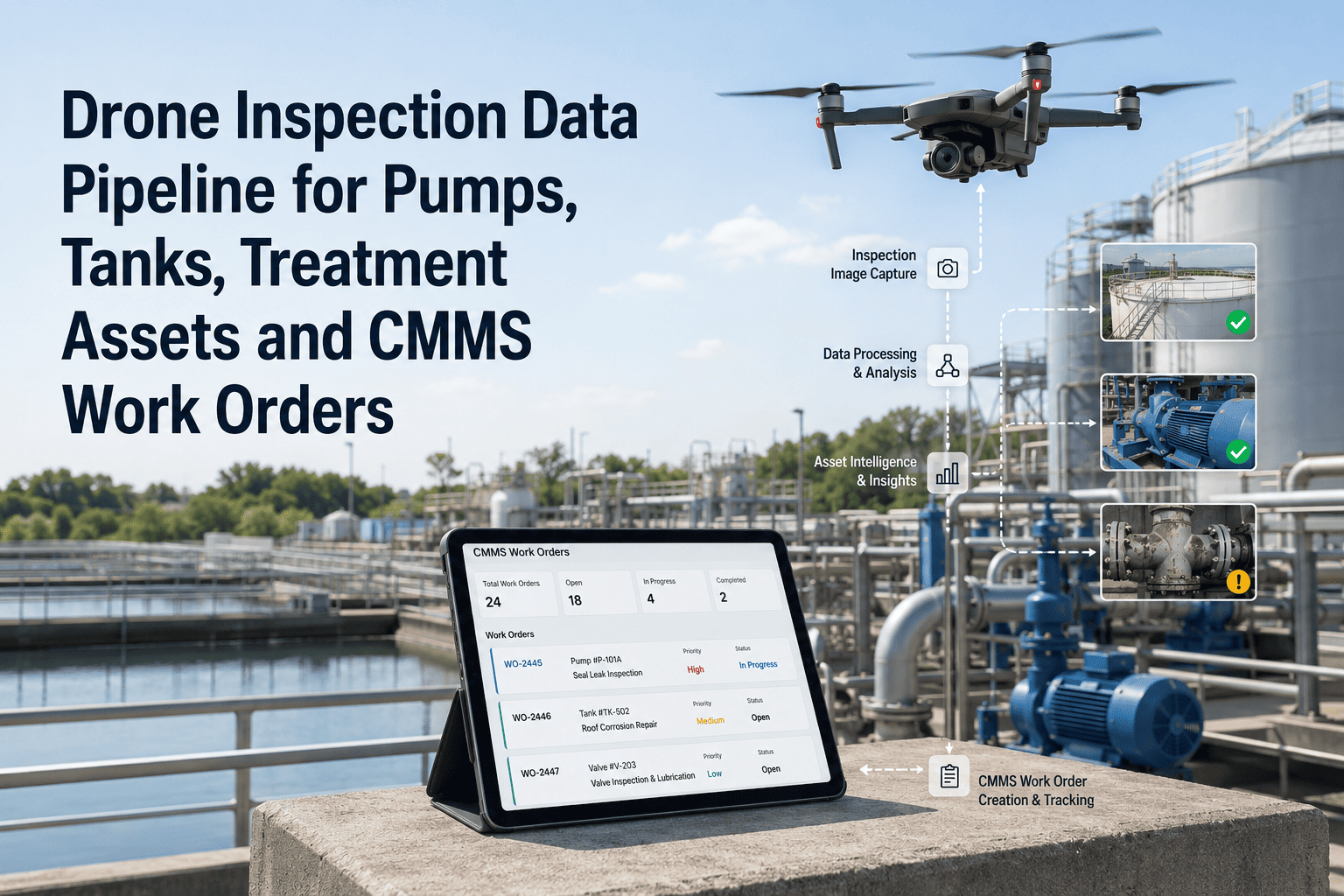
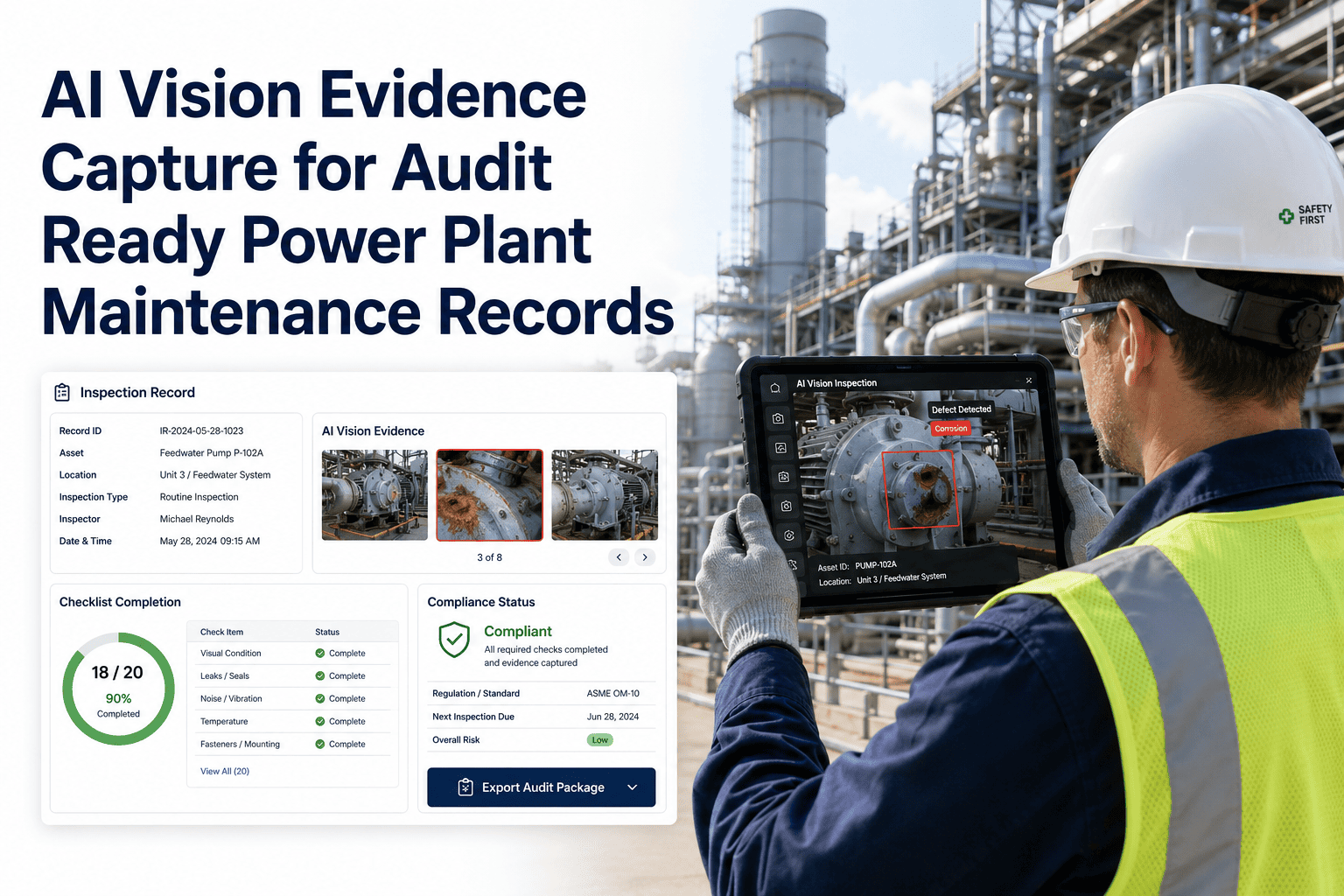
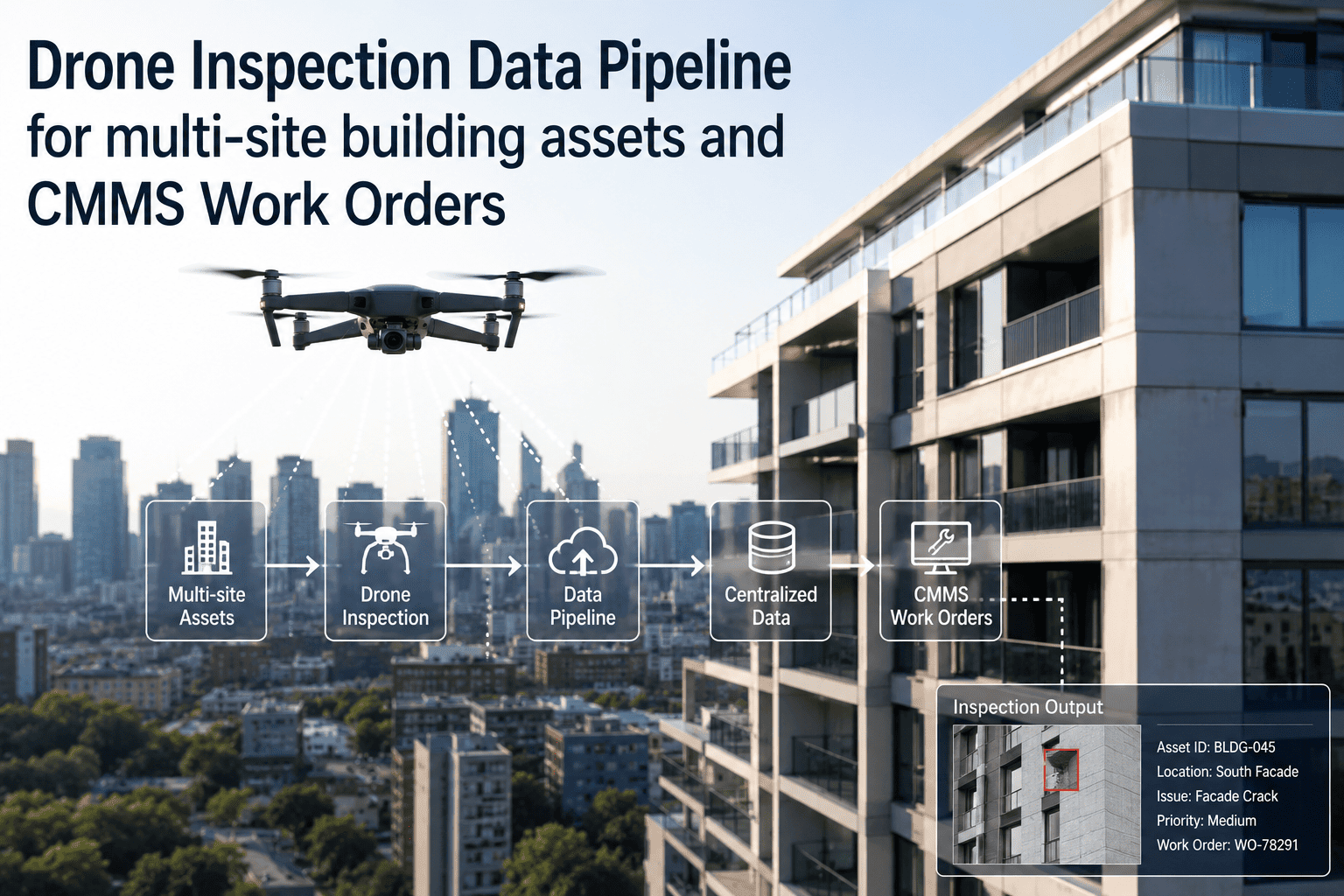
Cement plants present some of the most demanding inspection challenges in heavy industry — clinker coolers, preheater towers, rotary kilns, and raw mills operate continuously at extreme temperatures with limited access for human inspectors. Drone inspection programs are solving the access problem, but without a governance model connecting drone evidence to maintenance records and work orders, the data remains unactioned. OxMaint provides cement plant maintenance teams with a structured drone inspection governance framework — linking AI-analyzed drone footage to timestamped work orders, asset maintenance history, and uptime analytics, so inspection findings translate directly into maintenance outcomes rather than report archives.
DRONE INSPECTION · CEMENT PLANT MAINTENANCE · GOVERNANCE & EVIDENCE
Drone footage shows what is wrong. OxMaint governance ensures it gets fixed — and documented.
A drone inspection program without a CMMS governance model produces excellent footage and poor maintenance outcomes. OxMaint closes the loop from aerial finding to verified repair, with every step traceable and audit-ready.
THE GOVERNANCE GAP
Why drone inspection programs fail to improve cement plant uptime
No chain from finding to work order
Drone footage goes to a review folder. A supervisor manually creates a ticket — sometimes. Without automated signal routing, 40–60% of drone-identified issues are never assigned.
Evidence not linked to asset history
Drone images sit in a media folder disconnected from the asset's maintenance record. When the same failure recurs, teams have no archived evidence of prior inspections to reference.
No verification of repair completion
Even when a work order is created, there is no system confirming the drone-identified defect was actually repaired — leaving compliance and quality gaps in the maintenance record.
Audit trails are manually assembled
For regulatory or insurance audits, teams manually compile drone logs, inspection dates, and work orders — a process that takes days and inevitably produces gaps.
THE GOVERNANCE MODEL
OxMaint drone inspection governance — four layers that make evidence actionable
Layer 1
Structured Evidence Intake
Drone footage and AI-annotated defect images are ingested into OxMaint with asset tag, inspection date, zone, and severity score — not stored in generic media folders. Every finding is a structured data record from the moment of capture.
Layer 2
Automated Work Order Routing
Validated findings auto-generate work orders with drone evidence attached, routed to the qualified technician or contractor based on defect type and asset criticality. Critical findings — spalling, structural cracks, refractory damage — trigger immediate P1 assignments.
Layer 3
Asset History Integration
Every closed work order feeds into the asset's maintenance history in OxMaint — creating a searchable record of all drone-identified defects, repair actions, and recurrence patterns specific to each asset in your cement plant.
Layer 4
Compliance & Audit Export
The full inspection-to-repair chain — drone evidence, work order, technician proof, closure timestamp — is exportable as a structured report for regulatory submissions, insurance reviews, or quality management audits.
INDUSTRY DATA
Drone inspection in cement — what the data shows
60%
of cement plant kiln shell inspections now use drone or aerial systems in leading operations (McKinsey Infrastructure, 2023)
3.2×
higher defect detection rate for drone vs. traditional rope-access or scaffold inspection in preheater towers
$1.6M
average cost per unplanned kiln shutdown in a mid-size cement plant (Cement Americas Industry Report)
48%
of drone-identified defects in cement plants go unresolved beyond 30 days without structured CMMS governance
CEMENT PLANT ASSETS COVERED
Where drone inspection governance matters most
| Asset |
Drone Inspection Capability |
OxMaint Governance Outcome |
| Rotary Kiln Shell |
Red-spot thermal detection, shell deformation scan |
Immediate P1 WO, shutdown decision support record |
| Preheater Tower |
Refractory crack mapping, hot-gas duct seal inspection |
Defect-linked WO with spatial annotation |
| Clinker Cooler |
Grate plate wear imaging, thermal hotspot detection |
Scheduled maintenance WO with evidence archive |
| Limestone Crusher Structure |
Structural fatigue crack detection, bolt looseness imaging |
Corrective WO + engineering review flag |
| Silos & Storage Tanks |
Surface corrosion mapping, roof deformation scan |
Risk-ranked WO queue, insurance audit record |
| Raw Mill & Finish Mill |
Shell liner wear estimation, fan blade visual inspection |
Predictive replacement WO with cost justification |
EXPERT REVIEW
What cement plant maintenance leaders say about drone governance
In cement, the limiting factor in drone inspection programs is never the drone capability — it is the governance framework that determines what happens after the footage is captured. Without CMMS integration, you are producing an inspection archive, not a maintenance outcome.
T. Raghunathan
VP Maintenance, Integrated Cement Complex, South India
Cement plants face enormous regulatory pressure around environmental and structural compliance. Drone inspection with digital evidence chains — where every finding, every work order, and every repair is time-stamped and attributed — is rapidly becoming a compliance baseline, not a competitive advantage.
Kiran Mehta
Process Safety & Compliance Consultant, Cement & Mining Sector
TAKE THE NEXT STEP
Build the governance model your drone inspection program is missing
OxMaint's implementation team works with cement plant maintenance managers to configure drone evidence intake, work order routing rules, and asset history integration within 2 weeks. Book a session to see the governance model configured for your plant's specific asset structure.
COMMON QUESTIONS
Drone inspection governance for cement plants — what teams ask
How does OxMaint ingest drone inspection footage and convert it into structured records?
OxMaint accepts drone inspection outputs via API integration with platforms like DJI, Skydio, and Percepto, or via structured upload from any drone fleet management software that exports annotated images or defect reports. Each uploaded finding is mapped to an asset tag in OxMaint's CMMS and converted into a structured evidence record.
Book a demo to see live drone evidence ingestion for a cement plant asset register and understand the configuration options for your specific drone fleet.
Can drone inspection evidence be linked to a specific asset's long-term maintenance history?
Yes. Every drone-sourced work order in OxMaint is linked to the asset's permanent maintenance history record. This means recurring defect patterns — kiln shell hot spots appearing at the same zone across multiple inspections — are visible in the asset timeline, supporting data-driven replacement and refurbishment decisions.
Start a free trial to see asset history integration built from drone and manual inspection records combined. Full history search is available from day one of activation.
What does the audit export look like for a regulatory inspection covering drone-identified defects?
OxMaint generates a structured PDF or data export that includes the original drone-captured image with timestamp and GPS coordinates, the AI defect annotation and severity score, the work order creation record with assigned technician, field closure notes with technician-uploaded photo evidence, and the digital sign-off timestamp. This complete chain is accepted by ISO 45001, ISO 55001, and typical factory inspectorate documentation requirements.
Book a demo to review a sample audit export in the format used by cement plant compliance teams in your region.
Can OxMaint handle inspection governance for kilns that run continuously without scheduled downtime windows?
Yes. OxMaint's governance model supports both immediate-action work orders — for findings that require forced outage decision-making — and deferred-action queues for defects that can be monitored until the next planned maintenance window. Drone inspection findings are categorized by severity and run-to-failure risk, giving maintenance managers a structured decision support framework for continuous operations where stopping the kiln has significant cost implications.
MAKE EVERY INSPECTION COUNT
Drone inspection governance that turns footage into uptime — not just archives.
Cement plant maintenance teams using OxMaint's drone governance model report 40–55% reductions in defect-to-action time and audit preparation time cut from days to under 30 minutes. Every drone finding becomes a work order. Every work order becomes an asset record. Every record makes the next inspection more powerful.