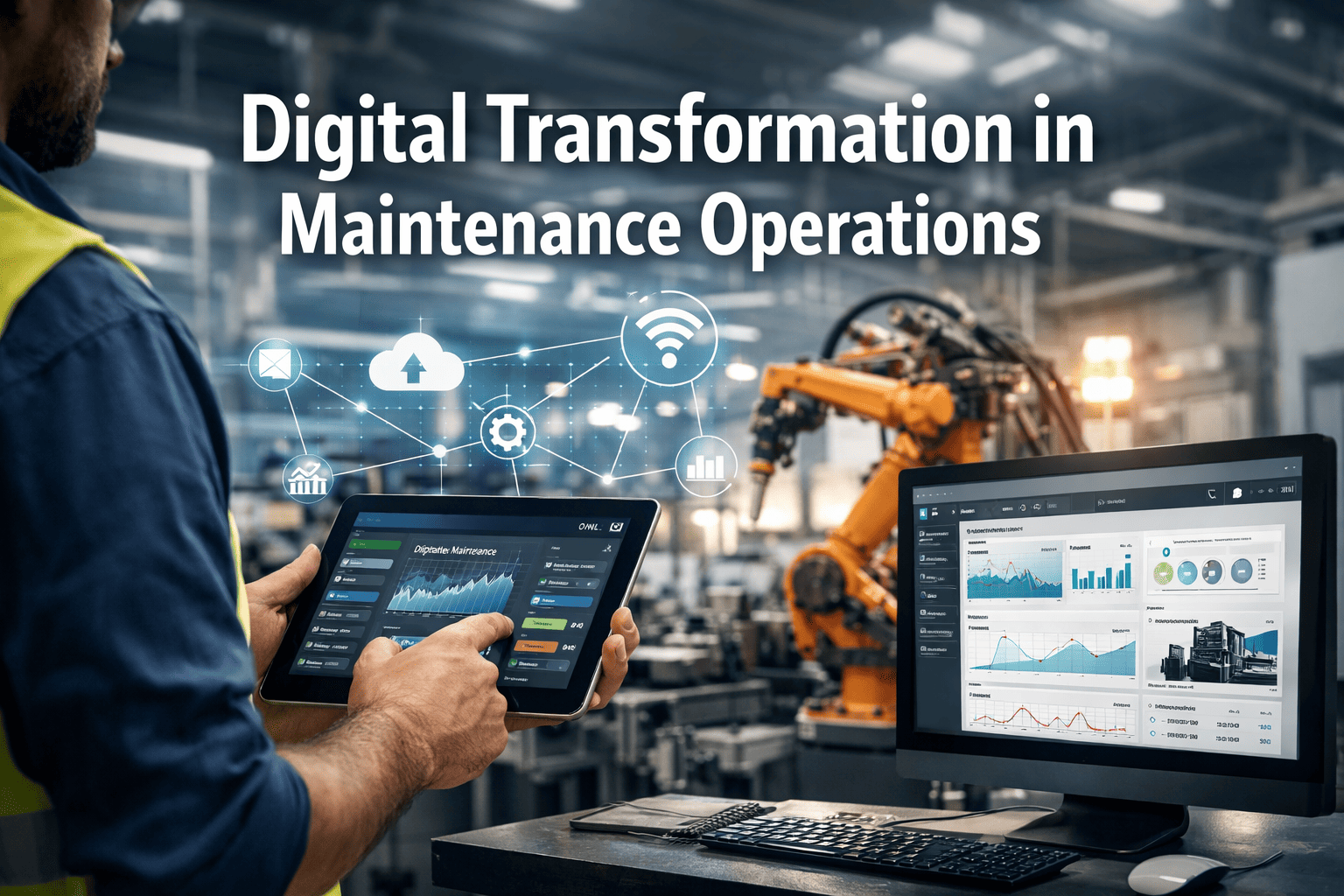
Digital transformation represents one of the most significant paradigm shifts affecting industrial maintenance operations, with companies investing an average of $15 million annually in digitalization initiatives that promise to revolutionize asset management approaches. Industry research indicates that 78% of manufacturing organizations still operate with legacy maintenance systems that create operational blind spots, inefficient resource allocation, and reactive maintenance cycles. Comprehensive digital transformation can reduce maintenance costs by 20-30%, improve equipment availability by 15-25%, and increase operational efficiency by 35-40% while enabling predictive maintenance capabilities and data-driven decision making across complex industrial environments.
Modern industrial operations depend on sophisticated digital ecosystems that integrate sensors, analytics platforms, and automated response systems to create intelligent maintenance environments. The convergence of IoT technologies, artificial intelligence and cloud computing platforms has fundamentally altered how organizations approach asset management, transforming traditional time-based maintenance into condition-driven strategies that optimize equipment performance and operational costs.
Transform your maintenance operations with cutting-edge digital solutions
Don't let outdated maintenance practices drain your profitability while competitors gain digital advantages - join the 40% of industry leaders already leveraging AI-powered systems that eliminate 85% of unexpected breakdowns and deliver up to $8 million in annual cost savings through intelligent maintenance transformation.
Unlock Digital Advantage Discover Your PotentialThe Digital Maintenance Architecture: Foundation Technologies
Digital transformation in maintenance requires comprehensive technology architectures that seamlessly integrate operational technology with information systems, creating unified platforms for asset monitoring, analytics processing and automated decision-making capabilities.
IoT Sensor Networks
Industrial Internet of Things sensors provide continuous equipment monitoring capabilities, capturing vibration patterns, temperature fluctuations, pressure variations, and performance metrics that enable real-time condition assessment and predictive failure detection.
Cloud Computing Platforms
Scalable cloud infrastructures support massive data processing requirements, enabling advanced analytics, machine learning algorithms, and collaborative maintenance planning across distributed industrial operations and multi-site facilities.
Artificial Intelligence Integration
AI-powered maintenance systems analyze equipment behavior patterns, predict optimal intervention timing, and automate routine maintenance decisions while learning from operational data to continuously improve prediction accuracy and response effectiveness.
Mobile and Remote Connectivity
Mobile maintenance platforms enable technicians to access real-time equipment data, receive automated work orders, and execute maintenance procedures while maintaining connectivity with central management systems and expert support resources.
Data Integration and Analytics Capabilities
Successful digital transformation depends on comprehensive data integration strategies that combine operational data streams, maintenance history, and external factors into unified analytics platforms that provide actionable insights for maintenance optimization.
Real-Time Data Processing
Advanced data processing systems handle millions of sensor readings, maintenance transactions, and operational events to provide immediate visibility into equipment health status and maintenance requirements.
Predictive Analytics Engine
Machine learning algorithms analyze historical patterns, current conditions, and operational variables to forecast equipment failures weeks in advance, enabling planned maintenance interventions and resource optimization.
Performance Benchmarking
Comparative analytics identify optimal maintenance strategies by analyzing equipment performance across similar assets, operational conditions, and maintenance approaches to drive continuous improvement initiatives.
Automated Reporting Systems
Intelligent reporting platforms generate executive dashboards, compliance documentation, and performance metrics while providing drill-down capabilities for detailed analysis and root cause investigation.
Identifying Digital Transformation Opportunities and Warning Signs
Digital readiness assessment reveals critical indicators that signal the need for maintenance transformation while identifying specific areas where digital technologies can deliver immediate operational improvements and long-term strategic advantages.
- Reactive maintenance dominance consuming 70%+ of maintenance resources while providing minimal preventive value and creating unpredictable operational disruptions
- Data silos and integration challenges preventing comprehensive equipment analysis and hindering informed maintenance decision-making across organizational boundaries
- Manual documentation processes creating information delays, accuracy issues, and limiting real-time visibility into maintenance activities and equipment status
- Inconsistent maintenance execution resulting from limited standardization, knowledge gaps, and inadequate performance monitoring capabilities
- Rising maintenance costs without corresponding improvements in equipment reliability, availability, or operational performance metrics
Technology Maturity Assessment Framework
Comprehensive maturity assessments evaluate current technology capabilities, organizational readiness, and transformation potential across multiple dimensions that influence digital maintenance success and implementation strategies.
Implementation Strategies for Digital Maintenance Transformation
Systematic digital transformation requires phased implementation approaches that minimize operational disruption while maximizing technology adoption and ensuring measurable improvements in maintenance effectiveness and operational performance.
Phase 1: Foundation Building
Digital infrastructure development, sensor installation planning, data architecture design, and integration preparation that establishes technical foundations for advanced maintenance capabilities and analytics processing.
Phase 2: System Integration
CMMS implementation, IoT sensor deployment, connectivity establishment, and initial data collection that creates unified maintenance platforms and enables real-time equipment monitoring capabilities.
Phase 3: Analytics Deployment
Predictive analytics implementation, machine learning model development, automated alert configuration, and performance dashboard creation that transforms data into actionable maintenance insights and decisions.
Phase 4: Optimization and Scaling
Advanced feature implementation, AI-driven automation, cross-facility integration, and continuous improvement processes that maximize digital transformation value and operational excellence achievements.
Change Management and Workforce Development
Digital transformation success depends heavily on organizational change management and workforce development programs that ensure technology adoption and maximize human potential in digitally-enhanced maintenance environments.
Skills Assessment and Training
Comprehensive evaluation of current workforce capabilities, identification of skill gaps, and development of targeted training programs that prepare maintenance teams for digital technology utilization and advanced maintenance practices.
Technology Adoption Support
User-friendly interface design, comprehensive training resources, ongoing support systems, and feedback mechanisms that encourage technology adoption and ensure effective utilization of digital maintenance tools.
Performance Incentive Alignment
KPI framework development and reward systems that recognize digital tool utilization, data quality contributions, and collaborative maintenance practices that support transformation objectives and cultural change.
Communication and Engagement
Regular communication programs, transformation progress updates, success story sharing, and feedback collection that maintain momentum and address concerns during digital transition periods.
Advanced Digital Technologies Reshaping Maintenance
Emerging digital technologies continue expanding maintenance possibilities through artificial intelligence, machine learning, augmented reality, and blockchain integration that promise enhanced efficiency, accuracy, and operational intelligence capabilities.
Digital Twin Technology
Virtual equipment replicas that simulate real-world performance, enable predictive modeling, and support scenario analysis for optimal maintenance planning and equipment lifecycle management strategies.
Augmented Reality Applications
AR-enhanced maintenance procedures provide technicians with real-time equipment information, step-by-step guidance, and remote expert support that improve accuracy and reduce maintenance time requirements.
Blockchain Documentation
Immutable maintenance records, warranty protection, and supply chain verification that enhance compliance capabilities, improve audit trails, and support equipment authenticity verification processes.
Edge Computing Integration
Local data processing capabilities that enable real-time decision-making, reduce latency, and support autonomous maintenance responses in distributed industrial environments with connectivity challenges.
ROI and Performance Measurement Framework
Digital transformation investments require comprehensive measurement frameworks that track financial returns, operational improvements, and strategic advantages across multiple performance dimensions and timeframes.
The future of industrial maintenance lies in intelligent systems that combine human expertise with digital capabilities, creating maintenance environments that are more efficient, predictable, and cost-effective than traditional approaches. Oxmaint provides comprehensive digital transformation solutions that help organizations navigate this complex journey while maximizing return on technology investments.
Digital transformation represents a fundamental shift from reactive maintenance cultures to proactive, data-driven approaches that optimize equipment performance and operational efficiency. Organizations that embrace comprehensive digitalization strategies position themselves for sustained competitive advantages through enhanced maintenance capabilities and operational excellence.
The integration of artificial intelligence, machine learning, and predictive analytics continues reshaping maintenance landscapes, offering unprecedented opportunities for cost optimization, risk reduction, and performance improvement that extend beyond traditional maintenance boundaries into comprehensive asset management excellence.
Ready to accelerate your digital maintenance transformation?
While your competitors struggle with reactive maintenance crises, you could be leveraging AI-powered predictive systems that prevent 95% of equipment failures before they occur - the maintenance leaders of tomorrow are making their transformation decisions today, and your journey to maintenance excellence begins with expert guidance tailored to your unique operational challenges.