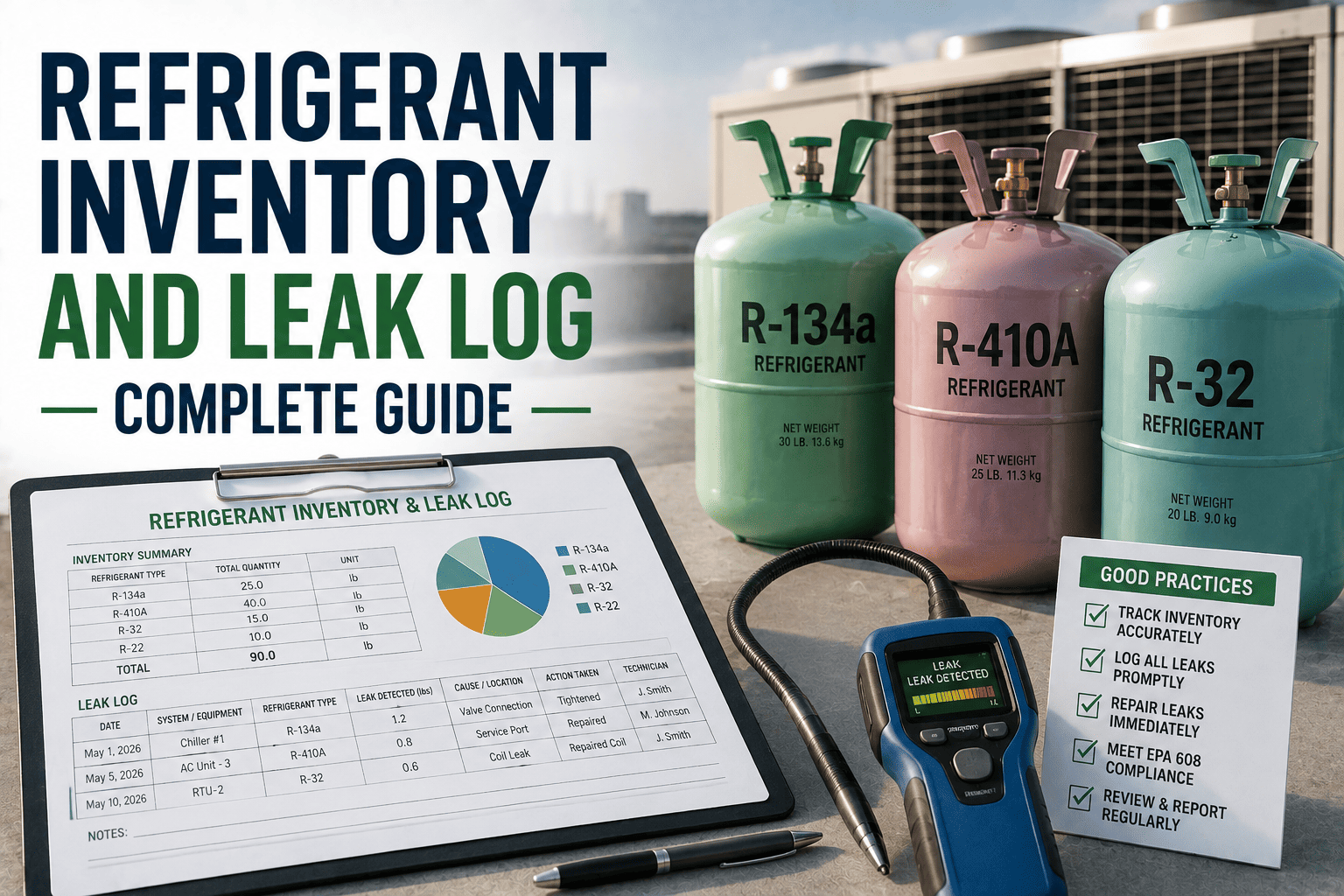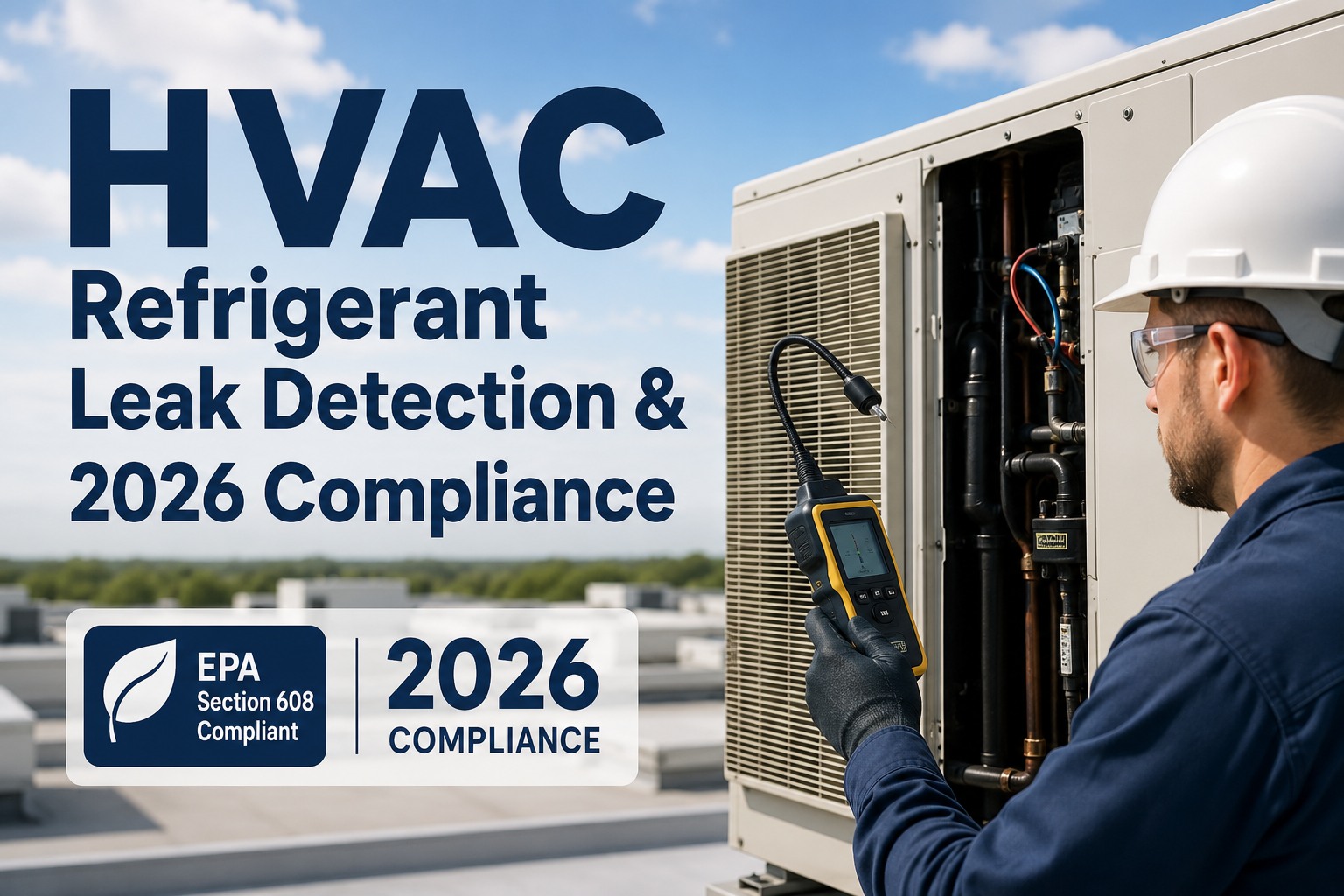
HVAC refrigerant leak detection is no longer just an energy-efficiency concern — under the AIM Act phase-down and tightening EPA Section 608 rules, it is now a mandatory compliance issue carrying federal enforcement risk and per-pound penalties. By 2026, facility teams managing HFC refrigerants face lower leak-rate thresholds, mandatory leak repair timelines, and rigorous refrigerant recordkeeping requirements that paper logs and spreadsheets simply cannot sustain. OxMaint provides an AI-powered CMMS that tracks leak inspections, enforces repair deadlines, and maintains defensible refrigerant compliance records — you can Start Free Trial today or book a demo to see a refrigerant compliance workflow built for your HVAC operation.
2026 HVAC REFRIGERANT COMPLIANCE
Are your refrigerant leak records ready for an EPA audit in 2026?
The AIM Act phase-down slashes HFC production 85% by 2036, and 2026 ushers in stricter Section 608 leak-detection thresholds. If your HVAC refrigerant management still relies on clipboards and spreadsheets, every unlogged leak, missed repair deadline, and missing cylinder receipt is a citation waiting to happen.
THE COMPLIANCE LANDSCAPE
What the AIM Act and Section 608 mean for HVAC refrigerant management
The American Innovation and Manufacturing (AIM) Act mandates an 85% reduction in HFC production and consumption by 2036, with major phase-down steps hitting in 2024, 2026, and 2029. As HFC refrigerants become scarcer and costlier, EPA Section 608 rules tighten the screws on how facilities detect, repair, and document refrigerant leaks. For commercial refrigeration and HVAC systems containing 50+ pounds of refrigerant, mandatory periodic leak inspections are now required — and for systems holding 1,500+ pounds, automatic leak detection systems must be installed and operational.
| Refrigerant Charge | Leak Inspection Cadence | Repair Deadline | Leak Rate Trigger |
|---|---|---|---|
| 50 – 500 lbs | Once per calendar year | 30 days from detection | 20% (commercial refrigeration) |
| 500 – 1,500 lbs | Twice per calendar year | 30 days from detection | 20% (commercial refrigeration) |
| 1,500+ lbs | Automatic leak detection (ALD) system required | 30 days from detection | 10% (comfort cooling) |
Miss any of these milestones and your facility is exposed. A single Section 608 violation can carry a penalty of up to $44,539 per day per violation — and EPA enforcement actions routinely cite inadequate refrigerant tracking and missing leak repair documentation as primary infractions. Reactive, paper-based HVAC refrigerant management does not scale across dozens of rooftop units, chillers, and cold-storage racks; it creates blind spots that auditors exploit.
THE FINANCIAL STAKE
What unchecked refrigerant leaks actually cost your facility
Refrigerant leaks are not just an EPA problem — they are a direct hit to operating margin. Leaky HVAC and refrigeration systems run longer to maintain setpoints, consuming 10–25% more energy per degree of lost cooling capacity. At a typical commercial rate of $0.12/kWh, a single 50-ton rooftop unit leaking 15% of its charge can waste $4,000–$7,000 in electricity annually — before the cost of replacement refrigerant, which for R-410A has risen 60–80% since 2022 due to the phase-down.
Annual Refrigerant Leak Cost
Refrigerant Lost (lbs) × Replacement Cost ($/lb) + Energy Waste ($)
A 200-lb system leaking 20% annually loses 40 lbs of refrigerant — at $25/lb plus $5,200 in excess energy, that is $6,200 evaporating silently each year.
Compliance Exposure Risk
Missed Inspections × Days Overdue × Max Penalty per Violation
Five undocumented rooftop units with overdue leak inspections can compound into $200K+ in potential EPA enforcement exposure within a single quarter.
A 180-asset cold-storage facility spending $42,000 annually on refrigerant top-offs and excess compressor run-time deployed OxMaint's refrigerant tracking and automated leak-inspection scheduling. Within 8 months they reduced refrigerant spend by 34%, eliminated 6 overdue Section 608 inspections, and recovered $14,200 in avoided energy waste — turning a compliance burden into measurable ROI.
YOUR COMPLIANCE CHECKLIST
HVAC refrigerant leak detection checklist for 2026 compliance
Use this checklist to assess whether your refrigerant compliance program will survive an EPA audit. Every item below maps directly to a Section 608 or AIM Act requirement — and to a workflow OxMaint automates out of the box.
HOW OXMAINT HELPS
How OxMaint turns refrigerant compliance into a controlled, auditable workflow
OxMaint is an AI-powered CMMS and EAM platform that transforms HVAC refrigerant management from a manual, error-prone process into a proactive, fully documented compliance program. Instead of chasing spreadsheets and paper logs, your team gets automated inspection scheduling, refrigerant inventory tracking, and repair-deadline enforcement — all backed by maintenance analytics that predict which assets are most likely to leak next.
Automated Leak Inspection Scheduling
OxMaint auto-generates Section 608 leak inspection work orders based on each asset's refrigerant charge and compliance category — annual, semi-annual, or continuous ALD monitoring — so no inspection window is ever missed.
Cuts overdue inspections to zero and eliminates the #1 EPA citation trigger.
Refrigerant Inventory & Charge Tracking
Every refrigerant cylinder, top-off, recovery, and disposal is logged against the specific asset — with automatic leak-rate calculation against the 10% and 20% annualized thresholds.
Reduces refrigerant spend 25–35% by exposing hidden losses across the fleet.
30-Day Repair Deadline Enforcement
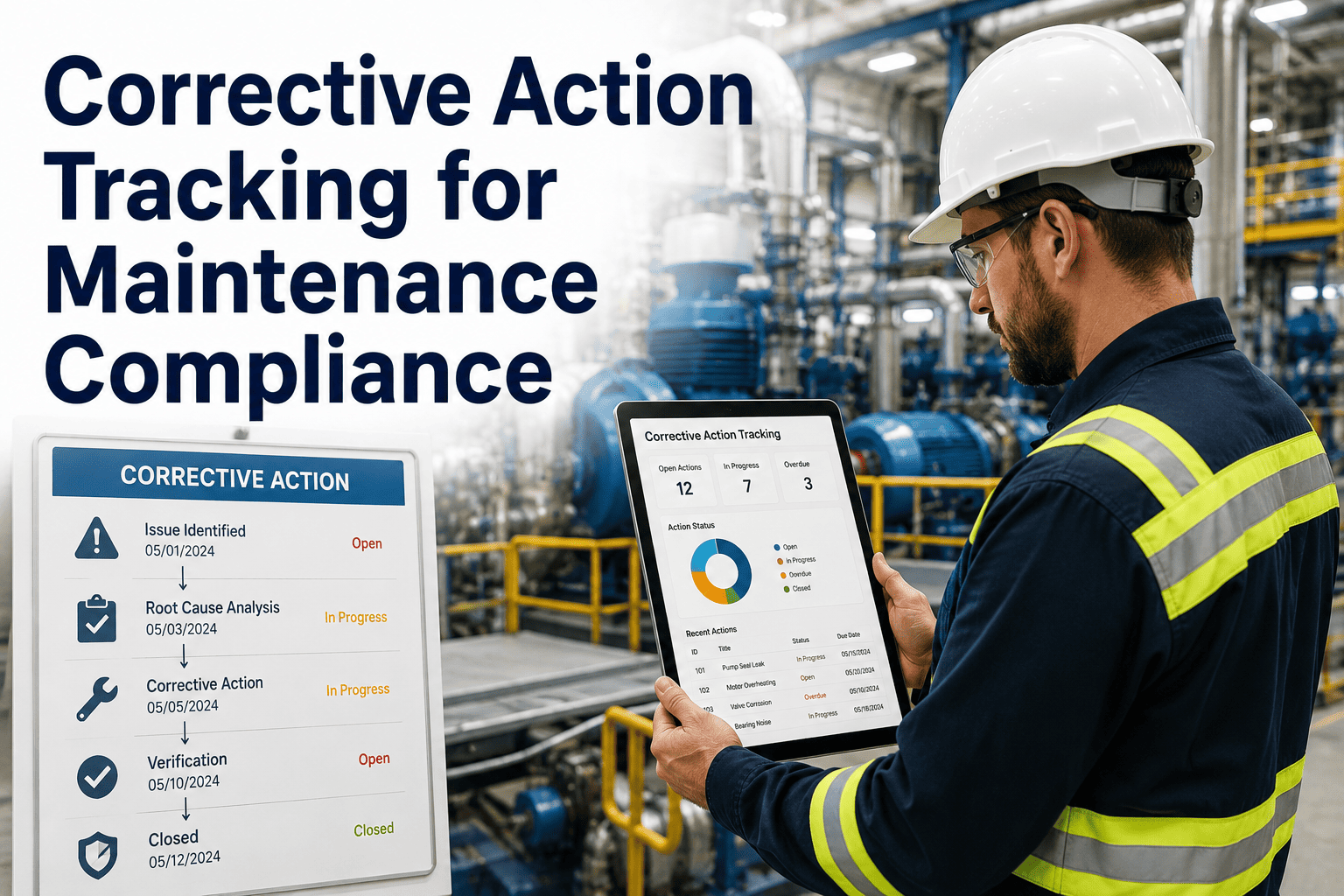
When a leak is detected, OxMaint instantly creates a priority repair work order with a 30-day compliance clock, automated escalation reminders, and a documented chain of custody from detection to verification.
Eliminates penalty exposure from missed repair timelines and creates a defensible audit trail.
Predictive Leak Analytics
OxMaint's AI analyzes compressor run-hours, temperature deviations, and top-off frequency to flag assets at high risk of refrigerant loss — before they breach the compliance threshold.
Predicts 40–60% of leak events early, cutting unplanned refrigeration downtime and emergency refrigerant purchases.
COMPLIANCE TIMELINE
Refrigerant compliance roadmap: from detection to audit-ready in 90 days
Building a defensible HVAC refrigerant compliance program does not happen overnight, but with the right CMMS workflow it can be operational in a single quarter. Here is how a typical facility team rolls out OxMaint-driven refrigerant management — from baseline audit to continuous compliance.
Baseline Asset & Refrigerant Audit
Import every HVAC and refrigeration asset into OxMaint with nameplate data, refrigerant type, full charge weight, and location. Tag each asset by compliance category (50–500 lbs, 500–1,500 lbs, 1,500+ lbs) to trigger the correct inspection cadence automatically.
Deploy Inspection & Repair Workflows
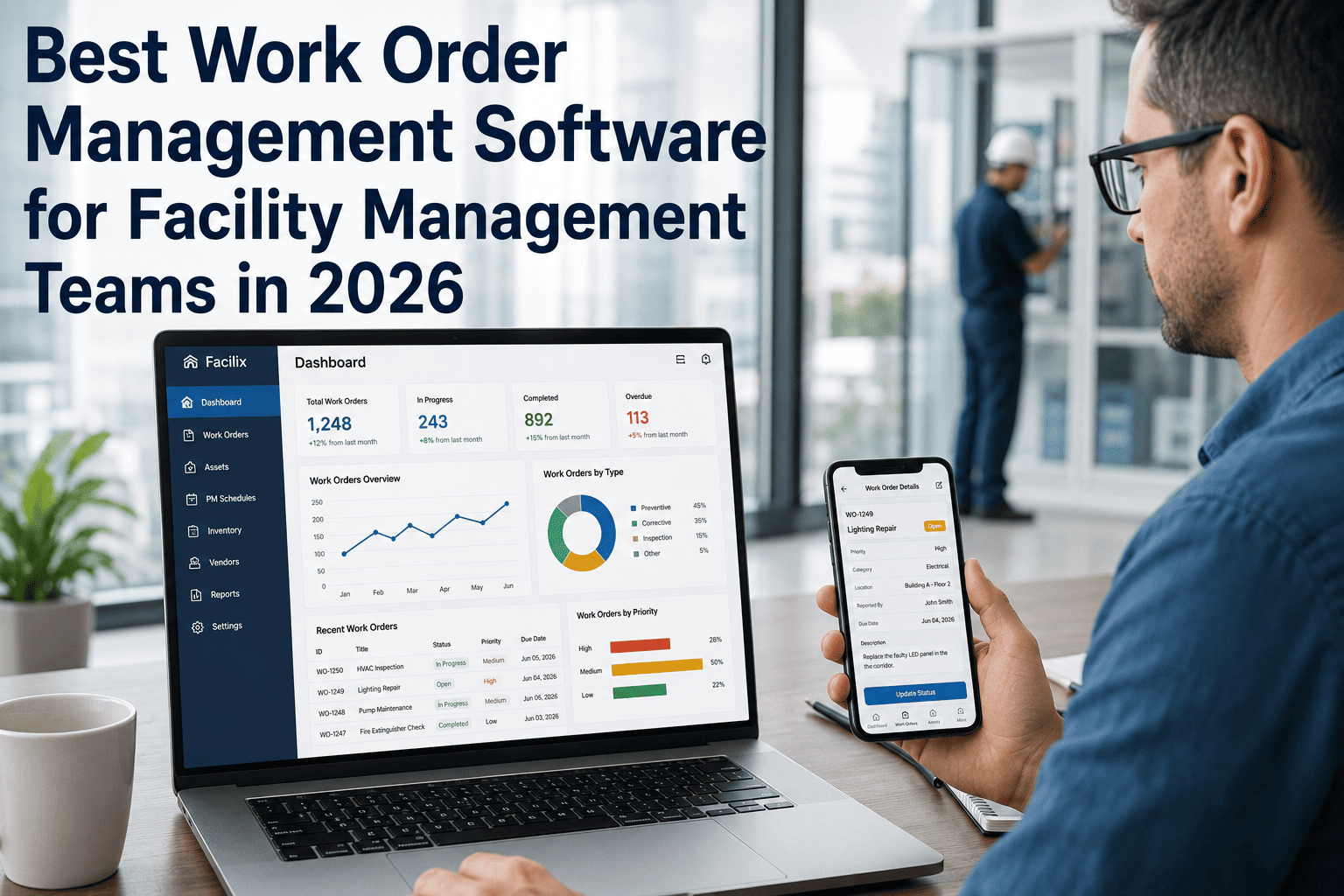
Activate automated leak-inspection work orders, refrigerant inventory logging, and 30-day repair deadline enforcement. Technicians receive mobile work orders with Section 608 certification prompts and built-in leak-rate calculators on every job.
Enable Predictive Analytics & Audit Reporting
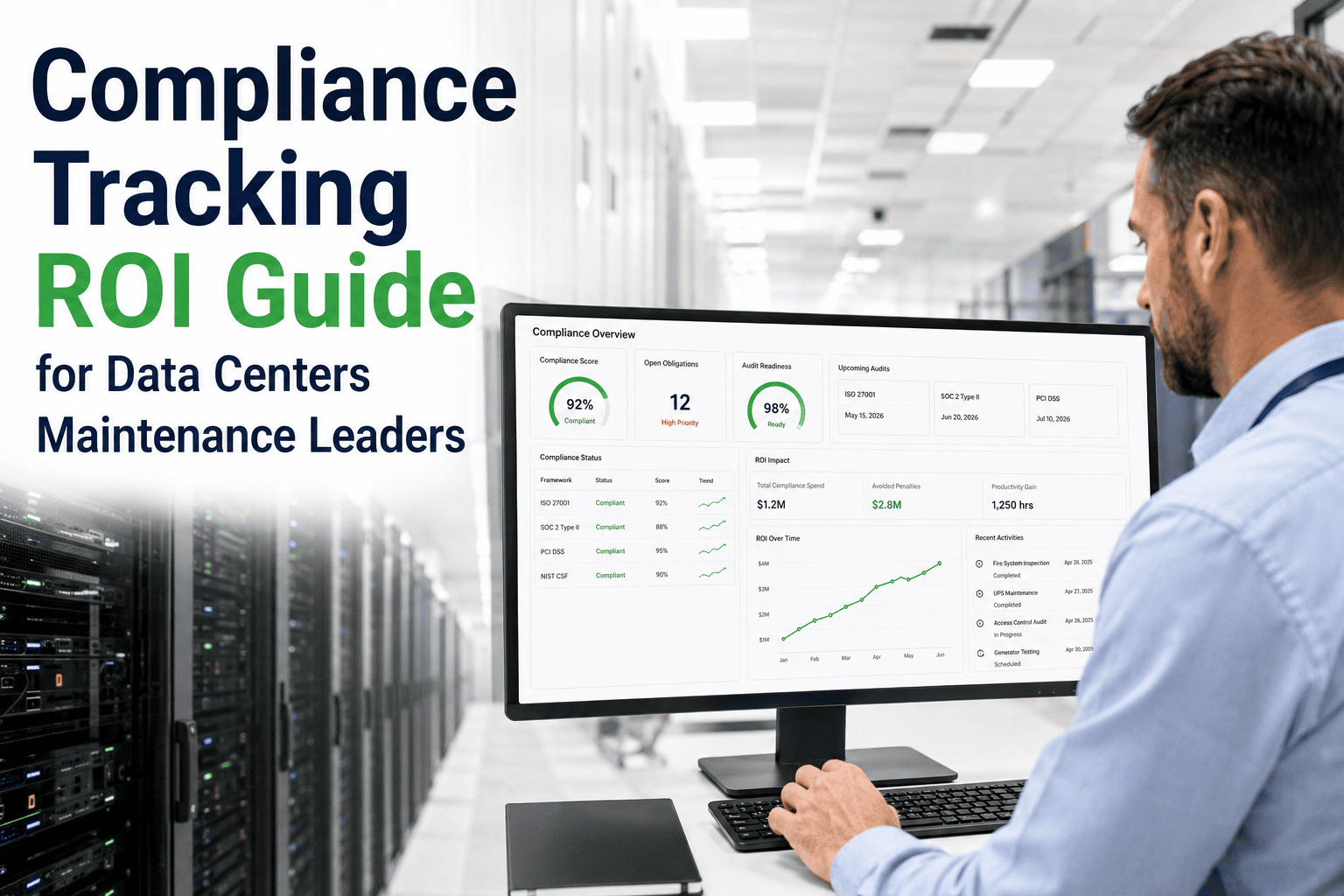
Turn on OxMaint's AI leak-prediction models and generate your first compliance audit report — covering 90 days of inspection records, refrigerant movements, repair timelines, and technician certifications — ready for any EPA or internal review.
See OxMaint on your assets — book a 30-minute demo
Walk through a live refrigerant compliance workflow: leak-inspection scheduling, 30-day repair tracking, refrigerant inventory, and one-click audit reporting — configured for your facility's equipment and EPA obligations.
FREQUENTLY ASKED QUESTIONS
HVAC refrigerant leak detection & 2026 compliance: your questions answered
What are the EPA refrigerant leak detection requirements for 2026?
Under EPA Section 608, commercial refrigeration systems with 50+ pounds of refrigerant require periodic leak inspections — annually for 50–500 lb systems and semi-annually for 500–1,500 lb systems. Systems with 1,500+ pounds must have automatic leak detection (ALD) systems installed. The 2026 compliance landscape adds tighter AIM Act phase-down pressure, making refrigerant leak detection and documentation more critical than ever. You can Start Free Trial to automate these inspection schedules immediately.
How long do I have to repair a refrigerant leak under Section 608?
Once a leak is detected that exceeds the applicable annual leak rate threshold (20% for commercial refrigeration, 10% for comfort cooling), the facility must repair the leak within 30 calendar days. If the repair cannot be completed within 30 days, you must document the reason, develop a retrofit or retirement plan, and submit it to the EPA. OxMaint automatically creates a 30-day compliance work order upon leak detection with escalation alerts.
What records do I need to keep for refrigerant compliance?
Facilities must maintain records of refrigerant inventory, leak inspections, leak repair dates and methods, refrigerant recovery and disposal, technician certification numbers, and leak-rate calculations for at least three years. These records must be available for EPA inspection on request. OxMaint stores all of this automatically against each asset and generates audit-ready compliance reports in one click.
What is the penalty for violating EPA refrigerant regulations?
EPA can assess civil penalties of up to $44,539 per day per violation under Section 608 enforcement. Common violations include failing to repair leaks within 30 days, not conducting required leak inspections, inadequate recordkeeping, and using uncertified technicians to handle refrigerants. Facilities may also face criminal liability for intentional venting of refrigerants.
How does a CMMS help with refrigerant leak detection and compliance?
A CMMS like OxMaint automates the entire refrigerant compliance lifecycle: it schedules leak inspections based on charge size and equipment type, tracks refrigerant inventory and leak rates per asset, enforces 30-day repair deadlines with automated work orders, and maintains a defensible audit trail of every action. To see it configured for your facility, Book a Demo with our team.
Make refrigerant compliance automatic — before 2026 arrives
OxMaint replaces clipboards and spreadsheets with an AI-powered CMMS that tracks every leak, enforces every repair deadline, and keeps your facility audit-ready under the AIM Act and Section 608. Get operational in weeks, not months.
Free 14-day trial · No credit card