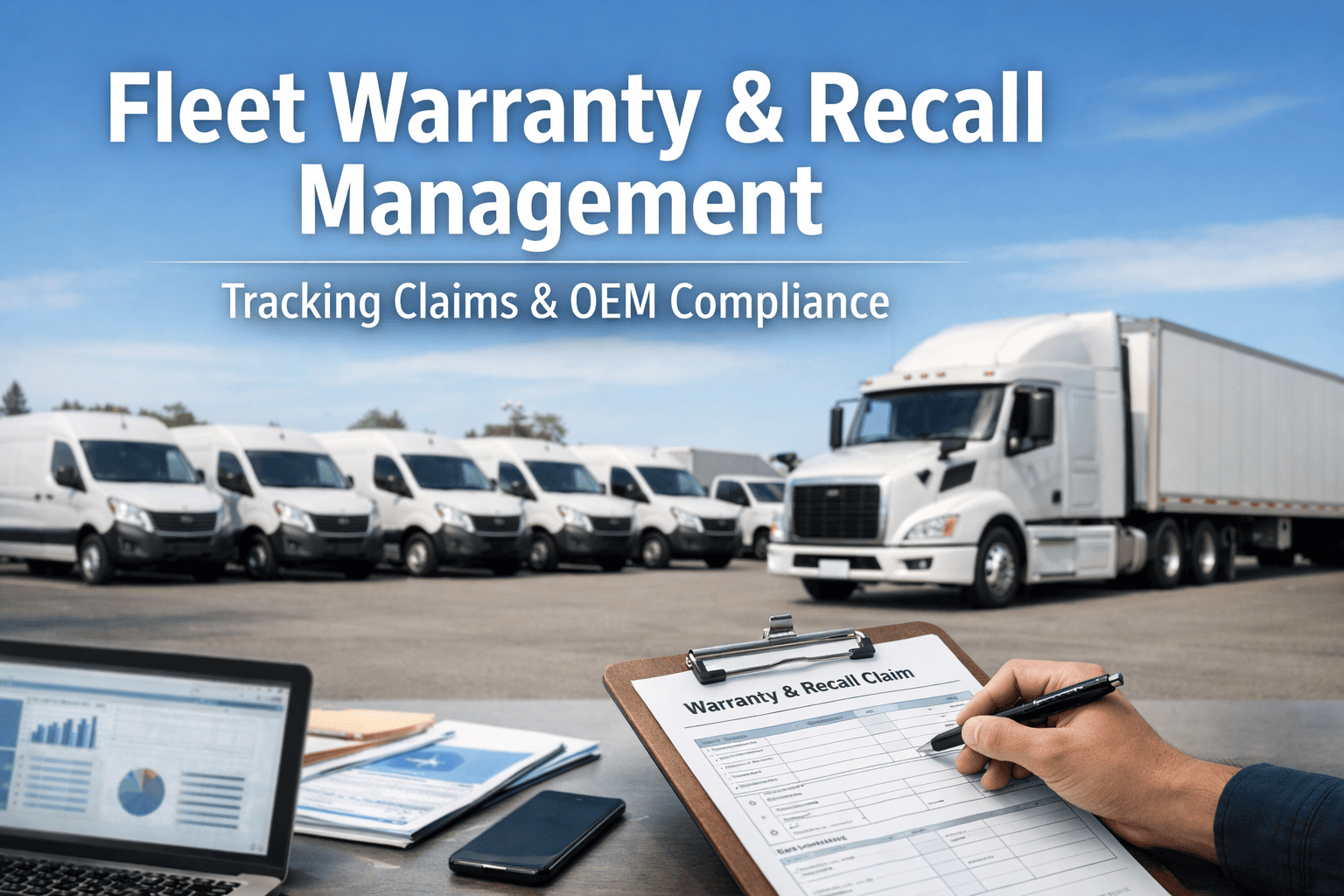
A regional trucking company in Ohio discovered — during a routine CMMS audit — that they had paid $214,000 in powertrain repairs over 18 months on vehicles that were still under OEM warranty. Nobody had checked. The work orders were approved, the invoices paid, and the warranty windows quietly closed. Warranty leakage of this kind is not unusual in American commercial fleets: industry data consistently shows that fleets without structured warranty tracking recover less than 35% of claimable repair costs. The OEM warranty, the extended service contract, the federal emissions warranty, and the manufacturer recall program represent a collective cash recovery opportunity that most fleet operators leave entirely on the table. OxMaint automates warranty tracking and recall compliance so every qualifying repair is flagged before the invoice is approved — not discovered in an audit two years later. Book a demo to see how fleets recover $8,000–$15,000 per vehicle annually.
Auto-Flag Every Warranty-Eligible Repair Before Approval
OEM warranty · Extended contracts · Federal emissions · Recall campaigns — tracked per VIN in OxMaint
Lost in warranty-eligible repairs by one Ohio fleet in 18 months — never claimed
<35%
Warranty recovery rate at fleets without structured tracking — industry average
$8K–$15K
Annual warranty recovery per vehicle with OxMaint automated tracking
Five Warranty Types Every Fleet Must Track Simultaneously
Modern commercial vehicles carry up to five overlapping warranty types — each with different mileage limits, calendar expiry, and covered components. Missing any one of them while approving a repair means paying out of fleet budget for a cost the OEM or ESC provider should absorb. OxMaint maps all five against live odometer data and flags coverage at the point of work order creation — not after the invoice is already paid.
Most missed
Basic / Bumper-to-Bumper
Typically 3 yr / 36,000 mi
Covers most mechanical failures. Highest claim frequency — most likely to expire quietly while powertrain is still active.
Highest value
Powertrain Warranty
5 yr / 60,000–100,000 mi
Engine, transmission, driveline. Single transmission replacement = $4,000–$8,000. Most valuable per claim.
Federal mandate
Emissions / EPA Warranty
8 yr / 80,000 mi (federal minimum)
Catalytic converter, EGR, DPF, SCR system. Federally mandated — claimable even when other warranties expired.
Customizable
Extended Service Contract
Up to 200,000 mi — varies per contract
Dealer or third-party ESC. Coverage scope varies — OxMaint stores exact covered components per contract per VIN.
Safety critical
Recall / Campaign Warranty
No mileage limit — open until remedied
NHTSA safety recalls and manufacturer campaigns. OxMaint cross-references fleet VINs against active recall database automatically.
Warranty Coverage Timeline — Where Most Fleets Lose Money
The gap between when basic warranty expires and when powertrain warranty ends is the highest-risk zone for warranty leakage. Fleets that do not have live mileage mapped against each warranty type routinely pay for repairs the OEM should cover. OxMaint displays live coverage status per vehicle — green for active, amber for expiring within 10%, red for expired.
Typical Class 8 Truck — Warranty Coverage by Mileage
Basic
36K — Expired
Powertrain
100K — Active
Emissions
80K — Active
Ext. Contract
75K — Expiring
Recall Status
Open — 2 Active Campaigns
72K mi (current)
025K50K75K100K mi
Active coverageExpiring <10% remainingExpiredOpen recall
Recall Management: The Compliance Obligation Most Fleets Undertrack
NHTSA safety recalls are not optional — operating a vehicle with an open safety recall creates direct federal liability exposure. In commercial fleets, the challenge is scale: a 200-vehicle fleet may have 30–50 VINs with open recall campaigns at any given time, spread across multiple model years and manufacturers. Tracking these manually against the NHTSA portal is a full-time job. OxMaint cross-references every fleet VIN against the live NHTSA database and flags open recalls on the vehicle dashboard — with required remedy details and dealer contact pre-populated in the work order.
Safety Recall
NHTSA-mandated. Vehicle must be remedied before next deployment — OxMaint flags as P1 and blocks vehicle from active rotation until remedy is confirmed.
Technical Service Bulletin
OEM service bulletin for known defects — often covered under warranty. OxMaint matches TSB descriptions against open work orders to identify warranty claim opportunities.
Manufacturer Campaign
Voluntary OEM campaigns for quality improvements. Typically free of charge — OxMaint captures campaign completion with tech signature and part number for audit trail.
Emissions Recall
EPA-ordered recall for emissions system failures. Separate from NHTSA — OxMaint monitors both databases. Non-compliance risk: significant EPA penalties per vehicle per day.
Warranty Claim Workflow — From Work Order to Recovery
The reason warranty leakage happens is not ignorance — it is process. The repair gets approved before anyone checks coverage, the vehicle is already fixed, and the window to file a retrospective claim is narrow. OxMaint inserts the warranty check at step one of every work order — before approval, before parts are ordered, before the tech touches the vehicle.
1
Work Order Created
Driver report, DTC alert, or scheduled PM generates work order. Vehicle VIN and odometer reading captured automatically from telematics.
2
Warranty Check — Automatic
OxMaint checks all five warranty types against VIN, mileage, and repair category. Coverage flag displayed before approval — zero manual lookup required.
3
Claim Package Assembled
Repair description, parts, labour hours, DTC code, and photo evidence assembled from work order data into claim format for the relevant OEM or ESC provider.
4
Recovery Tracked
Claim submission, approval status, and recovery amount logged against the vehicle's cost record. Recovery reduces operating cost per mile in real-time fleet reporting.
Technology That Makes Warranty Recovery Automatic
Leading fleets in the US, Canada, and the UK combine OxMaint with telematics, AI diagnostics, and ERP integration to make warranty recovery a background process — not a manual chase. Every repair either gets paid by the fleet or gets flagged for OEM recovery. Nothing falls through.
Telematics / OBD Integration
Live odometer data from Samsara, Geotab, and Verizon Connect keeps every warranty coverage window current to the mile. DTC fault codes auto-matched against TSB and recall databases — warranty flag appears at work order creation, not during approval review.
AI Digital Twin — Failure Prediction
AI models component wear against OEM failure data — identifying parts approaching failure while still under warranty. Pre-emptive replacement under warranty costs nothing. The same replacement 3,000 miles after warranty expiry costs full retail. OxMaint acts at the right mileage.
SAP / ERP Integration
OxMaint warranty recovery amounts post directly to SAP cost centre records — reducing vehicle operating cost per mile in financial reporting. Warranty claim status tracked from submission through payment, with accounts payable automatically updated when OEM or ESC reimbursement is received.
NHTSA Recall API — Live Cross-Reference
OxMaint integrates with the NHTSA recall database — every fleet VIN cross-referenced against active safety campaigns continuously. New recall notifications appear in the fleet dashboard within 24 hours of NHTSA publication, with affected vehicle count, required remedy, and nearest dealer pre-populated.
PLC / Diagnostic Tool Integration
Heavy equipment and vocational vehicles with PLC control systems connect to OxMaint via J1939 CAN bus integration. Fault codes classified against OEM diagnostic codes — warranty-relevant faults flagged with TSB cross-reference before the tech's first diagnostic step.
91%
Warranty recovery rate with OxMaint vs <35% without
80%
Faster claim assembly — work order data pre-populates claim form
70%
Of open recalls actioned within 30 days vs 110 days average without tracking
95%
Recall compliance across fleet within 60 days of deployment
"We recovered $112,000 in warranty claims in our first year with OxMaint — repairs we had been paying out of our maintenance budget that were covered under powertrain and emissions warranties. The system flagged coverage before we approved the work order. We never knew the vehicles were still covered."
— Fleet Director, Municipal Vehicle Fleet · Colorado, USA · 280 vehicles
Frequently Asked Questions
When a work order is created, OxMaint checks the vehicle VIN, current odometer, and repair category against all active warranty records. If the fault falls within a covered component and the vehicle is within coverage limits, a warranty flag appears before the approver sees the work order.
Yes — OxMaint stores unlimited warranty records per vehicle including OEM, extended service contracts, and component-specific warranties. Each record includes covered components, mileage limits, calendar expiry, and claim contact information.
OxMaint cross-references every fleet VIN against the NHTSA recall database continuously. Open recalls appear in the vehicle dashboard within 24 hours of publication, with required remedy details and dealer contact pre-populated.
OxMaint assembles the claim package from the work order — repair description, parts, labour hours, DTC code, and photo evidence — formatted for the OEM or ESC provider. Submission to approval typically takes under 20 minutes per claim.
OxMaint generates alerts at 30 days and 10% remaining mileage before each warranty type expires — giving fleet managers time to inspect and document existing issues before coverage ends.