Light Vehicle Safety Inspection is where fleet safety programs either hold up under audit or fall apart — and the checklist you use is the single biggest variable. Sign up to run your light vehicle inspections digitally, with photo evidence and a full audit trail behind every result.
What This Guide Covers
This guide walks through a complete light vehicle safety inspection procedure, aligned to FMCSA 396.13: what belongs on the checklist for cars, vans, and pickups, clear pass/fail criteria for each item, mandatory documentation points, and the corrective-action workflow that keeps an unsafe vehicle off the road until it's fixed.
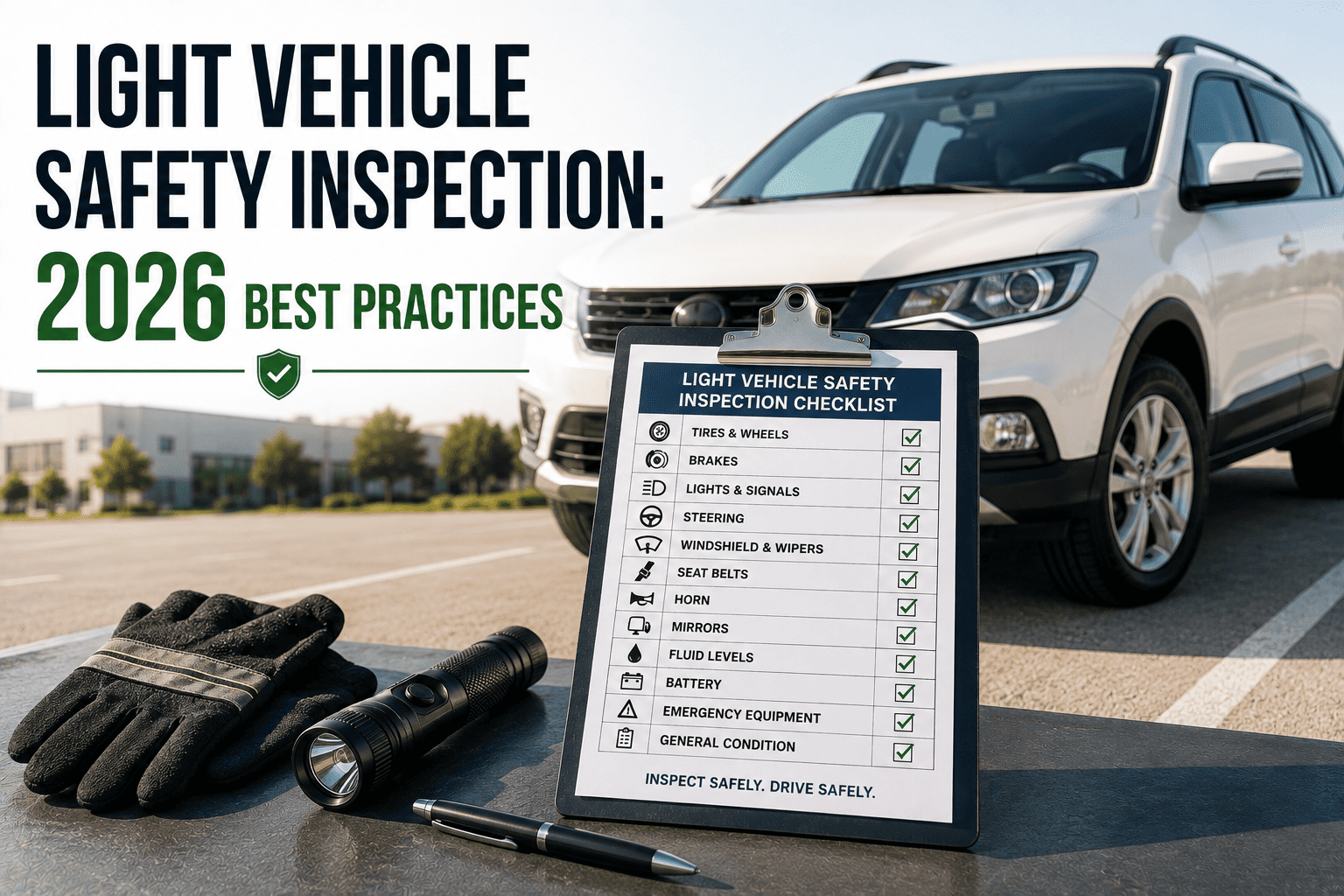
What Belongs On A Light Vehicle Checklist
| Area |
What To Verify |
| Tires & brakes |
Tread depth, inflation, pedal feel, and any grinding or pulling under braking |
| Lights & signals |
Headlights, brake lights, turn signals, and hazard lights all functioning |
| Fluids & belts |
Oil, coolant, and washer fluid levels, plus visible belt wear or cracking |
| Cabin safety items |
Seatbelts, mirrors, horn, wipers, and windshield free of cracks blocking view |
Running The Inspection In Four Steps
01
Walk Around Before You Get In
Tires, lights, and body damage are easier to spot from outside the vehicle than from the seat
02
Check The Cabin Before The Engine Starts
Seatbelts, mirrors, and the horn get tested from the driver's seat before the vehicle moves
03
Photograph Anything Below Standard
Worn tread or a cracked windshield gets a photo attached, not just a mental note to "watch it"
04
Sign Off And Route Any Defect
The check ends in an e-signature, and any flagged item routes straight into a repair work order
Make Every Light Vehicle Check Count
OxMaint enforces mandatory fields and photo capture on every inspection, routes defects straight to a work order, and keeps a full history against each vehicle. Sign up for a free trial to digitize your light vehicle inspections, or book a demo to see it fit your fleet.
Why Light Vehicles Get Skipped — And Why That's Risky
Assumed Low Risk
A sedan or pickup feels less critical than a heavy truck, so checks quietly slip
No Dedicated Bay Time
Light vehicles rarely get scheduled shop time the way heavy trucks do
Same Liability Exposure
A worn brake or bald tire creates the same liability regardless of vehicle class
Still Covered By FMCSA
Vehicles used in commerce fall under 396.13 regardless of gross weight class
A Clean Look Isn't The Same As A Verified Check
A vehicle can look fine from a quick glance across the lot while still having tread near the legal minimum or a signal bulb that's out. Programs that actually reduce incidents require a real inspection with proof, not just a driver saying it looked okay.
Frequently Asked Questions
Q
Does FMCSA 396.13 apply to light vehicles?
Yes, any vehicle operated in commerce, including cars, vans, and pickups, must be inspected before use to confirm it's safe to operate under 396.13.
Q
How often should a light vehicle be inspected?
Most fleets run a pre-use check daily and a fuller inspection weekly or monthly, depending on how often the vehicle is on the road.
Q
What happens if a light vehicle fails inspection?
The vehicle should be held from dispatch until the flagged item is repaired and re-checked, with the whole cycle logged against the vehicle's record.
Don't Let A Light Vehicle Be The Gap In Your Safety Program
OxMaint links every light vehicle inspection, defect, and repair together with photo evidence, e-signatures, and a full audit trail your EHS team can trust. Sign up for a free trial to start running light vehicle safety inspections digitally, or book a demo to see it fit your fleet.