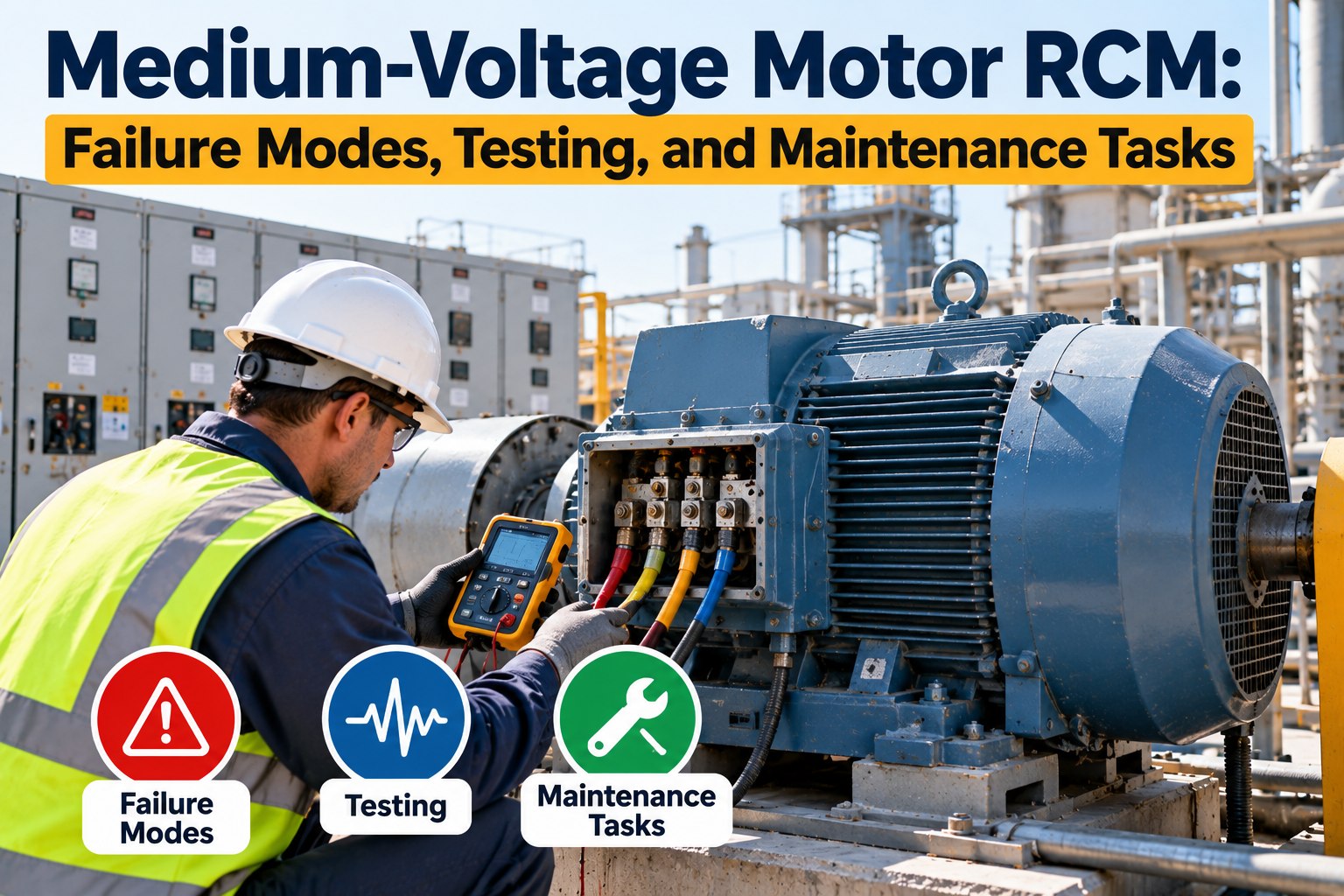
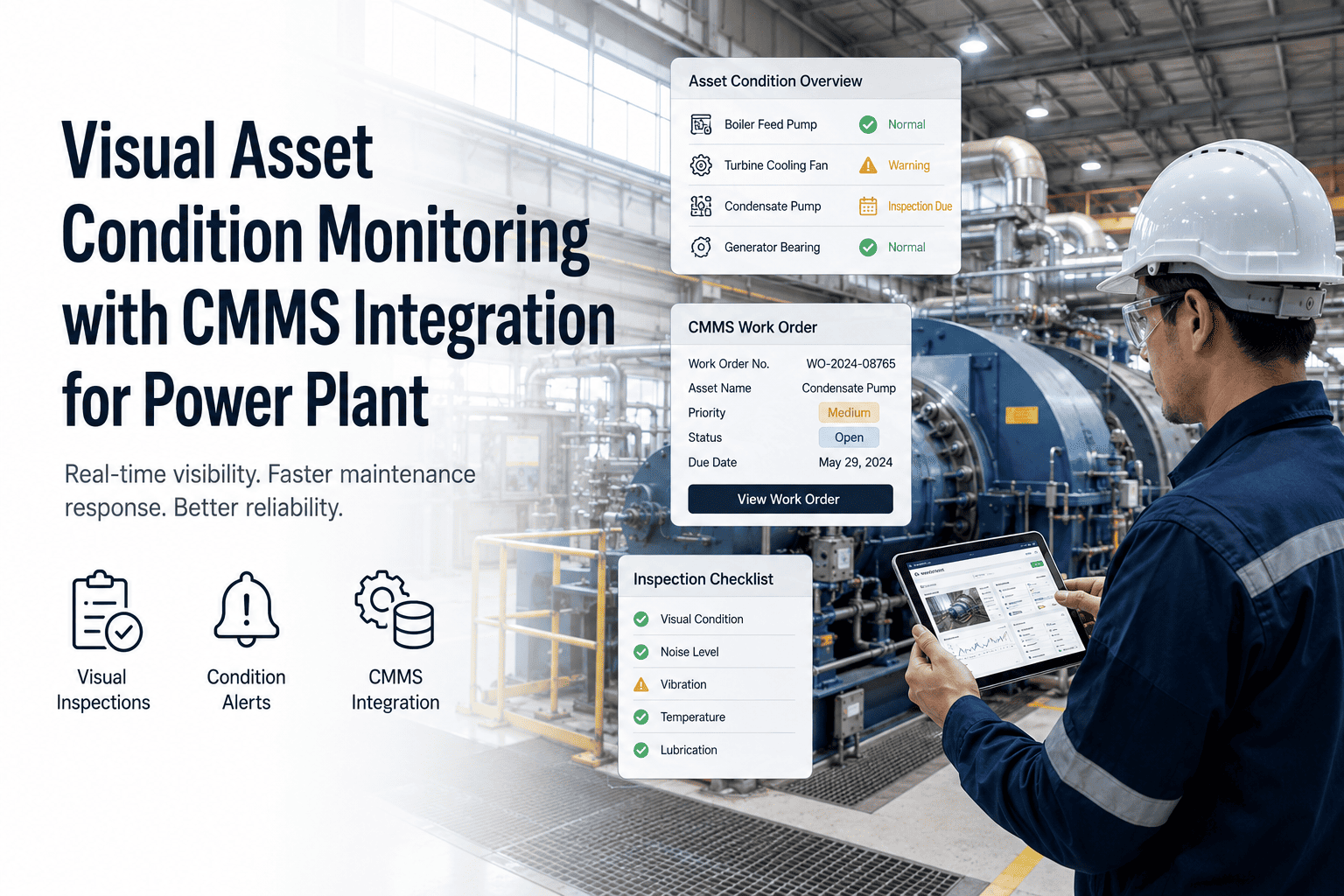
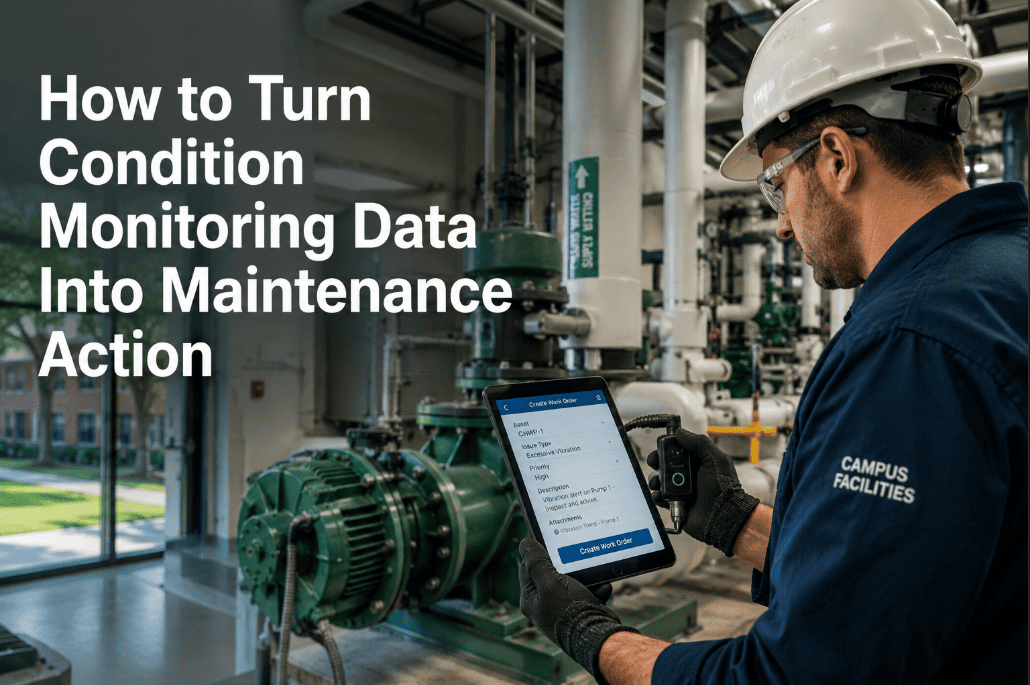
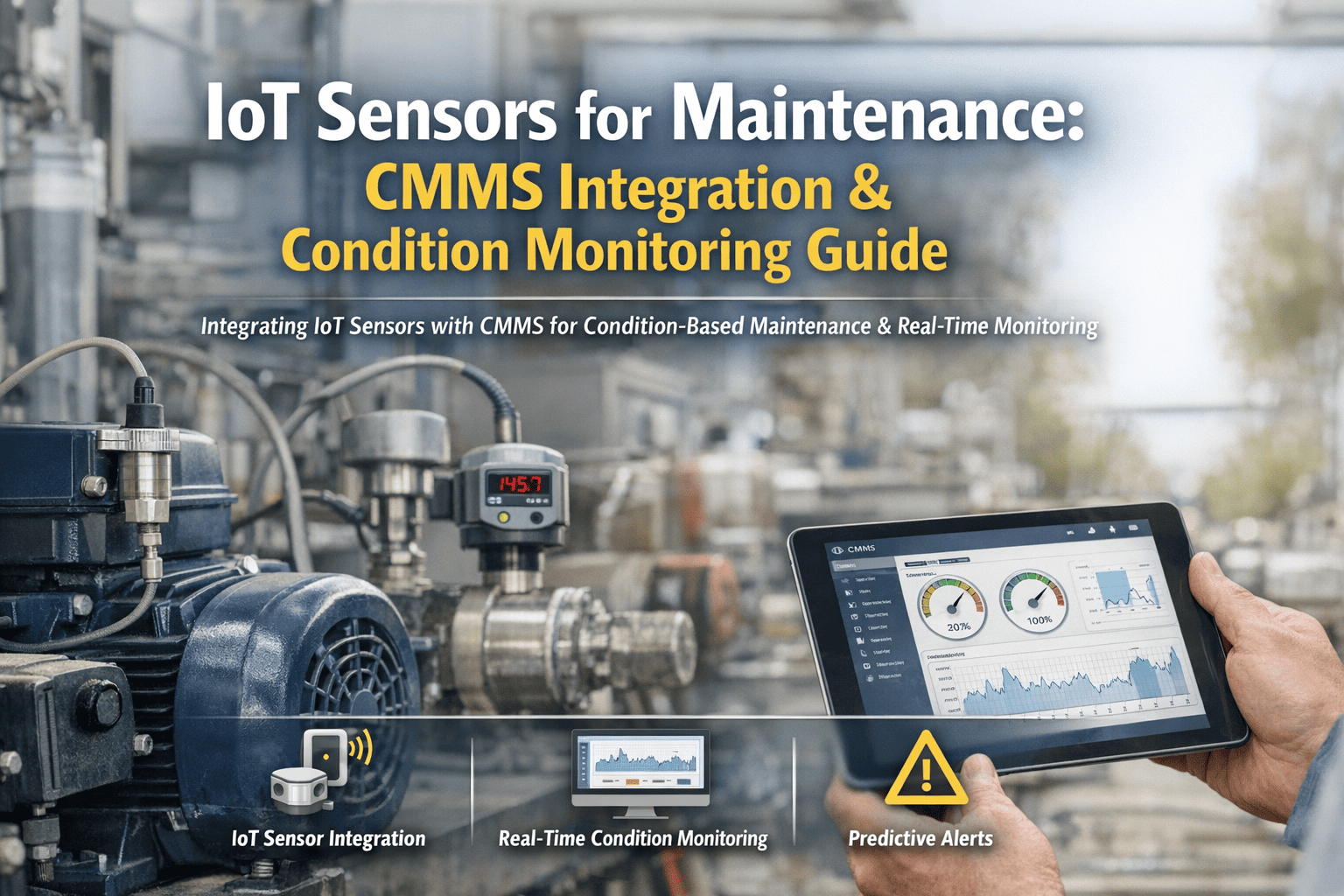
New hum. Rising drive-end temperature. Phase current spreading. At 02:14 the operator knows something changed — but not whether the fault is in the motor, power, coupling, gearbox, or process. Ordering a bearing or staging a rewind before separating those causes builds repeat failures into the next outage. Oxmaint AI aligns the motor's evidence on one asset timeline and drafts an evidence-backed work order inside the existing Maximo, SAP, or CMMS workflow.
MV Motors · RCM Overlay · Failure Modes · 2026
Medium Voltage Motor Maintenance: Diagnose Before You Dispatch
Oxmaint AI is an AI RCM overlay on Maximo, SAP, Infor, or your CMMS — it fuses vibration, three-phase electrical, thermal, and insulation evidence to separate motor faults from power, coupling, gearbox, and process causes, then drafts a planner-ready work order. Not a second system of record.
1 kV+
motors this strategy is typically applied to
6 Modes
failure modes drive the planner queue
5 Signals
evidence families fused per diagnosis
90 Days
pilot the overlay without replacing systems
More Than Another Calendar Route
The strategy must reflect the actual train — duty, starts, load, cooling, VFD topology, bearings, gearbox, and consequence. Installed manuals and IEC/IEEE/ISO guidance inform the work; they don't justify one fleet-wide alarm limit. Start free on your current stack — no rip-and-replace.
Calendar Route / One Alarm
The Way It Fails
✕ "Motor bad" before separating causes
✕ Bearing ordered or rewind staged too early
✕ One low megohm value read as a diagnosis
✕ Cooling loss mistaken for electrical deterioration
✕ Gearbox vibration blamed on the motor
✕ One fleet-wide alarm limit for every asset
✕ Repeat failures built into the next outage
Oxmaint AI Overlay
The Way It Works
✓ A bounded diagnostic fork, not a verdict
✓ Targeted testing only when evidence supports it
✓ IR trends read with temperature & test context
✓ Winding temperature normalized to load & ambient
✓ Train-wide vibration localizes the real source
✓ Limits read from the installed manuals & relays
✓ Ranked WO drafts pushed into Maximo/SAP
What One Asset Timeline Shows
Oxmaint AI compares equivalent load, speed, ambient, and starts instead of treating every data point alike. The result isn't "Motor bad," but a bounded fork: inspect cooling first, collect train-wide vibration and phase, review relay records, and escalate to winding tests only if evidence still supports insulation deterioration. Book a demo to see one motor's timeline live.
02:14 → 02:22
The Event
02:14 operator logs a new cyclic hum under load; 02:19 drive-end vibration moves above the asset baseline; 02:22 phase-current imbalance and winding RTD spread appear.
Prior Work
Outage History
Previous outage: coupling replaced, but hot alignment verification was not recorded. Last electrical test: insulation resistance improved after approved cleaning and drying.
Seasonal
Recurring Pattern
Prior summer: similar thermal alarms followed cooler fouling. Oxmaint AI shows whether the pattern follows the motor, season, process rate, or a maintenance intervention.
Method
Ranked Hypotheses
Preserves contradictory evidence, ranks competing hypotheses, and compares equivalent operating states instead of treating every data point as interchangeable.
Overlay Positioning — Not a Second CMMS.
Asset masters, cost centers, inventory, and settlements stay in your EAM. Oxmaint AI owns living failure-mode history, JA1011-style task selection, and ranked WO drafts that push into Maximo or SAP. Maximo, SAP, Infor, or existing CMMS records remain governed systems of record.
Failure Modes That Drive the Planner Queue
The RCM question is specific: can the motor produce torque, control temperatures, transmit shaft power, and give dependable protection indications? JA1011 framing separates failure, mode, effect, and consequence before selecting a task. Book a demo to map these six modes to your queue.
RCM Task Intervals — PdM / PM / FF
Predictive maintenance must use consequence, duty, evidence quality, and P-F behavior. These intervals are starting logic, not universal calendars — online monitoring suits critical or inaccessible assets, and intrusive testing belongs in controlled outages. Sign up free and set intervals from your P-F behavior.
Signals Oxmaint AI Weights on Your Tags
Oxmaint AI begins with these fusion weights, then tunes them to the asset's history. Weights are not trip limits — relay protection, OEM restrictions, and approved procedures remain authoritative. Book a demo to see the weighting on your tags.
27%
Vibration spectrum, phase and envelope
24%
Three-phase electrical and relay evidence
20%
Thermal and cooling performance
17%
Insulation-condition test trend
12%
Work history and operator observations
For example, negative-sequence current, phase-skewed RTDs, and a relay event together raise confidence in an electrical cause — while missing load or cooling context lowers it.
Overlay Flow: Ingest → Detect → Diagnose → Prioritize → Dispatch
The flow preserves engineering judgment and CMMS governance at every step. Priority uses consequence multiplied by recurrence — ground faults, smoke, failed protection, or severe vibration escalate immediately; a stable anomaly stays monitored only with a threshold and review date. Sign up free and run the flow on one motor.
01
Ingest
Connect Maximo/SAP/Infor/CMMS work history with historian tags, relay events, VFD diagnostics, vibration systems, lab results, inspection forms & operator notes.
02
Detect
Normalize for load, speed, ambient, operating mode & cooling state. Identify rate-of-change, recurrence, phase spread & departures from the motor's own baseline.
03
Diagnose
Rank winding, rotor, bearing, cooling, alignment, supply, gearbox & process hypotheses. Preserve evidence supporting and contradicting each one.
04
Prioritize
Use consequence multiplied by recurrence. Ground faults, smoke, failed protection, rapid thermal rise or severe vibration require immediate escalation.
05
Dispatch
Draft the approved CMMS work package, route it through existing planning & safety governance, and return as-found/as-left results to the same system of record.
Planner-Ready Work Order Fields
A useful work order carries evidence, not a verdict — and never pre-stages a rewind or rotor replacement without confirmation. Book a demo to see a drafted MV-motor work order.
01
Problem: Asset, operating mode, load, speed, ambient, alarm or trip, affected phase or end, first detection time & response to shutdown or load change.
02
Cause hypothesis: Ranked winding, rotor, bearing, cooling, alignment, supply, protection, gearbox & process possibilities.
03
Failure code: Map to the site hierarchy while keeping symptom, cause & remedy separate.
04
Recommended tasks: Preserve data before reset; compare equivalent operating states; inspect cooling, lubrication, coupling, foundation & accessible terminations; then perform targeted testing.
05
Parts hints: Serial-correct bearings, approved lubricant, RTDs, heater, fan, filters, grounding brush, coupling element, seals or certified terminations. Don't pre-stage a rewind without confirmation.
06
Permits: MV LOTO, arc-flash controls, test-before-touch, stored-energy & backfeed controls, grounding, lifting, rotating-equipment, cooling-water, hazardous-area & other applicable permits.
07
Closeout: Record test conditions, alignment values, protection changes, replaced parts, controlled-start verification & acceptance criteria.
08
System of record: Approved execution, inventory, labor, compliance & history remain in Maximo, SAP, Infor, or the site CMMS.
90-Day Pilot on Your Stack — Overlay, Not Rip-and-Replace
Pilot review should focus on evidence quality, diagnostic usefulness, and workflow adoption — not generic savings claims. Any cost scenario must be labeled illustrative only and replaced with approved site values. Sign up free and pilot one consequential motor train.
Days 1–30 · Connect
Select one consequential motor train. Connect available historian, condition-monitoring, relay & CMMS records; confirm asset hierarchy, tag quality, failure codes & access controls.
Days 31–60 · Baseline
Build the asset baseline, map the six principal failure modes, review prior trips & test diagnostic forks against known work history.
Days 31–60 · Approve Rules
Reliability and electrical specialists approve the task rules before governed alerts begin.
Days 61–90 · Run Alerts
Run governed alerts and draft planner-ready work orders through existing planning and safety governance.
Days 61–90 · Validate Write-Back
Capture technician findings and validate write-back to Maximo, SAP, Infor, or the existing CMMS.
Honest Positioning
No invented ROI, overlay positioning only. Cost scenarios stay illustrative until replaced with approved site values.
"
At 02:14 the operator knew something changed — a new hum, rising drive-end temperature, phase current starting to spread — but not whether the fault sat in the motor, the power, the coupling, the gearbox, or the process. What we needed wasn't 'Motor bad.' It was a bounded diagnostic fork: inspect cooling first, collect train-wide vibration and phase, review the relay records, and only escalate to winding tests if the evidence still supported insulation deterioration.
Reliability Planner · Electrical Maintenance
Frequently Asked Questions
How often should medium voltage motor maintenance be performed?
There is no universal interval. Use consequence, duty, starts, environment, protective coverage, history, and measured P-F interval. Review online thermal and relay data continuously where available; schedule routes and intrusive testing by risk and trigger.
Is insulation resistance testing enough?
No. Combine controlled, temperature-corrected trends with winding resistance, thermal history, relay events, visual findings, and specialist tests such as dissipation factor or partial discharge when justified.
How do we tell whether vibration comes from the motor or gearbox?
Measure the full train in the same operating state. Compare spectrum, phase, axial response, envelope frequencies, gear-mesh components, temperature, and lubrication evidence. Field confirmation remains required.
Does Oxmaint AI replace Maximo, SAP, Infor, or our CMMS?
No. Oxmaint AI is an AI RCM overlay that fuses condition and work history, drafts evidence-backed work packages, and returns approved actions to the existing governed system.
Bring One Motor, Its Gearbox, and Its History.
Turn recent alarms, trends, and work history into planner-ready action. Start free to see how Oxmaint AI works from your existing evidence — without replacing your CMMS.