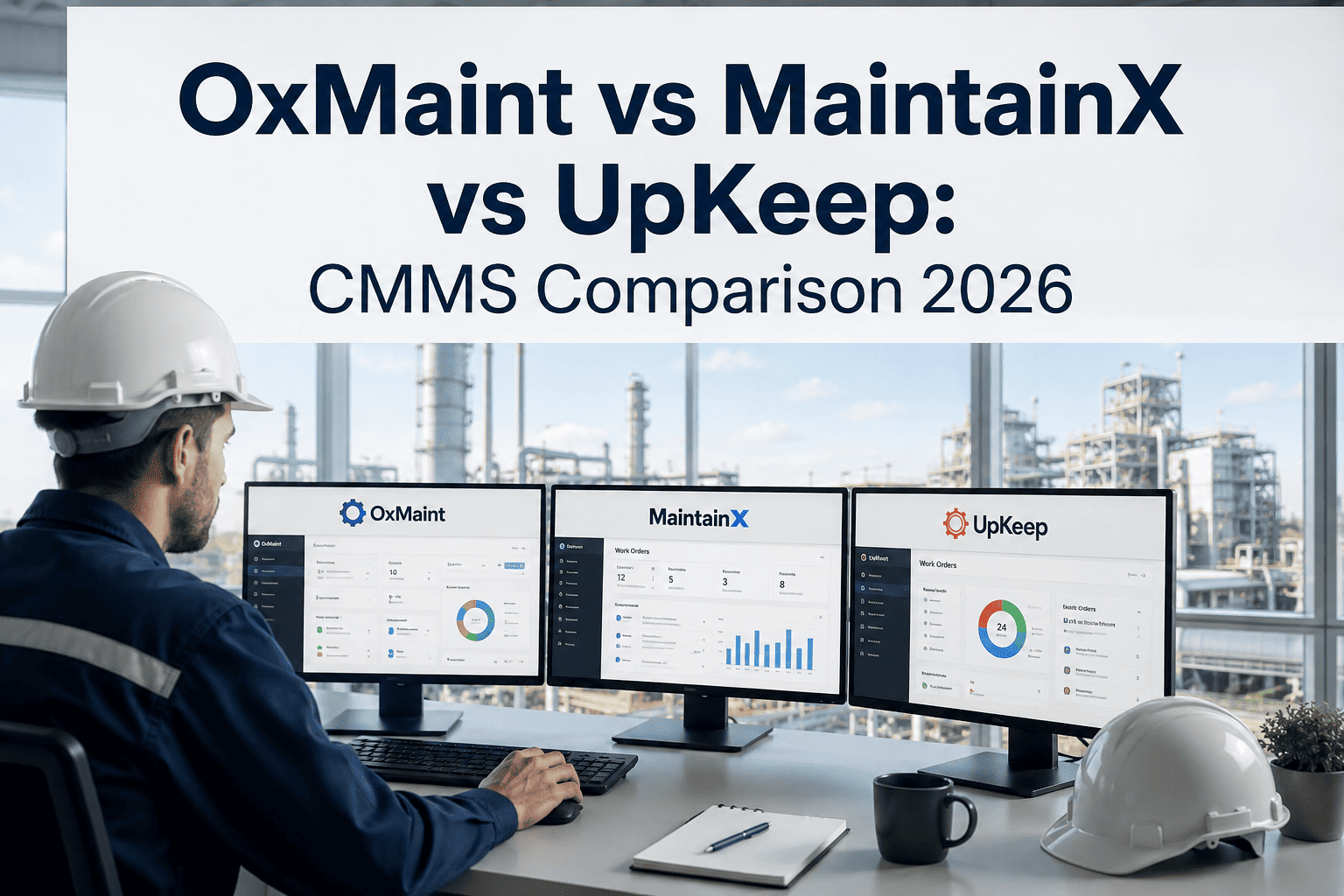
OxMaint vs MaintainX vs UpKeep: CMMS Comparison 2026
Choosing the right CMMS in 2026 means more than picking software — it means deciding how your maintenance team will operate for the next several years. OxMaint, MaintainX, and UpKeep are three of the most actively evaluated platforms right now, and while all three handle core work order management, they diverge sharply on AI capability, deployment speed, compliance depth, and total cost of ownership. This comparison breaks down exactly where each platform leads, where it falls short, and which team profile each one is actually built for — so you can make the right call before booking a demo. Start your OxMaint free trial or book a live demo to see the platform head-to-head.
CMMS Comparison 2026
OxMaint vs MaintainX vs UpKeep
AI work orders. Predictive maintenance. Mobile CMMS. Compliance tracking. Three platforms — one clear decision guide.
OxMaint AI
vs
MaintainX
vs
UpKeep
Quick Verdict — Which Platform Is Right for You
Before diving into the feature-by-feature breakdown, here is the summary decision guide based on team size, industry, and primary use case.
Best For
OxMaint AI
Industrial, manufacturing, government, and heavy asset facilities that need AI-driven predictive maintenance, fast deployment, and audit-grade compliance documentation. Strongest platform for teams that need to go live in under 60 days and need live KPI dashboards from day one.
AI Predictive Maintenance60-Day DeploymentCompliance TrackingGovernment / Industrial
Best For
MaintainX
Mid-market teams in facilities management, hospitality, and food processing that prioritize an intuitive mobile experience and internal communication features. Well-suited for teams transitioning from paper-based systems where technician adoption is the primary concern.
Mobile UXTeam CommunicationMid-MarketFacilities Management
Best For
UpKeep
Small to mid-size operations and multi-site property management teams that need a straightforward work order system with a low barrier to entry. Good fit for teams that have basic maintenance tracking needs and do not require deep compliance or predictive analytics capability.
Small TeamsProperty ManagementSimple Work OrdersLow Entry Barrier
Full Feature Comparison Matrix
Side-by-side evaluation across 20 capability dimensions that matter most for maintenance operations teams.
Capability
OxMaint AI
MaintainX
UpKeep
Work Order Management
Mobile Work Order Execution
Full — offline capable
Full — strong UX
Full — standard
AI-Assisted Work Order Creation
Yes — auto-generated from sensors and PM triggers
Partial — manual with templates
No
Work Order Priority Escalation
Automated by asset criticality
Manual rule-based
Manual
Parts Consumption Tracking per WO
Yes — mobile capture at closure
Yes
Yes
Preventive Maintenance
PM Schedule Configuration
Time, meter, and condition-based
Time and meter-based
Time-based primary
PM Compliance Dashboard
Live, real-time
Weekly refresh
Reporting module
Predictive AI Maintenance Triggers
Yes — anomaly detection + sensor data
No
No
Asset Management
QR / Barcode Asset Tagging
Yes — printable, offline scan
Yes
Yes
IoT Sensor Integration
Native — MQTT, Modbus, REST
Limited third-party
No native integration
Asset Lifecycle Reporting
Full lifecycle with cost tracking
Basic history
Basic history
Analytics and Reporting
Live KPI Dashboard
OEE, MTBF, PM compliance, backlog
Standard reports, not live
Basic dashboards
Custom Report Builder
Yes — no-code configuration
Limited
Template-based
Audit-Ready Export
PDF and CSV, formatted
CSV export only
CSV export only
Compliance and Documentation
Digital Inspection Sign-Off
Timestamped, GPS, user-linked
Yes
Basic sign-off
Regulatory Compliance Templates
Government, ISO, OSHA frameworks
Limited templates
No
Corrective Action Evidence Chain
Automated end-to-end
Manual linking required
No
Deployment and Support
Go-Live Timeframe
60-day structured deployment
90 to 180 days typical
60 to 90 days typical
Dedicated Deployment Team
Included — gate-based rollout
Available at additional cost
Self-serve primary
Multi-Site Management
Native — cross-site dashboard
Yes
Yes
Full capability
Partial capability
Not available
Category Score Breakdown
Scored out of 10 across six core capability categories based on independent evaluation of each platform's documented feature set as of Q2 2026.
AI and Predictive Capability
OxMaint
9.2
MaintainX
4.2
UpKeep
3.0
Mobile Work Order Experience
OxMaint
8.8
MaintainX
8.6
UpKeep
7.4
Compliance and Audit Readiness
OxMaint
9.5
MaintainX
5.8
UpKeep
4.0
Analytics and Live Dashboards
OxMaint
9.1
MaintainX
6.2
UpKeep
5.5
Deployment Speed
OxMaint
9.6
MaintainX
6.0
UpKeep
6.8
IoT and Sensor Integration
OxMaint
9.0
MaintainX
4.4
UpKeep
2.8
OxMaint AI — CMMS Built for Industrial and Government Operations
See why maintenance teams in manufacturing, government, and heavy industry choose OxMaint AI over MaintainX and UpKeep for predictive maintenance and compliance-grade documentation.
Deep-Dive: Where Each Platform Leads and Where It Falls Short
Honest capability assessment — including the gaps each vendor does not prominently advertise.
OxMaint AI
Strongest for: AI, compliance, fast deployment, industrial/government
Where It Leads
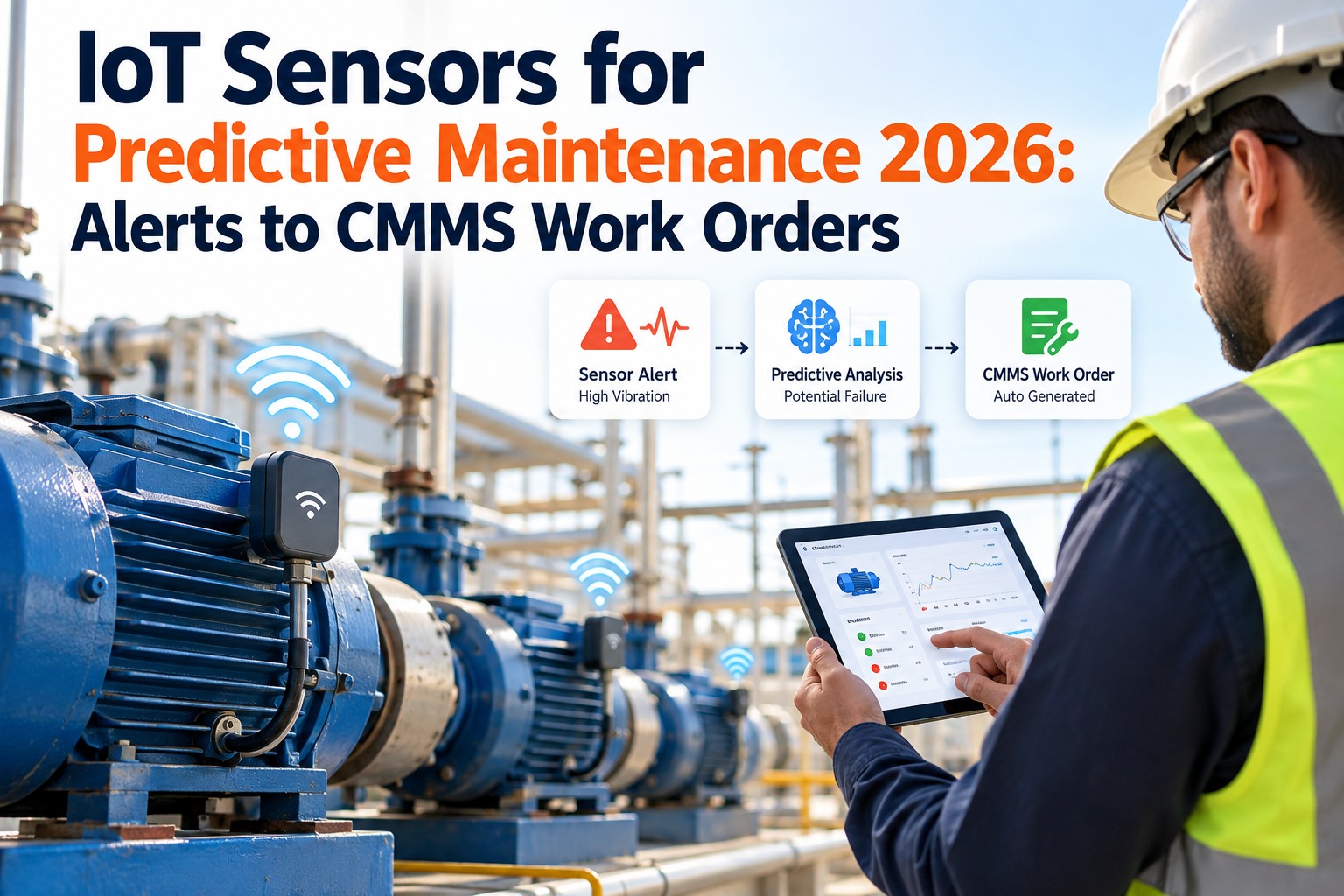
Predictive maintenance AI that detects asset anomalies before failure, using IoT sensor data and historical work order patterns
Fastest deployment track of the three platforms — gate-based 60-day rollout with dedicated implementation team included
Audit-grade compliance documentation with tamper-evident records, corrective action chains, and pre-formatted export reports
Live KPI dashboards showing OEE, MTBF, PM compliance, and backlog — active from day 60, not as a post-launch project
Watch Points
Feature depth is strongest for industrial, manufacturing, and government — lighter-weight general facilities teams may find capabilities exceed their immediate needs
IoT and sensor integration adds configuration steps that simple paper-to-digital transitions do not require
MaintainX
Strongest for: mobile UX, team communication, mid-market facilities
Where It Leads
Consumer-grade mobile interface that achieves high technician adoption rates among teams transitioning from paper for the first time
Built-in messaging and team communication features reduce the need for a separate coordination tool in smaller operations
Well-documented onboarding flow with a large library of template procedures and checklists for common industries
Watch Points
No native predictive maintenance or AI anomaly detection — proactive maintenance relies entirely on manually configured PM schedules
Compliance and audit documentation features are limited relative to regulated industries — corrective action chains require manual linking by planners
Deployment timelines of 90 to 180 days are common for full go-live in complex asset environments
UpKeep
Strongest for: simple operations, small teams, low-complexity work order needs
Where It Leads
Very low barrier to entry — small teams can self-configure and go live on basic work order management within days without a formal deployment project
Straightforward pricing structure and a widely understood feature set make the initial purchase decision low-risk for small operations
Watch Points
No AI or predictive capability — fully reactive maintenance model by default unless manually configured PM schedules are built out
Limited compliance and regulatory documentation features — not suitable for government, food safety, pharmaceutical, or regulated manufacturing environments
Analytics and reporting depth is limited — live dashboards for OEE or MTBF are not available; teams relying on data for budget decisions outgrow the platform quickly
Expert Perspective
The CMMS market in 2026 has split clearly into two tiers. The first tier is general-purpose work order tools that serve as digital paper — useful for teams that just need to stop using clipboards. The second tier is AI-native maintenance platforms that actively reduce unplanned downtime through anomaly detection, predictive triggers, and live operational dashboards. The single most important question any maintenance leader should ask before selecting a platform is not which has the best mobile app, but which platform will still be capable of meeting their operational needs in three years as IoT sensor deployments and compliance requirements intensify. Platforms without a native predictive maintenance architecture are already struggling to retrofit that capability at a platform level, and the gap is widening with each product cycle.
Independent CMMS Analyst and Maintenance Technology Advisor
Industrial and Government Maintenance Software Evaluation — 20 Years
Switching to OxMaint — What the Migration Looks Like
Whether you are moving from MaintainX, UpKeep, or a legacy system, OxMaint's structured migration approach keeps operations running throughout.
01
Data Export from Current Platform
Asset register, work order history, and PM schedule data are exported from your existing CMMS and provided to the OxMaint deployment team in standard CSV format. No custom data preparation is required from your team.
02
Asset Register Import and Gap Flagging
OxMaint imports the asset register including incomplete records. Missing fields are flagged for completion during live operation rather than requiring a pre-launch data cleaning project that delays go-live.
03
Parallel Running Period
During the final 10 days before legacy system decommission, both platforms run in parallel. This confirms data fidelity and gives technicians confidence before the old system is switched off entirely.
04
Go-Live with Live KPI Dashboard
On day 60 the legacy system is decommissioned. OxMaint becomes the single system of record with live KPI dashboards, active PM schedules, and all technicians operating on mobile work orders from the first day.
Frequently Asked Questions
The core difference is AI and predictive maintenance capability. MaintainX is a well-designed mobile-first work order platform with strong communication features, but it does not offer native AI anomaly detection, IoT sensor integration, or predictive maintenance triggers. OxMaint AI connects to sensor infrastructure, detects equipment anomalies before failure, and auto-generates work orders from live asset data — a critical capability for industrial teams managing high-value or high-criticality assets where unplanned downtime is expensive. For compliance-heavy environments like government, food processing, or regulated manufacturing, OxMaint's audit-grade documentation features also significantly exceed what MaintainX provides. Book a demo to see both the predictive maintenance and compliance features live.
OxMaint deploys in 60 days through a structured gate-based rollout that includes a dedicated deployment team — which is typically faster than UpKeep for complex asset environments despite UpKeep's reputation for simplicity. UpKeep's low barrier applies to very small or simple operations, but mid-size and enterprise deployments typically take 60 to 90 days without the structured support that OxMaint includes as standard. For field technician adoption, OxMaint runs two-hour per-shift mobile training sessions at the work area using live plant equipment — not classroom training — which achieves high adoption rates within the first two weeks of go-live. Start a free trial to test the onboarding experience directly.
Yes. OxMaint supports data migration from both MaintainX and UpKeep, as well as from legacy CMMS platforms and spreadsheet-based systems. The migration process uses standard CSV export from your current platform — no custom data preparation is required. Asset records, historical work orders, and PM schedules are imported during the deployment phase. Incomplete records are accepted and flagged for completion during live operation rather than blocking the migration. The OxMaint deployment team manages the import process and validates data integrity before go-live. Book a demo to walk through the migration pathway from your current platform.
Pricing across all three platforms is customized based on user count, asset volume, feature tier, and contract length, so published list prices rarely reflect actual contract values for mid-size teams. For a 50-technician deployment, OxMaint pricing includes the deployment team, onboarding, and KPI dashboard configuration as standard — costs that MaintainX and UpKeep typically add as professional services fees on top of the base subscription. Total cost of ownership including deployment, training, and ongoing support is often comparable or lower with OxMaint when those additional costs are factored in. Book a demo and request a customized pricing comparison for your team size and requirements.
OxMaint is purpose-built for industrial and asset-heavy sectors where predictive maintenance, IoT integration, and compliance documentation are core operational requirements — including manufacturing, cement and heavy industry, government and public works, utilities, food and beverage processing, and pharmaceutical facilities. MaintainX targets a broader market including hospitality, retail, and general facilities management. UpKeep serves the widest range including very small property management operations and general maintenance teams. If your operation runs heavy plant, critical infrastructure, or faces regulatory compliance requirements, OxMaint's industry-specific feature depth is the most relevant match. Start your free trial and explore the feature set for your specific industry.
OxMaint AI — The CMMS Built for What Maintenance Teams Actually Need in 2026
AI predictive maintenance. 60-day deployment. Audit-ready compliance documentation. Live KPI dashboards. If your operation needs more than digital paper, OxMaint is the platform built for it.
Compare firsthand — book a live demo and see OxMaint AI running against the MaintainX and UpKeep feature set in real time with your own use case scenarios.