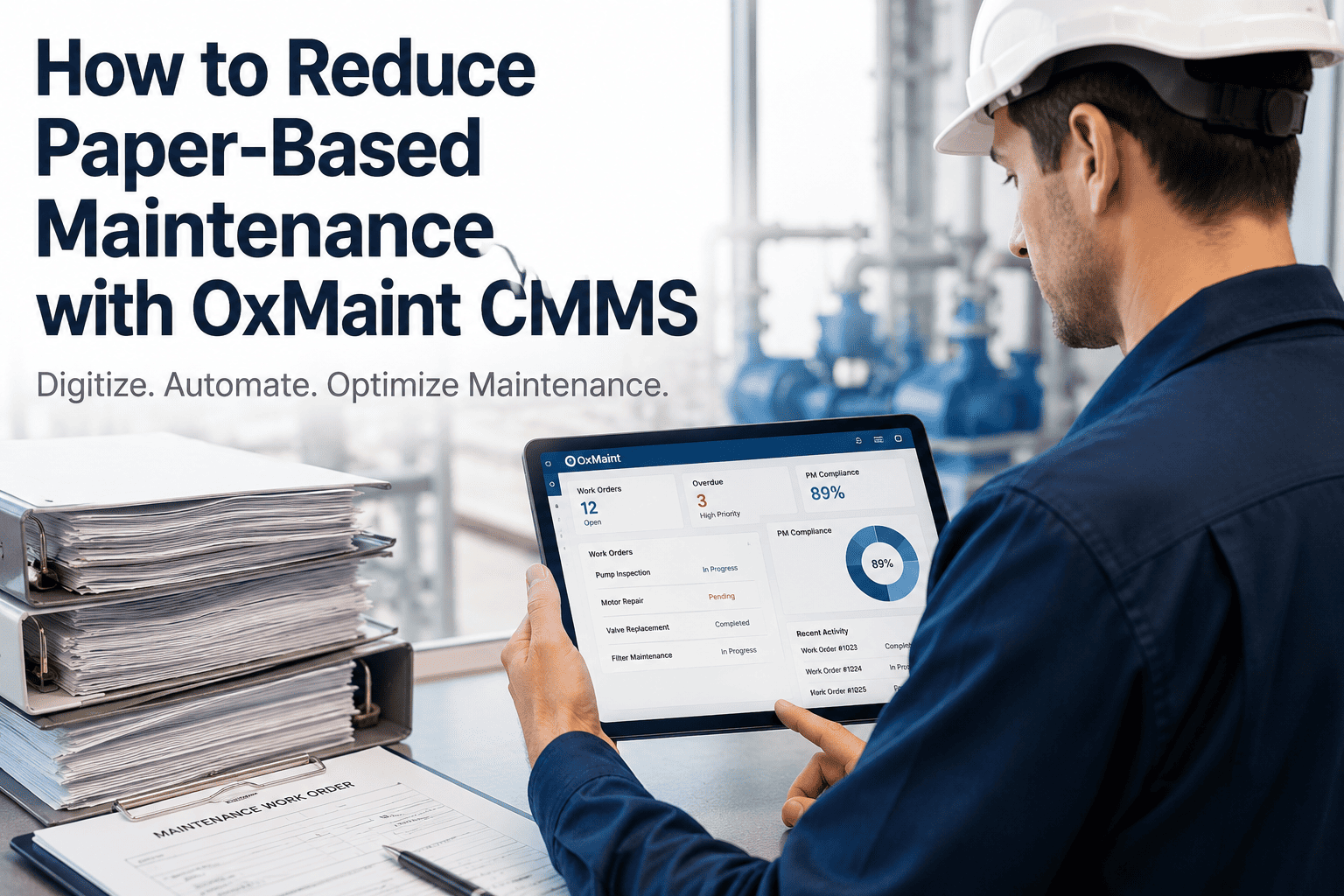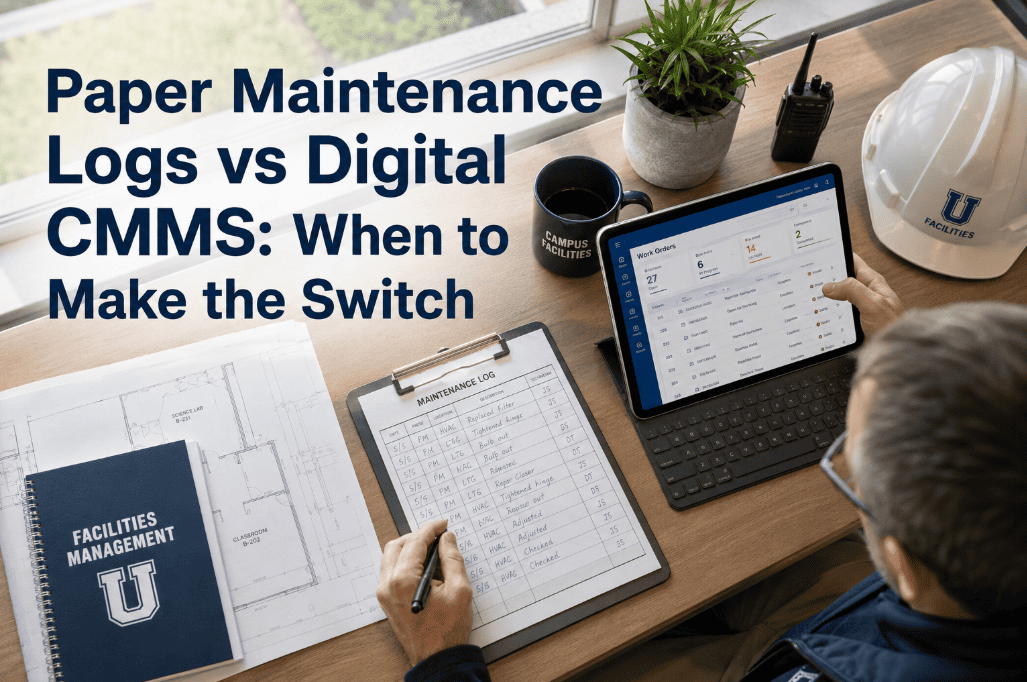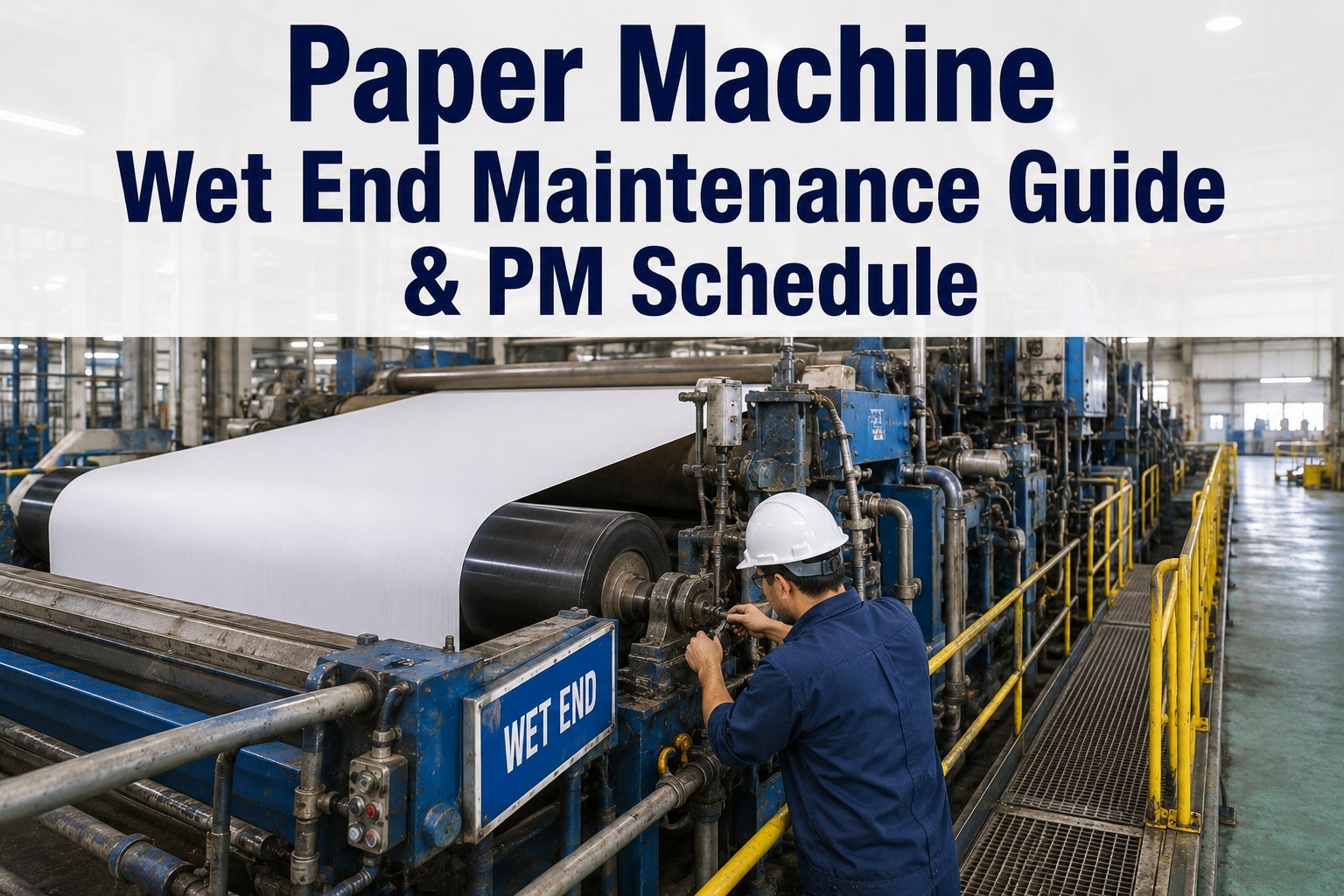
Paper machine wet end maintenance is the single most decisive factor in determining sheet quality, machine speed, and overall paper mill reliability across the forming, press, and stock delivery sections. When headbox flow dynamics, Fourdrinier drainage, and press felt conditioning are properly managed through a structured paper machine PM schedule, mills consistently operate at design capacity while reducing unscheduled downtime. OxMaint provides an AI-powered CMMS designed to eliminate spreadsheet chaos and centralize your wet end reliability program, from suction roll maintenance to fabric tracking. To modernize your paper machine maintenance strategy and stop costly downtime, you can Start Free Trial or book a personalized demo today.
Is your wet end costing you $12,000+ per hour in unplanned downtime?
A single press felt failure or headbox deposit can drop machine speed by 15% and ruin days of production. Structuring your wet end PM schedule in a CMMS is how top-tier paper mills sustain OEE above 85% and protect profit margins. OxMaint digitizes your entire paper machine maintenance workflow — from forming section inspections to suction roll overhauls.
Paper machine wet end maintenance fundamentals
The wet end dictates sheet formation. With stock consistency hovering around 0.3% to 1.0% at the headbox, any mechanical deviation instantly translates to basis-weight variation and moisture profiles. A robust wet end PM program addresses four core zones: stock delivery, the headbox, the Fourdrinier forming section, and the press section. OxMaint's paper machine CMMS maps these assets into a digital hierarchy, automatically triggering preventive maintenance based on runtime hours, sheet count, or tonnage produced.
Headbox Maintenance
Monitor slice lip adjustment mechanisms, verify surge chamber pressures, and schedule chemical descaling to prevent deposit build-up that disrupts flow uniformity.
Forming Section
Track Fourdrinier wire wear, foil blade condition, and drainage table performance. Misaligned foils increase energy draw and accelerate fabric wear.
Press Felt Conditioning
Manage uhle box vacuum levels, felt cleaning showers, and conditioning cycles to prevent sheet crushing and web breaks at the press nip.
Suction Roll PM
Schedule bore inspections, internal water shower checks, and vacuum box seal replacements. Undetected shell corrosion leads to catastrophic failure.
Paper machine PM schedule: Weekly vs. Monthly tasks
Relying on operator memory or whiteboards for your paper machine PM schedule is a guaranteed path to missed lubrications and premature fabric failures. Below is a proven maintenance framework that mills load directly into OxMaint to auto-assign work orders to the right technicians via mobile app.
| Frequency | Wet End Component | PM Task | Expected Outcome |
|---|---|---|---|
| Daily | Headbox & Forming Wire | Inspect edge showers, verify wire tension, check slice lip opening uniformity | Consistent sheet formation, zero edge tears |
| Weekly | Press Section | Measure nip profile, inspect felt condition, clean uhle box slots | Prevent sheet crushing, maintain dryness after press |
| Weekly | Suction Rolls | Check vacuum gauge readings, inspect end deckles, verify shower pressures | Optimize dewatering, prevent roller seizure |
| Monthly | Stock Delivery | Calibrate consistency transmitters, clean fan pump screens, inspect pulsation dampeners | Stable basis weight, reduced flow pulsation |
| Quarterly | Forming Fabric | Assess wear profile via drainage tests, verify guiding system response, check seam integrity | Maximize fabric life, prevent unscheduled re-felts |
The cost of reactive wet end maintenance
Every minute a paper machine is down due to a felt failure or headbox clog, the mill bleeds cash. Transitioning from reactive firefighting to CMMS-driven preventive maintenance delivers one of the fastest paybacks in heavy industry.
Example: A machine running 1,000 tons/day at $45/ton profit losing 120 hours annually to wet end failures = $540,000 lost per year. Reducing that downtime by 35% with OxMaint saves $189,000 annually.
Digitize your wet end reliability program with OxMaint
OxMaint is built for the complexities of paper mill equipment maintenance. By migrating your paper machine guide logs and scattered spreadsheets into an AI-powered EAM platform, your maintenance and reliability teams gain total visibility over asset health, spare parts inventory, and PM compliance.
Automated Fabric & Felt Tracking
OxMaint tracks runtime hours and sheet count for every paper machine felt and forming fabric. The system automatically generates replacement work orders before wear impacts sheet quality, eliminating premature failures and maximizing fabric lifecycle.
Predictive Suction Roll Maintenance
Connect vibration and temperature sensors to OxMaint's predictive analytics engine. Detect bearing degradation and shell fatigue weeks before catastrophic failure, allowing you to schedule suction roll PMs during planned outage windows rather than emergency shutdowns.
Mobile Work Orders for Press Section
Equip floor technicians with the OxMaint mobile app to receive digital work orders, log nip measurements, and upload photos of felt damage instantly. Eliminate paper logbooks, reduce data entry errors by 90%, and create a complete audit-ready maintenance history.
Spare Parts Inventory Optimization
Maintain critical spare thresholds for suction roll seals, headbox gaskets, and forming fabrics. OxMaint automatically flags low stock and ties directly to work orders, cutting parts search time by 60% and ensuring the wet end never waits for components.
Stop losing production to wet end failures
See how OxMaint transforms paper machine maintenance from reactive chaos into a predictive, data-driven reliability program.
Paper machine wet end maintenance FAQs
How often should paper machine headbox maintenance be performed?
Daily inspections should verify slice lip cleanliness, edge shower operation, and pressure differentials. Deep headbox maintenance, including internal cleaning and descaling of the manifold, is typically scheduled every 6 to 12 months during planned outages. Using a CMMS like OxMaint ensures these intervals are never missed based on actual machine runtime.
What is the expected lifespan of a press felt in the wet end?
A well-maintained press felt typically lasts between 30 to 60 days, depending on machine speed, nip load, and shower efficiency. Tracking felt conditioning via OxMaint CMMS allows reliability teams to predict felt replacement accurately, preventing run-to-failure scenarios that cause severe sheet breaks.
How does a CMMS improve paper machine reliability?
A CMMS centralizes asset hierarchies, automates PM schedule triggers, and provides maintenance analytics on downtime root causes. By transitioning from paper logs to a system like OxMaint, mills typically cut unplanned downtime by 30% to 50%, optimize spare parts inventory, and maintain continuous OEE visibility.
What are the most common failures in the Fourdrinier forming section?
The most frequent forming section failures include premature wire wear, misaligned foil blades causing drainage issues, and guide system malfunctions leading to wire tracking off-center. Regular weekly PMs tracked in OxMaint help identify foil wear and vacuum box issues before they degrade sheet formation.
Why is suction roll maintenance critical for paper mill operations?
Suction rolls remove massive volumes of water from the sheet; a failure here causes immediate machine shutdowns and potential roller damage. Suction roll maintenance involves monitoring vacuum bearing temperatures, inspecting the drilled shell for corrosion, and replacing internal seals. You can schedule a full audit of your suction roll PM compliance by booking a demo at OxMaint.
Build your digital paper machine reliability program today
Join the mills using OxMaint to automate work orders, track fabric life, and eliminate unplanned wet end downtime.
Free 14-day trial · No credit card required