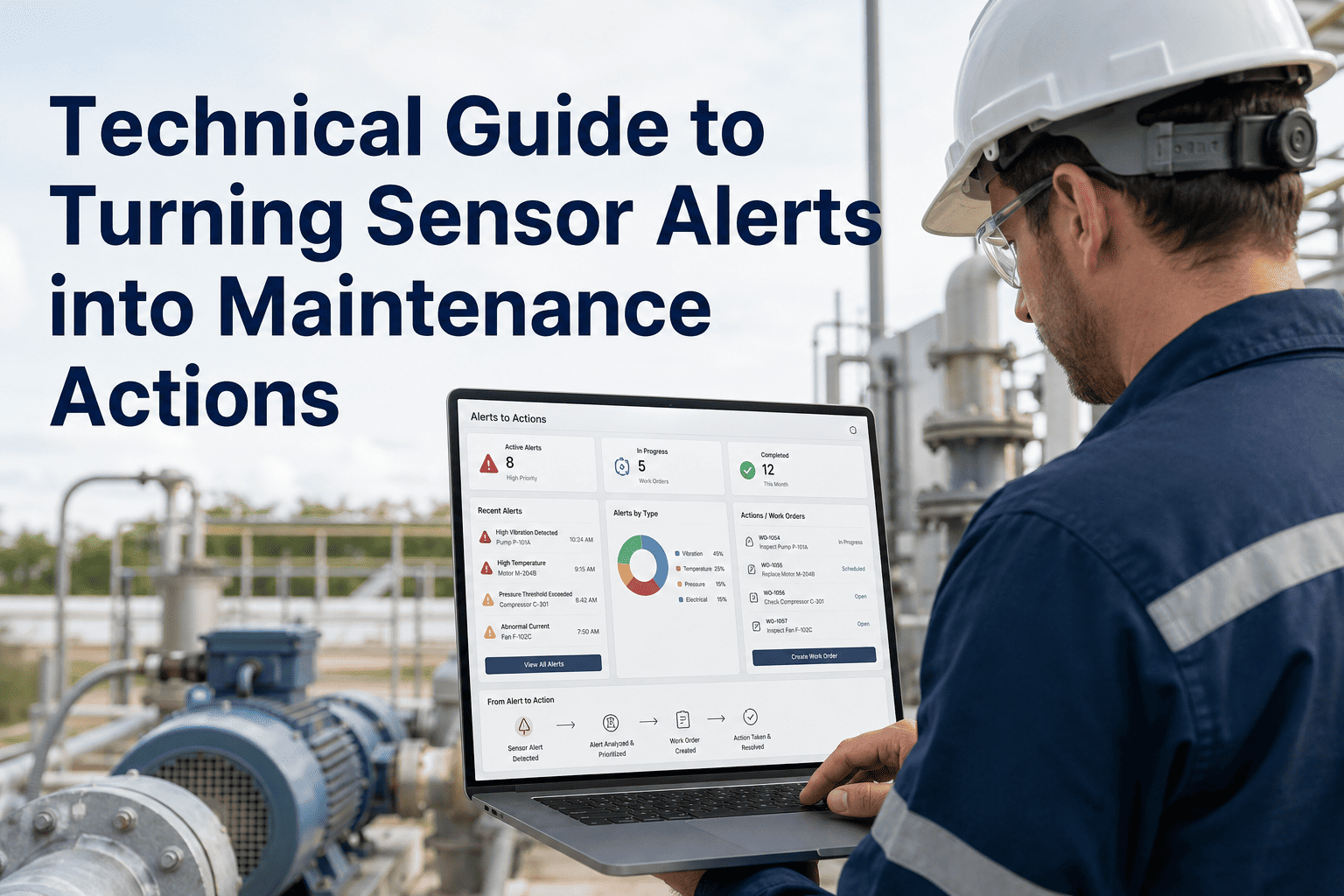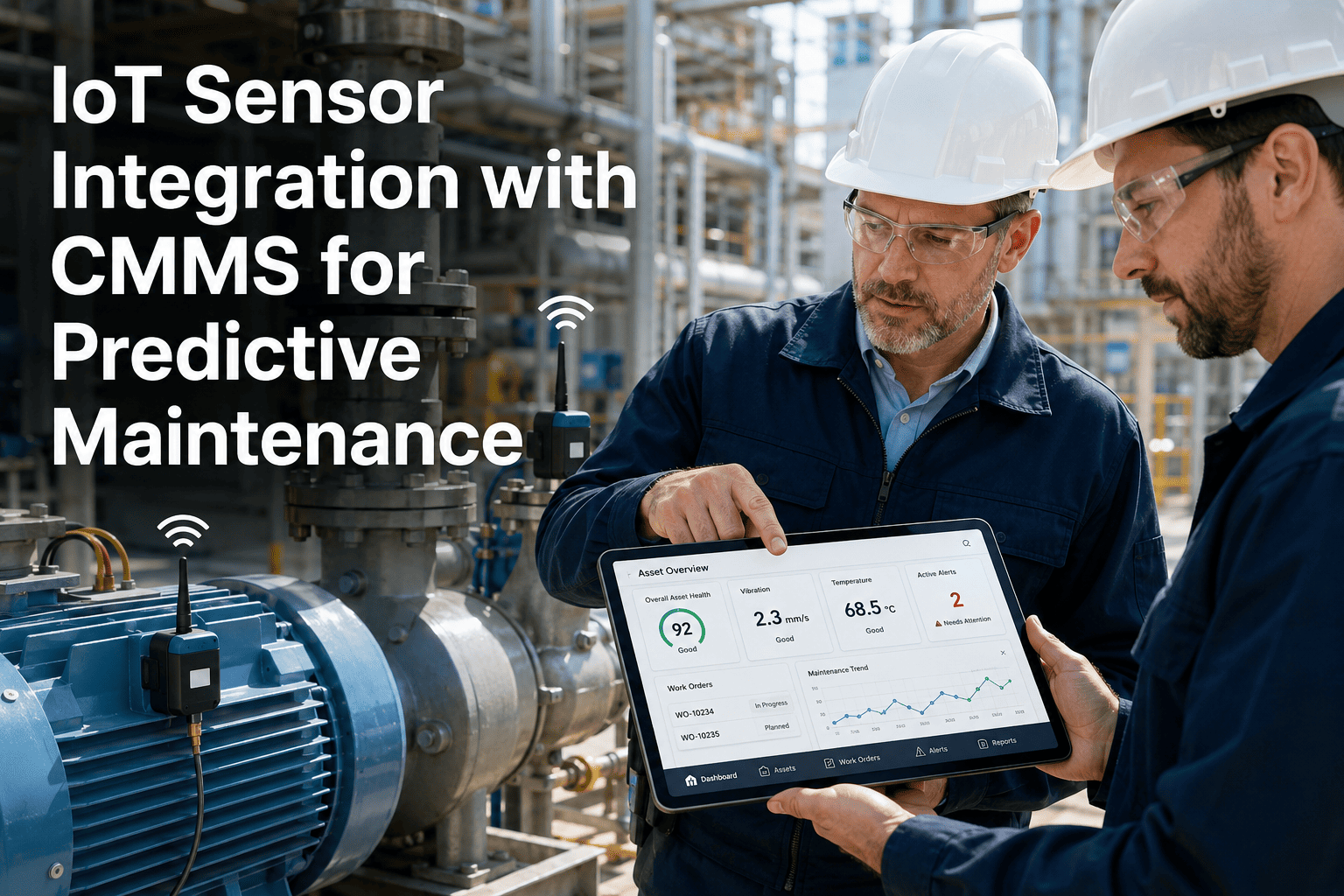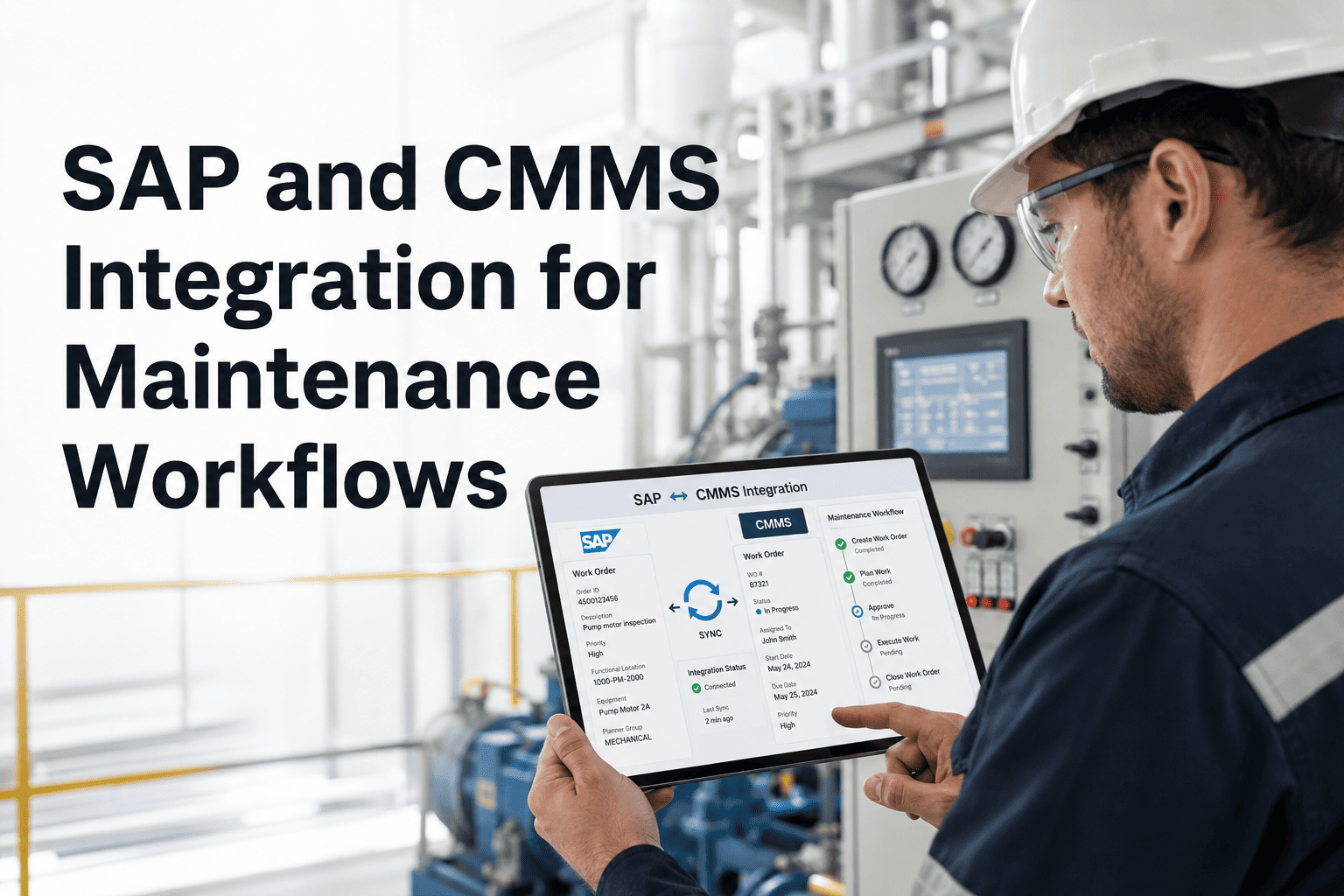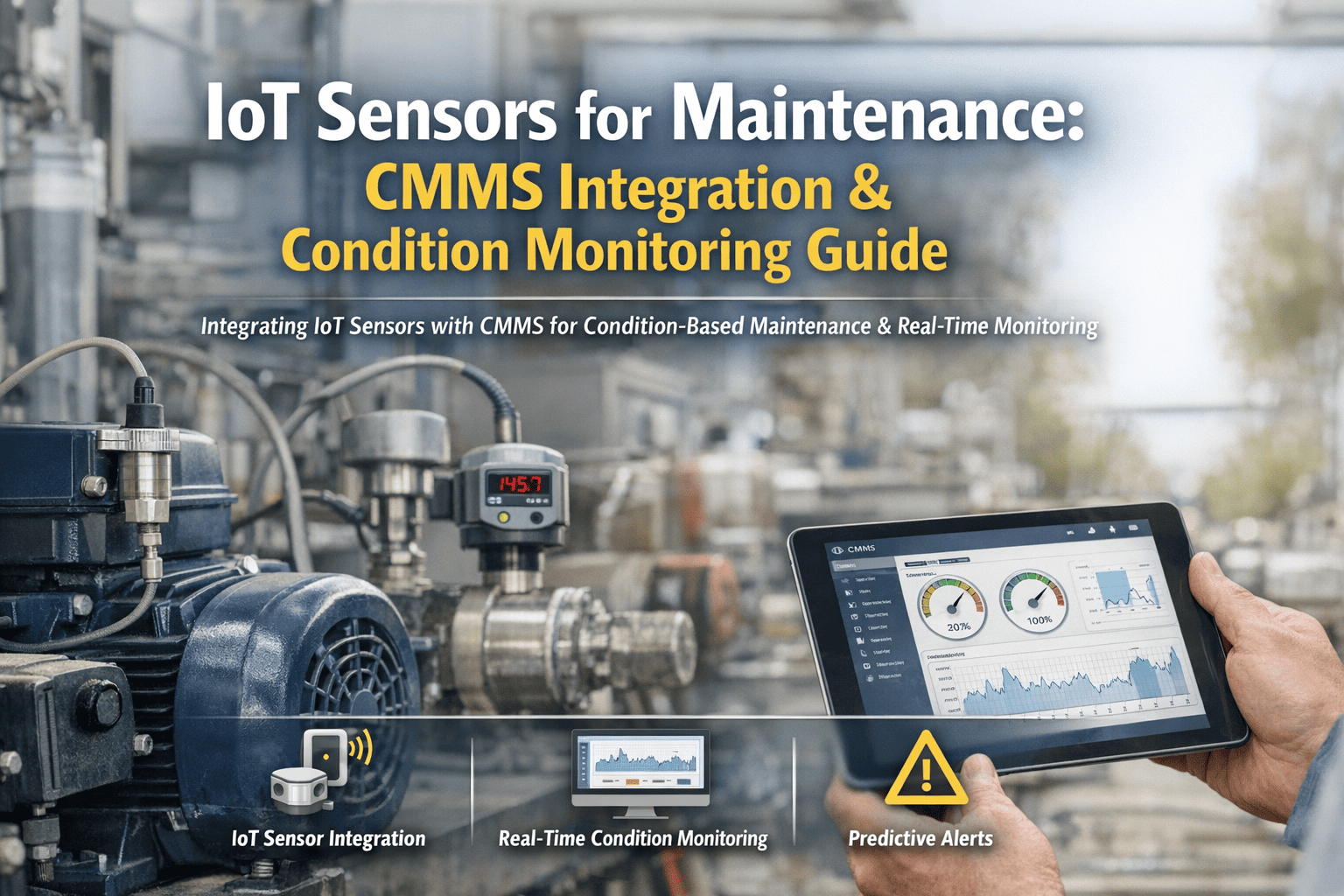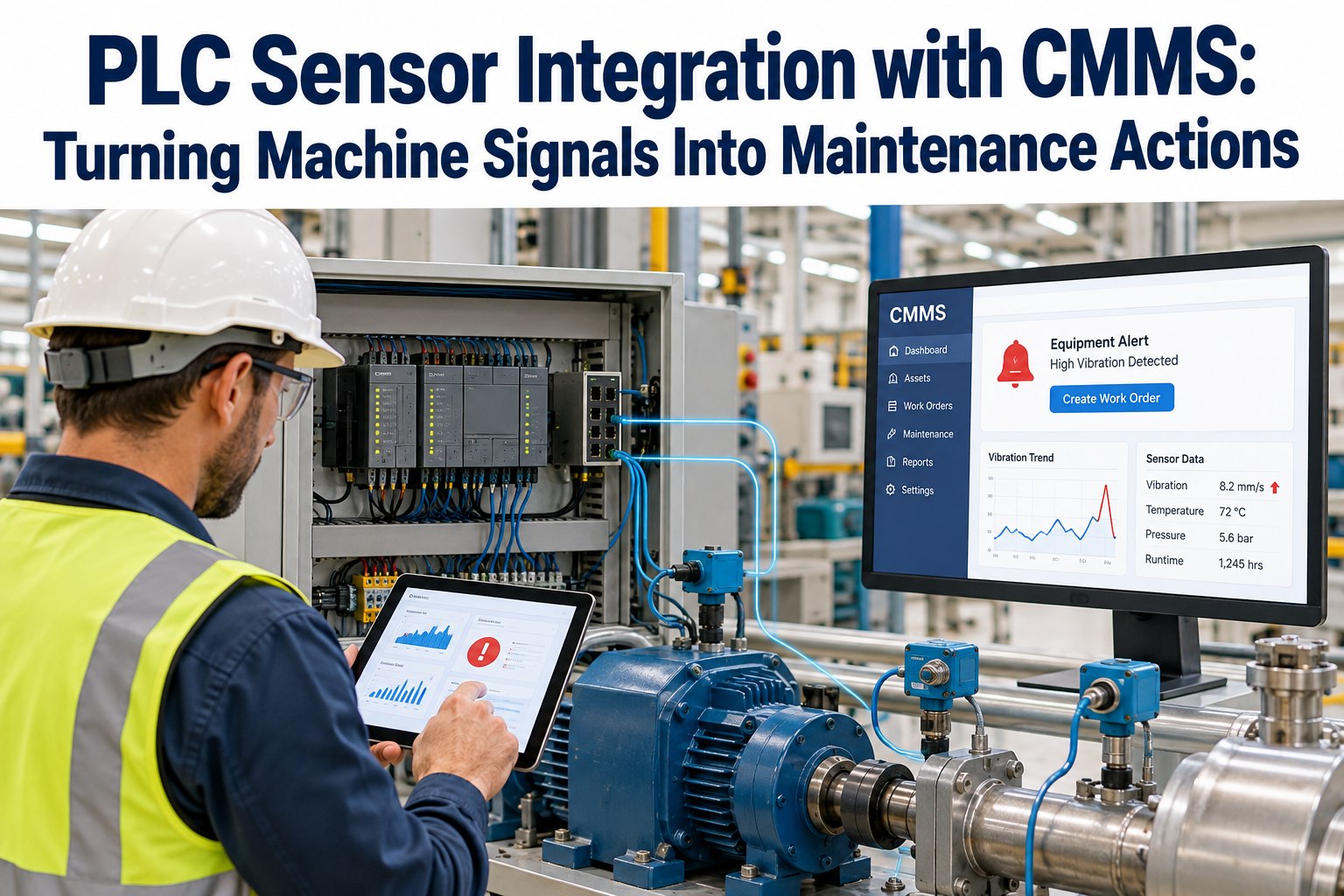
Every machine on the floor is already talking — a PLC flags a fault bit, a sensor crosses a limit, a cycle counter rolls past its interval — but if those signals stop at the SCADA screen, nobody in maintenance acts until the machine is down. The data exists; the connection to a work order doesn't. This guide shows how PLC and sensor signals become maintenance actions automatically, from protocol to prioritized job, and how OXMAINT AI, the AI-powered CMMS, turns machine signals into ranked work orders instead of ignored alarms.
PLC Sensor Integration with CMMS: Turning Machine Signals Into Maintenance Actions
A fault bit that never leaves the SCADA screen, a vibration limit crossed with no one notified, an alarm flood so loud the real fault hides in it — that's machine data without a path to maintenance. OXMAINT AI, the AI-powered CMMS and maintenance management software, connects the floor: read PLC tags and sensor values over standard protocols, classify each signal into the right action, and generate a prioritized work order with asset, parts and safety steps already populated.
Connecting the Floor — New Machines and Old
The first hurdle is protocol. A new line speaks OPC-UA; a twenty-year-old press speaks Modbus and nothing else. A real integration reads both, so a brownfield plant isn't locked out. OXMAINT AI connects across the full range of industrial protocols. Book a demo to confirm your machines connect to OXMAINT AI.
| Protocol | Best for | What it carries |
|---|---|---|
| OPC-UA | Modern PLCs — Siemens, Rockwell, ABB, Schneider | Tag values with semantic context, on the standard endpoint |
| MQTT | IIoT gateways & modern SCADA | High-frequency sensor streams & alarm events at sub-second latency |
| Modbus TCP / EtherNet/IP | Legacy PLCs, 15–25-year-old equipment | Register-level reads through an industrial gateway |
| REST / webhooks | Modern SCADA — Ignition, WinCC, FactoryTalk | Alarm-event subscription and threshold breaches |
An IoT gateway bridges the machines that have no native modern protocol, so equipment that predates OPC-UA still feeds the same maintenance workflow — no rip-and-replace to get a legacy line connected.
What the Machine Is Already Telling You
Once connected, a PLC exposes far more than a fault light. Run status, cycle counts, process values and quality data are all readable — and each can drive a maintenance action. OXMAINT AI reads these tags and turns the right ones into triggers. Start free and read your machine tags in OXMAINT AI.
The Signal-to-Action Pipeline
Reading a tag is not the point — acting on it is. OXMAINT AI runs an automated pipeline from protocol connection to a technician holding a fully populated work order, in under 90 seconds. Book a demo to walk the pipeline in OXMAINT AI.
A Signal Nobody Acts On Is Just Noise.
The machines already know when something's wrong — the gap is between the signal and the work order. Closing it in under 90 seconds, with the right classification and full context attached, is the difference between catching a fault and cleaning up after it.
From Alarm Flood to Actionable Few
A plant floor can throw hundreds to thousands of raw alarms a day — and that volume is exactly why real faults get missed. The fix isn't fewer sensors; it's classification. OXMAINT AI sorts every incoming signal into one of four actions, turning the flood into a short, actionable list. Start free and tame the alarm flood in OXMAINT AI.
Confirmation windows (a signal must persist before it counts) and multi-signal correlation (a vibration alert backed by a temperature rise) cut false alarms further — so a work order means a real problem, and technicians keep trusting the system.
Thresholds and Meters That Fire the Work
Two kinds of trigger drive the automation: a condition crossing a limit, and a counter reaching an interval. OXMAINT AI reads both directly from the PLC and acts on them. These are example rules a plant can set. Book a demo to configure triggers in OXMAINT AI.
Why It Holds Up on a Real Floor
An integration has to survive mixed equipment, legacy controllers and the realities of a working plant. OXMAINT AI is built for that environment, not a lab. Start free and connect your floor to OXMAINT AI.
Our machines were full of data that never reached the maintenance team — the PLCs flagged faults, the sensors tripped limits, and it all sat on the line SCADA where operators silenced it. Wiring those signals into work orders, with classification sorting the real faults from the noise, changed how the floor runs. A genuine fault now reaches a technician in a minute or two with the asset and parts already on the order, and our PM finally runs on actual cycles instead of a calendar that never matched the machines.
Frequently Asked Questions
Turn Machine Signals Into Maintenance That Happens.
Connect your floor to the OXMAINT AI maintenance management software — OPC-UA, MQTT, Modbus and REST connectivity, asset-tag mapping, four-way alarm classification, meter-based PM, and full-context work orders raised in under 90 seconds. Stop letting signals die on the SCADA screen.