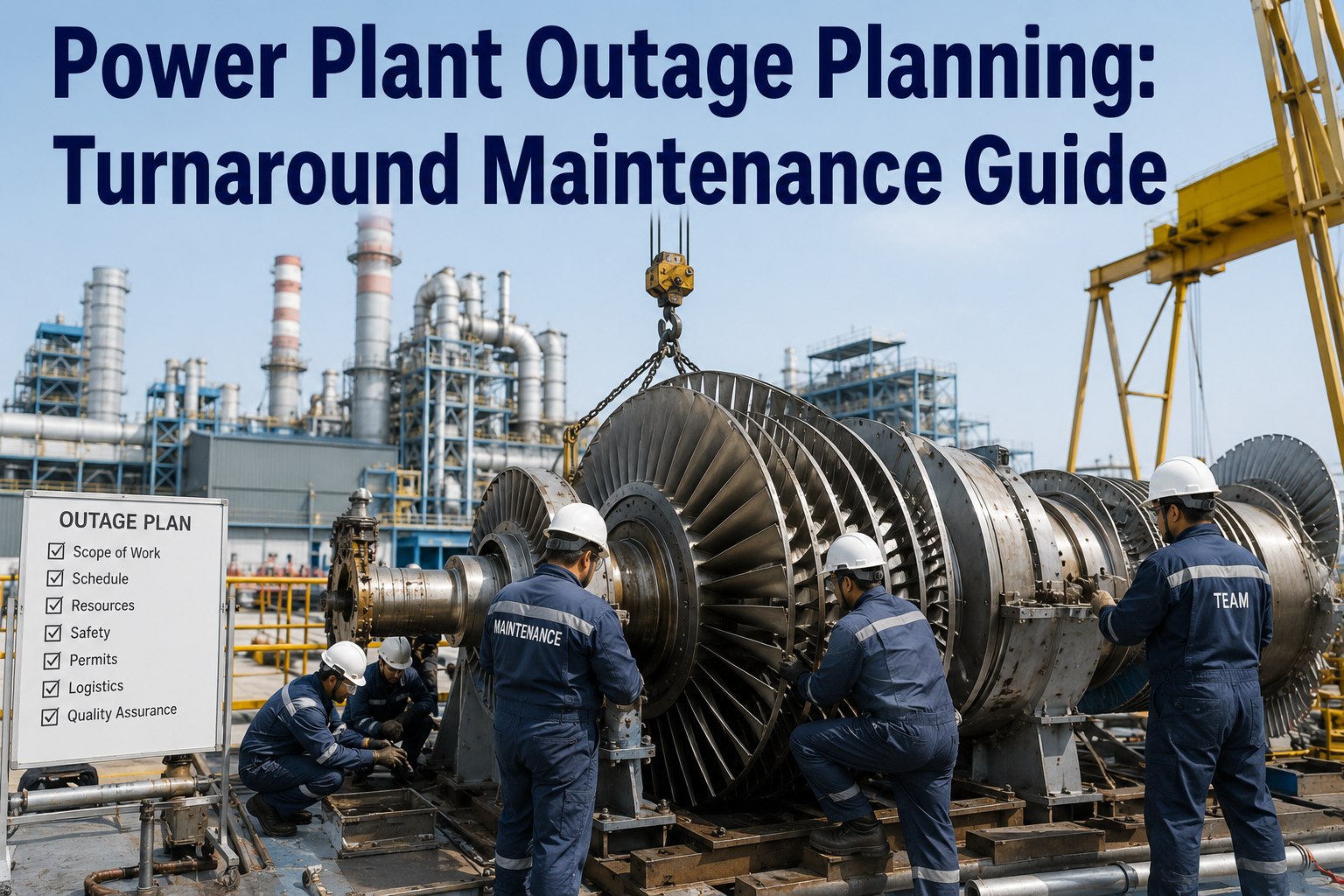
A planned power plant outage is the single largest maintenance event of any generation year — a 21- to 45-day window where refractory, boiler, turbine and balance-of-plant work converge under one critical path. Industry benchmarks put outage spend at roughly 30–40% of a plant's annual maintenance budget, so a single week of schedule slip can wipe out millions in availability margin. The teams that finish on time and under budget do it through disciplined work-package structure, contractor coordination and a CMMS backbone purpose-built for turnaround execution. If you want to compress your next outage window instead of extending it, Start Free Trial of OxMaint and put that backbone in place before scope freeze.
What would one week of outage overrun cost your plant this year?
Every day past the agreed return-to-service date burns $300K–$2M in replacement power, contract penalties and lost gross margin — before a single rework cost lands. Planned outages don't slip because the work is hard; they slip because scope, schedule and contractors aren't held in one system. OxMaint keeps your critical path, work packages and contractor tags in a single CMMS backbone built for the pressure of a major turnaround.
The Four Phases of a Controlled Power Plant Turnaround
A best-in-class outage is engineered 6 months before the unit trips and measured 30 days after it returns. Each phase below carries its own gate — miss the gate and the next phase pays for it in overtime and schedule float burn.
Scope Development & Long-Lead Procurement
Pull PM history, last-outage findings and condition-monitoring data into a master scope list. Lock turbine buckets, boiler tubes and refractory materials with POs issued by T-150 — these items drive 70% of critical-path risk. ISO 55000-aligned asset criticality scoring should rank every work order into Tier 1 (must do), Tier 2 (should do), Tier 3 (nice to have).
Work Package Build & Critical Path Lock
Every Tier 1 job becomes a work package: procedure, permits, JHA, materials, special tools, contractor crew size and hours. Level-3 schedule published with the turbine on the critical path and float mapped for BOP work. A gate review signs off scope freeze — after this point, additions route through a formal change-control board with cost and float impact attached.
Outage Execution & Daily Critical-Path Management
Two shift briefings per day: 06:00 plan-of-day, 18:00 look-ahead. Each contractor crew clocks onto their package in the CMMS; critical-path slippage triggers an escalation within 4 hours. Hold points and QC inspections are captured in-field on mobile, with photos tied to the asset ID. The target is zero open Tier 1 punch-list items at T+0 return-to-service.
Post-Outage Review & Knowledge Capture
Within 30 days, publish a turnaround report: planned vs actual hours, schedule variance, contractor performance scores, and every finding that should feed next cycle's scope. Load findings back into the CMMS asset register so the next planner starts from documented history, not tribal memory. Plants that skip this step repeat 15–20% of the same findings on the next outage.
The Outage Budget Math That Separates On-Time from Overrun
A 500 MW coal or combined-cycle unit typically spends $8M–$18M on a major planned outage. The variance between the top and bottom of that range is almost entirely schedule discipline and scope control — not labor rates.
The two terms most planners underweight: schedule slip days and the 1.3–1.5× change-order multiplier that hits when scope is added mid-execution without competitive bidding.
A 480 MW combined-cycle plant ran a 28-day gas-turbine major inspection on a $9.2M budget. Using OxMaint work-package templates and mobile hold-point capture, planners cut daily Tier 1 status meetings from 90 minutes to 35, eliminated 11 of 14 late change orders, and finished at T+1 instead of the prior cycle's T+6. The one-day slip cost $480K in replacement energy — against $3.1M saved versus the previous outage's overrun. Net payback on the CMMS rollout: under 4 months.
The Outage Readiness Checklist Every Planner Must Close Before Scope Freeze
These items form the gate between planning and execution. If any one of them is open at T-21, you are not ready to trip the unit — you are ready to overrun.
Scope & Work Packages
- Every Tier 1 job has a signed work package with procedure and JHA
- Asset criticality scoring applied to all scope items
- Tier 2/Tier 3 items parked in a deferral list with owner and trigger
- Formal scope-freeze sign-off from ops, maintenance and engineering
Schedule & Critical Path
- Level-3 schedule published with turbine path clearly identified
- Float mapped for BOP work and non-critical contractors
- Weather and ambient-temperature contingencies built into outdoor work
- Daily critical-path review block scheduled on every shift lead's calendar
Materials & Contractors
- Long-lead items received, inspected and staged at warehouse
- Rental tools reserved with confirmed delivery dates
- Contractor site inductions and safety orientations completed
- Contractor crew rosters and competent-person sign-offs on file
Permits, Safety & QC
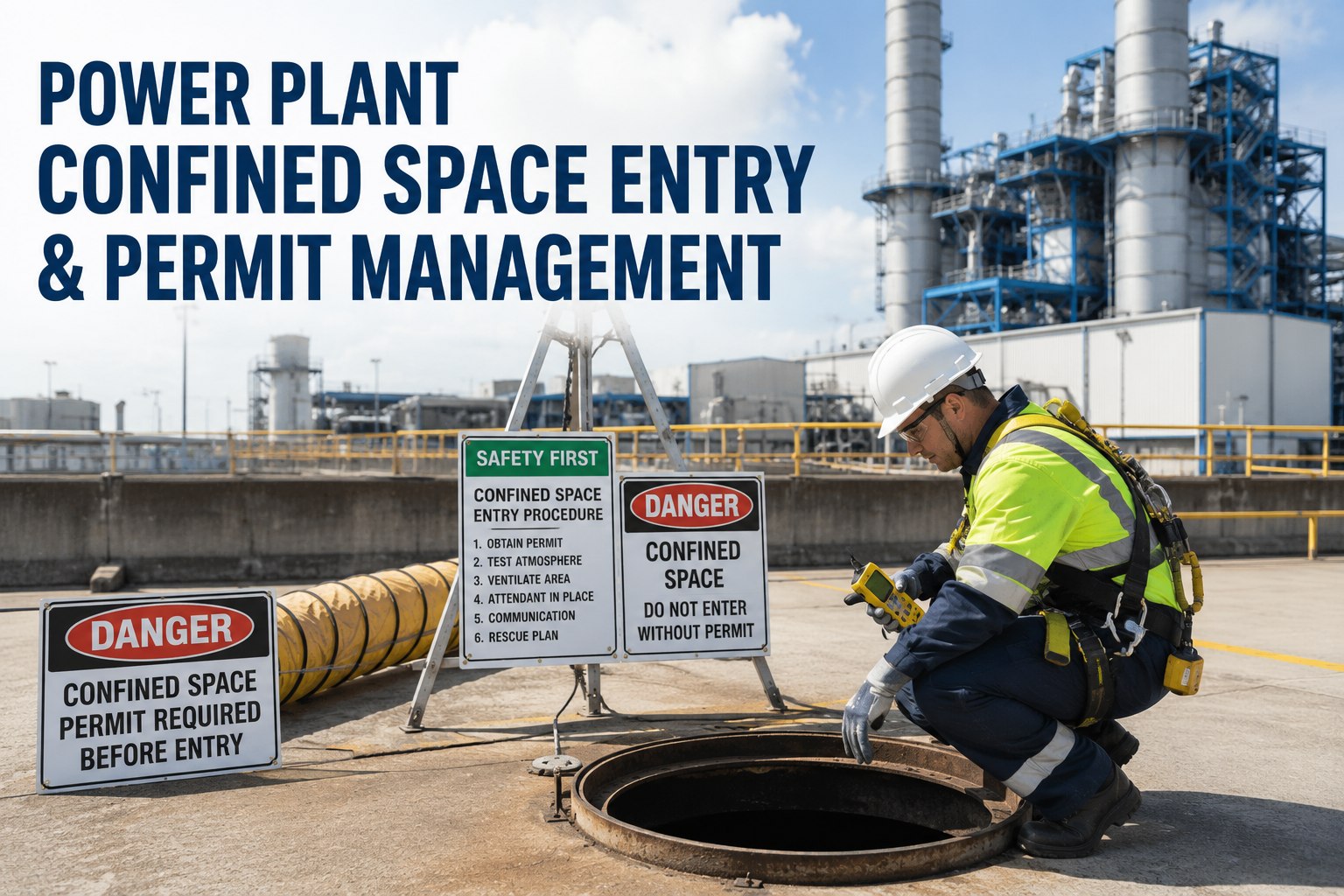
- Confined-space and LOTO plans written for every applicable package
- QC inspector assignments mapped to hold points in the schedule
- Radiation and scaffold access permits pre-staged where required
- Emergency response and medevac plan briefed to all shift leads
Why Spreadsheets and Email Collapse Under Outage Pressure
Most plants still run turnarounds on a patched-together stack of Excel, email and a shared drive. It works — until day 4, when three contractors are waiting on the same hold-point release and nobody can find the latest revision of the work package.
| Capability | Spreadsheet + Email | OxMaint CMMS |
|---|---|---|
| Work package version control | Manual file naming, revision drift by day 3 | Single source of truth, mobile-accessible, audit-tracked |
| Critical path visibility | Static Gantt screenshot in a deck | Live critical-path dashboard, slip alerts within 4 hours |
| Contractor time and tag-in | Paper timesheets reconciled at week-end | Mobile clock-on per package, real-time hours vs estimate |
| Hold-point and QC capture | Clipboard sheets, photos on personal phones | In-field mobile sign-off with photo tied to asset ID |
| Change-order impact | Email thread, cost impact guessed | Formal change-control with auto-calculated float and cost impact |
| Post-outage findings feed-forward | Binder on a shelf, lost by next cycle | Findings loaded to asset register, searchable at next scope meeting |
The Five Metrics That Tell You Whether Your Outage Is Winning
If your daily outage report doesn't show these five numbers by 08:00, you're managing on anecdote. Each one is a leading indicator — by the time they lag, the slip has already happened.
Your next outage is already being scoped — is it in one system?
Stop reconciling spreadsheets at 11 p.m. on day three. Put work packages, critical path, contractor tags and hold-point capture in one CMMS built for turnaround pressure.
Answers to the Questions Outage Planners Ask Most
How early should planning start for a major power plant outage?
Best practice is to begin scope development at T-180 days for a major inspection and T-365 for a turbine major. Long-lead items — turbine buckets, boiler tube modules, generator components — typically carry 16–24 week lead times, so procurement must be locked by T-150. Plants that start at T-90 routinely burn 5–8 days of float on expediting alone. You can Book a Demo to see how OxMaint templates compress scoping from weeks to days.
What is the difference between a planned outage and a turnaround?
In power generation the terms are largely interchangeable, though "turnaround" more often implies a major, multi-week event with full unit shutdown — turbine major, boiler overhaul or refractory rebuild — while "planned outage" can include shorter annual inspections. Both follow the same lifecycle: scope, plan, execute, review. The complexity, not the terminology, is what drives cost and schedule risk.
How do you control scope creep during outage execution?
Enforce a formal scope-freeze gate at T-21, then route every addition through a change-control board that attaches a cost and float impact to each request. The change-order multiplier — typically 1.3–1.5× — should be visible on every approval so stakeholders feel the cost in real time. Plants that allow verbal scope adds during execution routinely close 15–25% over budget.
What does a CMMS actually do for outage management that a spreadsheet can't?
A CMMS gives you version-controlled work packages, mobile hold-point capture tied to asset IDs, live critical-path dashboards with slip alerts, and contractor clock-on that compares actual hours to estimate in real time. It also feeds findings back into the asset register so the next planner starts from documented history. Spreadsheets can hold the plan; they cannot enforce the process or capture the truth from the field. Start Free Trial and see the difference on your next scope.
How do you measure outage success after return to service?
Publish a post-outage report within 30 days covering schedule variance (planned vs actual days), labor multiplier (actual vs estimated hours), scope change rate, contractor performance scores, safety record, and a findings register that feeds the next cycle. The single best leading indicator of next-outage success is whether this year's findings are searchable in the CMMS when next year's scope meeting opens.
Run your next turnaround on schedule, on budget, on one platform.
Work packages, critical path, contractor coordination and post-outage findings — all in a CMMS built for power plant turnarounds. Set up your outage workspace in under an hour.
Free 14-day trial · No credit card