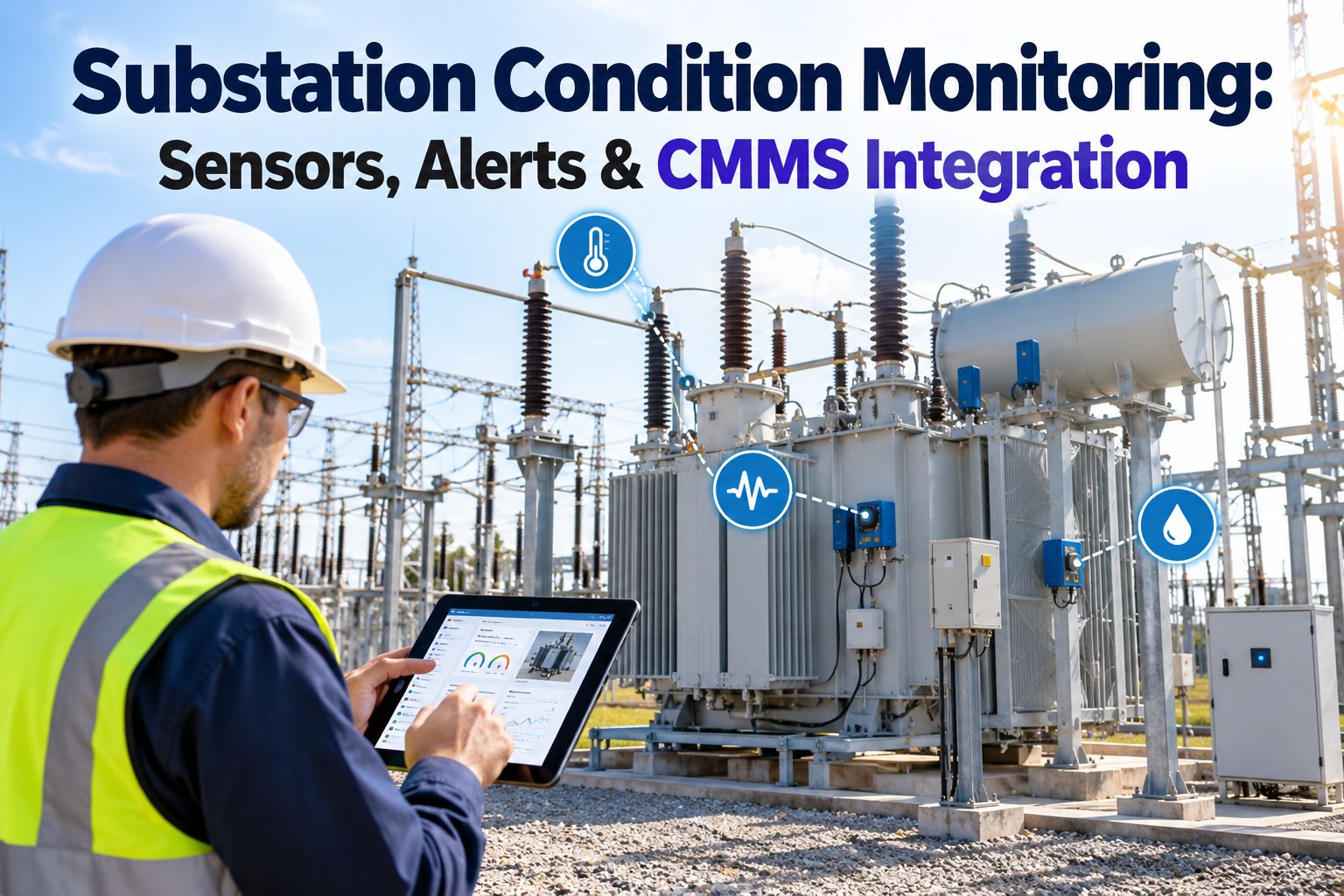
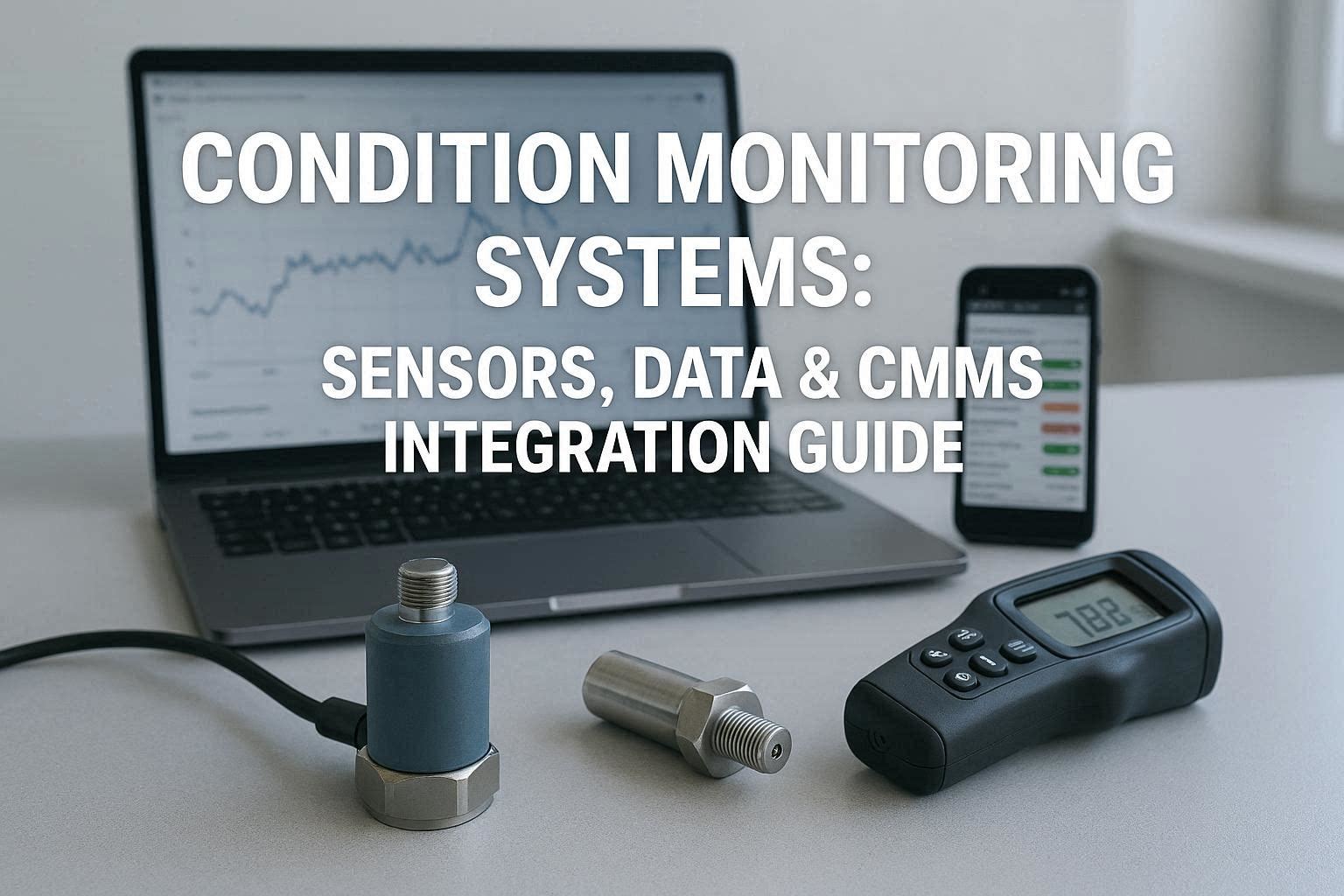
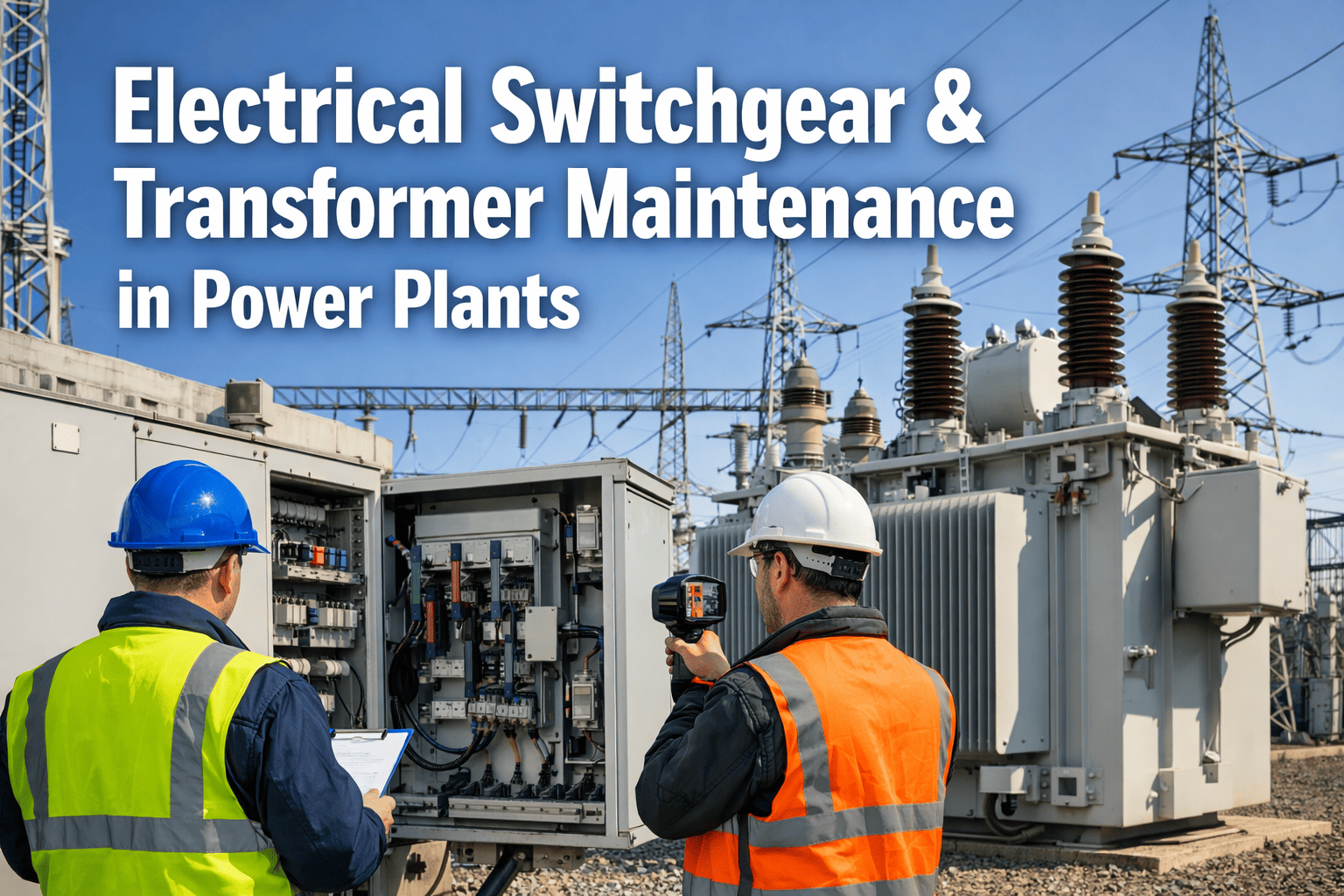
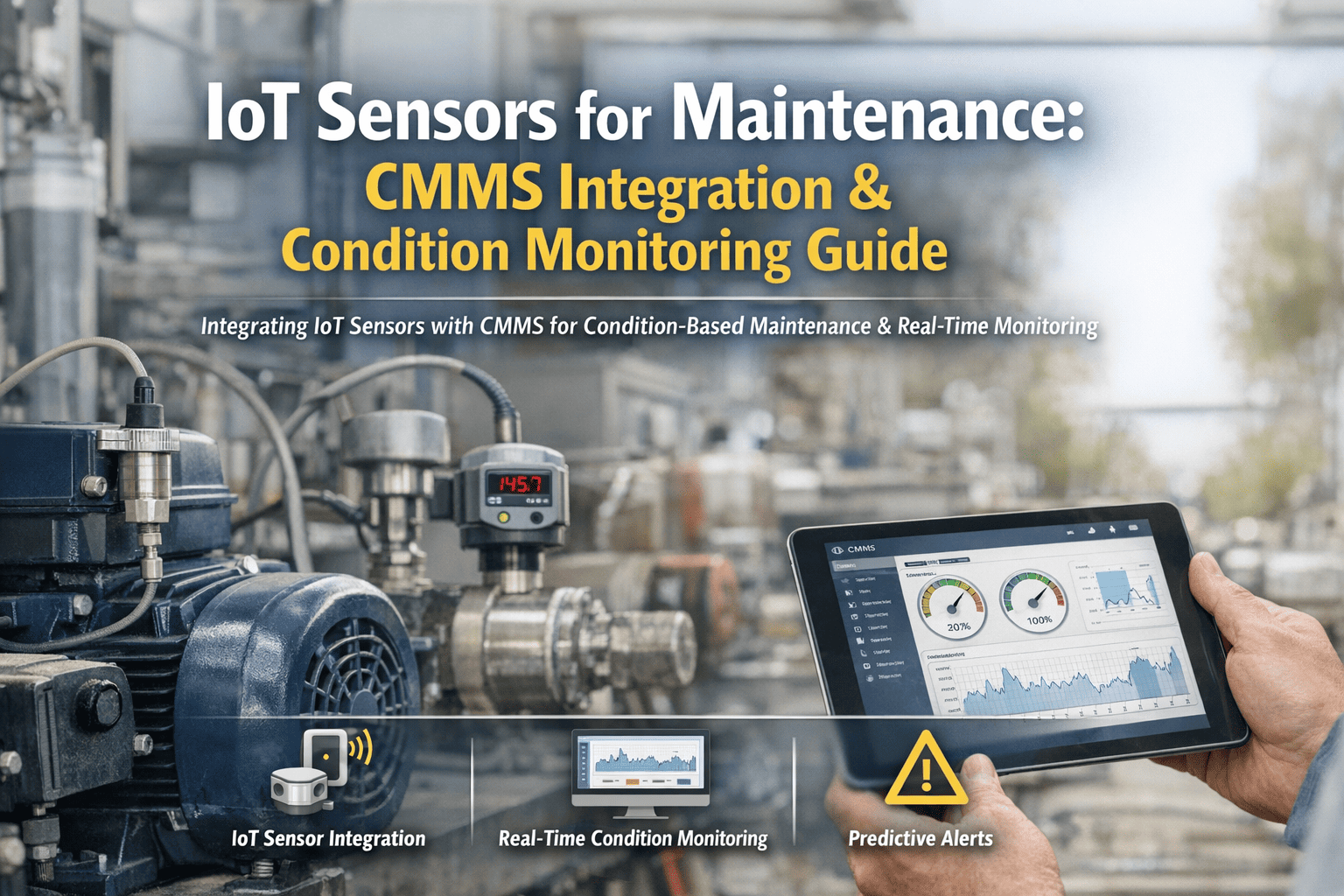
A substation can fail faster than anyone can walk up to it. A transformer developing an internal fault, a breaker whose contacts are eroding, a bushing starting to discharge — these develop over hours or days, and a monthly manual round is blind to them between visits. Continuous condition monitoring closes that gap: sensors watch the assets every second, flag the developing fault the moment it appears, and — when they feed a CMMS — turn that alert into a scheduled, tracked work order. This article covers what to monitor, the techniques that catch each fault, and how the alert becomes a repair in OXMAINT AI — or book a demo of substation monitoring integration in OXMAINT AI.
SUBSTATION CONDITION MONITORING · SENSORS · ALERTS · CMMS · 2026
Substation Condition Monitoring: Sensors, Alerts & CMMS Integration
A fault that develops between manual rounds is a failure nobody saw coming — and a substation outage cascades well beyond its own fence. OXMAINT AI is the AI-powered CMMS that receives the monitoring alert, raises a prioritised corrective work order with the reading attached, and ties it to the asset's history and PM — so a sensor warning becomes a planned repair, not an unplanned trip.
1 · Sense
2 · Alert
3 · Work order
4 · Close loop
24/7
continuous sensing versus a snapshot on a monthly manual round
DGA
dissolved gas analysis reads a transformer's internal health from its oil
PD
partial discharge is the early fingerprint of insulation breakdown
Alert→WO
the value only matters if it becomes a tracked corrective work order
What to Monitor on Each Asset
A substation is a handful of asset types, each with its own failure modes and its own sensors. Effective monitoring means watching the right parameter on the right asset — this matrix maps them. Start free and build your substation asset register in OXMAINT AI.
Asset
What to monitor
Sensor / technique
Catches
Power Transformer
Dissolved gases, oil & winding temp, moisture
Online DGA, temperature, moisture sensors
Internal arcing, overheating, aging
Bushings
Capacitance, power factor, discharge
Bushing monitor, partial discharge
Insulation breakdown before failure
Circuit Breaker
Operation timing, count, mechanism
Travel/timing, coil-current signature
Slow or failing operation, contact wear
SF6 Switchgear / GIS
Gas density & pressure, discharge
SF6 density sensor, partial discharge
Gas loss, insulation faults
Busbar & Connections
Joint temperature
Thermal / infrared, wireless temp spots
Loose, hot, high-resistance joints
Surge Arrester
Leakage current
Leakage-current monitor
Degradation and impending failure
The Techniques That Catch a Developing Fault
Behind those sensors are a few core monitoring techniques, each reading a different physics of failure — gas, heat, electrical discharge, pressure. Together they cover the substation.
Dissolved Gas Analysis
Fault gases in transformer oil — hydrogen, acetylene, carbon monoxide — reveal arcing and overheating inside the tank.
Thermal / Infrared
Hot spots at connections, bushings and joints — the signature of loose or high-resistance contacts.
Partial Discharge
Tiny electrical discharges in insulation — the earliest warning that a dielectric is breaking down.
SF6 Density
Gas pressure and density in switchgear — a slow leak lowers insulation and interruption capability.
Breaker Timing
Contact travel and coil-current signatures — a breaker operating slow or out of spec before it fails to clear.
Leakage Current
Current through surge arresters and insulation — a rising trend flags degradation underway.
From Sensor to Corrective Work Order
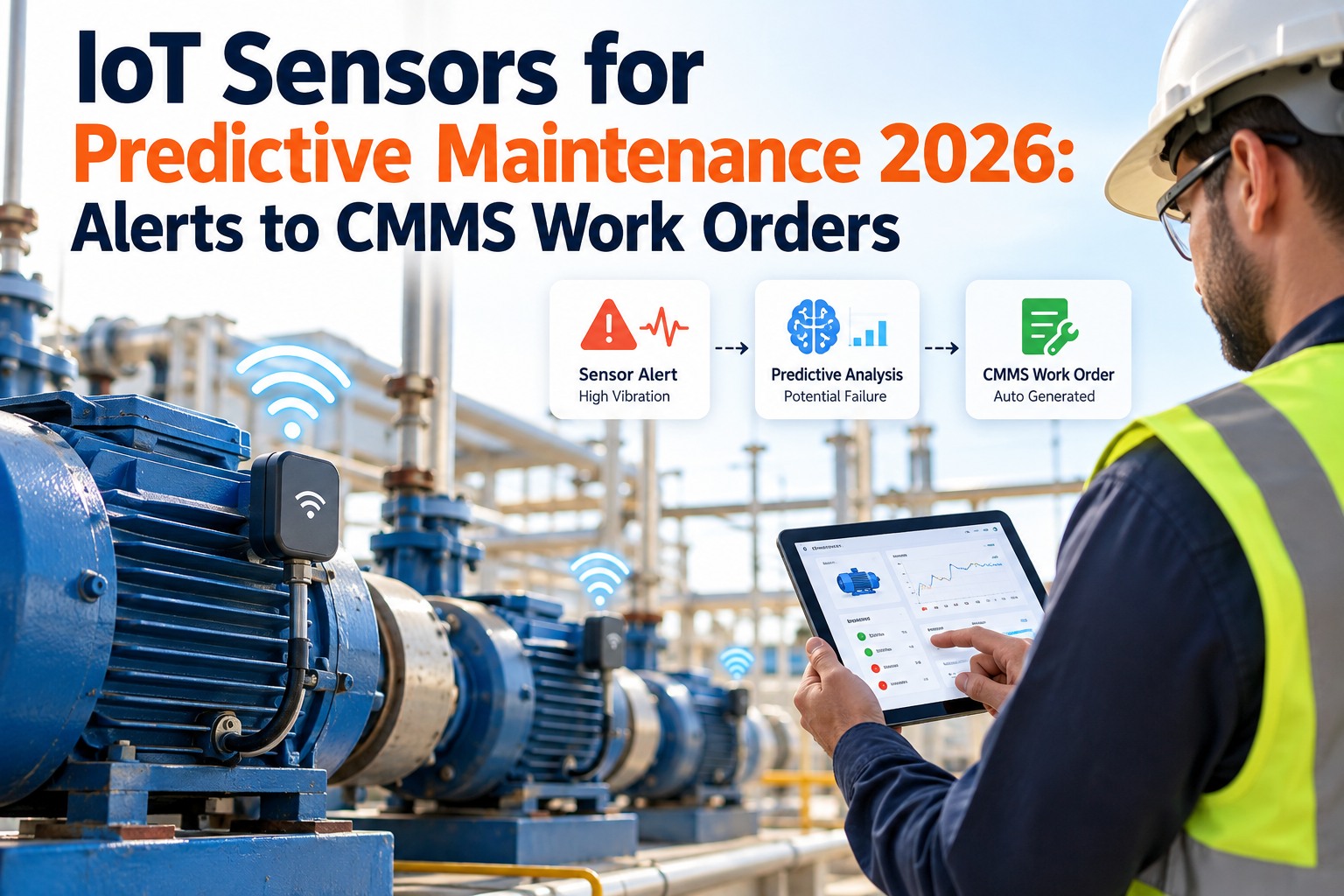
A sensor reading is only useful if it drives action. The value of condition monitoring is realised at the point it meets the CMMS — where an alert becomes an assigned, tracked, closed work order. Book a demo of the alert-to-work-order chain in OXMAINT AI.
1Sensor Reads
Continuous data streams from the asset.
→
2Threshold / Anomaly
A reading crosses a limit or trends abnormally.
→
3CMMS Work Order
An alert raises a ranked corrective job with the data and asset attached.
→
4Dispatch & Repair
The crew acts with the history in hand.
→
5Close & Learn
The fix is recorded and feeds the asset's PM.
Without the CMMS link, an alert is just an email someone may or may not act on. With it, every warning is accountable and on record.
The Monitoring Maturity Ladder
Substation maintenance climbs a ladder from scheduled manual checks to continuous, predictive monitoring — each rung catching more, sooner.
01
Periodic Manual
Scheduled rounds and offline tests — a snapshot that misses what develops between visits.
02
Continuous Online
Permanent sensors stream data around the clock, alerting on thresholds in real time.
03
Predictive
Trends and analytics forecast the failure and raise the work order before the limit is reached.
Gaps That Let Substation Faults Through
Even monitored substations fail when the program has holes. Each of these is a reason the warning never became a repair.
×Alerts With No Owner
A warning that lands in an inbox instead of a tracked work order and gets lost.
×Monitoring the Wrong Thing
Sensors on low-risk assets while a critical transformer runs unwatched.
×No Trend History
Readings seen once, never trended, so a slow drift toward failure stays hidden.
×Alarm Fatigue
Thresholds so noisy the real warning is ignored with the false ones.
×Islanded Data
Monitoring platform and maintenance system that never talk, so action lags.
×Uncalibrated Sensors
Monitors that drift untrusted, so teams stop believing the readings.
How OXMAINT AI Turns Monitoring Into Action
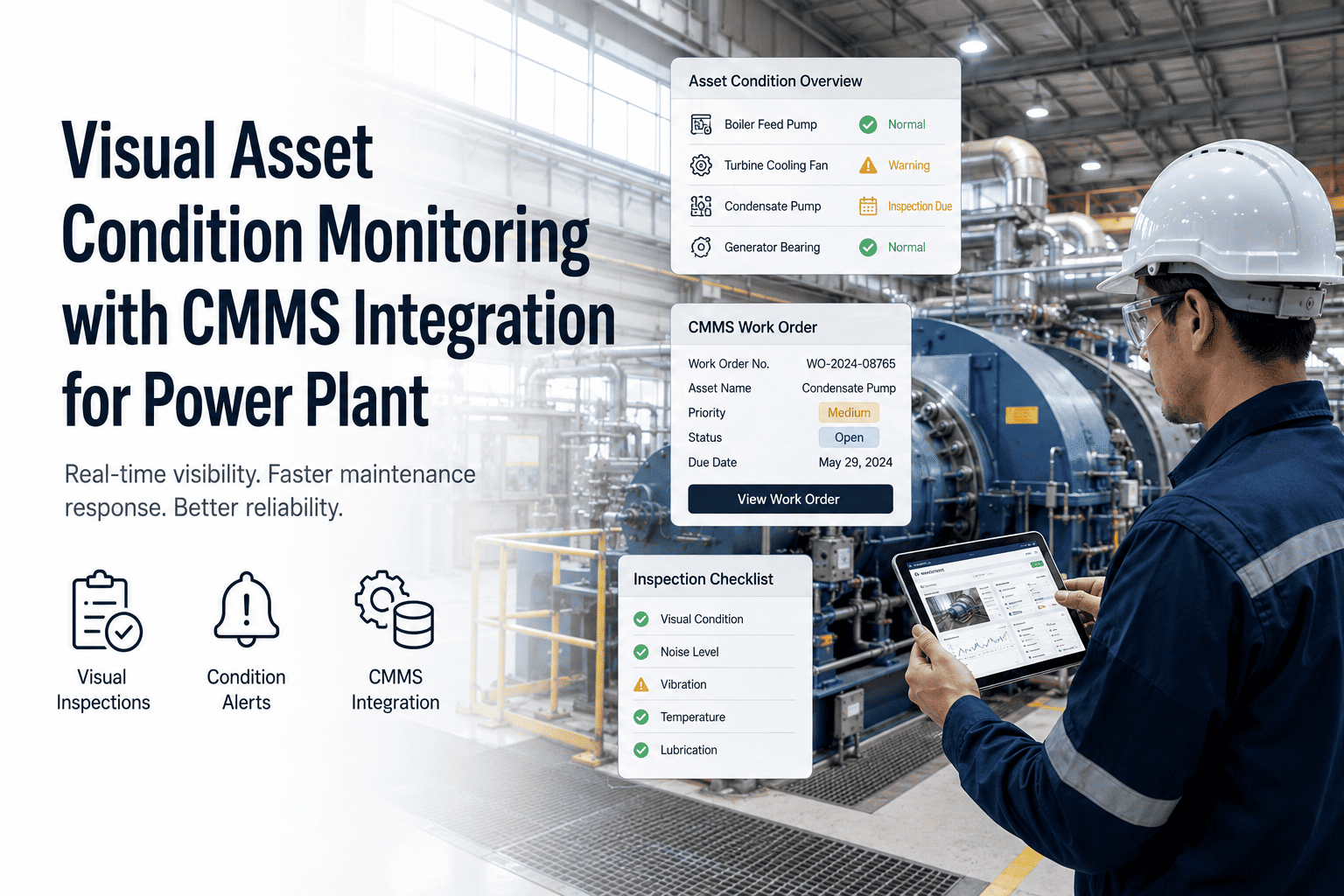
OXMAINT AI is the AI-powered maintenance management software that sits at the action end of condition monitoring — the substation asset register, the alert-driven work orders, the maintenance history and the PM schedule on one platform. Put your substation on it when you start free and connect monitoring to work orders in OXMAINT AI.
Substation Asset Register
Transformers, breakers, switchgear and arresters as structured assets with their limits and history.
Alert → Work Order
A monitoring alert raises a prioritised corrective job automatically, with the reading attached.
Reading & Trend Log
Sensor values and test results logged to each asset, so drift is caught as a trend.
Preventive Maintenance
Scheduled breaker, transformer and switchgear PMs alongside the condition-based work.
Calibration Tracking
Sensor and monitor calibration tracked, so the readings stay trusted and auditable.
Reliability Analytics
Failures and alerts trended by asset so the recurring weak point gets a permanent fix.
A Sensor That Nobody Acts On Is Just Decoration.
The monitoring is only as good as what happens after the alert. OXMAINT AI is where the warning becomes a ranked, assigned, closed work order — so continuous monitoring actually prevents the failure instead of just recording it.
EXPERT REVIEW
Written for power-utility, substation and electrical-reliability teams. Substation condition monitoring draws on established techniques — dissolved gas analysis, partial discharge, thermography, SF6 density and breaker timing — and operates within utility safety rules and standards such as IEEE and IEC guidance, with substation automation often built on IEC 61850. The parameters and techniques here are a general framework; the specific limits, test methods and action thresholds come from the equipment manufacturer, the utility's standards and the asset's duty. All work in an energized substation is safety-critical and performed by qualified, authorised personnel under the site's switching and safety procedures. OXMAINT AI is a maintenance management platform that receives alerts, raises and tracks work orders, and holds asset history — it is not a condition-monitoring sensor system, a protection relay, or a substitute for qualified engineers.
Frequently Asked Questions
What is substation condition monitoring?
It's continuously watching the health of substation equipment — transformers, breakers, switchgear, bushings and arresters — with sensors that read parameters like dissolved gases, temperature, partial discharge and SF6 density. Instead of a periodic snapshot, it gives a live view, so a developing fault is caught as it forms rather than at the next scheduled round.
Start free and log substation asset health in OXMAINT AI.
Why monitor transformers with dissolved gas analysis?
Because the oil carries the evidence. Internal faults — arcing, overheating, insulation breakdown — generate specific gases that dissolve in the transformer oil. Online DGA reads those gases continuously, so a developing internal fault shows up as a rising gas trend long before it becomes a failure or a trip. It's one of the most valuable transformer monitoring techniques.
How does condition monitoring integrate with a CMMS?
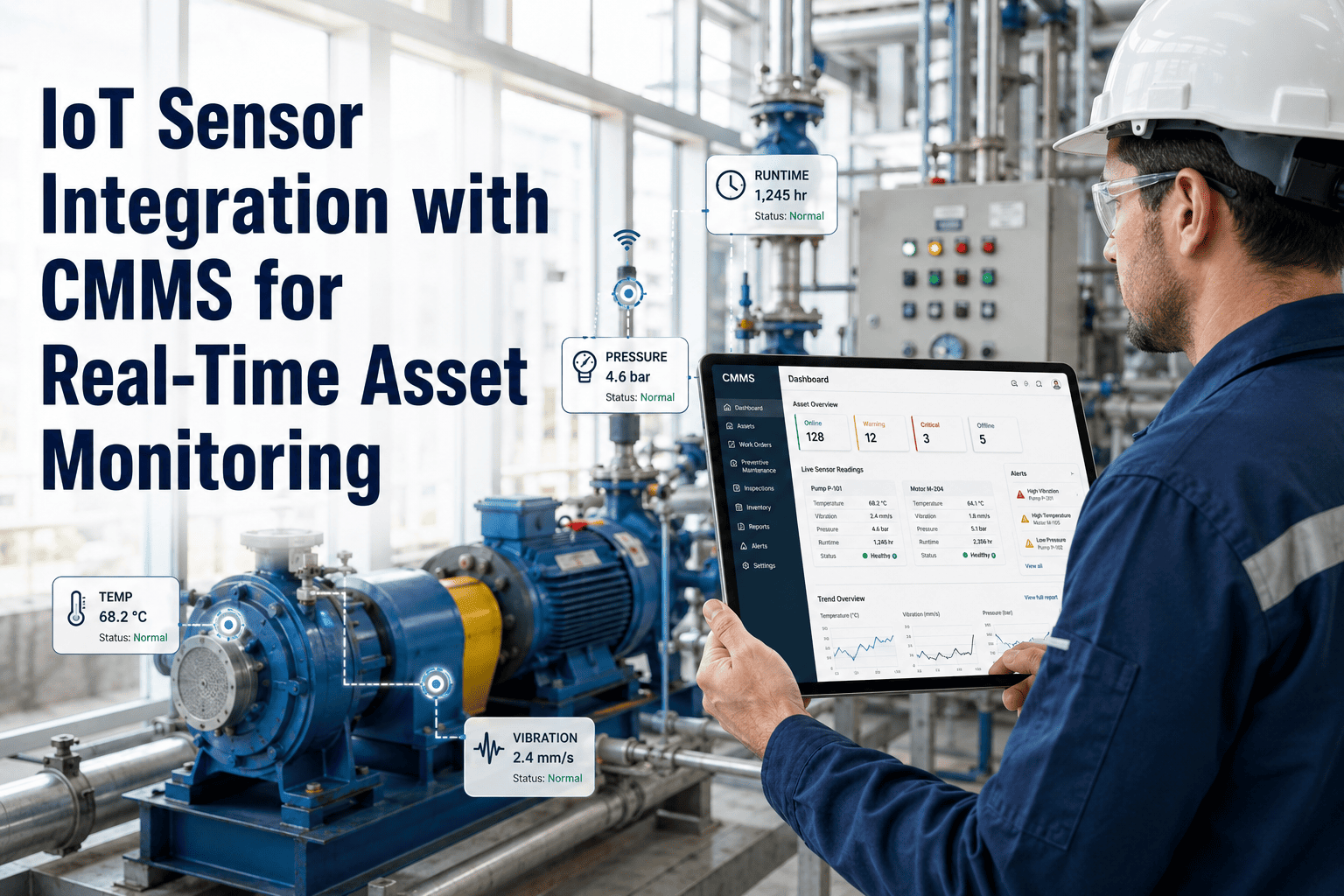
The monitoring system detects the anomaly and sends an alert; the CMMS turns that alert into a prioritised corrective work order, attaches the reading and the asset history, assigns it, and tracks it to closure. The monitoring sees the problem; the CMMS makes sure someone owns and fixes it. Without that link, alerts get lost in inboxes.
Does continuous monitoring replace periodic testing?
Not entirely — they complement each other. Continuous sensors catch fast-developing and between-round faults in real time, while periodic offline tests and inspections verify condition in ways online sensors can't, and confirm the monitoring itself. The strongest programs use continuous monitoring on critical assets and keep a planned testing schedule alongside it.
What is partial discharge and why monitor it?
Partial discharge is a small electrical discharge that bridges part of the insulation without fully breaking it down — an early symptom of insulation degradation in bushings, switchgear and cables. Detecting and trending it gives one of the earliest possible warnings of an insulation problem, often long before any other symptom appears.
Book a demo of tracking condition alerts in OXMAINT AI.
Watch Every Asset, Act on Every Alert.
Run substation condition monitoring on OXMAINT AI: transformers, breakers and switchgear as tracked assets, monitoring alerts turned into prioritised corrective work orders, readings trended against limits, and sensor calibration kept current — so a developing fault is a planned repair, not a substation outage.