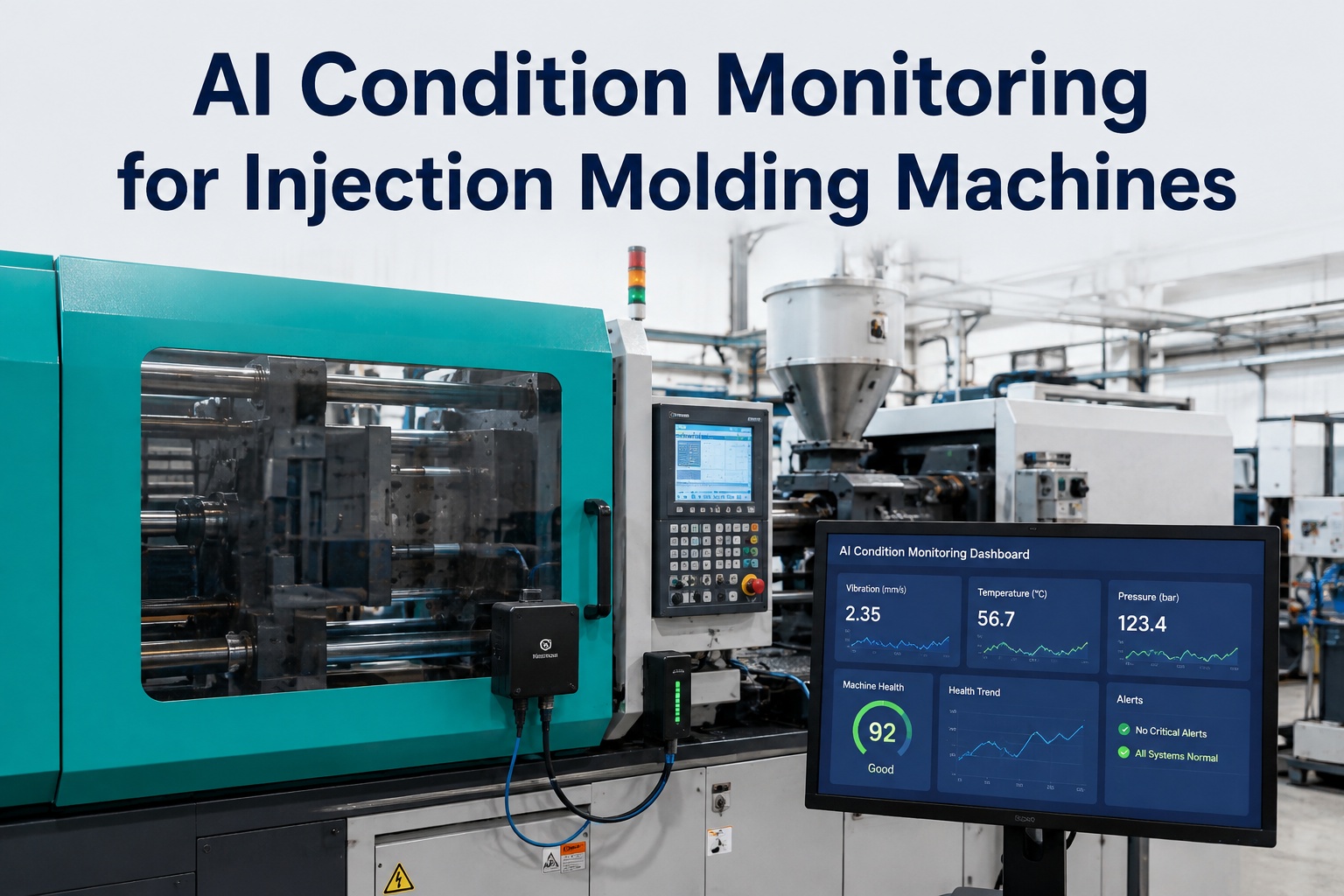
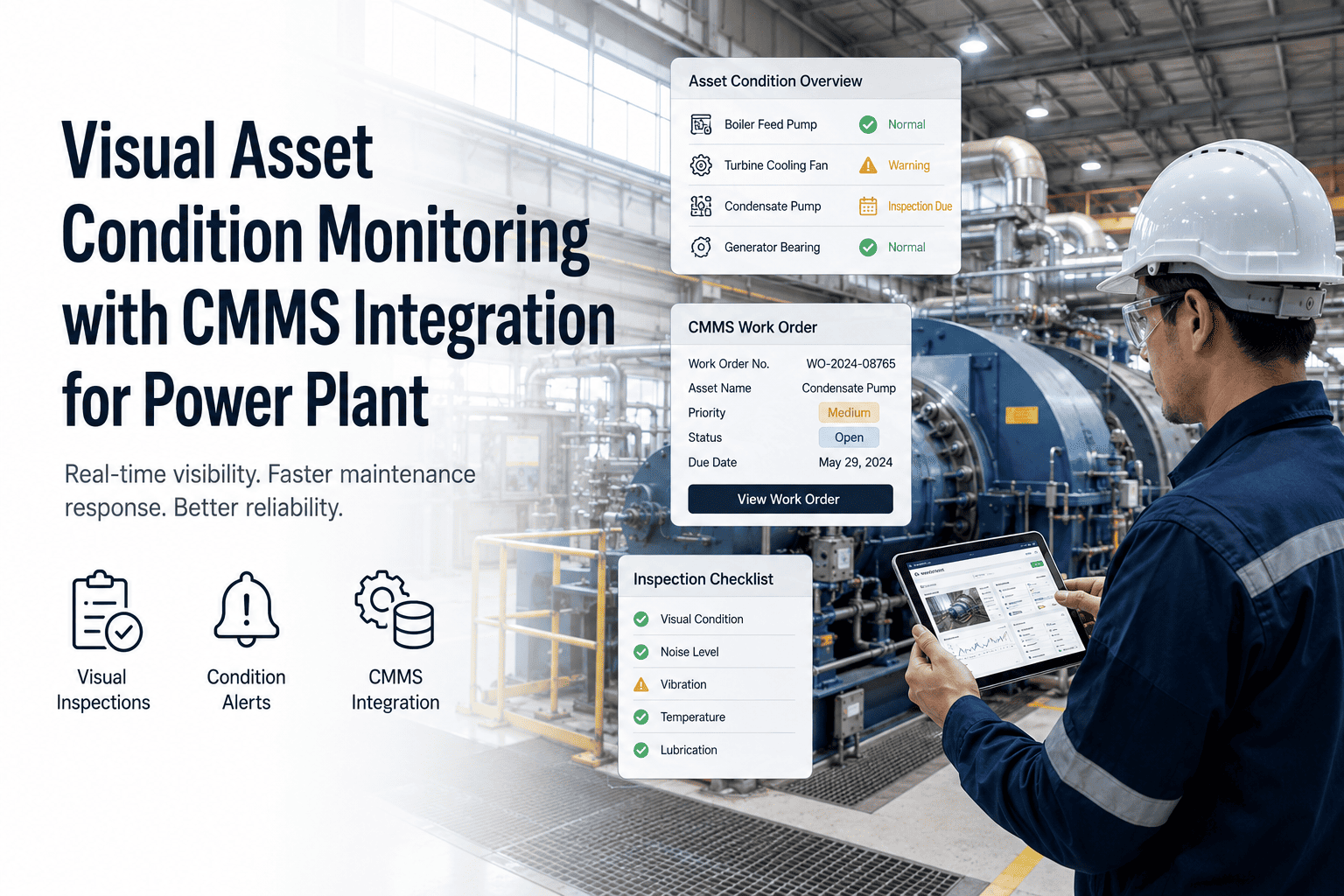
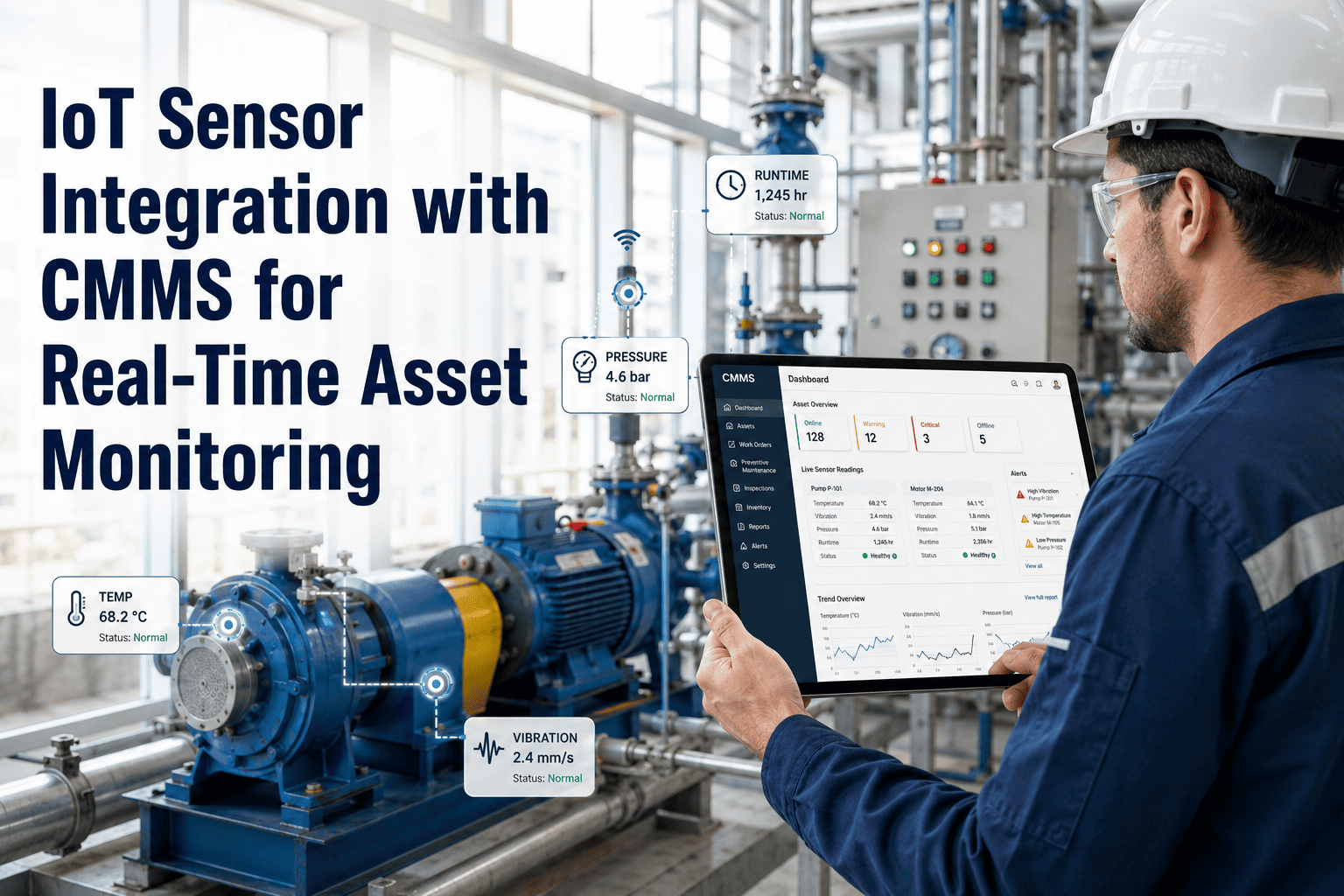
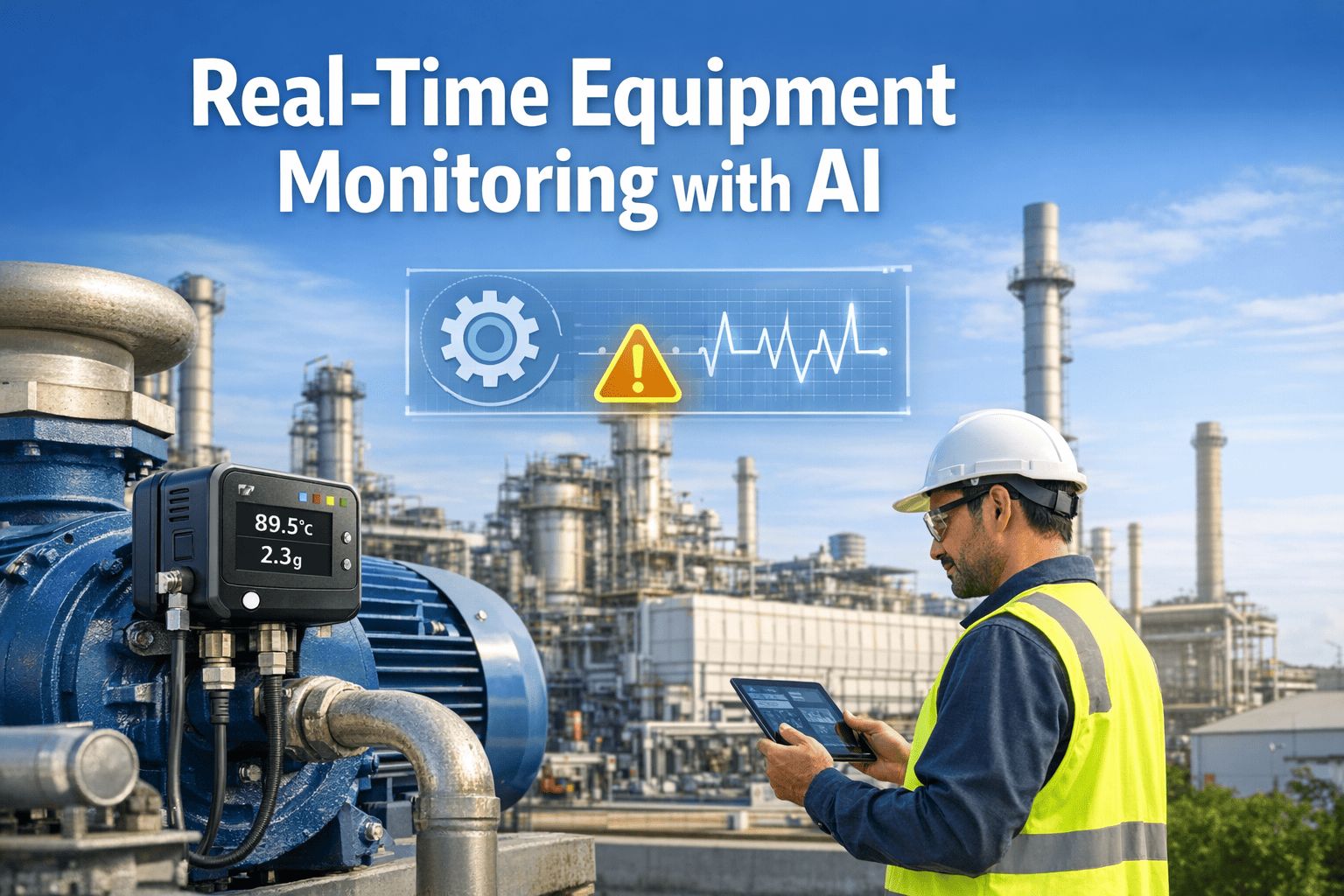
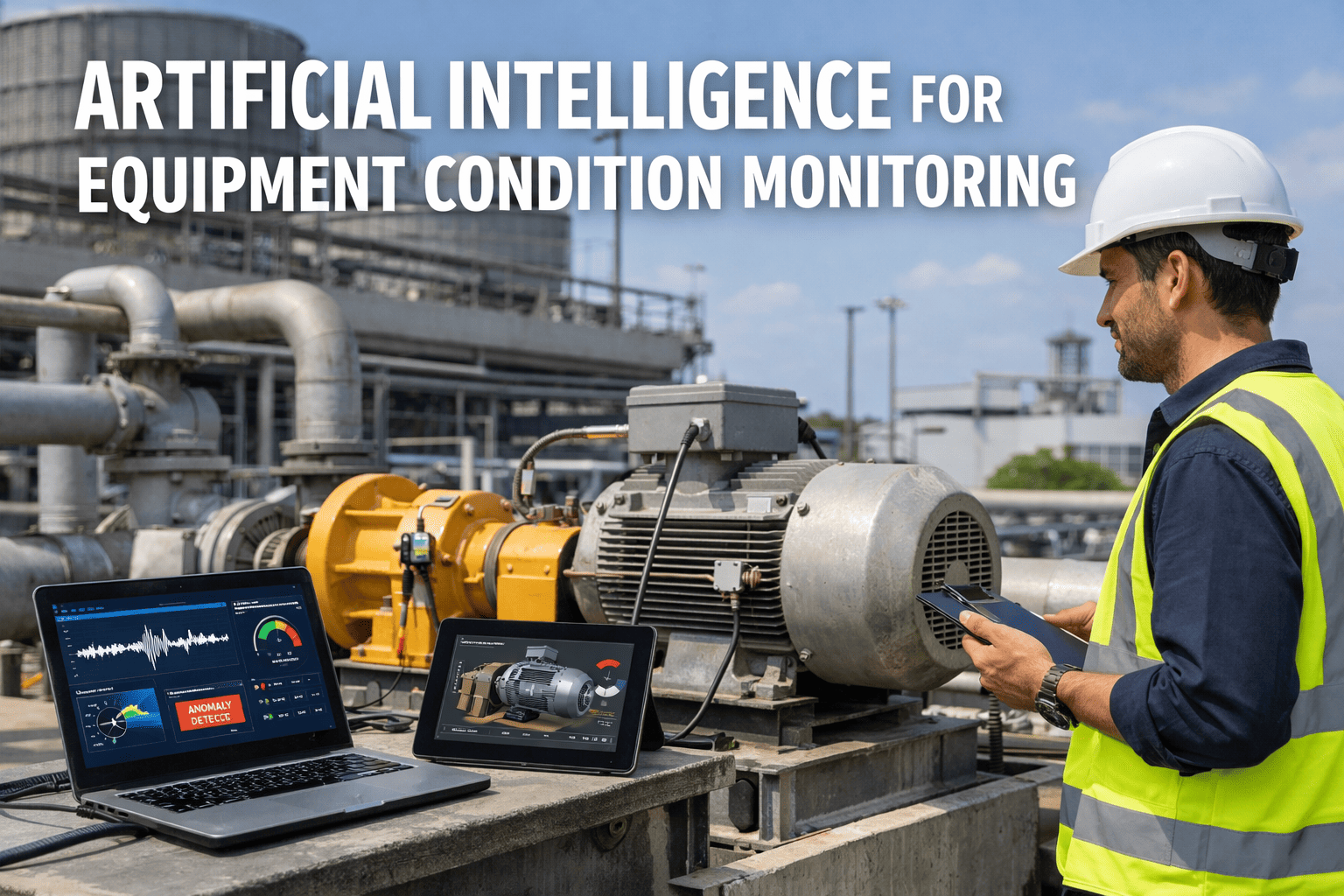
Equipment that appears to be running fine can fail catastrophically within hours. The bearing that seemed healthy yesterday develops a fault pattern at 3 AM and seizes by noon—costing $275,000 in emergency repairs and lost production. Real-time equipment health monitoring eliminates this uncertainty by continuously measuring vibration, temperature, pressure, and other condition indicators, detecting developing failures 60–90 days before they occur. According to MarketsandMarkets, the global machine condition monitoring market is projected to reach $4.7 billion by 2029, growing at 8.3% CAGR as organizations recognize that guesswork is no longer acceptable. Facilities implementing systematic sensor networks achieve 50–70% reductions in maintenance costs while improving asset reliability by 40–55%. The shift from periodic inspections to continuous monitoring represents the most significant advancement in maintenance since CMMS—turning reactive firefighting into intelligent asset management. Sign up for Oxmaint to integrate real-time sensor data with your maintenance workflows and transform condition alerts into automated work orders.
Vibration
2.4 mm/s
Normal
Temperature
68 °C
Elevated
Operating Hours
4,280 hrs
On Track
Overall Health
87 %
Healthy
Why Real-Time Monitoring Changes Everything
Periodic inspections capture snapshots—real-time monitoring captures the full movie. A technician walking past a motor once per shift might miss the 15-minute vibration spike that signals bearing degradation. Continuous sensors never miss these events, building a complete picture of equipment behavior that enables detection of developing failures weeks or months before catastrophic breakdown. Book a demo to see how continuous monitoring transforms your maintenance operations.
✗
Monthly or quarterly snapshots miss developing faults
✗
Technician subjectivity affects detection accuracy
✗
No visibility between inspection intervals
✗
Labor-intensive manual data collection
✗
Failures occur between scheduled checks
30–50%
of failures still occur unexpectedly
✓
24/7 data capture detects anomalies within minutes
✓
AI-driven analysis ensures consistent detection
✓
Complete visibility into equipment behavior
✓
Automated data collection eliminates manual effort
✓
60–90 day advance warning of failures
80–90%
of unexpected failures prevented
Core Monitoring Parameters
Different failure modes reveal themselves through different physical parameters. Book a demo to discuss which parameters are most critical for your specific equipment types and failure patterns. A comprehensive health monitoring program combines multiple sensor types to detect the full range of potential issues.
The most information-rich condition indicator for rotating equipment. Frequency analysis reveals specific fault types—bearing defects, imbalance, misalignment, looseness—often months before failure.
Detects:
Bearing wear
Shaft imbalance
Misalignment
Looseness
Gear defects
Lead Time:
30–90 days
Elevated temperature often indicates friction, electrical issues, or insufficient lubrication. Both absolute values and rate of change matter—a motor running 5°C hotter than yesterday signals developing problems.
Detects:
Lubrication failure
Electrical faults
Overloading
Bearing issues
Cooling problems
Lead Time:
7–30 days
Motor current signature analysis detects electrical and mechanical faults simultaneously. Power consumption patterns reveal efficiency degradation, overloading, and abnormal operating conditions.
Detects:
Motor faults
Rotor bar issues
Load variations
Phase imbalance
Insulation problems
Lead Time:
14–60 days
Critical for hydraulic systems, pumps, and compressed air. Pressure drops indicate leaks, filter clogging, or pump wear. Flow variations reveal valve issues, blockages, or system contamination.
Detects:
Pump wear
Filter clogging
Valve failures
System leaks
Cavitation
Lead Time:
7–45 days
Online oil sensors continuously measure particle count, moisture, viscosity, and contamination. Wear debris analysis identifies which component is degrading based on metal particle composition.
Detects:
Wear particles
Contamination
Moisture ingress
Oil degradation
Component wear
Lead Time:
30–120 days
High-frequency sound detection reveals early-stage bearing defects, air leaks, electrical discharge, and steam trap failures—often before other sensors register any change.
Detects:
Early bearing faults
Air/gas leaks
Electrical arcing
Steam trap issues
Valve leaks
Lead Time:
45–120 days
Turn Sensor Data Into Maintenance Action
Oxmaint integrates with industrial IoT sensors to automatically convert condition alerts into work orders, ensuring no developing fault slips through the cracks.
Sensor Technology Options
Modern sensors come in wired and wireless variants, each with trade-offs in cost, installation complexity, battery life, and data transmission speed. Book a demo to discuss the right sensor mix for your facility's specific requirements.
Critical assets requiring continuous high-frequency data
N/A (powered)
Continuous
$200–2,000
Facilities with existing WiFi infrastructure
1–3 years
High (hourly+)
$100–500
Large facilities, distributed assets, outdoor equipment
5–10 years
Daily/hourly
$50–300
Mobile assets, remote locations, cellular coverage areas
5–10 years
Near real-time
$75–400
Short-range, mobile collection rounds, handheld readers
2–5 years
On-demand
$25–150
Implementation Roadmap
Successful health monitoring deployment follows the 80/20 rule: instrument the 20% of critical assets that cause 80% of your downtime first. Schedule a consultation to build your phased implementation plan with clear milestones and ROI targets.
Critical Asset Pilot
Identify 5–10 highest-criticality assets based on downtime cost and failure frequency
Deploy vibration and temperature sensors on pilot assets
Integrate sensor data with CMMS for automated work order generation
Establish baseline operating parameters and alert thresholds
Target:
Prove concept on critical equipment, refine alert thresholds, build team confidence
Expansion to High-Value Assets
Extend monitoring to all Tier 1 and Tier 2 critical assets
Add additional sensor types (pressure, current, oil condition) as needed
Implement edge computing for local processing and faster alerting
Train maintenance team on data interpretation and response protocols
Target:
50+ monitored assets, measurable downtime reduction, maintenance labor optimization
Plant-Wide Predictive Maintenance
Scale monitoring across entire facility with wireless sensor networks
Deploy AI/ML analytics for pattern recognition and failure prediction
Integrate with digital twins for advanced diagnostics
Establish continuous improvement cycle based on prediction accuracy
Target:
80%+ prediction accuracy, 50–70% maintenance cost reduction, world-class reliability
Start Monitoring Your Critical Assets Today
Oxmaint provides the platform to receive sensor feeds, convert condition alerts into work orders, and build a complete equipment health program—starting with your most critical assets.
Frequently Asked Questions
How many sensors do I need to monitor a typical rotating asset?
Most rotating equipment (motors, pumps, fans) requires 2–4 sensors for comprehensive monitoring: typically one vibration sensor per bearing location plus a temperature sensor. Critical or complex assets may benefit from additional parameters like current monitoring or oil analysis. Start with vibration and temperature on your pilot assets—they detect the majority of common failure modes.
What's the typical ROI timeline for equipment health monitoring?
Most organizations see positive ROI within 12–18 months, often sooner if the pilot targets high-criticality equipment. A single prevented catastrophic failure on a critical asset typically covers the entire sensor investment. Ongoing savings come from reduced emergency repairs (2–3× more expensive than planned maintenance), optimized PM intervals, and extended asset life through early intervention.
How accurate is predictive analytics for detecting failures?
Well-implemented systems achieve 85–98% accuracy for well-defined failure modes, but this requires 2–4 months of baseline data collection to establish normal operating parameters. Accuracy improves as AI models learn asset-specific condition signatures. Some failure modes (like sudden seal failures or electrical faults) remain difficult to predict, so monitoring complements rather than replaces good maintenance practices.
Can I retrofit sensors to legacy equipment?
Yes—modern wireless sensors are designed specifically for retrofit applications. Surface-mount accelerometers attach magnetically or with adhesive, temperature sensors clamp onto housings or pipes, and wireless gateways connect to existing plant networks. No modifications to the equipment itself are required. Facilities regularly add condition monitoring to decades-old equipment successfully.
How do I handle the volume of data from continuous monitoring?
Edge computing processes data locally at the sensor or gateway level, applying analytics to identify anomalies before transmitting to central systems. Only summary data and alerts are sent to the cloud or CMMS, reducing bandwidth and storage requirements. Modern platforms handle thousands of sensor streams efficiently—the key is setting appropriate alert thresholds to avoid alarm fatigue while catching real issues.
What cybersecurity measures protect industrial sensor networks?
Industrial IoT security requires network segmentation between IT and OT systems, encrypted data transmission, industrial firewalls at edge gateways, and role-based access controls. In 2024, 31% of manufacturers experienced financial impact from cyberattacks affecting OT/IT systems. Work with vendors who follow IEC 62443 standards and integrate security into the architecture from the start rather than adding it later.
How does sensor data integrate with existing CMMS?
Modern CMMS platforms provide REST APIs and pre-built integrations with major sensor platforms and IoT gateways. When sensor readings exceed defined thresholds, the system automatically generates work orders with relevant diagnostic information, parts recommendations, and priority levels. Integration enables the full value of condition monitoring—turning raw data into actionable maintenance tasks without manual intervention.