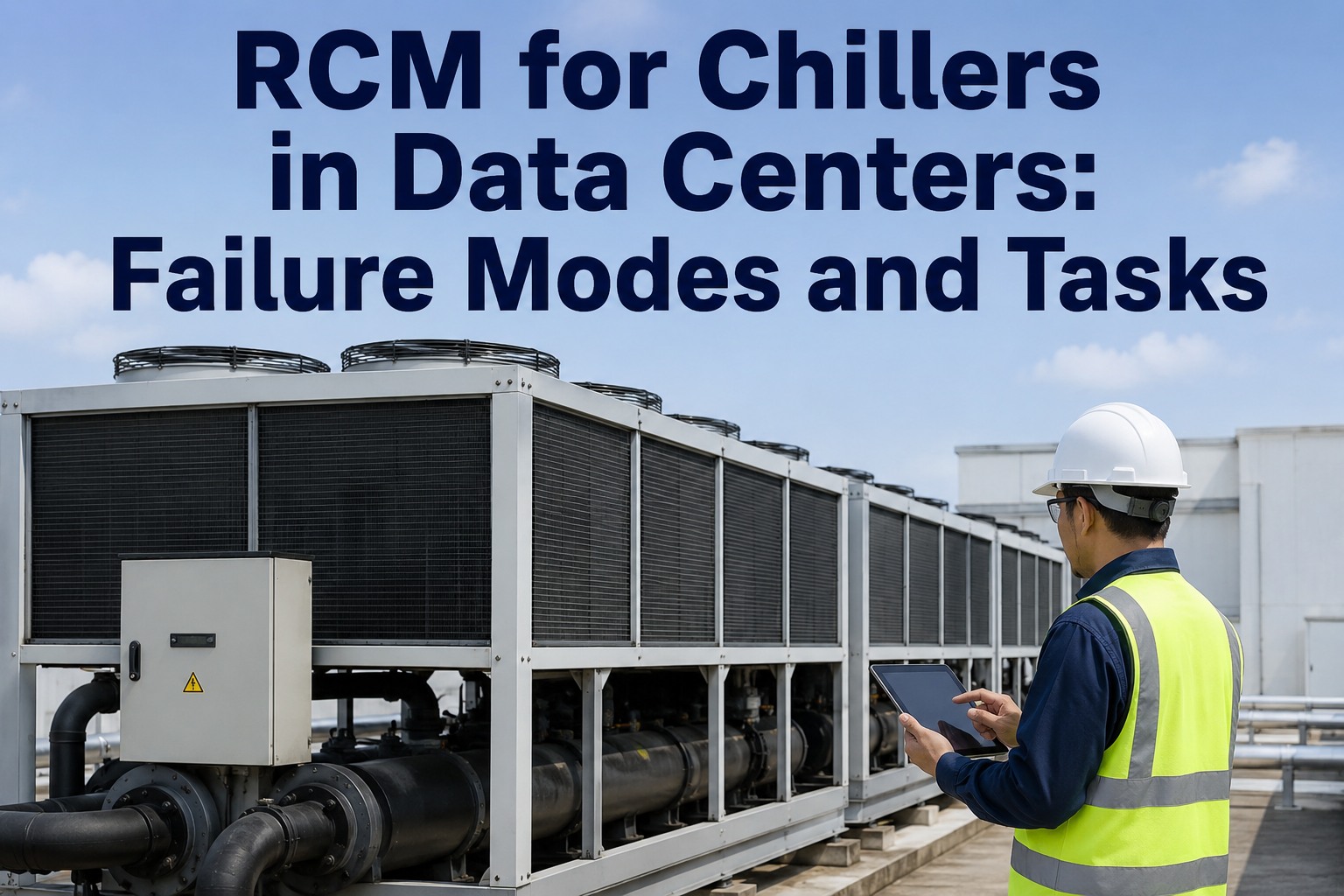
RCM for chillers in data centers is the discipline of matching each chiller failure mode — from refrigerant leaks and compressor bearing wear to condenser fouling and control drift — with the most effective maintenance task, so cooling capacity never becomes the weak link in uptime. Because cooling accounts for roughly 40% of a data center's energy use and a single chiller trip can push inlet temperatures past ASHRAE limits in minutes, reliability-centered maintenance is the difference between controlled risk and a six-figure outage. This guide breaks down the dominant chiller failure modes in data centers, the condition-monitoring techniques that catch them early, and the RCM task logic that turns findings into a defensible PM schedule. It also shows how OxMaint's AI-powered CMMS operationalizes that strategy across every chiller, pump, and CRAH in your facility. If you want to skip the spreadsheet phase, Start Free Trial and build your first chiller RCM plan today.
What if your next chiller failure announced itself 3 weeks early?
That is exactly what a working RCM program delivers. Data center chillers fail in predictable ways — and the teams that monitor the right indicators convert 70–80% of would-be emergencies into planned, low-cost repairs.
The 8 chiller failure modes that cause 90% of data center cooling events
RCM starts with functions and failure modes, not a generic calendar. Across centrifugal, screw, and scroll chillers in data center service, eight failure modes account for the overwhelming majority of unplanned capacity loss — and each one demands a different task type.
Refrigerant Leaks
Slow charge loss degrades capacity 5–10% before alarms fire. Task: quarterly leak detection plus continuous pressure trending.
Compressor Bearing Wear
The highest-consequence failure — $40K–$120K rebuilds. Task: monthly vibration analysis catches it 4–8 weeks early.
Condenser Tube Fouling
Every 1°F of approach temperature rise costs ~1.5% efficiency. Task: approach-temp monitoring plus scheduled tube brushing.
Oil Degradation & Contamination
Acid formation silently attacks motor windings. Task: annual oil analysis (spectrometric + acid number).
Sensor & Control Drift
A 2°F drifted sensor can cut capacity 8% with no visible fault. Task: semi-annual calibration against a reference standard.
Electrical & Starter Faults
Loose lugs and pitted contacts cause nuisance trips at peak load. Task: annual thermography plus torque checks.
Water Treatment Breakdown
Scale and biofilm drive both fouling and under-deposit corrosion. Task: continuous conductivity/chemistry monitoring.
Refrigerant Pump-Out / Migration
Off-cycle migration floods the compressor on start. Task: verify crankcase heaters and pump-down logic each quarter.
Best chiller monitoring techniques for data centers — and what each one detects
A mature chiller condition-monitoring stack in a data center layers five techniques. Together they cover mechanical, thermodynamic, electrical, and chemical failure modes — the full RCM envelope.
| Technique | Frequency | Detects | Typical Lead Time |
|---|---|---|---|
| Vibration analysis | Monthly | Bearing wear, imbalance, misalignment, surge | 4–8 weeks |
| Oil analysis | Quarterly–Annual | Acid formation, wear metals, moisture ingress | 2–6 months |
| Refrigerant / approach-temp trending | Continuous (BMS) | Leaks, fouling, low charge, non-condensables | Days–weeks |
| Infrared thermography | Annual | Hot connections, starter faults, bearing heat | Weeks |
| Eddy-current tube testing | Every 3–5 years | Tube wall loss, pitting, corrosion | Years (planning) |
Rule of thumb: continuous BMS trends catch thermodynamic drift; periodic PdM routes catch mechanical wear. You need both — one without the other leaves half the failure modes invisible.
How to build a chiller RCM task schedule for your data center
RCM assigns each failure mode one of four task types: condition-based, scheduled restoration, scheduled discard, or run-to-failure (only when consequences are low). Here is a proven 12-month cadence for a typical N+1 data center chiller plant.
BMS Trend Monitoring
Approach temperatures, suction/discharge pressures, kW/ton, superheat/subcooling. OxMaint ingests these readings and auto-generates work orders when thresholds breach.
Vibration Route + Visual Inspection
Compressor and motor bearing readings, oil level check, leak sniff at fittings, unusual-noise log. 45–60 minutes per chiller.
Leak Test + Water Chemistry Audit
Electronic leak detection across the refrigerant circuit; verify treatment residuals, conductivity, and biocide program on condenser water.
Sensor Calibration + Controls Verification
Calibrate temperature/pressure transducers against a reference; test capacity control, safeties, and pump-down sequences under load.
Oil Analysis + Thermography + Tube Cleaning
Full oil sample, IR scan of starters and switchgear, condenser tube brushing (or as approach temps dictate), and megger test of motor windings.
Eddy-Current Testing + Overhaul Review
Tube integrity survey informs retubing decisions; compressor run-hours and vibration history drive overhaul timing instead of the calendar.
What chiller RCM is worth: a 6-chiller data center scenario
Consider a 2 MW facility running six 400-ton centrifugal chillers (N+1). Before RCM, the team averaged 3 unplanned chiller events per year — each involving emergency labor, expedited parts, and thermal-risk exposure.
"We moved 14 chillers and 40+ CRAHs into OxMaint in one quarter. Vibration flags now open work orders automatically, and our compressor rebuilds dropped from two per year to zero in 18 months."
How OxMaint operationalizes chiller RCM in data centers
RCM fails when it lives in a binder. OxMaint turns your failure-mode analysis into living schedules, mobile checklists, and automatic alerts — so the strategy survives staff turnover and audit season.
Asset Hierarchy & Failure-Mode Library
Model chillers, compressors, pumps, and cooling towers in a parent-child hierarchy with failure modes attached to each asset class. Outcome: every PM task traces to a documented failure mode — audit-ready for ISO 55000.
Condition-Based Work Order Automation
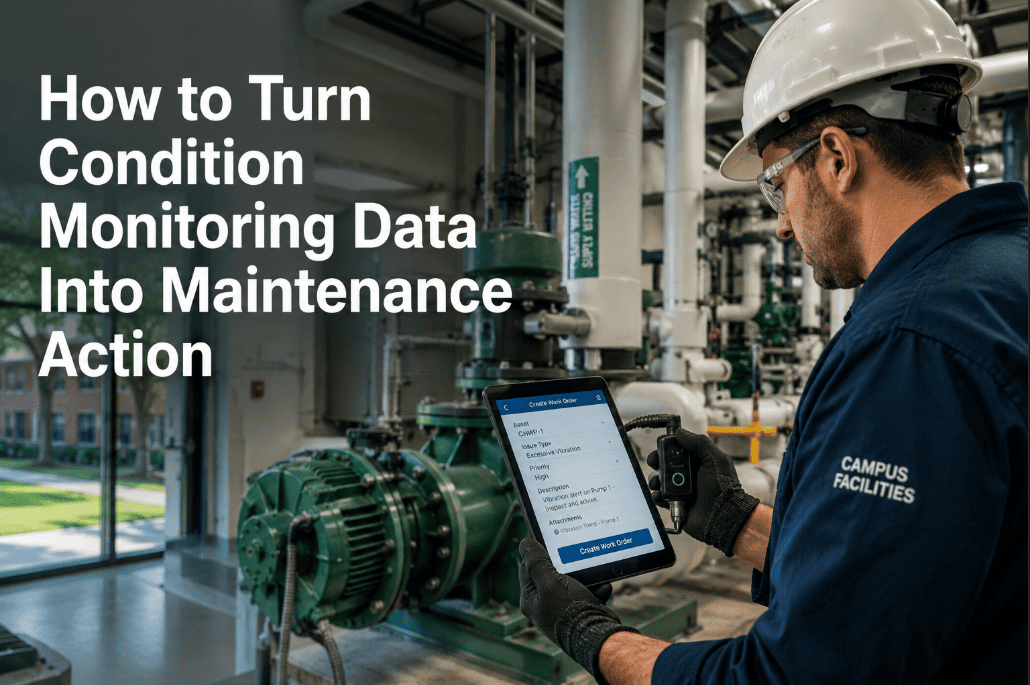
Thresholds on approach temperature, vibration, or kW/ton auto-trigger prioritized work orders. Outcome: teams convert 70–80% of emergencies into planned repairs and cut unplanned downtime 30–50%.
Mobile Technician Checklists
Monthly vibration routes and quarterly leak checks run from a phone with photo capture and pass/fail logic. Outcome: 100% PM completion visibility, zero paper, and findings logged in seconds.
Reliability Analytics & Spare Parts
MTBF, PM compliance, and cost-per-ton dashboards, plus min/max inventory for filters, oil, and sensors. Outcome: prove RCM payback to leadership and never wait 5 days for a $40 part.
Book a 30-minute demo — we'll map RCM to your chiller plant live
Bring your asset list. We'll show you the failure-mode library, condition triggers, and PM schedules configured for data center cooling.
RCM for data center chillers: common questions
What is RCM for chillers in data centers?
Reliability-centered maintenance is a framework that identifies each chiller's functions, failure modes, and consequences, then assigns the most effective task — condition monitoring, scheduled restoration, or run-to-failure — to each mode. For data centers, it ensures cooling capacity is protected with evidence-based tasks instead of generic calendar PMs.
What are the most common chiller failure modes in data centers?
The top modes are refrigerant leaks, compressor bearing wear, condenser tube fouling, oil degradation, sensor drift, electrical/starter faults, water-treatment breakdown, and refrigerant migration. Together they account for roughly 90% of unplanned chiller capacity loss in mission-critical facilities.
How often should data center chillers be inspected?
A proven cadence is continuous BMS trending, monthly vibration and visual routes, quarterly leak detection and water chemistry audits, semi-annual sensor calibration, and annual oil analysis with thermography and tube cleaning. OxMaint automates this entire schedule — Start Free Trial to see it pre-built.
Which condition-monitoring technique gives the earliest warning on chillers?
For mechanical failures, monthly vibration analysis gives 4–8 weeks of lead time on bearing wear. For thermodynamic problems like fouling or low charge, continuous approach-temperature and pressure trending detects drift within days. Best practice layers both.
What ROI can a data center expect from chiller RCM?
Facilities typically cut unplanned chiller downtime 30–50% in year one and see 3–4× ROI on program costs, before counting 4–6% chiller energy savings from clean heat-transfer surfaces. A Book a Demo session can model the payback against your own asset count and downtime history.
Put your chiller RCM program on autopilot with OxMaint
Failure-mode libraries, condition-triggered work orders, mobile checklists, and reliability analytics — built for mission-critical cooling teams.
Free 14-day trial · No credit card · Set up your first chiller schedule in under an hour