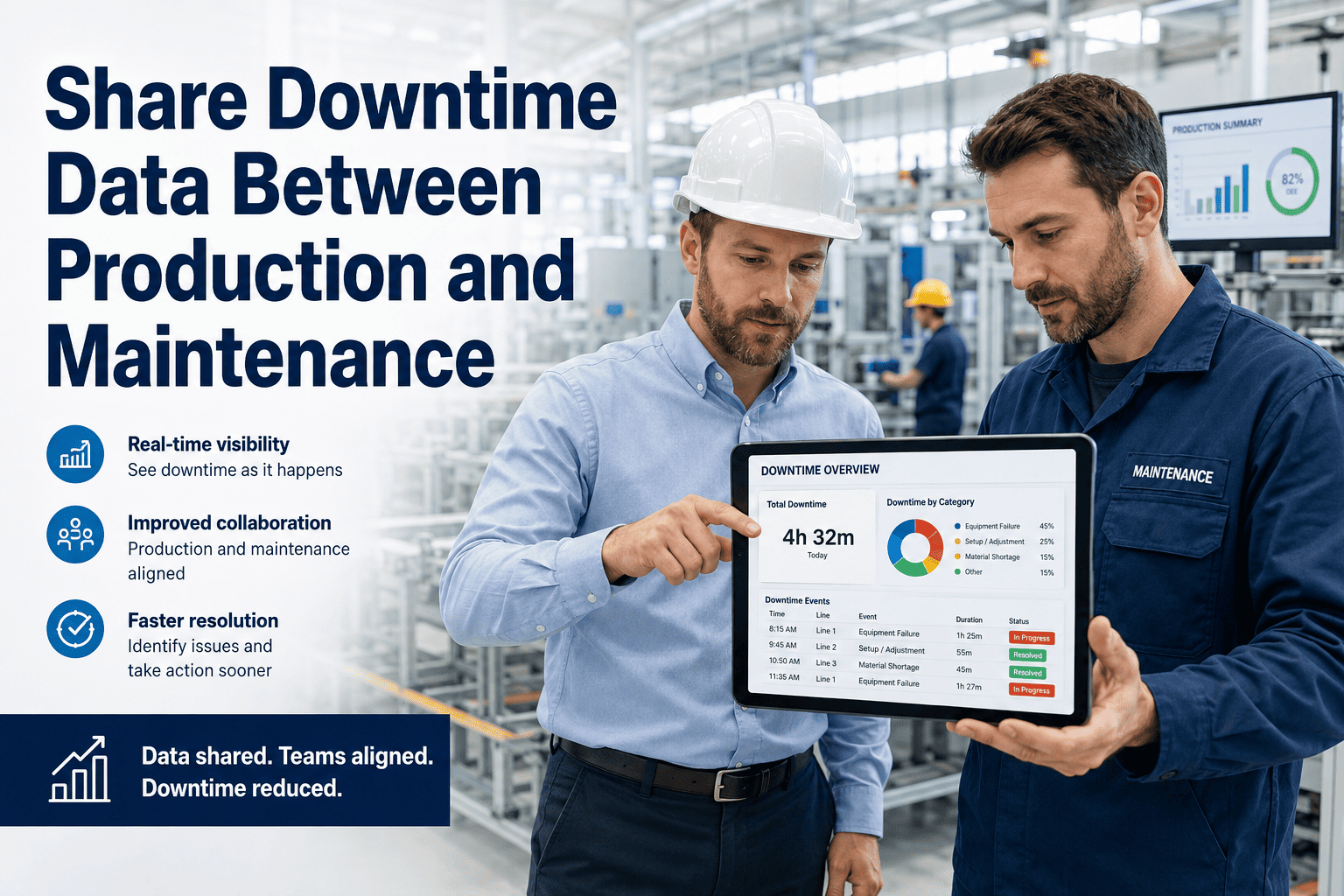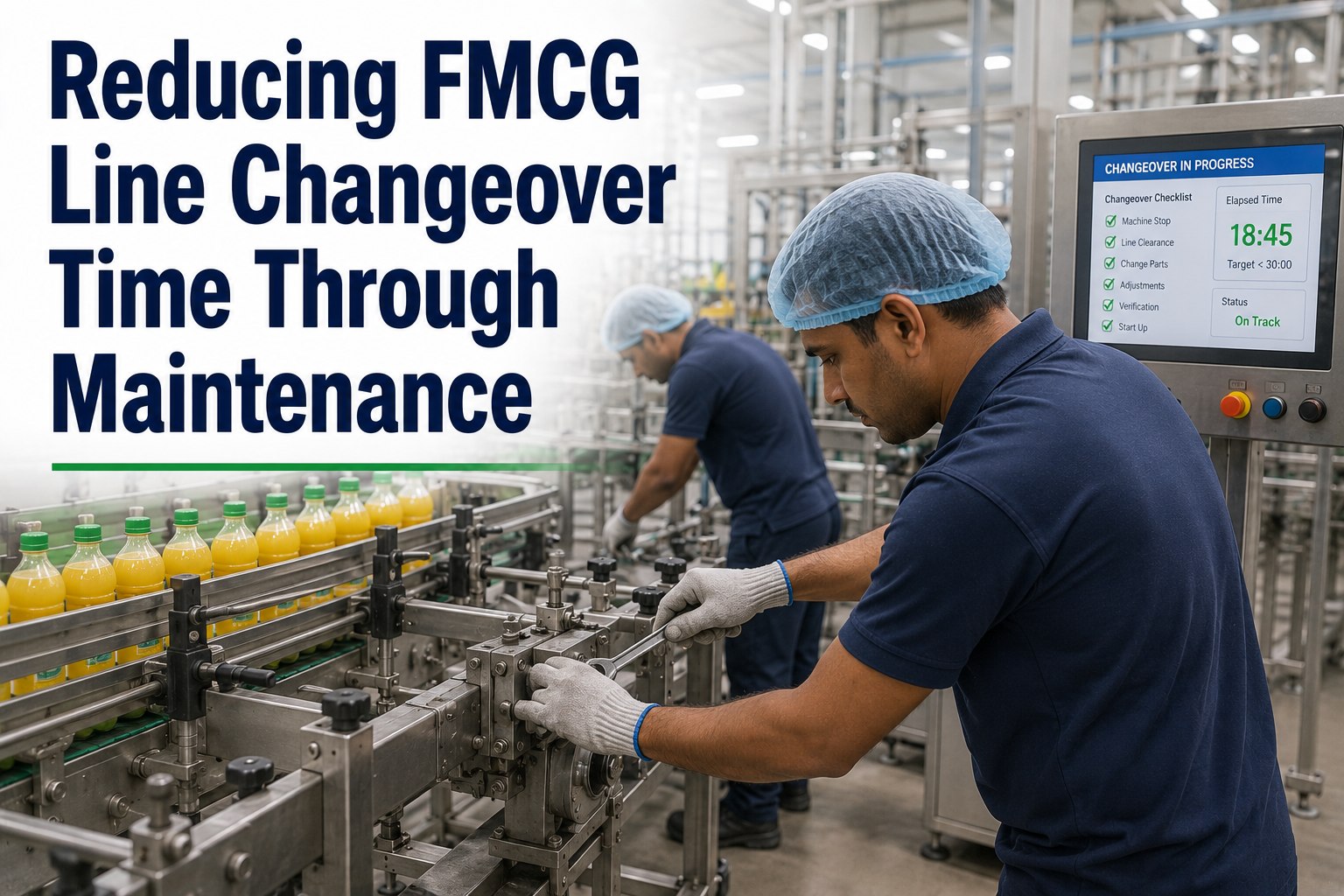
Reducing FMCG line changeover time is one of the highest-leverage operational improvements available to fast-moving consumer goods manufacturers, where every minute of downtime translates directly to lost production capacity and revenue. Single-Minute Exchange of Die (SMED) methodologies provide the framework, but maintenance discipline is what sustains those gains—worn tooling, misaligned sensors, and undocumented equipment drift silently inflate changeover times long after the initial SMED kaizen event ends. A well-structured CMMS like OxMaint bridges this gap by formalizing changeover work orders, tracking spare-parts readiness, and integrating preventive maintenance schedules with production changeover routines. By treating changeover as a maintenance-triggered event rather than just an operational task, plants can permanently lock in faster changeovers and recover thousands of production hours—start your Start Free Trial to see the workflow in action.
Stop Losing Production Hours to Slipping Changeover Times
Fast changeovers depend on well-maintained tooling and equipment. OxMaint embeds SMED discipline into your CMMS so changeover gains never decay back to legacy times.
Why FMCG Changeover Reduction Fails Without Maintenance Discipline
Most FMCG plants achieve a 20–30% changeover reduction in the first month after a SMED workshop—then watch 40–60% of that gain erode within six months.
The root cause is rarely the SMED methodology itself—it is the absence of a maintenance system to sustain it. When changeover procedures live in a spreadsheet and PM schedules live in a separate system, tooling calibration, spare-parts availability, and equipment condition checks fall through the cracks. OxMaint eliminates this fragmentation by embedding changeover maintenance directly into your work-order workflow, ensuring that every changeover triggers the right inspections, tooling readiness checks, and parts kitting automatically.
What Slow FMCG Line Changeovers Actually Cost You
A mid-sized FMCG plant running three packaging lines with 8 changeovers per day per line loses more than it realizes.
“We thought our changeovers were efficient because the SMED team cut them from 45 to 28 minutes. Six months later they were back to 38. Nobody was maintaining the quick-change tooling.”
— Plant Manager, Beverage ManufacturerThe math is unforgiving: even a 10-minute-per-changeover overrun compounds across shifts, lines, and days into hundreds of thousands of dollars annually. Most plants absorb this loss silently because it never appears as a line item—OEE drops incrementally, overtime increases to meet demand, and the connection to changeover maintenance is never made. OxMaint makes that connection visible with maintenance analytics that tie PM completion, tooling condition, and spare-parts readiness directly to changeover duration trends.
How OxMaint Locks In Faster Changeovers Through CMMS Structure
OxMaint transforms changeover from an isolated operational event into a structured, maintenance-backed workflow with measurable, sustained outcomes.
Changeover Work Order Templates
Pre-built multi-step work orders for each product-to-product transition, covering tooling change, sensor recalibration, safety checks, and first-article validation. Eliminates missed steps and standardizes execution.
Spare-Parts Kitting for Changeovers
Automatically reserve and kit wear parts, seals, format-change tooling, and calibration fixtures against upcoming changeover schedules. Technicians arrive with everything staged—no searching, no waiting.
Changeover Analytics & SMED Tracking
Track actual changeover duration by line, product, and shift. Identify drift early, flag lines where changeover time is creeping back up, and quantify the maintenance impact on line efficiency.
Predictive Changeover PM Triggers
AI-driven predictive maintenance flags equipment—filler cams, capper heads, sealing jaws—approaching wear thresholds before the scheduled changeover, so corrections happen during planned downtime, not mid-transition.
A CMMS-Driven SMED Implementation Timeline for FMCG Lines
Embedding maintenance discipline into changeover reduction is a phased process. Here is what a typical 4-month OxMaint implementation looks like.
Baseline & Asset Mapping
Upload all line assets, tooling, and format-change components into OxMaint. Record baseline changeover times for every product-to-product transition. Identify the 5 changeovers with the highest variance and overrun.
Changeover Work Order Design
Build standardized changeover work-order templates in OxMaint—internal → external task separation, tooling checklist, parts kitting trigger, and safety validation. Assign PM tasks for each transition's critical wear components.
Pilot & Refine
Deploy on one high-frequency changeover line. Track actual vs. target times. Use OxMaint analytics to identify remaining bottlenecks—missed PM steps, missing parts, tooling wear. Refine templates weekly.
Roll Out & Sustain
Push validated changeover templates to all lines. Enable predictive PM triggers. Set up dashboards that alert reliability engineers when any line's changeover time deviates more than 10% from target—catching decay before it becomes the new normal.
The Changeover Maintenance Checklist Every FMCG Plant Needs
These are the maintenance tasks that should be embedded in every changeover work order to prevent the silent drift that erodes SMED gains.
Pre-Changeover (Internal → External)
- ✓ Spare parts kit staged at line-side 30 min before changeover
- ✓ Tooling condition verified—no visible wear beyond threshold
- ✓ Calibration fixtures checked and available
- ✓ Previous run's maintenance alerts reviewed and cleared
During Changeover (Execution)
- ✓ Sensor recalibration performed per work-order step
- ✓ Quick-change components inspected for wear—flagged in CMMS
- ✓ Torque values verified on all reassembled fasteners
- ✓ Any abnormal resistance or misalignment logged as a PM trigger
Post-Changeover (Validation)
- ✓ First-article quality check passed and recorded
- ✓ Actual changeover time logged in OxMaint against target
- ✓ Wear parts replaced during changeover reordered automatically
- ✓ Next scheduled PM for this line confirmed and queued
CMMS-Managed Changeovers vs. Spreadsheet-Driven Changeovers
The difference between a plant that manages changeover maintenance in a CMMS and one that relies on spreadsheets and tribal knowledge is measurable within weeks.
| Dimension | Spreadsheet / Manual | OxMaint CMMS |
|---|---|---|
| Changeover procedure adherence | ~60% — steps skipped or improvised | 98% — enforced via work-order checklist |
| Parts readiness at changeover start | Often delayed 10–20 min waiting on parts | Kit staged automatically—zero wait time |
| Tooling wear tracking | Visual inspection only—failures caught too late | Predictive alerts flag wear before changeover |
| Changeover time trend visibility | Monthly manual reports—lagging indicator | Real-time dashboards—drift caught immediately |
| SMED gain sustainability | 40–60% of gains lost within 6 months | Gains sustained indefinitely through PM enforcement |
| Audit & compliance trail | Paper records—hard to retrieve | Full digital traceability of every changeover step |
See OxMaint on Your Assets—Book a 30-Minute Demo
Watch how fast changeover work orders, parts kitting, and predictive PM triggers come together in a live environment tailored to your FMCG lines.
FMCG Changeover Maintenance & SMED: Common Questions
How does maintenance affect FMCG line changeover time?
Maintenance directly determines whether SMED gains are sustained. Worn tooling, miscalibrated sensors, and unstocked spare parts add 10–20 minutes to every changeover. When changeover procedures are embedded as structured work orders in a CMMS like OxMaint, maintenance tasks—tooling inspection, parts kitting, sensor recalibration—are executed consistently, preventing the silent drift that erodes changeover speed.
What is SMED maintenance and why does it matter for FMCG?
SMED maintenance is the practice of integrating preventive and predictive maintenance routines into the Single-Minute Exchange of Die framework. Instead of treating changeover as purely an operational task, SMED maintenance ensures that equipment condition, tooling readiness, and parts availability are pre-validated before the line stops. This prevents mid-changeover surprises—broken seals, misaligned guides, missing fixtures—that extend downtime beyond the planned window. You can see this workflow firsthand—Start Free Trial or book a demo.
How much can FMCG plants reduce changeover time with a CMMS?
Plants that formalize changeover maintenance in a CMMS typically achieve a 25–40% reduction in changeover time and, critically, sustain those gains long-term. The biggest wins come from eliminating parts-retrieval delays, standardizing tooling checks, and catching wear-related issues through predictive maintenance before they impact the changeover window.
How long does it take to implement CMMS-driven changeover reduction?
A focused implementation on one pilot line typically takes 4–6 weeks: baseline measurement, work-order template design, parts kitting setup, and team training. Full multi-line rollout usually completes within 3–4 months. OxMaint's intuitive interface and pre-built FMCG changeover templates accelerate this timeline compared to legacy CMMS platforms. Book a Demo to get a tailored implementation plan.
Can OxMaint integrate with existing production scheduling systems?
Yes. OxMaint can ingest production changeover schedules and automatically generate the corresponding maintenance work orders, parts kits, and PM triggers. This ensures that maintenance preparation begins before the line stops, and that every changeover is both operationally and mechanically ready when the production team arrives.
Ready to Cut Changeover Time and Keep It Cut?
Join FMCG manufacturers using OxMaint to embed SMED discipline into their maintenance workflow—permanently. Start your free trial or book a personalized demo today.
Free 14-day trial · No credit card