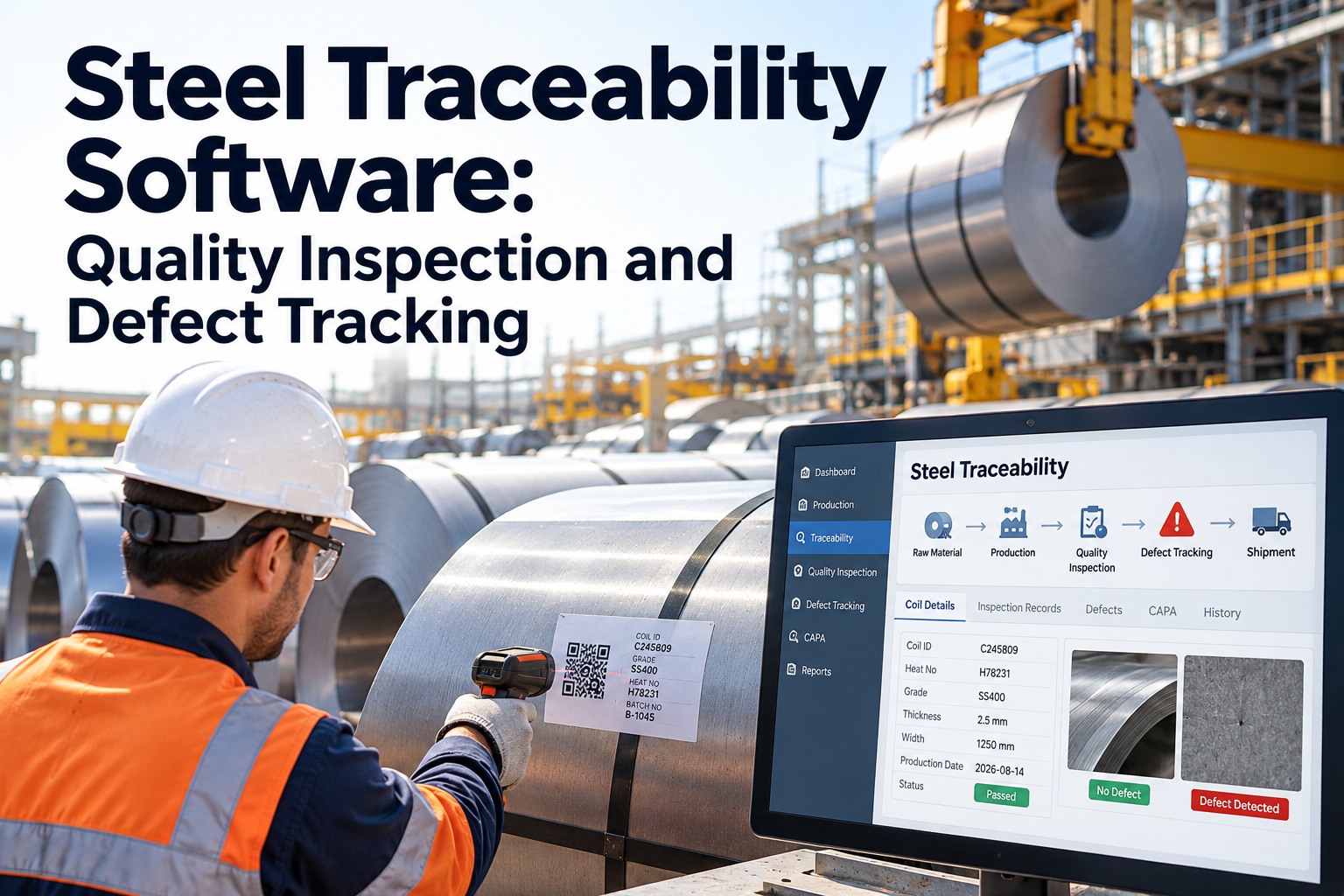
When a customer rejects a steel coil, the first question is never "what went wrong?" It is "where did this coil come from, and what else is like it?" If the answer sits across a melt shop log, a rolling mill sheet, an inspection form and someone's memory, a single defect becomes days of searching and a wide, expensive hold. Steel traceability software connects the heat, the process, the inspection result and the machine behind each product, so a quality problem stays small. OxMaint AI maintenance management software links quality records, defect tracking and CAPA to the equipment that produced the steel.
Steel Traceability Software: Quality Inspection and Defect Tracking
Traceability only helps if it works backward when something fails, from a customer complaint to the heat, the line and the machine condition. See how the traceability chain works, which defects point to which process stage, and how OxMaint AI ties inspection, CAPA and maintenance into one record.
The Steel Traceability Chain: From Melt to Customer
Every product carries an identity that must survive each transformation. If one link breaks, everything after it loses its history. Start free and map your own chain in OxMaint AI.
Where Each Defect Starts, and What It Usually Points To
Defect tracking is only useful when each defect is tied to a process stage and a piece of equipment. These are common patterns; a proper investigation confirms the actual cause. Book a demo to see defects linked to assets.
| Defect | Typical stage | What to investigate |
|---|---|---|
| Surface cracks | Casting | Mould condition, cooling, casting speed |
| Inclusions | Melt shop / casting | Ladle practice, refractory wear, tundish |
| Scale or roll marks | Hot rolling | Roll wear, descaler nozzles, roll changes |
| Edge cracks | Rolling | Temperature, edge condition, mill setup |
| Thickness deviation | Rolling / finishing | Gauge calibration, roll gap, drive condition |
| Flatness or shape faults | Finishing / leveling | Leveler wear, coolant, tension control |
| Coil damage | Handling / packing | Crane, coiler and handling equipment |
One Defective Coil Should Not Become a Plant-Wide Hold.
Without lot history, the safe move is to hold everything near the suspect product. With it, you isolate the exact heats, coils and shipments involved. OxMaint AI keeps the inspection record, the production lot and the equipment history in one place.
Spreadsheets vs. Connected Traceability
Most plants already record quality data. The difference is whether it can be searched, linked and trusted when a complaint arrives. Start free and replace the scramble.
- Data split across logbooks, sheets and emails
- Complaint triggers a manual hunt for the lot history
- Wide holds because the boundary is unclear
- Defects repeat because the cause is never linked to equipment
- Audits mean collecting paperwork at short notice
- Inspection, lot and equipment records in one system
- Search by heat, coil or order and see the full history
- Hold only the affected product
- Each defect linked to a CAPA and the asset involved
- Audit-ready records produced on demand
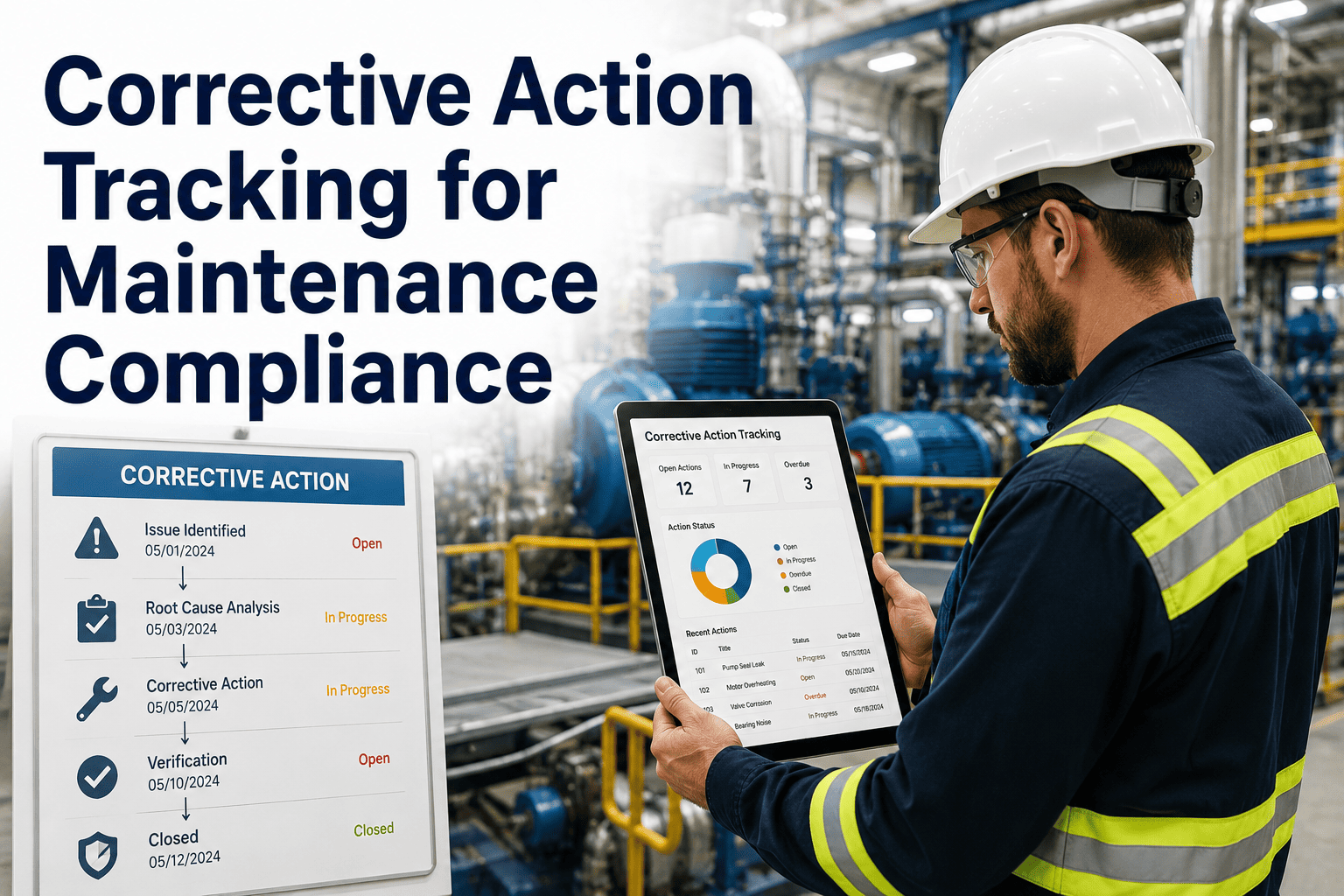
From Defect to Fix: The CAPA Loop
Finding a defect is half the job. Making sure it does not return is the part customers and auditors look for. Book a demo to see the CAPA workflow.
Why Quality Needs Maintenance Data
Many quality defects begin as equipment conditions: worn rolls, a drifting gauge, a blocked nozzle. When quality and maintenance records sit in separate systems, the link is missed. Start free and connect both in OxMaint AI.
What OxMaint AI Brings to Steel Plants
Frequently Asked Questions
When the Next Complaint Arrives, Have the Answer Ready.
Trace the lot, find the cause, fix the machine and close the CAPA, all from one record. Start with one line and see the difference on the next defect.