Most teams assume OSHA has a strict form for toolbox talk meeting records. It doesn't — but that gap is exactly where weak documentation slips through, because "we'll just note it somewhere" isn't a system an auditor can verify. Sign up to keep every toolbox talk meeting record structured, dated, and signed the moment the talk ends.
Why It Exists
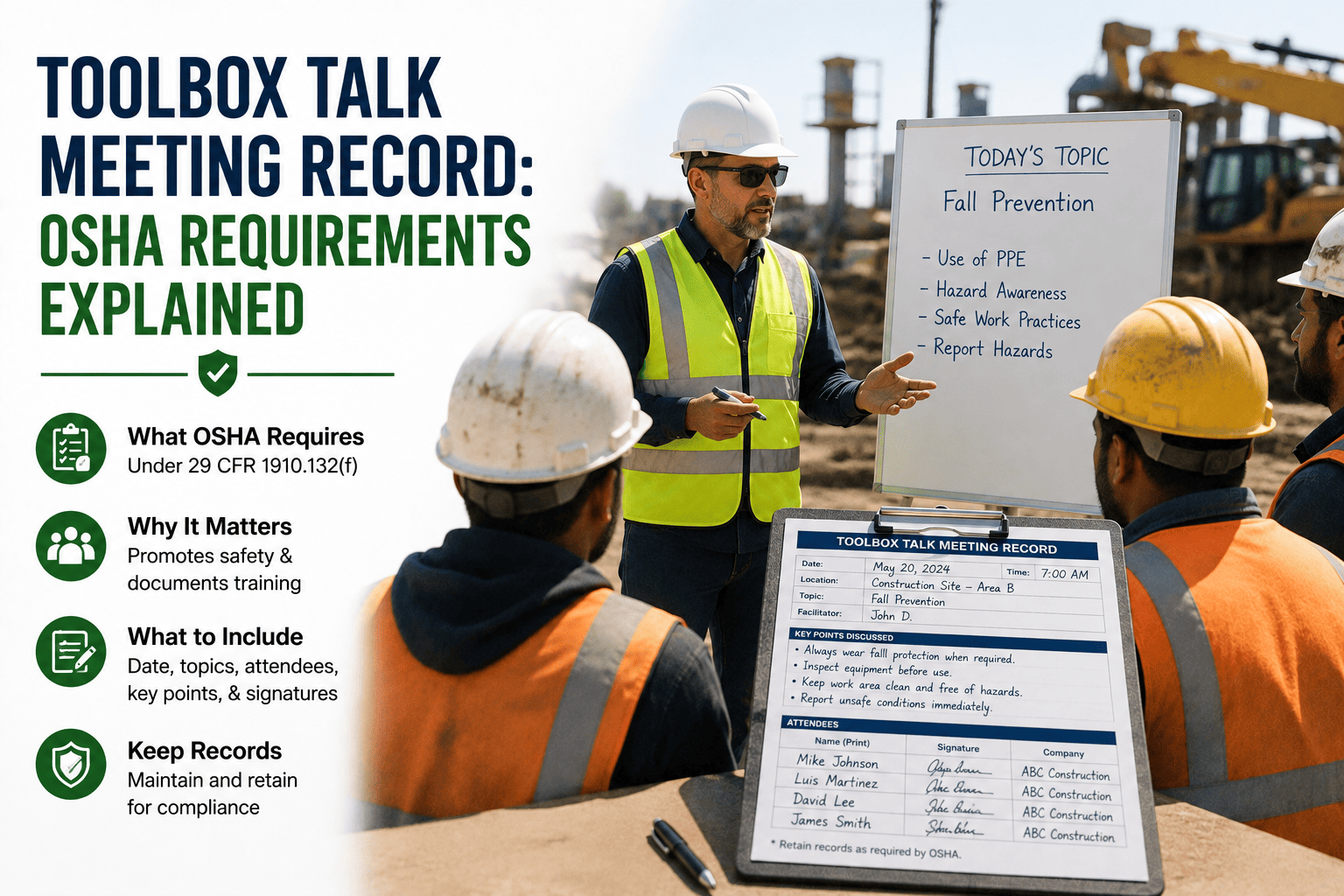
OSHA doesn't publish a standard toolbox talk form, but it does require employers to communicate hazards to employees on an ongoing basis and, in many cases, to keep training records. A meeting record is how you turn a five-minute conversation into evidence that this obligation was actually met.
What OSHA Actually Expects To See
1
Date And Location
Exactly when and where the talk happened, tied to the shift it covered
2
Topic Discussed
A specific hazard or procedure, not a vague catch-all description
3
Attendee Signatures
Proof of exactly who received the information, not just a headcount
4
Presenter Identified
Who delivered the talk, so there's accountability for the content covered
Stop Guessing What An Auditor Will Ask For
OxMaint captures every required field automatically, with e-signatures collected on-site and records searchable by date, crew, or topic the moment an audit request comes in. Sign up for a free trial to standardize your meeting records, or book a demo to see it in action.
Common Myths About Toolbox Talk Records
| What People Assume |
What's Actually True |
| OSHA provides an official toolbox talk form |
There's no standard template — the requirement is that hazard communication happens and can be documented |
| A verbal talk without a written record is enough |
Without a signed record, there's no way to prove the talk happened if it's ever questioned |
| Any general safety topic is fine every time |
Topics should track the actual work being done that day or week to hold up as meaningful training |
| A headcount is the same as attendance proof |
Auditors expect named signatures tied to individuals, not just a number of people present |
Recordkeeping Basics Worth Getting Right
Retention Period
Keep records at least as long as your company policy or industry standard requires, often several years for high-risk work
Storage Location
Centralize records so any site's history is searchable without hunting through separate binders or drives
Access For Auditors
Records should be pullable by date, crew, or topic within minutes, not days, when regulators ask
Linked Follow-Up
If a hazard was raised during a talk, the record should connect to whatever corrective action followed
The Payoff
Clear, consistent meeting records don't just protect you in an audit. They show a genuine pattern of communication, which is often the difference between a citation and a warning if an incident is ever investigated.
Frequently Asked Questions
Q
Does OSHA require a specific toolbox talk template?
No. There's no mandated form, but your record needs to clearly show the date, topic, presenter, and attendees so it can stand as evidence of communication if it's ever reviewed.
Q
How long should we keep toolbox talk records?
Retention periods vary by industry and jurisdiction, so check applicable standards for your work. Many organizations keep records for several years as a safe default, especially on high-risk sites.
Q
Can a digital signature replace a handwritten one?
Yes, a digital e-signature tied to the worker's identity is generally accepted and often easier to verify and store than a rushed handwritten one on a clipboard sheet.
Build A Meeting Record An Auditor Can't Poke Holes In
OxMaint links toolbox talk meeting records to mandatory checks, digital LOTO and permit workflows, photo evidence, and e-signatures, so every talk comes with a defensible, real-time audit trail. Sign up for a free trial to standardize meeting records across every crew, or book a demo to see it working on live safety data.