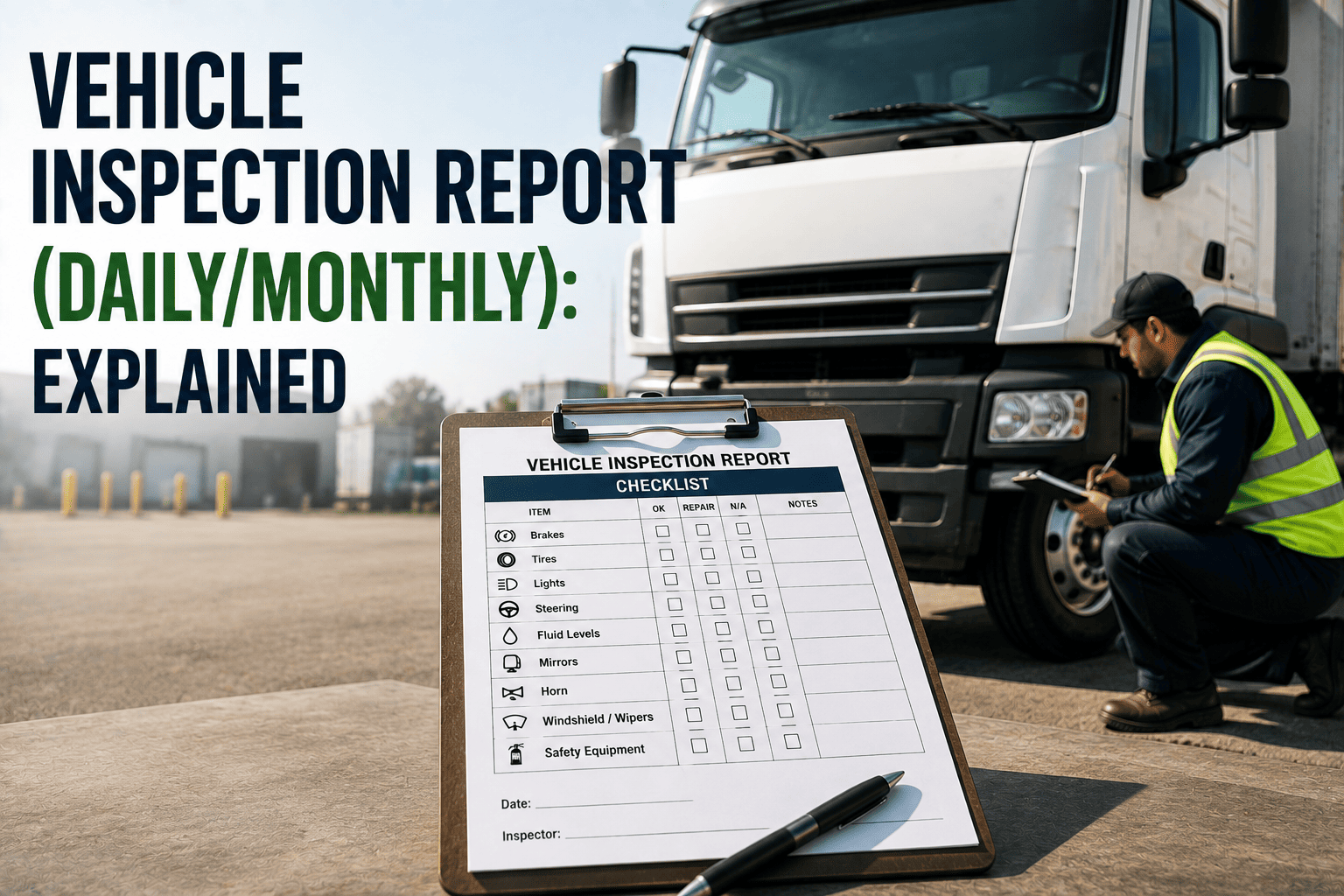
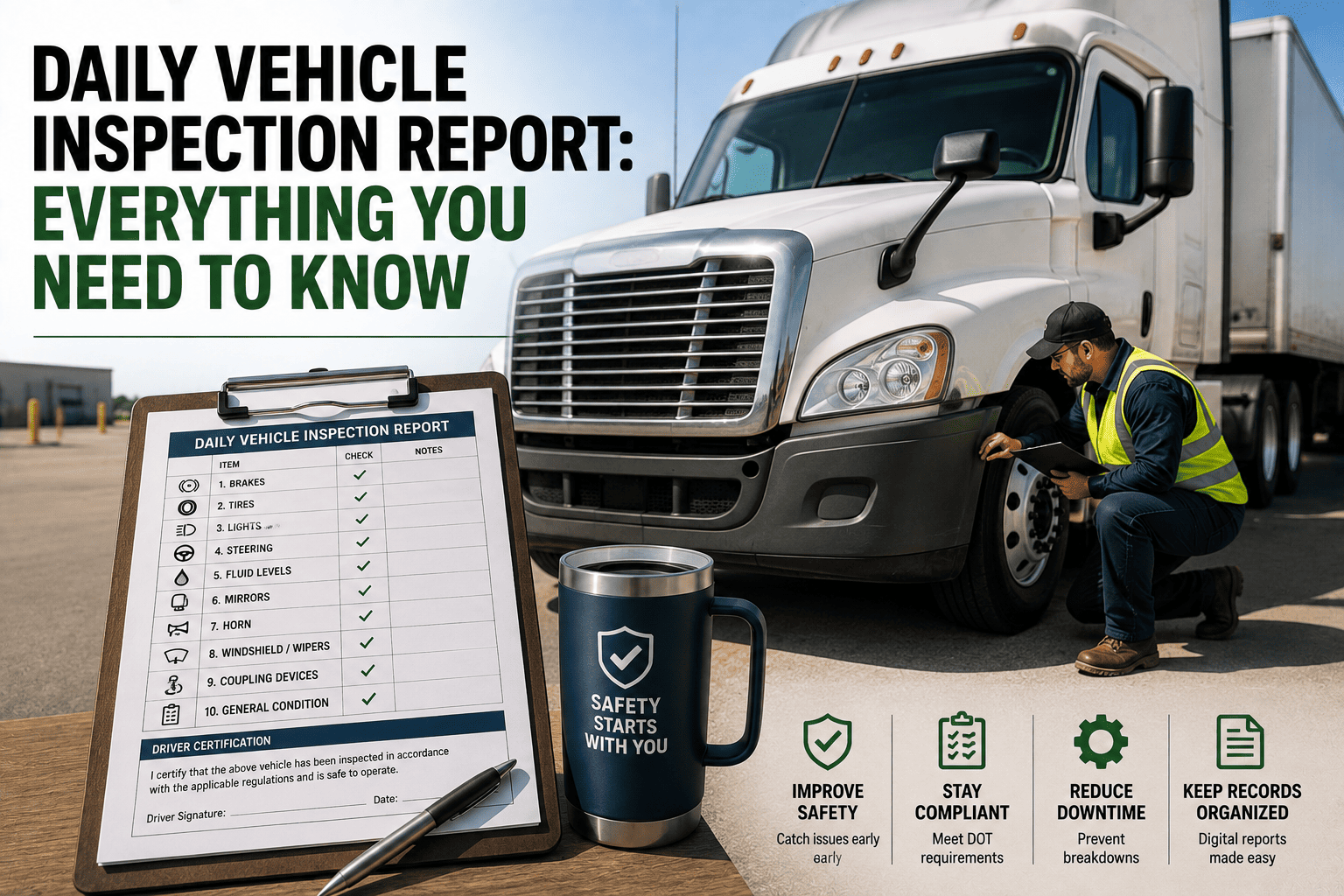
A Vehicle Inspection Report isn't a task you want to do from memory or a photocopied paper form. Missed steps become missed failures, and missed failures become unplanned downtime on a route that can't wait. The gap between a technician who glances at a tire and one who actually checks tread depth against a threshold is the gap between a passed inspection and a vehicle pulled from service later that day. Sign up to run daily and monthly vehicle inspection reports digitally, with mandatory fields, photo capture, and a full audit trail.
What This Guide Covers
This guide lays out every point technicians should touch on a daily and monthly Vehicle Inspection Report: mechanical checks, electrical readings, lubrication, wear indicators, safety verifications, and the calibration or replacement thresholds that decide whether an asset stays in service. It also covers how to move that checklist from ad-hoc calendar work into a standardized, auditable PM program.
Daily Inspection Focus
Quick, driver or technician-run checks on brakes, lights, fluid levels, tires, and safety gear before the vehicle goes on the road.
Monthly Inspection Focus
Deeper mechanical and electrical checks, wear measurements against threshold specs, and lubrication points that a daily glance can't cover.
What Gets Checked, And Against What
| Category |
What To Verify |
| Mechanical checks |
Brakes, steering, suspension, and tire condition checked against wear limits, not just a visual glance from the side |
| Electrical readings |
Battery voltage, alternator output, and lighting circuits tested against spec, since a dim headlight can still technically turn on |
| Lubrication points |
Grease fittings, fluid levels, and lubrication intervals checked and logged, catching dry components before they wear |
| Wear and safety verifications |
Belts, hoses, and safety equipment measured against calibration or replacement thresholds, not judged by eye alone |
Running The Inspection Without Cutting Corners
01
Work The Checklist In Order
Go point by point through the required list, so nothing gets skipped because it seemed fine at a glance
02
Measure Against Threshold, Not Impression
Tread depth, voltage, and wear points get compared to an actual spec number, not a technician's gut feel
03
Capture Photo Evidence On Any Fail
A failed item gets a photo and a note attached, giving the record something to stand on beyond a checkbox
04
Route The Fail Into A Work Order
A failed item generates repair work automatically, and the vehicle isn't cleared until that work order closes
Turn Every Failed Item Into A Tracked PM Work Order
OxMaint auto-generates PM work orders on the right daily and monthly interval, with mobile execution, mandatory fields, photo capture, and e-signatures logged against the asset. Sign up for a free trial to start standardizing your vehicle inspection reports, or book a demo to see it built around your fleet.
What A Digital Inspection Report Adds Over Paper
Auto-Scheduled PM Intervals
Daily and monthly inspection work orders generate on their own schedule instead of depending on a wall calendar
Mandatory Fields And Photos
A technician can't submit the report without completing every required field, closing the gap paper forms leave open
Asset-Linked History
Every inspection stays tied to its vehicle, building a real maintenance history instead of a folder of loose forms
Audit-Ready Records
E-signatures and timestamps on every report make PM compliance provable in seconds, not a records-room search
A Signed Report Isn't The Same As A Verified Vehicle
It's easy to sign off a paper form in the cab without actually measuring tread depth or testing a circuit. The programs that actually extend asset life and cut breakdowns require a measurement or a photo behind every pass, not just a signature confirming someone walked around the vehicle.
Frequently Asked Questions
Q
What's the actual difference between a daily and a monthly Vehicle Inspection Report?
A daily report is a fast pre-trip or post-trip check of brakes, lights, fluids, and safety gear, while the monthly report goes deeper into mechanical and electrical measurements against calibration thresholds that a quick daily glance isn't built to catch.
Q
What actually pulls a vehicle out of service after an inspection?
Any item that fails against its documented threshold, such as tread depth below spec, a brake reading out of range, or a required safety item missing or expired, should hold the vehicle until the linked work order is closed.
Q
How long should completed vehicle inspection reports be kept on file?
Most fleets retain inspection records for at least a year to stay aligned with OSHA and related compliance expectations, though internal policy, insurance requirements, or state rules can call for a longer retention period.
Move From Ad-Hoc Inspections To A Standardized PM Program
OxMaint turns your daily and monthly Vehicle Inspection Report into auto-scheduled PM work orders with mobile execution, photo capture, and e-signatures logged against every asset. Sign up for a free trial to get your inspection program running, or book a demo to see it built around your fleet.