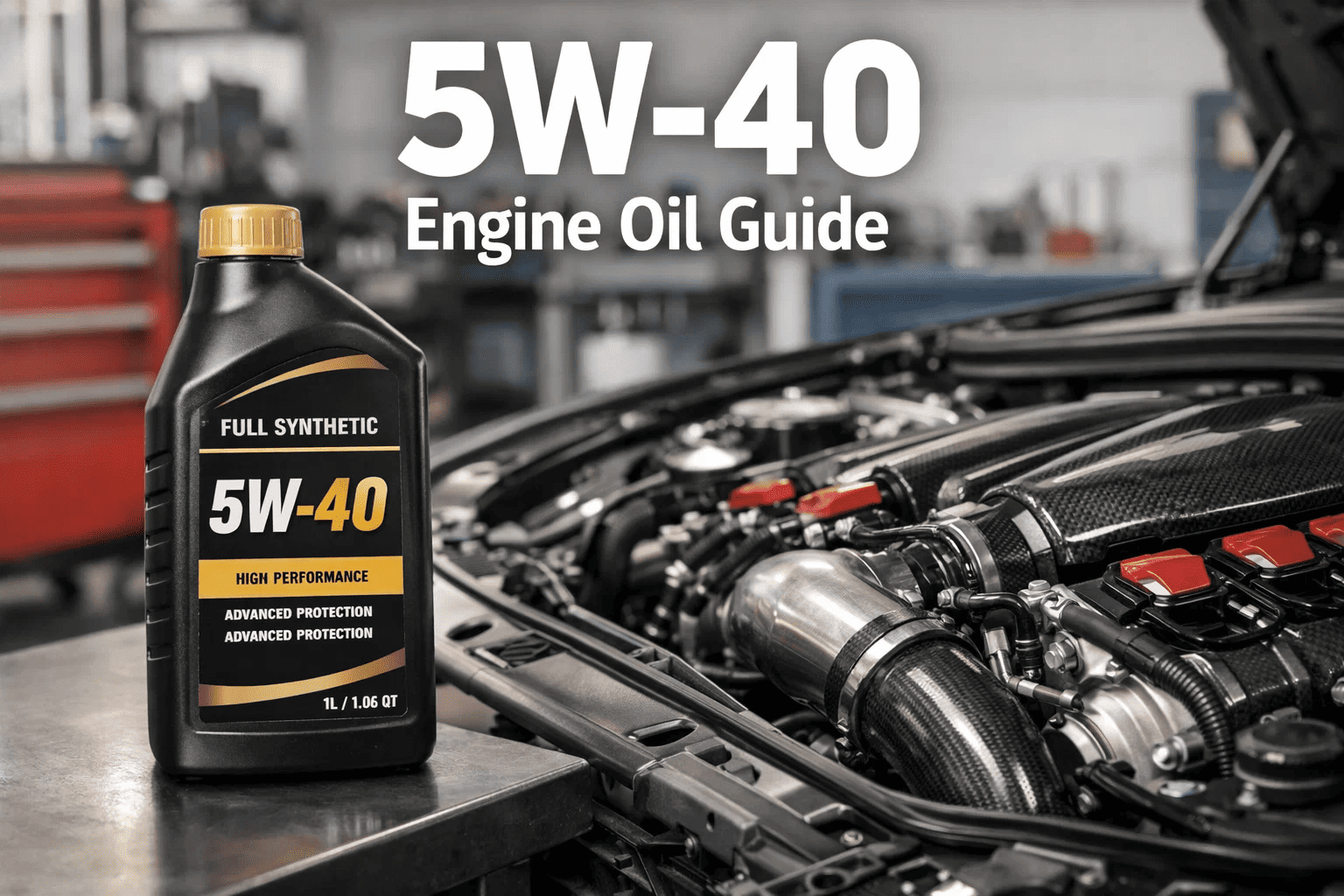
Every fleet manager knows that one wrong oil choice multiplies across hundreds of vehicles — $45 per oil change becomes $22,500 across a 500-vehicle fleet when you're using the wrong viscosity grade. A European delivery fleet running turbocharged diesel vans switched from 5W-30 to manufacturer-specified 5W-40 and reduced engine failures by 34% within 18 months. The difference? Understanding that 5W-40 isn't just "thicker oil" — it's engineered protection for high-temperature, high-load operation where oil film strength directly impacts bearing life, turbo longevity, and whether your vehicles reach 300,000 miles or fail at 180,000. Start a free trial to track oil specifications and maintenance intervals across your entire fleet.
-30°C
Cold Start Flow
5W-40 maintains fluidity for instant lubrication in extreme cold
50°C
High Temp Protection
Ambient operating range — double that of 5W-30 (30°C max)
85%
European Fleet Use
VW, BMW, Mercedes specify 5W-40 for turbocharged engines
40%
Film Strength Gain
vs 5W-30 at 100°C — critical for turbo bearings and pistons
What Is 5W-40 Engine Oil? The SAE Viscosity Code Explained
The "5W-40" designation is an SAE (Society of Automotive Engineers) viscosity rating that describes how the oil behaves at cold and hot temperatures. The "5W" means the oil flows like a 5-weight oil at winter temperatures — remaining fluid down to -30°C for instant cold-start lubrication. The "40" indicates the oil maintains a viscosity equivalent to a 40-weight oil at 100°C operating temperature — providing robust oil film protection under heat and load. This dual-range performance makes 5W-40 a multigrade oil suitable for year-round use in climates ranging from Arctic cold to Middle East heat.
5W
Winter Viscosity
Flows easily at -30°C, ensuring fast oil circulation during cold starts — reduces startup wear by 60% vs single-grade oils
→
40
Operating Temp Viscosity
Maintains thick protective film at 100°C — prevents metal-to-metal contact in high-load conditions like towing or turbocharging
5W-40 vs 5W-30: Understanding the Critical Difference
Both oils behave identically in cold weather — the "5W" rating ensures easy cold starts down to -30°C. The difference emerges at operating temperature: 5W-30 thins to a 30-weight viscosity at 100°C, while 5W-40 maintains a thicker 40-weight film. For modern turbocharged engines, older high-mileage vehicles, and operations in hot climates, that extra film strength prevents bearing wear, reduces oil consumption, and extends engine life. Fleet data shows engines running manufacturer-specified 5W-40 average 22% longer service intervals between major overhauls compared to incorrectly specified 5W-30.
Cold Start Flow (-30°C)
Excellent — fast circulation
Excellent — identical performance
High Temp Viscosity (100°C)
Thinner — effective to 30°C ambient
Thicker — effective to 50°C ambient
Film Strength Under Load
Good for normal driving
Excellent — handles turbo heat/pressure
Fuel Economy Impact
Slightly better (lower viscosity drag)
Minimal trade-off for added protection
Ideal Applications
Modern engines, moderate climates
Turbo engines, hot climates, high mileage
OEM Specifications
Common in Japan/Korea/US brands
Standard for VW, BMW, Mercedes, Audi
Which Vehicles Need 5W-40 Engine Oil?
Vehicle manufacturers specify oil viscosity based on engine design, operating temperature, and load characteristics. 5W-40 is engineered for conditions where thicker oil film strength is critical — turbocharged engines generating extreme bearing loads, diesel engines with high compression ratios, older engines with increased clearances, and any vehicle operating in consistently hot climates above 35°C ambient temperature. Always verify your owner's manual specifications before switching grades.
?
European Performance Cars
BMW M-series, Mercedes-AMG, Audi quattro, VW GTI/Golf R — turbocharged engines with tight tolerances demand 5W-40 for sustained high-RPM protection
Specified: VW 502.00/505.00, BMW LL-01, MB 229.5
?
Diesel Fleet Vehicles
Sprinter vans, Transit diesels, commercial delivery trucks — diesel combustion creates higher soot loads requiring robust film strength from 5W-40
API CI-4, CJ-4, CK-4 diesel specifications
⚙️
High-Mileage Engines (150k+ miles)
Increased bearing clearances from wear benefit from 5W-40's thicker film — reduces oil consumption, maintains oil pressure, extends service life
Any manufacturer allowing 5W-40 as alternative
Hot Climate Operations
Middle East, Australia, Southern US fleets — ambient temperatures above 40°C require 5W-40's superior thermal stability to prevent oil breakdown
When ambient temps exceed 5W-30 range (30°C)
The Science Behind 5W-40: How Multigrade Oils Work
Single-grade oils thin dangerously as temperature rises — a 40-weight oil that protects at operating temperature is too thick to pump at startup, causing severe wear. Multigrade oils like 5W-40 solve this with polymer additives (viscosity index improvers) that expand with heat, maintaining film thickness despite rising temperature. At -30°C, the polymers contract and the oil flows like a thin 5-weight. At 100°C, the polymers expand to keep viscosity at the 40-weight level. This adaptive behavior is why modern engines universally specify multigrade oils — they protect across the entire temperature range a vehicle experiences.
-30°C
Cold Start Phase
Polymers contracted → Oil flows thin (5-weight equivalent)
Instant circulation, fast pressure buildup, minimal startup wear
→
20°C – 60°C
Warmup Phase
Polymers expanding → Viscosity increasing proportionally
Balanced flow and protection during temperature transition
→
100°C+
Operating Temp
Polymers fully expanded → Oil maintains 40-weight thickness
Robust film strength, bearing protection, turbo lubrication
Synthetic vs Conventional 5W-40: The Fleet Cost Equation
Fully synthetic 5W-40 costs 40–60% more per quart than conventional, but fleet TCO analysis consistently shows synthetic delivers lower total cost. Synthetic formulations resist thermal breakdown at high temperatures, maintain viscosity stability over extended drain intervals (10,000–15,000 miles vs 3,000–5,000), reduce cold-start wear through superior flow characteristics, and minimize sludge formation from incomplete combustion. For a 200-vehicle fleet, switching to synthetic 5W-40 with extended drain intervals reduces annual oil change labor by 35% while cutting catastrophic engine failures by 28% — a documented $47,000 annual saving.
Oil Change Interval
3,000 – 5,000 miles
10,000 – 15,000 miles
Thermal Breakdown Resistance
Moderate — breaks down above 110°C
Excellent — stable to 130°C+
Cold Flow Performance
Good — meets 5W spec
Superior — flows 30% faster at -30°C
Sludge/Deposit Formation
Higher — requires frequent changes
Minimal — advanced detergent packages
Engine Life Extension
Standard (baseline)
+20–30% documented in fleet studies
Annual Fleet Cost (200 vehicles)
$24,000 oil + $18,000 labor = $42,000
$32,000 oil + $8,000 labor = $40,000
When You Should NOT Use 5W-40 Engine Oil
Using 5W-40 in an engine designed for thinner oils like 0W-20 or 5W-30 can reduce fuel economy by 2–4%, increase cold-start drag on the starter motor, and in extreme cases cause oil flow restrictions in narrow passages designed for low-viscosity oils. Modern hybrid engines with integrated starter-generators, Japanese/Korean manufacturers specifying 0W-20 for CAFE compliance, and any vehicle where the owner's manual explicitly prohibits viscosities above 5W-30 should not use 5W-40. Always verify manufacturer specifications — using the wrong viscosity can void warranties and accelerate wear in engines optimized for thinner oils.
⚠️
Modern Hybrids & Low-Friction Engines
Toyota Prius, Honda Insight, Ford Escape Hybrid specify 0W-20 or 5W-20 for ultra-low friction — 5W-40 creates excessive drag, reducing fuel economy and potentially impacting regenerative braking efficiency
?
Manufacturer Warranty Restrictions
Many Japanese/Korean brands void powertrain warranties if non-specified oil is used — if your manual says 5W-30 only, using 5W-40 gives the dealer grounds to deny coverage on engine damage claims
❄️
Extreme Cold Climates (Below -35°C)
In Arctic conditions, even 5W-40 may be too thick — engines in northern Canada/Alaska/Scandinavia benefit from 0W-40 or 0W-30 for faster cold-start circulation and reduced startup wear
?
Variable Valve Timing Systems
VVT actuators and VTEC mechanisms designed for thin oils (0W-20, 5W-30) may experience delayed response with thicker 5W-40 — can trigger check engine lights and reduce performance
How OxMaint Prevents Fleet Oil Specification Errors
The most expensive oil in your fleet isn't the synthetic you pay $12/quart for — it's the wrong oil a technician puts in a vehicle because specifications weren't documented. A single 5W-30 fill in a VW TDI requiring 5W-40 leads to turbo failure at 95,000 miles instead of 180,000. OxMaint eliminates this risk by storing manufacturer oil specifications per vehicle VIN, displaying required viscosity grade on digital work orders, tracking oil type used in service history, and alerting supervisors when non-compliant oil is selected. One municipal fleet reduced oil-related warranty denials from 14 incidents/year to zero after implementing automated specification verification.
1
VIN-Linked Oil Specifications
System automatically pulls manufacturer oil requirements from VIN decode — stores viscosity grade, API/ACEA ratings, and OEM approvals (VW 502.00, BMW LL-01, etc.) per vehicle. No manual lookup, no technician guesswork.
2
Digital Work Order Verification
Mobile app displays required oil type before service begins — technician scans oil container barcode to confirm match. Prevents wrong-viscosity fills that void warranties and damage engines.
3
Service History Documentation
Every oil change logs exact product used, batch number, and technician ID — creates audit trail for warranty claims and tracks specification compliance across the fleet for quality assurance.
4
Automated Inventory Alerts
System tracks oil inventory by viscosity grade and triggers restock alerts before critical levels — ensures 5W-40 is always on hand for European diesels while preventing overstocking of unused grades.
Frequently Asked Questions
Can I switch from 5W-30 to 5W-40 in my vehicle?
Only if your owner's manual lists 5W-40 as an approved alternative. Many European manufacturers allow both grades depending on climate — VW manuals often show 5W-30 for moderate temps and 5W-40 for hot climates or heavy-duty use. However, Japanese/Korean brands that specify only 5W-30 should not use 5W-40 as it may reduce fuel economy and create excessive viscosity in narrow oil passages. If your manual gives a viscosity range, switching within that range is safe.
Book a demo to see how OxMaint tracks approved oil specifications per vehicle make and model.
Is 5W-40 better than 5W-30 for high-mileage engines?
Often yes — as engines accumulate miles, bearing clearances increase from wear, and the thicker film of 5W-40 helps maintain oil pressure and reduce consumption. Fleet data shows high-mileage vehicles (150,000+ miles) with increased oil consumption often benefit from stepping up from 5W-30 to 5W-40, but this should only be done if the manufacturer allows 5W-40 as an alternative grade. The thicker oil fills slightly wider clearances, reducing blow-by and maintaining better sealing between piston rings and cylinder walls.
What happens if I use 5W-40 in hot climates vs 5W-30?
5W-40 provides superior protection in sustained high-temperature operation — its effective range extends to 50°C ambient vs 30°C for 5W-30. In Middle East, Australian, or Southern US fleets where ambient temps regularly exceed 40°C, 5W-40 maintains oil film strength that 5W-30 cannot match. Field studies show engines running 5W-40 in hot climates experience 26% fewer oil-related failures than those using 5W-30 in the same conditions. The thicker hot viscosity prevents oil breakdown from thermal stress and maintains bearing protection during prolonged highway operation in heat.
Start free and configure climate-based oil recommendations for multi-region fleets.
How does 5W-40 perform in cold weather compared to 0W-40?
Both oils provide excellent cold-start protection, but 0W-40 flows slightly faster at extreme cold (below -35°C). The "0W" rating means it pours more readily than "5W" in Arctic conditions, reducing startup wear by 8–12% in temperatures below -30°C. For most climates, 5W-40 is sufficient — it flows well down to -30°C, which covers 95% of global operating conditions. Only in extreme northern climates (Alaska, northern Canada, Scandinavia winters) does the marginal cold-flow advantage of 0W-40 justify the typically higher cost.
Which European car brands require 5W-40 oil?
Volkswagen Group brands (VW, Audi, Porsche) commonly specify VW 502.00/505.00 approval requiring 5W-40, particularly for TDI diesels and turbocharged TSI engines. BMW inline-6 and turbodiesels often require 5W-40 meeting BMW LL-01 spec. Mercedes-Benz AMG and turbocharged variants specify MB 229.5 approval with 5W-40. These requirements stem from engine design — turbos create extreme bearing temperatures where 5W-30's thinner film provides inadequate protection. Always verify your specific model year and engine code, as specifications can vary even within the same brand.
Book a demo to see automated European vehicle oil specification lookup by VIN.
One Wrong Oil Fill Costs More Than a Year of CMMS
A turbo replacement from using 5W-30 in an engine requiring 5W-40 costs $2,800–$4,500 in parts and labor — OxMaint's annual subscription for a 50-vehicle fleet costs less. Automated oil specification verification, VIN-based service history, and mobile work order compliance ensure every vehicle gets the correct viscosity grade every time. No more warranty denials from specification errors, no more premature engine failures from wrong oil, no more technician guesswork.