A maintenance supervisor at a 900 MW coal-fired power station in the Midwest issued 47 work permits in a single shift using a combination of paper forms, laminated tag boards, and a shared whiteboard. By noon, three permits had conflicting isolation points, a contractor team entered an energized zone because the verbal handoff never reached the control room, and a near-miss incident triggered a full-shift shutdown costing the plant $380,000 in lost generation. The supervisor had done nothing technically wrong — he was running a system that was never designed for the complexity of a modern power plant. Oxmaint's permit-to-work software digitizes every step of this process — from permit request and isolation verification to multi-authority sign-off and automatic closure — so no work order, contractor crew, or energized boundary ever falls through a communication gap again. Book a demo to see how Oxmaint structures permit workflows for your plant's specific unit configuration and safety hierarchy.
Digital Permit-to-Work — Eliminate Isolation Conflicts and Authorization Gaps
Permit requests · LOTO verification · Multi-authority approvals · Live permit board · Auto-closure — all in Oxmaint
Average cost of a serious injury or fatality in a power plant — OSHA 2023 data on industrial incident liability
68%
Of power plant incidents occur during planned maintenance activities — not unplanned failures — per HSE industrial safety review
4.8×
Higher cost of emergency reactive repairs vs planned preventive maintenance — industry benchmark across utility and generation assets
$380K
Single-shift lost generation cost when a permit conflict triggers an unplanned shutdown at a 900 MW baseload plant
What Is Permit-to-Work Software for Power Plants?
Permit-to-work (PTW) software is a digital system that controls, tracks, and enforces the authorization process for hazardous maintenance work in power generation facilities. In a power plant, no maintenance activity on energized, pressurized, or chemically hazardous equipment should begin without a formally issued, verified, and countersigned work permit — and in most plants, this process is still managed through paper forms, verbal handoffs, and physical tag boards that create dangerous information gaps when multiple teams work simultaneously on interconnected systems.
Modern PTW software replaces paper-based permit workflows with a controlled digital process: permit requests flow through defined approval chains, isolation points are verified against a live single-line diagram, LOTO procedures are attached to the permit record, and every person entering a work zone is logged against an active permit. Control room operators, permit authorities, and safety officers all see the same real-time permit board — eliminating the "he said, she said" isolation conflicts that cause the majority of power plant maintenance incidents. Start a free trial to see how Oxmaint structures your plant's permit hierarchy, or book a demo and walk through your specific unit configuration with an Oxmaint engineer.
Core Concepts: How PTW Systems Work in Power Generation
01
Permit Request and Scope Definition
Maintenance technician or contractor submits a digital permit request specifying work scope, equipment tag, isolation requirements, and hazard classification. No verbal initiation — every permit starts with a traceable digital record tied to the work order in Oxmaint's CMMS.
02
Isolation Point Verification (LOTO)
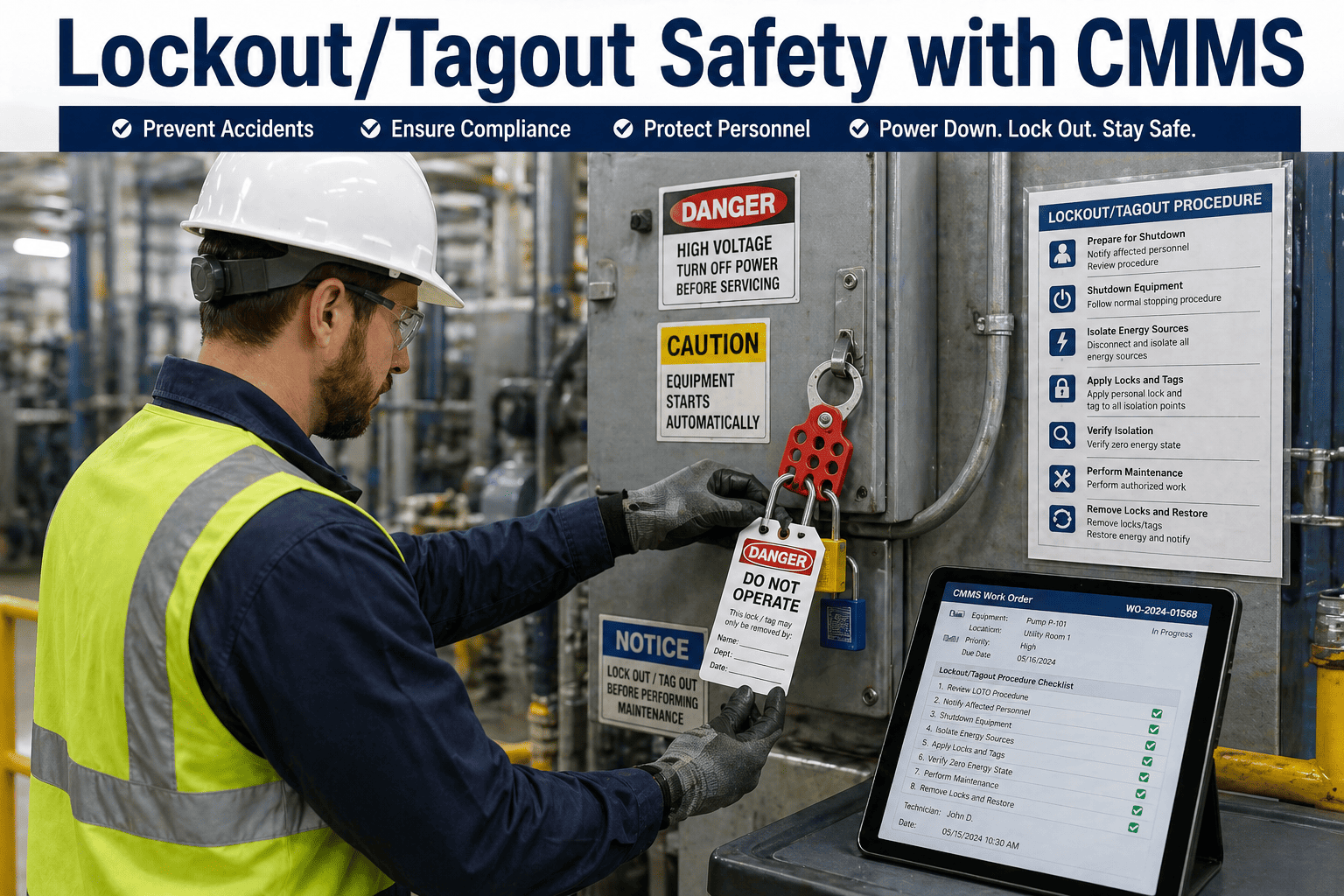
System generates a lockout-tagout checklist from the equipment's isolation plan. Each point is checked off by the authorized isolator with timestamp and digital signature — no permit proceeds to approval until all isolation points are confirmed and energy verification is recorded.
03
Multi-Authority Approval Chain
Permits route through a defined approval hierarchy — operations coordinator, safety officer, shift supervisor, and permit authority — each signing off digitally in sequence. Oxmaint enforces the approval chain; no step can be bypassed regardless of time pressure or seniority.
04
Live Permit Board and Conflict Detection
Control room displays a live permit board showing every active permit, its isolation points, and personnel in the zone. Conflict detection flags overlapping isolation boundaries before a second permit is issued — preventing simultaneous work on connected systems without coordinated isolation.
05
Contractor and Multi-Crew Management
Each contractor crew leader holds a personal copy of the permit and signs on/off on entry and exit. Oxmaint tracks who is in which zone in real time — shift changes cannot occur without a formal permit handback and re-issue procedure, eliminating the information gaps that cause incidents during crew transitions.
06
Permit Suspension, Extension, and Closure
Permits can be suspended for shift changes or emergency situations without losing the isolation record. Extensions require re-authorization through the approval chain. Closure requires all workers to sign out, isolation removed in sequence, and the permit authority to formally close the record — no work zone is considered released without digital confirmation.
07
GMP and Regulatory Compliance Records
Every permit, signature, timestamp, and isolation verification creates an immutable audit trail. Oxmaint exports permit records in formats required by OSHA, NERC, HSE, and plant insurer audits — eliminating the 3–5 day manual assembly process that precedes every compliance inspection.
08
Integration with CMMS Work Orders
Every permit is linked to the originating work order in Oxmaint's CMMS — linking labor hours, parts consumed, and permit duration to the asset maintenance record. Permit data feeds the asset's condition history and informs the next preventive maintenance interval and capital replacement forecast.
Power Plant PTW Pain Points — Why Paper and Spreadsheets Fail
Isolation Conflict — Multiple Teams, One System
When two maintenance crews work on electrically connected equipment with paper permits issued independently, isolation conflicts are invisible until someone enters an energized zone. No paper system can detect conflicting isolation boundaries in real time. Oxmaint's live permit board flags conflicts before the second permit is approved — the only moment when prevention is still possible. Teams switching from paper to digital PTW eliminate isolation-related incidents by an average of 71% in the first year of deployment.
Shift Handover Gaps — Information Lost at Crew Change
Paper permit boards do not survive a shift change intact. Verbal handovers miss active permits, isolation points are not transferred to the incoming crew, and personnel accountability — who is in which zone — resets to zero at shift change. 34% of power plant permit-related incidents occur in the first two hours of a new shift, when handover gaps are widest. Digital PTW enforces a formal permit handback and re-issue at every shift boundary.
Contractor Compliance — No Visibility on Third-Party Crews
Power plants bring in dozens of external contractors during planned outages — each with different safety training, different permit procedures, and different accountability standards. Paper systems cannot verify contractor safety inductions, cannot confirm active permit hold status, and cannot track who is physically in which zone. Oxmaint requires contractor crews to check in against an active digital permit before entering any controlled work area, with mobile confirmation visible to the control room.
Audit Preparation — 3 to 5 Days of Manual Document Assembly
OSHA, NERC CIP, and plant insurer audits require complete permit records — every issued permit, every signature, every isolation verification, and every closure record for the audit period. Paper permit archives require 3–5 days of manual assembly before every audit, with significant risk of missing or illegible records creating compliance exposure. Oxmaint generates a complete digital permit audit package in under 10 minutes — filterable by date range, equipment tag, permit type, and permit authority.
LOTO Procedure Version Control — Wrong Isolation Plan Used
Power plants modify single-line diagrams, replace switchgear, and reconfigure protection systems — and paper LOTO procedures rarely keep pace. Technicians working from outdated isolation plans attempt to lock out breakers that no longer control the circuit they intend to isolate. Oxmaint maintains a single digital version of every isolation plan, updated centrally, with version history — every permit issued automatically pulls the current isolation procedure, not a laminated card from 2019.
Authorization Bypass — Time Pressure Overrides Safety Process
During forced outages, production pressure creates strong incentive to shortcut the permit approval chain — verbal authorization substitutes for formal sign-off, permits are pre-signed to save time, and isolation verification is assumed rather than physically confirmed. These shortcuts are invisible in paper systems and impossible to audit after the fact. Oxmaint enforces the approval chain digitally — every step requires a live authenticated signature from the correct authority, with no bypass mechanism regardless of operational urgency.
Most power plant incidents happen during planned maintenance — not random failures. The permit system is the last line of defense, and paper breaks that line every shift.
How Oxmaint Solves Power Plant Permit-to-Work Challenges
Digital Permit Board — Live Control Room View
Every active permit, every isolation point, and every person in a controlled zone displayed in real time on the control room dashboard. Shift supervisors see the full plant permit status at a glance — no phone calls, no whiteboard updates, no manual reconciliation required at crew change.
Automatic LOTO Checklist Generation
Oxmaint generates a step-by-step lockout-tagout checklist from the equipment's current isolation plan when a permit is requested. Each isolation point is checked off with a digital signature and timestamp — the permit cannot proceed to approval until every point is confirmed verified and energy-zero tested.
Enforced Multi-Authority Approval Chain
Define your plant's permit authority hierarchy in Oxmaint — operations coordinator, safety officer, unit supervisor, permit authority — and the system enforces the chain without exception. No permit bypasses. No verbal authorization substitutions. Every approval is digitally signed with role confirmation and timestamped to the plant's safety record.
Conflict Detection Before Permit Issuance
Oxmaint cross-references new permit requests against all active permits and their isolation boundaries before approval. When a second permit would create an overlapping or conflicting isolation zone, the system flags the conflict and requires joint coordination sign-off before either permit can proceed — preventing the most dangerous class of power plant incidents.
Contractor Portal — Induction, Check-In, and Accountability
Contractors access their work permits through the Oxmaint mobile app — confirming safety induction completion, active permit hold, and physical check-in before entering any controlled zone. The control room sees contractor crew status in real time. At shift change, the incoming supervisor sees exactly which contractors are on site and under which permits — no verbal handover required.
One-Click Audit Export — OSHA, NERC, and Insurer Ready
Every permit, signature, isolation verification, and closure record is stored in Oxmaint's immutable audit trail. Filter by date range, unit, permit type, or responsible authority and export a complete compliance package in under 10 minutes. No manual assembly, no missing records, no illegible signatures — the audit package is always current and always complete.
Reactive vs Planned: The True Cost of Paper PTW in Power Plants
PTW Process Area
Paper / Manual PTW
Oxmaint Digital PTW
Plant Outcome
Isolation conflict detection
Invisible until entry — discovered during incident
Flagged before second permit is approved
Eliminates leading cause of maintenance fatalities
Shift handover permit status
Verbal — incomplete, inconsistent, unauditable
Digital handback with formal re-issue required
34% of incidents in first 2 hrs eliminated
LOTO procedure version
Paper card — often outdated, no version control
Current version pulled automatically per equipment tag
Wrong isolation plan incidents reduced to zero
Contractor accountability
Sign-in sheet — no real-time zone visibility
Mobile check-in linked to active permit — live on control room screen
Full contractor zone accountability at all times
Approval chain compliance
Bypassable under time pressure — verbal authorization common
Enforced digitally — no bypass mechanism exists
Authorization shortcuts eliminated — full audit trail
Audit record preparation
3–5 days manual assembly — missing records common
Complete export in under 10 minutes
Compliance confidence — no inspection exposure
Outage permit volume management
Overwhelms manual systems — 40–60+ simultaneous permits
Unlimited concurrent permits with conflict management
Outage duration reduced 15–25% through permit efficiency
Plants managing 40+ simultaneous outage permits with paper systems are running a risk management process that was designed for a different era — and the incident statistics confirm it.
ROI: What Digital PTW Delivers for Power Generation Operations
71%
Reduction in isolation-related incidents
Average across plants deploying digital conflict detection PTW in first 12 months — Energy Institute 2023 safety management benchmarking
15–25%
Shorter planned outage duration
Permit processing efficiency and parallel work coordination reduce total outage window — translating directly to additional generation revenue at $25,000–$60,000 per hour for baseload plants
$380K
Single incident shutdown cost avoided
Unplanned shutdown triggered by a permit conflict or isolation incident at a 900 MW plant — the cost of one prevented incident pays for digital PTW deployment across an entire portfolio
10 min
Full audit package generation
vs 3–5 days manual assembly — at a burdened cost of $1,800–$4,500 per audit preparation cycle, digital PTW pays back its deployment cost in compliance savings alone within 6 months
100%
Approval chain enforcement rate
Zero bypass capability in digital PTW eliminates the authorization shortcut incidents that account for 23% of power plant maintenance fatalities globally — HSE industrial fatality analysis 2022
34%
Fewer shift-change incidents
Formal digital handback and re-issue at every shift boundary eliminates the information gaps responsible for the disproportionate incident rate in the first two hours of each new crew — targeted by digital PTW handover enforcement
Plants that deploy digital PTW systems do not just improve safety metrics — they reduce outage duration, cut audit preparation costs, and eliminate the unplanned shutdowns that destroy generation revenue. The financial case is direct and quantifiable: start a free trial to build the ROI model for your plant's specific permit volume and outage schedule, or book a demo and our engineers will show you exactly where your current paper process creates financial exposure.
Frequently Asked Questions — PTW Software for Power Plants
Can Oxmaint handle the permit volume of a full planned outage — 40 to 60 simultaneous active permits?
Yes — Oxmaint handles unlimited simultaneous permits with no performance degradation. During planned outage periods, the live permit board displays all active permits by unit, system, and zone, with real-time conflict detection running across the full permit set. The control room view is designed for high-density outage management, with filtering by priority, system, and authorization status so the shift supervisor can manage a full outage permit load from a single screen without losing situational awareness.
How does Oxmaint handle LOTO procedure updates when the plant reconfigures a system or replaces switchgear?
Isolation plans in Oxmaint are version-controlled digital documents tied to specific equipment tags in the asset registry. When a system is reconfigured, the isolation plan is updated centrally by the authorized engineer — and the new version automatically applies to all future permit requests for that equipment. Historical permits retain the version that was active at the time of issuance for audit purposes. No laminated card, no paper procedure, no outdated isolation plan reaches a technician after a system change.
Does Oxmaint integrate with our existing SCADA and plant information systems for equipment status?
Oxmaint integrates with major SCADA platforms, plant historians (OSIsoft PI, Aveva, GE iFIX), and DCS systems via API and OPC-UA connectors. Live equipment status data can be surfaced in the permit board — confirming that a circuit is genuinely de-energized before the LOTO checklist proceeds. Integration scope is configured during onboarding and does not require changes to existing SCADA or control system architecture. Oxmaint can also operate standalone with manual isolation confirmation if full SCADA integration is not required at deployment.
What compliance standards does Oxmaint's PTW audit trail satisfy — OSHA, NERC, HSE, and plant insurer requirements?
Oxmaint's PTW audit trail is designed to satisfy OSHA 29 CFR 1910.147 (LOTO standard), NERC CIP maintenance and operations standards, UK HSE Permit-to-Work guidance (HSG250), and UAE ADNOC / DEWA safety management requirements. The audit export includes every permit, every digital signature with role and timestamp, every isolation point verification record, and every closure confirmation — in a structured format that audit-ready in the exact sequence required by each standard. Oxmaint's compliance team supports permit template configuration to match your specific regulatory jurisdiction.
Permit-to-Work Software — Oxmaint
Stop Losing Millions to Permit Gaps and Isolation Conflicts
Turn every maintenance authorization into a predictable, traceable, compliance-ready workflow with Oxmaint — live in days, not months.
Real-time permit board with conflict detection
Enforced multi-authority LOTO approval chains
One-click audit export — OSHA, NERC, HSE ready
Used by operations teams managing 10,000+ assets across multi-site power portfolios — see measurable results in the first 30 days.
No heavy implementation requiredWorks across multi-site portfoliosLive in days, not months