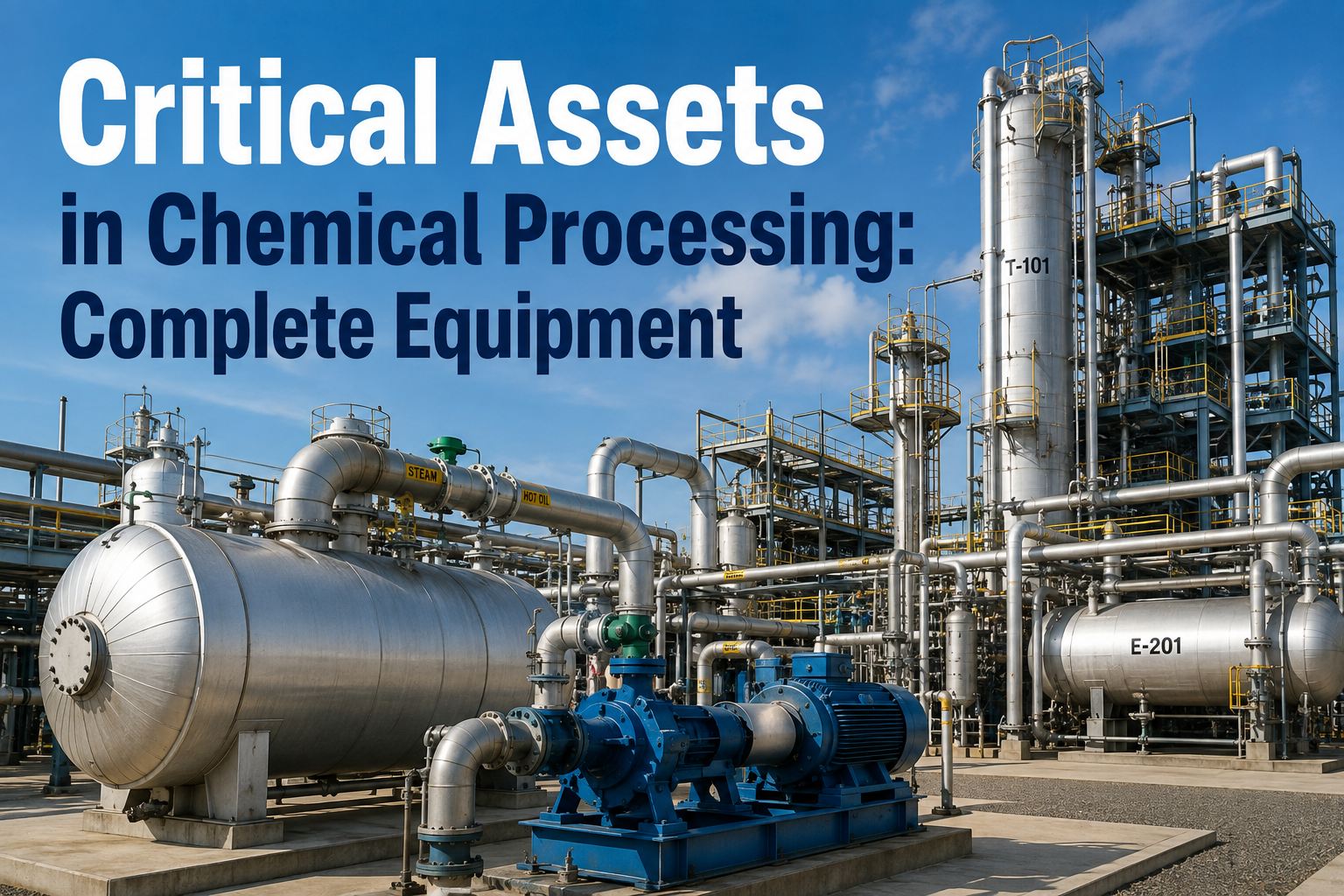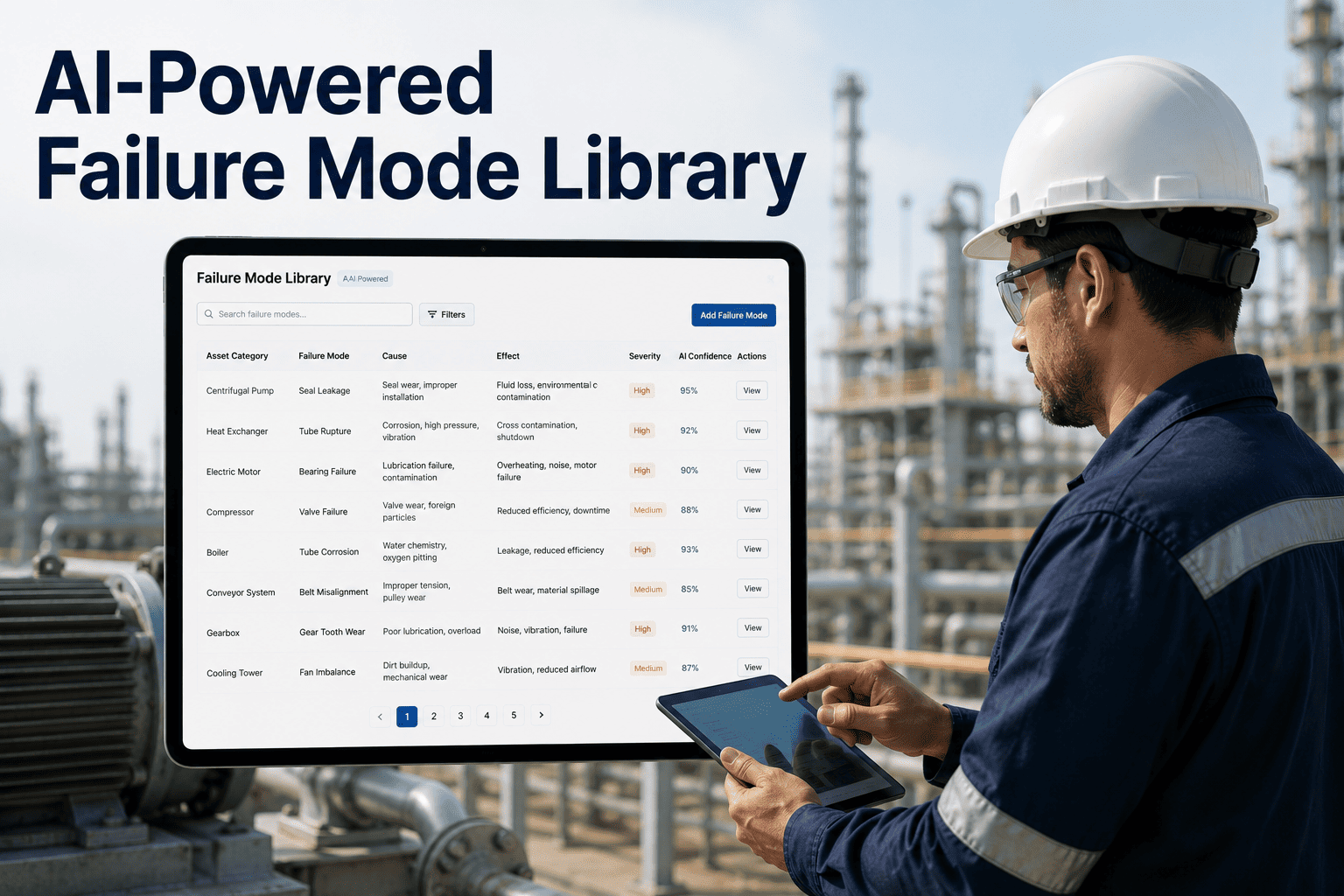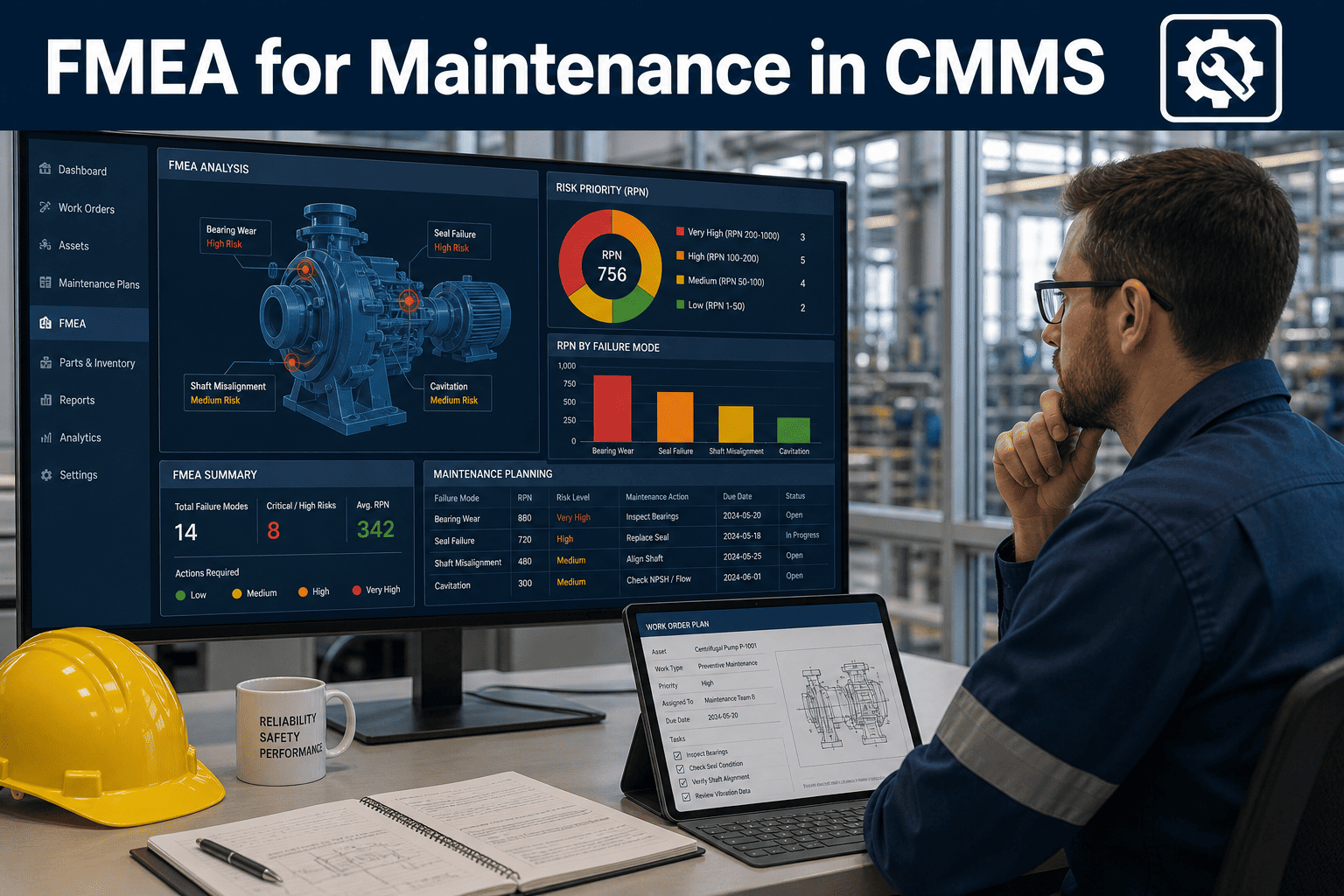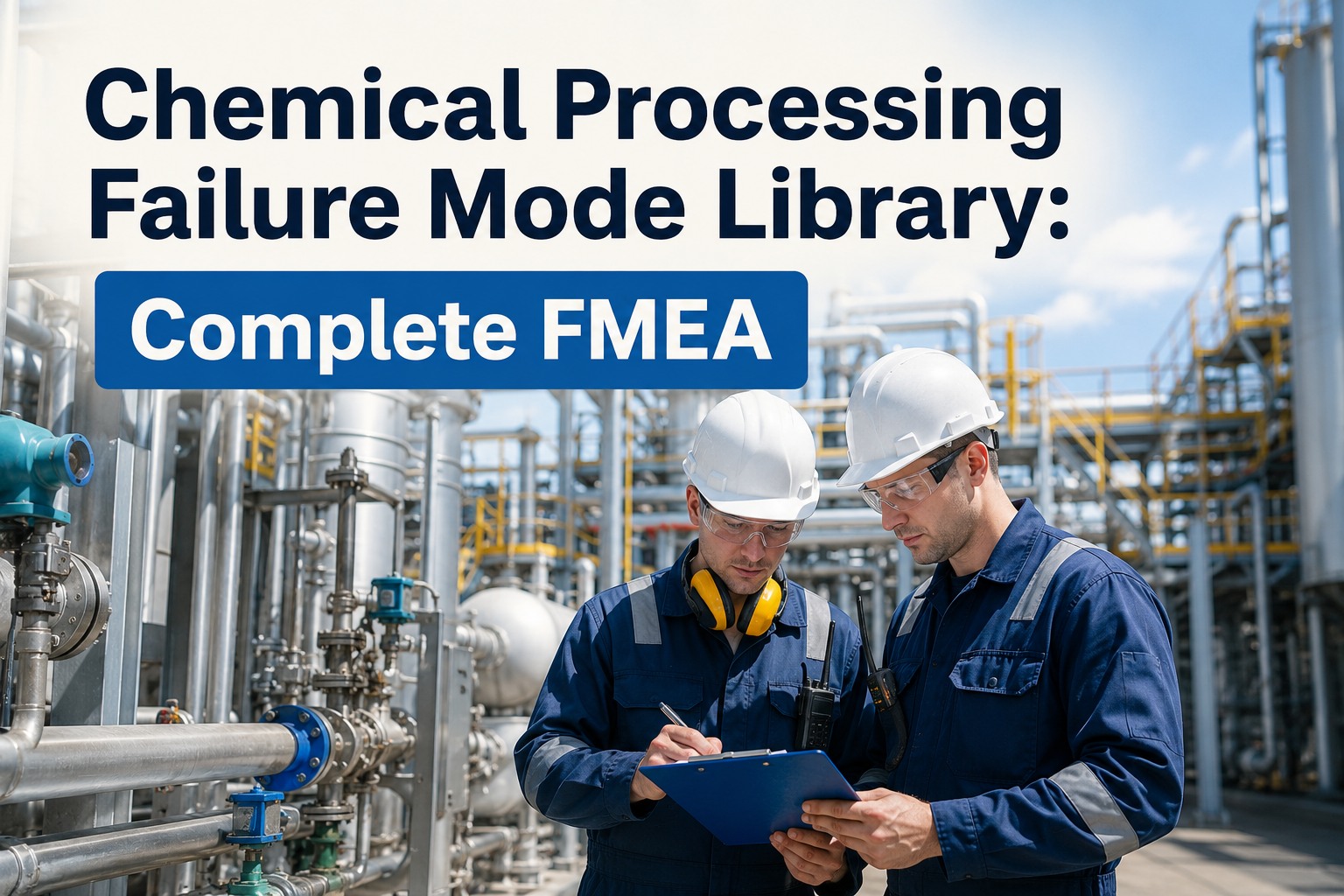
Chemical processing failure modes rarely strike without warning — every pump seizure, seal leak, and control loop drift follows a predictable pattern of root cause, failure mechanism, and downstream effect that a structured FMEA library can capture and prevent. This complete chemical processing failure mode reference catalogs the equipment failures your reliability team encounters daily, from bearing wear on rotating equipment to corrosion on structural assets, each mapped to its most likely root cause and the RCM task that stops it before it stops production. Whether you're building your first FMEA worksheet or tightening a mature reliability program, this guide gives you the failure modes, causes, effects, and preventive tasks you need to shift from reactive firefighting to planned, predictable maintenance. OxMaint's AI-powered CMMS turns this library into daily action — logging failure modes against each asset, triggering the right condition-based task at the right interval, and building a searchable FMEA history that makes every future work order smarter. Start Free Trial and start applying this reference inside OxMaint today.
The Complete Chemical Processing Failure Mode Library Your Reliability Team Actually Uses
Dozens of failure modes mapped to root causes, effects, and the exact RCM tasks that prevent them — built for maintenance and reliability teams in chemical plants who are done firefighting.
What Are the Most Common Failure Modes in Chemical Processing?
Unplanned downtime in chemical processing costs between $100K and $500K per hour depending on throughput — and 80% of those failures trace back to a handful of repeatable modes that a structured FMEA catches early. Below are the failure modes that account for the majority of unplanned work orders in chemical plants, organized by equipment class.
Rotating Equipment: Bearing Wear & Imbalance
Bearing fatigue, shaft misalignment, and rotor imbalance cause 40–50% of pump and compressor failures. Root causes include lubrication breakdown, contamination ingress, and installation error. Effect: seal damage, vibration, catastrophic seizure.
Pumps: Mechanical Seal Leakage
Seal face wear, dry running, and thermal distortion drive 60–70% of pump maintenance calls. Root causes: improper flush plans, cavitation, misalignment. Effect: product loss, environmental release, secondary bearing damage.
Control Systems: Loop Drift & Sensor Degradation
PLC input drift, transmitter fouling, and valve stiction cause off-spec product and unplanned shutdowns. Root causes: calibration drift, process coating on sensors, air supply contamination. Effect: quality excursions, safety interlock failures.
Pressure Vessels & Piping: Corrosion & Erosion
Wall thinning from CO2/H2S corrosion, erosion-corrosion at elbows, and CUI (corrosion under insulation) lead to leaks and ruptures. Root causes: chemistry excursions, velocity effects, insulation damage. Effect: loss of containment, regulatory exposure.
Heat Exchangers: Fouling & Tube Leaks
Fouling reduces heat transfer 20–40% before anyone notices; tube leaks cause cross-contamination. Root causes: water chemistry, velocity maldistribution, thermal cycling. Effect: energy waste, production bottlenecks, product quality issues.
Safety Instrumented Systems: Failure to Demand
SIS components fail dangerously (won't trip on demand) at rates of 1–5% per year if untested. Root causes: stuck valves, sensor drift, logic solver faults. Effect: loss of last-line defense against major accidents.
Chemical Processing Equipment Failures: Root Causes & Effects
Every failure mode has a root cause chain — understanding it turns one-off fixes into permanent solutions. This table maps the most common chemical processing failure modes to their root causes, downstream effects, and the RCM tasks that break the chain.
| Failure Mode | Root Cause | Effect | RCM Task |
|---|---|---|---|
| Centrifugal pump bearing failure | Lubricant degradation / contamination | Seal damage, shaft wear, fire risk | Oil analysis quarterly, vibration monthly |
| Mechanical seal leakage | Dry running, cavitation, misalignment | Product loss, environmental release | Seal flush monitoring, alignment verification |
| Control valve stiction | Packing wear, air supply contamination | Loop oscillation, off-spec product | Valve diagnostics semi-annually |
| Pressure transmitter drift | Process coating, temperature cycling | False readings, control errors | Calibration quarterly, impulse line checks |
| Heat exchanger fouling | Water chemistry, low velocity zones | Energy waste, throughput loss | Performance trending, cleaning optimization |
| Piping corrosion (CUI) | Insulation damage, moisture ingress | Wall thinning, leak risk | Visual inspection annually, UT thickness per API 570 |
| Agitator mechanical seal failure | Shaft runout, dry running | Product contamination, batch loss | Seal condition monitoring, alignment checks |
| Relief valve failure to open | Corrosion, fouling, improper assembly | Overpressure, vessel rupture risk | Testing per API 576, inspection per NBIC |
How One Chemical Plant Cut Unplanned Downtime 47% Using This FMEA Library
A 180-asset specialty chemical plant in the Gulf Coast was spending $42K per month on reactive maintenance — emergency callouts, expedited parts, and lost production from failures they "didn't see coming." Their reliability engineer used this failure mode library to run FMEA workshops on their top 20 bad actors, mapped each failure mode to its root cause, and built condition-based PM tasks inside OxMaint to catch degradation early. Within 9 months, unplanned downtime dropped 47%, maintenance costs fell $18K/month, and they finally had a searchable FMEA history that made every future work order smarter.
Turn This Chemical Processing FMEA Library Into Daily Action with OxMaint
A failure mode library only works if your team uses it. OxMaint's AI-powered CMMS + EAM platform turns this reference into automated workflows that catch failures before they happen.
Asset-Level FMEA History
Log every failure mode, root cause, and effect against each asset. Build a searchable FMEA database that makes every future work order smarter — no more tribal knowledge walking out the door.
Condition-Based Task Triggers
Set vibration, oil analysis, and performance thresholds for each failure mode. OxMaint auto-generates work orders when limits are exceeded — catching degradation before it becomes downtime.
RCM Task Library
Pre-built PM templates for every failure mode in this library — vibration analysis, seal monitoring, calibration, thickness testing. Assign the right task at the right interval with one click.
Failure Analytics & Pareto
See which failure modes are costing you the most. OxMaint's analytics rank bad actors by downtime, cost, and frequency — so you know exactly where to focus your reliability efforts.
See OxMaint Running on Your Chemical Plant's Assets
Book a 30-minute demo and we'll show you exactly how to turn this FMEA library into automated workflows that cut downtime 30–50%.
Chemical Processing FMEA Worksheet: How to Use This Library
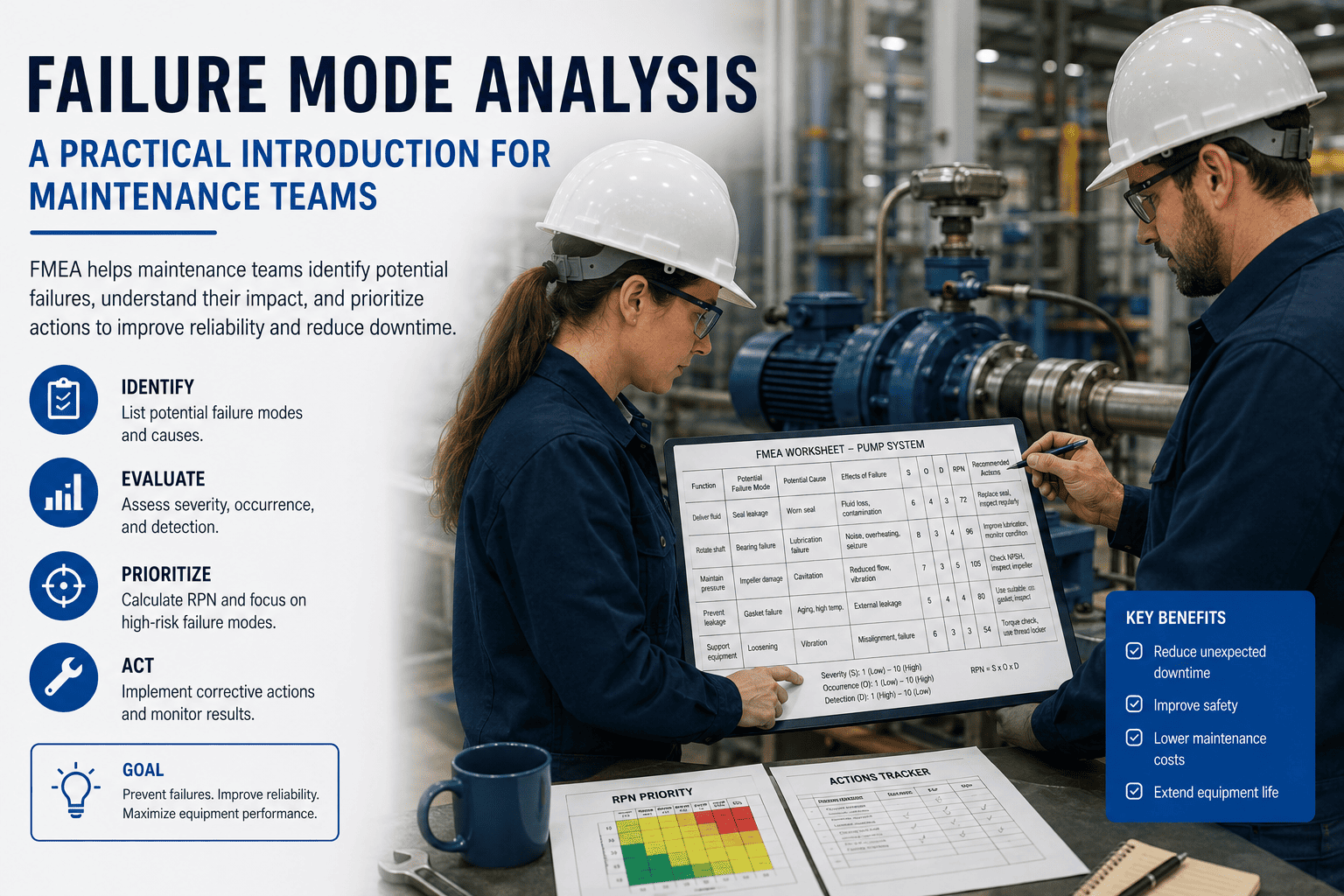
This failure mode library is the foundation — here's how to turn it into a working FMEA that drives your PM program. Follow these steps to run FMEA workshops, prioritize risks, and build condition-based tasks inside OxMaint.
Select Your Bad Actors
Start with the 20% of equipment causing 80% of your downtime. Pull work order history from OxMaint or your current system, rank by cost and frequency, and pick your top 10–20 assets for FMEA analysis.
Map Failure Modes to Root Causes
For each asset, list every failure mode from this library that applies. Use the root cause column to dig deeper — ask "why" five times until you hit something actionable (lubrication, alignment, calibration, chemistry).
Score Risk Priority (RPN)
Rate Severity (1–10), Occurrence (1–10), and Detection (1–10) for each failure mode. Multiply to get RPN. Focus on RPN > 200 or Severity > 8 — those are your priority failure modes.
Assign RCM Tasks
For each high-RPN failure mode, select the RCM task from this library that addresses the root cause. Set the interval based on failure history and manufacturer recommendations. Load tasks into OxMaint as automated PM schedules.
Monitor, Measure, Refine
Track task completion, failure rates, and downtime in OxMaint's analytics dashboard. Review FMEA quarterly — add new failure modes as you discover them, adjust intervals based on actual performance, and watch your RPN scores drop.
Chemical Processing FMEA: Your Questions Answered
What is FMEA in chemical processing maintenance?
FMEA (Failure Mode and Effects Analysis) is a structured method to identify every way equipment can fail, why it fails, what happens when it does, and what task prevents it. In chemical processing, FMEA catalogs failure modes like bearing wear, seal leakage, and corrosion — then maps each to its root cause and the RCM task that stops it before it stops production.
What are the most common failure modes in chemical plants?
The most common chemical processing failure modes are bearing wear on rotating equipment (40–50% of pump/compressor failures), mechanical seal leakage (60–70% of pump maintenance), control loop drift from sensor fouling or calibration drift, corrosion on pressure vessels and piping (especially CUI), heat exchanger fouling, and safety instrumented system failures. Each has predictable root causes and proven RCM tasks.
How do I prioritize which failure modes to address first?
Use Risk Priority Number (RPN): rate Severity (1–10), Occurrence (1–10), and Detection (1–10) for each failure mode, then multiply. Focus on RPN > 200 or any Severity > 8 (safety/environmental risk). Also prioritize by cost — pull work order history from OxMaint to see which failure modes are actually costing you the most in downtime and repairs.
What's the difference between FMEA and RCM?
FMEA identifies what can fail and why. RCM (Reliability-Centered Maintenance) takes that FMEA output and selects the right maintenance task — condition-based, time-based, or run-to-failure — based on failure consequences. FMEA is the analysis; RCM is the action plan. This library gives you both: failure modes mapped to the RCM tasks that prevent them.
How does OxMaint help with FMEA and failure mode tracking?
OxMaint turns your FMEA library into automated workflows. Log every failure mode against each asset, set condition-based triggers (vibration, oil analysis, performance thresholds), and auto-generate work orders when limits are exceeded. Build a searchable FMEA history that makes every future work order smarter, and use analytics to see which failure modes are costing you the most. Book a demo to see it running on your assets.
Stop Firefighting. Start Predicting.
Turn this chemical processing failure mode library into daily action with OxMaint's AI-powered CMMS. Cut unplanned downtime 30–50%, eliminate repeat failures, and build a reliability program that actually works.