Approach temperature is the number everyone watches for condenser fouling — and by the time it climbs, you've already been losing efficiency for weeks. It's a lagging indicator: the confirmation that fouling has progressed far enough to degrade heat transfer measurably. The costly truth is that every 1°F the refrigerant condenses above design forces the compressor to burn about 1.5% more energy so the weeks between "fouling started" and "approach finally moved" are pure, invisible waste. This guide covers the six signals that move earlier than approach temperature, so you can trigger a cleaning on evidence instead of on the calendar. Start free on OxMaint to trend them automatically, or book a demo.
Chiller Condensers · Heat Transfer · Early Detection
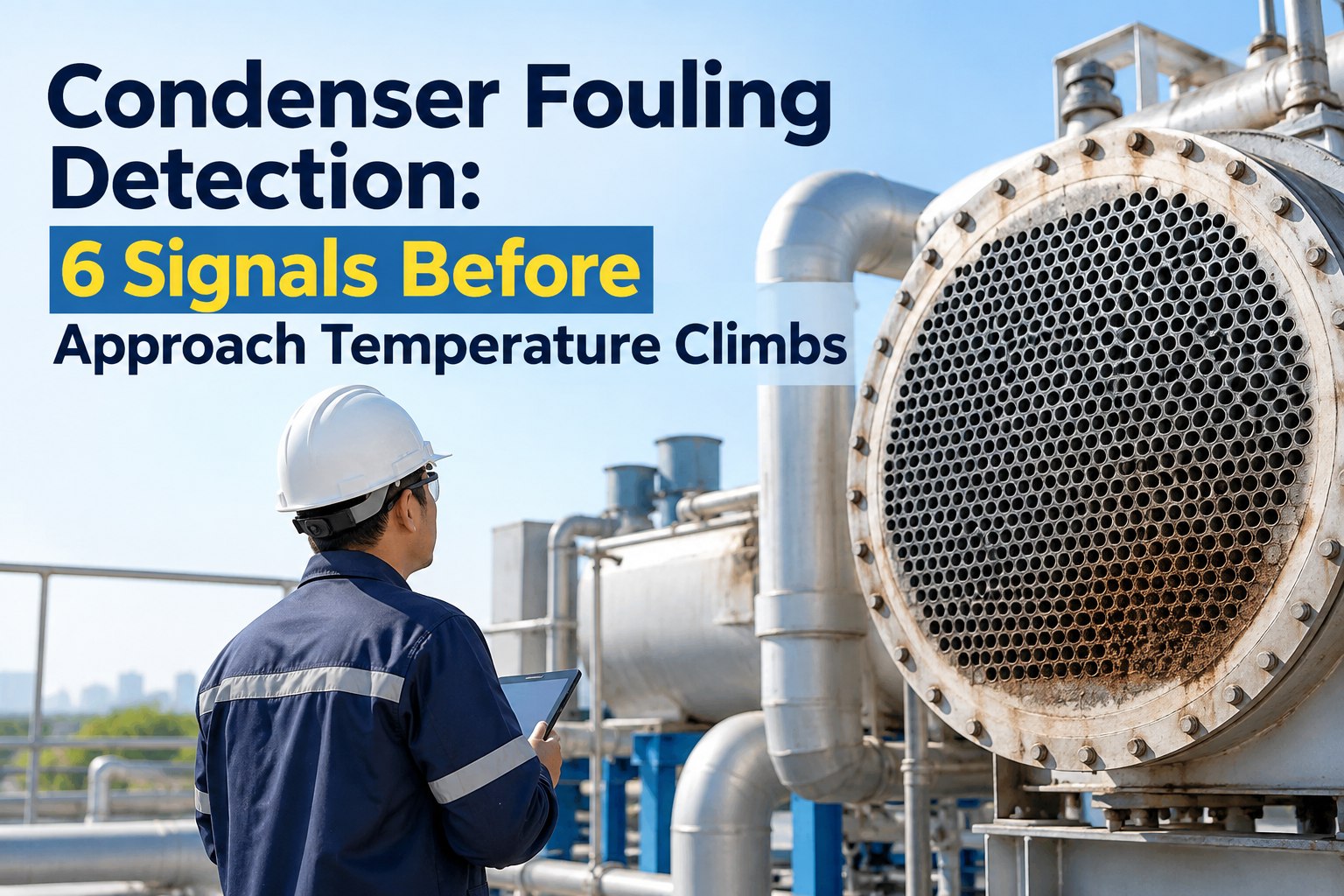
Condenser Fouling Detection: 6 Signals Before Approach Temperature Climbs
Approach temperature tells you fouling already happened. These six indicators tell you it's happening — while cleaning still costs you almost nothing.
The lagging indicator
Fouling begins
weeks of hidden loss →
Approach climbs
Every 1°F above design condensing = ~1.5% more compressor energy. The gap is where the money goes.
Why Approach Temperature Comes Too Late
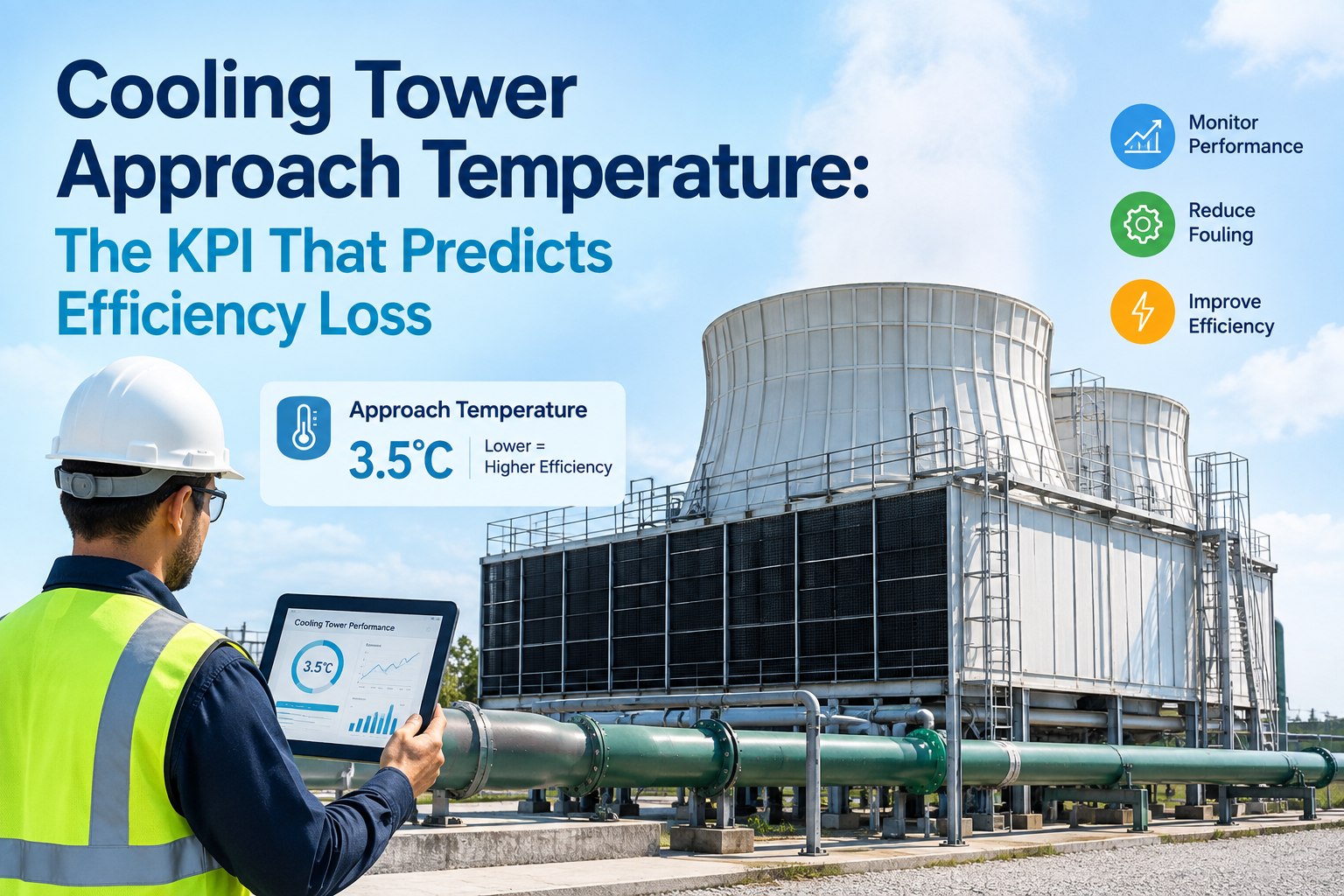
Condenser approach — the gap between the refrigerant's saturated condensing temperature and the leaving condenser-water temperature — is a genuinely good health metric. A clean centrifugal chiller runs an approach of roughly 8–15°F on older machines, 2–4°F on newer ones at full load. The problem isn't accuracy; it's timing. Fouling builds a thin insulating layer on the tubes gradually, and approach only moves once that layer is thick enough to measurably choke heat transfer. The rule of thumb reliability teams use — clean when approach rises 2°F above the post-cleaning baseline — is sound, but it fires late. The signals below shift first because they respond to the physics upstream of the temperature gap.
The 6 Earlier Signals
Each of these moves before approach temperature because it reflects a cause of degraded heat transfer, not the end result. Trend them together and you see fouling forming, not fouling arrived.
1
Condenser Head Pressure Creep
As tubes foul, the refrigerant can't reject heat, so it condenses hotter — and head pressure rises for the same load. A slow upward drift in head pressure at constant load and water temperature is fouling talking before the thermometer agrees.
2
Rising Subcooling
Fouling changes how the refrigerant gives up heat at the bottom of the condenser. A subcooling value drifting away from its clean baseline is an early tell that heat-transfer behavior has shifted — often visible before approach opens up.
3
Condenser Water ΔT Narrowing
The temperature rise the water gains across the condenser is a direct read on heat picked up. When fouling blocks transfer, that ΔT shrinks at the same flow and load — a leading sign the tubes are insulating instead of exchanging.
4
Water-Side Pressure Drop
Scale and biofilm narrow the tube bore, so the pressure drop across the condenser water side climbs at constant flow. It's a mechanical signal of deposit thickness that appears independently of any temperature effect.
5
Water Chemistry Drift
Fouling is downstream of water quality. Conductivity climbing past ~1000 µS/cm or pH straying from 7.0–8.0 is the leading-est signal of all — it predicts scale and biological growth before any deposit even forms.
6
Purge / Non-Condensable Activity
Rising purge-unit cycles or a >2 psi top-to-bottom shell pressure differential flag non-condensable gas — a separate heat-transfer killer that mimics fouling. Watching it stops you cleaning tubes when the real problem is air.
Trend All Six Automatically — Free Forever
A single reading means nothing; the trend against a clean baseline is everything. OxMaint logs head pressure, subcooling, ΔT, water-side pressure, conductivity, and purge activity per chiller, alarms on deviation from baseline, and opens a cleaning work order the moment the evidence — not the calendar — says it's time. No card, no time limit.
Gradual vs Sudden: Read the Shape
The same symptom means different things depending on how fast it appears. Misread it and you'll brush clean tubes while air quietly wrecks your efficiency. The rate of change is the diagnosis.
Gradual — over weeks/months
Fouling
Scale, biofilm, and suspended solids build slowly. Head pressure and approach creep up together over time. The fix is tube cleaning and a tighter water-treatment program.
Sudden — over hours/days
Air infiltration
A sharp jump points to non-condensable gas, not deposits. A 4–6 hour shutdown equalization test confirms it: if saturation temperature diverges from water temperature, air is present. The fix is the purge system, not a brush.
From Signal to Cleaning Decision
The whole point of watching earlier signals is to replace calendar cleaning with condition-based cleaning. ASHRAE recommends continuous approach monitoring for exactly this reason — but the earlier signals let you act sooner still. Here's the decision chain a monitored plant actually runs.
Baseline
Record clean-tube values for all six signals right after a cleaning — your reference point.
→
Trend
Log at constant load and water temp so deviations mean fouling, not operating change.
→
Alarm
Deviation from baseline on the leading signals fires before approach crosses +2°F.
→
Clean
Work order opens on evidence — you clean overdue tubes, not clean ones on a date.
How OxMaint Detects Fouling Early
Condenser signal trending, baseline alarming, condition-based cleaning work orders, and audit-ready efficiency records on one platform — so fouling becomes a tracked, evidence-driven decision instead of a calendar guess or a surprise on the hottest day of the year.
Per-Chiller Baselines
Clean-tube reference values stored for every condenser — the anchor that makes every later reading meaningful.
Six-Signal Trending
Head pressure, subcooling, ΔT, water-side pressure, conductivity, and purge activity logged and graphed over time.
Deviation Alarms
Alerts fire on drift from baseline — catching fouling weeks before approach temperature confirms it.
IoT & BAS Integration
Real-time chiller and water-chemistry data pulled in automatically, no manual logging round required.
Condition-Based Work Orders
Cleaning jobs open on evidence, routed to a technician with the signal history attached.
Efficiency Reporting
Approach and energy trends rolled up for facilities and energy leadership — proof the program pays for itself.
Catch Fouling While It's Still Cheap
Free forever plan — no card, no time limit. Baseline every condenser, trend the six leading signals, and let evidence trigger the cleaning — before approach climbs and the compressor burns 1.5% more for every degree. Or book 30 minutes and we'll map your chiller plant onto the platform end to end.
Frequently Asked Questions
Why isn't approach temperature enough on its own?
Approach is a lagging indicator — it only moves once fouling is thick enough to measurably choke heat transfer, which can be weeks after deposits start forming. During that gap the compressor is already burning roughly 1.5% more energy per degree of elevated condensing. The six earlier signals respond to the causes of degraded transfer, so they let you act before the loss compounds.
Which signal moves earliest?
Water chemistry. Conductivity rising past about 1000 µS/cm or pH drifting outside 7.0–8.0 predicts scale and biological growth before any deposit forms — it's upstream of fouling itself. Head pressure creep and a narrowing condenser-water ΔT are the next to move, both appearing before approach temperature reacts.
Start free to trend all of them.
How do I tell fouling from air infiltration?
Read the rate of change. Fouling builds gradually over weeks or months, so approach and head pressure creep up slowly together. Air infiltration causes a sudden jump over hours or days. A 4–6 hour shutdown equalization test confirms air: if the refrigerant saturation temperature diverges from water temperature, non-condensables are present — and the fix is the purge system, not tube cleaning.
How often should condenser tubes actually be cleaned?
Annual cleaning is the industry minimum, but calendar intervals over- or under-clean depending on water quality. Trending is more reliable: clean when approach rises about 2°F above the post-cleaning baseline, or sooner when the leading signals drift. That turns cleaning into a condition-based decision instead of a fixed-date one.
Book a demo to see condition-based scheduling.
Can a CMMS automate this without new sensors?
Largely, yes. Many of the six signals — head pressure, subcooling, ΔT, purge activity — are already available from the chiller controller or BAS. OxMaint pulls them in, holds per-chiller baselines, and alarms on deviation, so you get early detection from data you already generate. Where water chemistry or water-side pressure needs a sensor, those integrate too. The value is in the trending and the automatic work order, not just the reading.