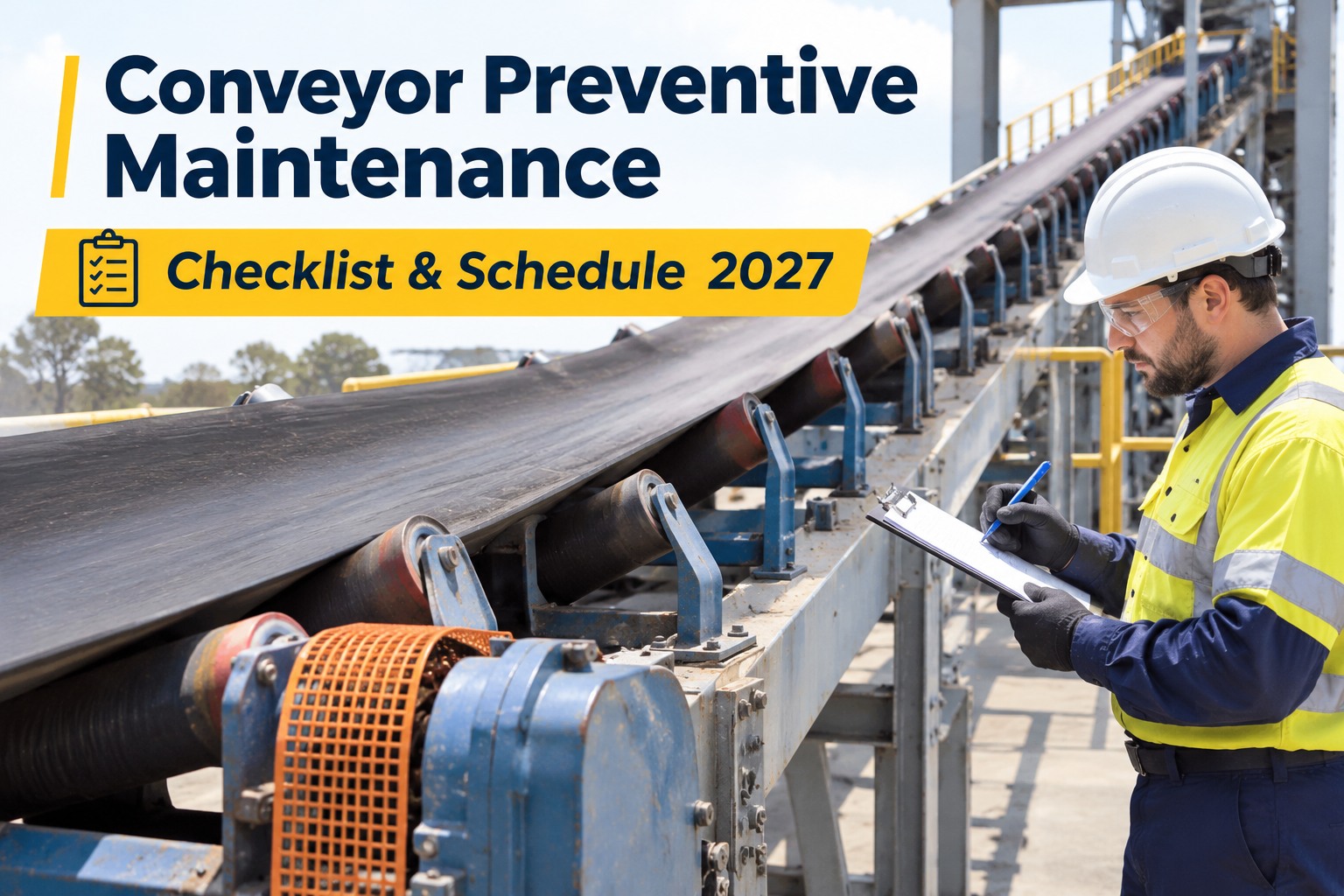
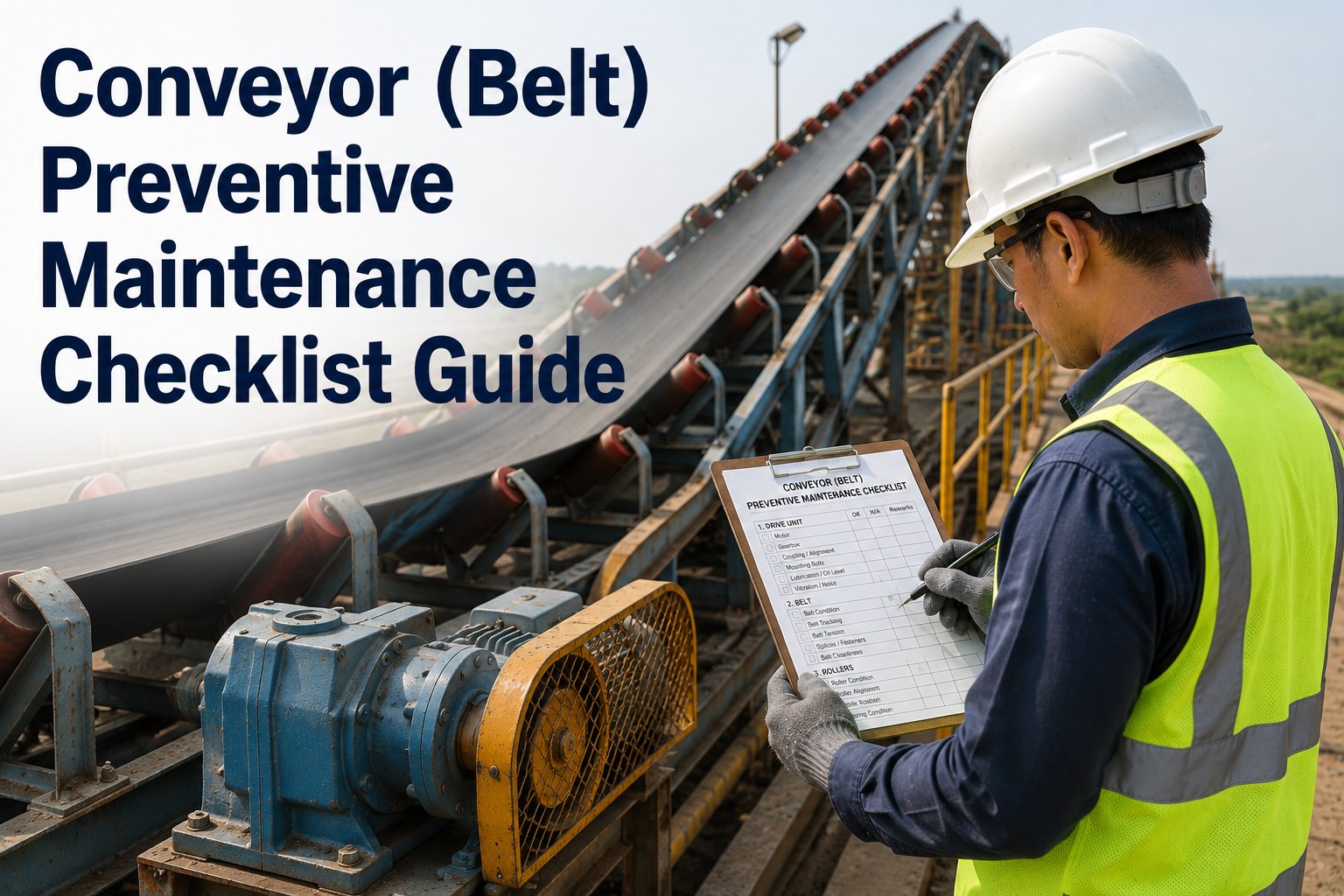
A conveyor that ran 40 hours last week and one that ran 160 do not need the same service yet a calendar schedule treats them the same. That is why the smartest plants are moving to run-hour maintenance, where a PLC runtime counter fires the PM by actual operating hours, not a date on a wall chart. This checklist gives you the belt, roller, chain and drive tasks by frequency, plus a run-hour trigger plan — and shows how OxMaint AI maintenance management software runs it from meter readings. Book a demo to see it live.
CONVEYOR SYSTEMS · PREVENTIVE MAINTENANCE · 2027
Conveyor Preventive Maintenance Checklist & Schedule
Belt tracking, roller rotation, chain lubrication and drive health — organized by frequency and by run-hours, so nothing gets over- or under-serviced. OxMaint AI ties each task to the conveyor's actual runtime and opens a work order the moment a check fails.
RUNTIME SINCE LAST PM340 h
500 h
250 hLube idlers, check tracking
500 hIdler rotation, take-up tension
2000 hGearbox oil sample, lagging
PLC counts hours only while the belt runs — PM fires on real usage.
Why Run-Hours Beat the Calendar
Time-based PM assumes every conveyor works the same week. It doesn't — and studies suggest a large share of calendar PM is applied too early or too late to match real wear. A run-hour trigger reads the belt's actual operating time from the PLC and schedules service when the hours say so, which is why most conveyor service intervals sit naturally in the 250–500 hour band.
Calendar PM
- Fixed dates, blind to actual runtime
- Light-duty lines over-serviced, heavy lines under-served
- Wasted labour on conveyors that barely ran
Run-Hour PM
- Triggers on PLC-counted operating hours
- Service matched to real belt usage and load
- Effort lands where wear actually happens
Keep a calendar backstop for safety-critical items, but let run-hours drive the wear-based tasks. Start free and trigger conveyor PM from meter readings.
Run-Hour Trigger Plan
Map each task to a runtime threshold, then let the counter do the scheduling. These bands are a common starting point — tune them to your belt speed, load and material.
Every 250 h
Lubricate idlers and bearings, check belt tracking and spillage, confirm guards.
Every 500 h
Idler rotation check, scraper and skirt wear, take-up tension, pulley lagging scan.
Every 2000 h
Gearbox oil sampling, coupling and chain wear, splice condition, frame squareness.
Every 8000 h
Major overhaul — belt, bearings, drive, and full alignment back to reference lines.
The Conveyor PM Checklist
Work through each component group below. Tick items as you go — the frequency chip on each section header is the baseline interval, which your run-hour plan can tighten or relax.
D Daily
W Weekly
M Monthly
Q Quarterly
A Annual
What Fails First — Catch It Early
Most belt failures start with misalignment, and most downtime starts with a signal someone skipped. Raise these from the floor in OxMaint AI and each becomes a ranked work order.
!Belt Mistracking
Drift to one edge from frame shift, uneven loading or a worn idler — the root of most belt damage.
!Belt Slip
Loss of traction at the drive pulley from low tension or worn lagging.
!Seized Idlers
Rollers that stop turning grind the belt and spike drag and energy use.
!Chain Stretch
Elongation and sprocket wear on chain conveyors, drifting toward skip and jam.
!Carryback Buildup
Material stuck to the belt fouling idlers and pulleys and feeding mistracking.
!Bearing Noise
Rising noise or heat at a pulley or idler — the early signature of a bearing on its way out.
Stop Servicing by the Calendar. Start Servicing by the Hours.
Every conveyor runs a different duty cycle, so a fixed date wastes effort on some and misses others. OxMaint AI reads run-hours from the PLC or a meter reading and fires the right task at the right threshold — then keeps every completed check as a timestamped record.
How OxMaint AI Runs Conveyor PM
OxMaint AI is the AI-powered maintenance management software that carries a conveyor from a meter reading or a failed check to a closed, recorded work order — with run-hour triggers, digital checklists and wear trending built in. Book a demo and see a run-hour PM route in action.
Run-Hour Triggers
PM fires on operating hours from PLC runtime or a logged meter reading, so each conveyor is serviced on its real usage, not a shared date.
Digital Checklists
This whole checklist on a phone, per asset — every failed item opens a work order against the exact belt, pulley or idler.
Wear Trending
Belt tension and chain elongation trend automatically, so an alert fires before the measurement crosses the limit.
Asset Tree per Conveyor
Model each line with its belt, pulleys, idler sets and drive, so history and spares stay with the right component.
Squawk to Work Order
Operators raise a tracking or noise issue from the floor with a photo; it becomes a ranked work order routed to the right tech.
Export to PDF or Excel
Pull a completed checklist or history as a PDF or spreadsheet for audits, shift handover or a supervisor review.
EXPERT REVIEW
Written for maintenance and reliability teams running belt, roller and chain conveyors across manufacturing, material handling and heavy industry. The tasks, intervals and run-hour bands here are a general framework drawn from standard conveyor practice — your authoritative schedule comes from the conveyor and component OEM manuals, your belt and lubricant suppliers, and your plant's safety procedures, which govern tension specs, lubrication and lockout. Treat all adjustment and idler work as lockout-first. OxMaint AI structures and records the PM and work order workflow; it does not replace your OEM manuals, your safety program, or your maintenance team's judgement on the floor.
Frequently Asked Questions
What is run-hour based conveyor maintenance?
It schedules PM by actual operating hours instead of fixed dates. A PLC or HMI accumulates a retentive run-hour counter that increments only while the conveyor is running, and when the count crosses a threshold it signals that service is due. That matches effort to real wear — a heavily used line gets attention sooner, a lightly used one later.
Start free and set run-hour triggers for every conveyor in OxMaint AI.
How often should a conveyor be inspected?
Daily visual checks on tracking, spillage and guards; weekly to monthly checks on idlers, scrapers, take-up tension and the drive; and deeper work like gearbox oil sampling on a quarterly or run-hour interval. Most service intervals fall in the 250–500 hour band, which is why run-hour triggers map so cleanly onto conveyor work.
Book a demo and see conveyor inspections scheduled automatically.
What is the most common cause of conveyor belt failure?
Mistracking. A belt that drifts to one edge — from a shifted frame, uneven loading, buildup on a pulley or a worn idler — wears and damages itself long before a dramatic break. That is why daily tracking checks and quarterly frame-and-alignment verification sit at the top of this checklist.
Start free and trend tracking and tension per belt in OxMaint AI.
Why does belt tension matter so much?
Because getting it wrong fails the system in two directions. Too little tension and the belt slips at the drive pulley, losing traction and generating heat; too much and you overload the bearings on every idler station and shorten belt life. Measure against the manufacturer's spec and adjust at the take-up.
Book a demo and keep tension readings on the record in OxMaint AI.
Can I download this checklist as a PDF or Excel file?
Yes — in OxMaint AI, a completed conveyor checklist and its history export to PDF or a spreadsheet, which is handy for audits, insurer reviews and shift handover. Better still, the digital version is live: every tick is timestamped against the asset and a failed check opens a work order on the spot, so the record builds itself.
Start free and digitize your conveyor checklists in OxMaint AI.
Service Every Conveyor on Its Own Hours.
Put belt, roller, chain and drive tasks on run-hour triggers in OxMaint AI maintenance management software — checked from the floor, ranked, scheduled on real usage, and recorded for the audit. One platform that keeps the line moving and the belt tracking true.