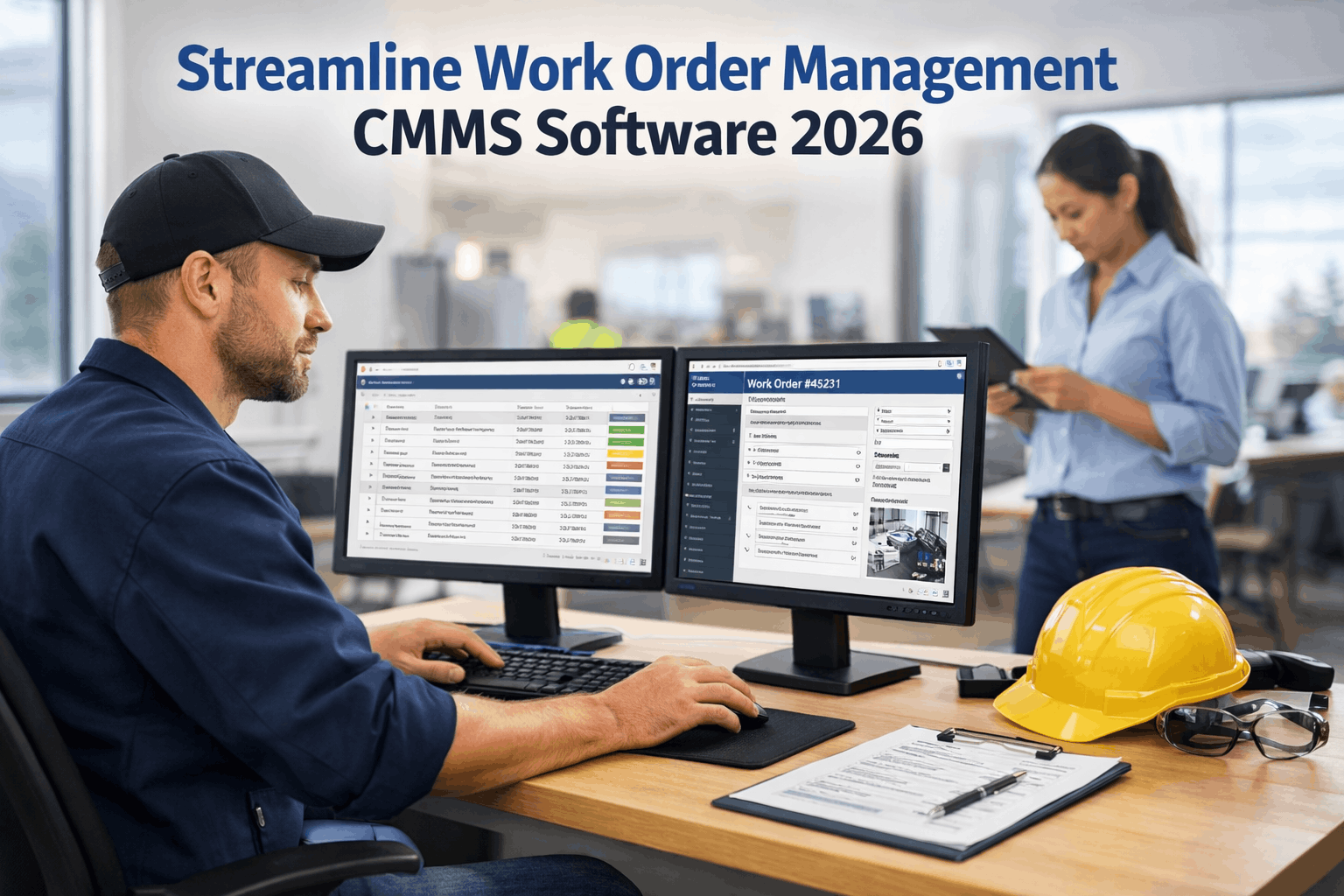
In a steel plant, the maintenance backlog is never empty. A caster roll bearing is running warm, a conveyor guard is missing, a furnace burner PM is due and someone has a leaking tap in the office. Every requester believes their job is urgent. Without a shared way to rank them, the loudest voice wins and the riskiest job waits. Work order prioritization gives planners a fair, visible rule: rank by safety, production impact, asset criticality, failure risk and due date, then schedule by parts and crew readiness. This guide shows how to build that system for a steel plant, using OXMAINT AI, the AI-powered CMMS for steel plant maintenance teams.
Steel Plant · Work Order Prioritization · Reliability
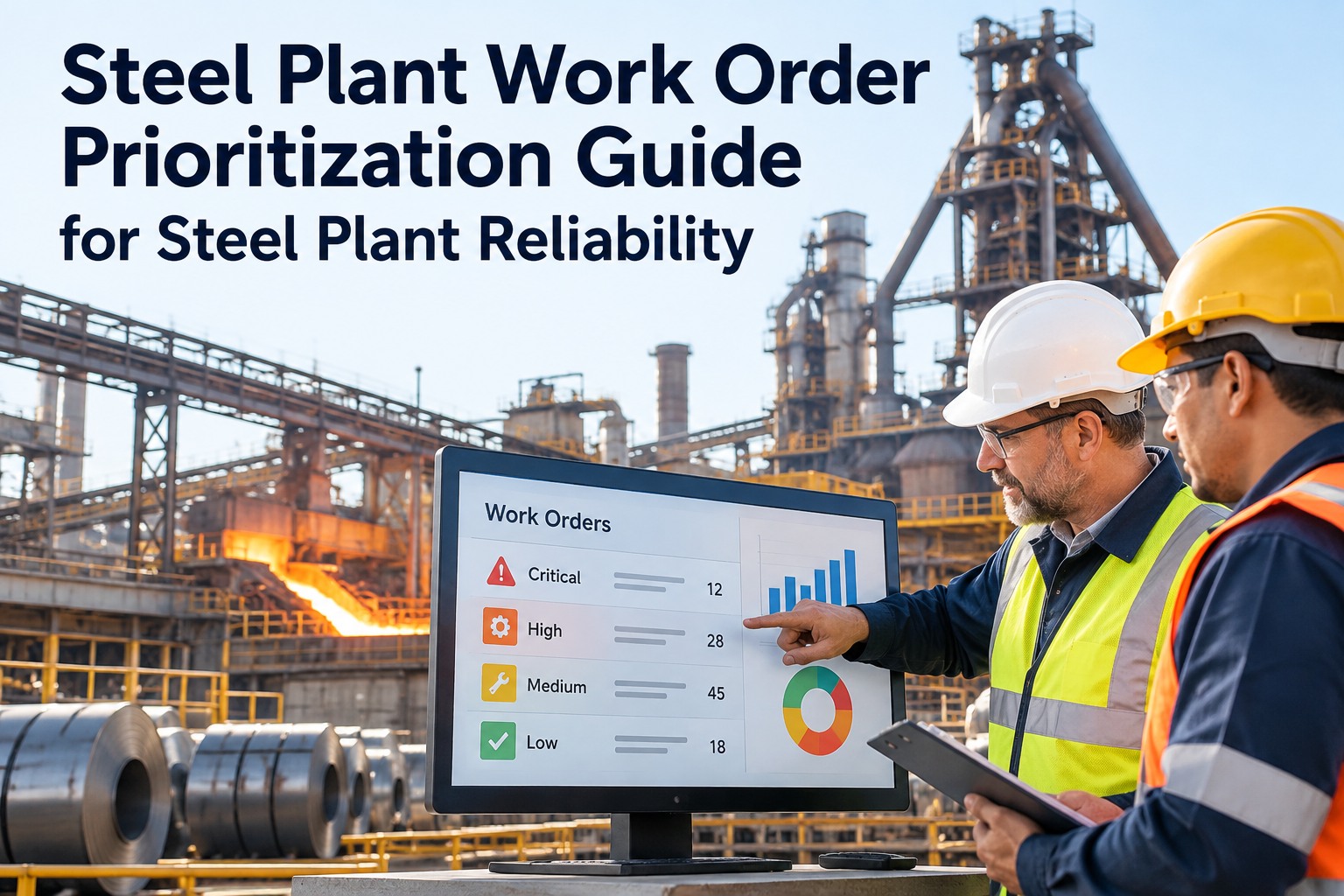
Steel Plant Work Order Prioritization Guide for Steel Plant Reliability.
When priority is decided by who calls loudest, critical jobs wait and routine jobs jump the queue. OXMAINT AI connects the workflow in one CMMS: requests and inspections raise issues, issues become work orders ranked by asset criticality and risk, repairs are recorded, and preventive and predictive maintenance are planned from the history.
1Request or Inspection
→
2Issue Logged
→
3Work Order Ranked
→
4Repair Recorded
→
5PM & Predictive Updated
Work Order Management
Asset Management
Preventive Maintenance
Parts & Inventory
Why "First Come, First Served" Fails in a Steel Plant
Steel operations run hot, heavy and continuous. A small delay on the wrong asset can stop a line, while a big effort on a low-risk asset changes nothing. These are the four ways unranked backlogs go wrong. Sign up free and see how OXMAINT AI keeps the queue honest.
1
Loudest voice wins
Priority follows who escalates, not what carries the most risk.
2
Everything is "urgent"
When all jobs are P1, the label stops meaning anything.
3
Hidden risk sits low
A degrading bearing looks quiet next to a visible leak.
4
Ready work is blocked
Jobs get scheduled before parts, permits or crews are available.
The 5 Questions That Set Priority
Score each work order from 1 (low) to 5 (high) on five questions. Keep the scale visible so planners and requesters see the same logic. Agree the exact scoring guide with operations, safety and reliability. Book a demo to set up scoring.
SAFETY
Could someone be hurt, or is a safeguard compromised?
Guards, interlocks, gas, crane, hot metal and electrical hazards.
PRODUCTION IMPACT
What stops or slows if this asset fails?
Caster, furnace, rolling mill, utilities and bottleneck equipment.
ASSET CRITICALITY
How important is this asset to the plant?
Single point of failure, standby availability and lead time to repair.
FAILURE RISK
How likely is failure if we wait?
Condition readings, trends, repeat faults and age.
DUE DATE & COMPLIANCE
What happens if the date is missed?
Statutory checks, permits, shutdown windows and PM deadlines.
!
Safety override: a work order with a serious safety risk jumps to the top, whatever its total score. Define this rule in writing so nobody has to argue it on the night.
The Priority Matrix: Criticality Meets Condition
If a full score feels heavy, start with a simple grid. Match how critical the asset is with how bad its condition is. The cell tells you the priority level. Start free and add criticality to your asset register.
Failed or unsafe
Degrading
Healthy / routine
Critical asset
P1Emergency
P2Urgent
P3Planned PM
Important asset
P2Urgent
P3Planned
P4Routine
Standard asset
P3Planned
P4Routine
P4Routine
Illustrative grid. Set your own levels and response targets with operations and safety.
Make Priority a Rule, Not an Argument.
Score, rank and schedule work orders in one place, so the next job on the board is the one that matters most.
A Worked Example: Four Jobs, One Ranking
Here is how the scoring works on a typical morning. Scores run 1–5 per question, so the maximum is 25. Notice what the safety override does, and what the parts gate does. Book a demo to try it on your own backlog.
Work order
Safe
Prod
Crit
Risk
Due
Score
Priority
Missing guard, conveyor 6
5
2
2
3
5
17
P1 · override
Caster roll bearing running warm
2
5
5
4
4
20
P1
Furnace burner PM due
2
4
4
2
3
15
P2
Office HVAC filter change
1
1
1
1
2
6
P4
Sample data for illustration only. The guard job ranks first through the safety override, even with a lower score than the bearing.
Priority Decides Importance. Readiness Decides When.
A high-priority job with no spare or no permit cannot start. A lower-priority job that is fully ready can fill a gap. Keeping these separate stops parts availability from distorting priority. Sign up free and link spares to work orders.
Step 1 · Rank
Score and assign P1–P4 on safety, impact, criticality, risk and due date.
→
Step 2 · Check readiness
Are parts, permits, isolation, crew and access available?
→
Step 3 · Schedule
Fit ready jobs to shifts and outages, highest priority first.
Ready: schedule it in the next suitable window.
Not ready: expedite the blocker, apply a temporary safeguard if needed and keep the priority visible.
A Weekly Rhythm That Keeps the Queue Healthy
Priority only works if the team revisits it. A short, regular cycle prevents backlog drift. Book a demo to see planning views.
Daily
Review new P1 and P2 jobs, confirm owners and unblock parts.
Weekly
Plan the coming week, balance crews and check readiness for planned work.
Monthly
Review aged jobs, repeat failures and rules that created disputes.
Per shutdown
Pull deferred jobs and group them into the outage scope.
How OXMAINT AI Supports Steel Plant Prioritization
OXMAINT AI keeps requests, assets, parts and work orders in one CMMS, so the ranking uses real context instead of memory. Start free and rank your first work orders.
Maintenance Requests
Collect requests from anyone on the floor, including QR-based requests, in one queue.
Asset Criticality
Hold criticality and history on each asset so every job starts with context.
Work Order Management
Assign, track and close jobs with status, notes and photos in one record.
Parts & Inventory
Check spares against a job before scheduling, with reorder alerts for critical items.
Preventive & Predictive
Schedule PM and use AI-assisted alerts to surface developing issues earlier.
Analytics & Reporting
Review backlog age, planned vs reactive work and repeat failures.
5 Signs Your Prioritization Is Working
Set a baseline first, then watch the trend. These are signals, not guarantees. Book a demo to see maintenance reporting.
Fewer "P1" Labels
Emergency priority is used rarely and means something
Older Jobs Move
Backlog age falls instead of growing
More Planned Work
Planned jobs rise against reactive jobs
Fewer Repeat Faults
Same fault returns less often on the same asset
Fewer Disputes
Requesters understand why a job ranks where it does
Frequently Asked Questions
What is work order prioritization?
It is a consistent way to rank maintenance jobs by factors such as safety, production impact, asset criticality, failure risk and due date, so the most important work is done first.
Sign up free and try it.
How many priority levels should we use?
Most plants use three to five. Fewer levels are easier to apply consistently. Define each one clearly, with an agreed response target set by your plant.
Book a demo to design your levels.
Should parts availability change a job's priority?
It is usually better to treat it as a readiness check. Rank on importance, then schedule on readiness, and expedite parts for high-priority jobs.
Start free and link parts to jobs.
Who should set priority: the requester or the planner?
Requesters can suggest a level, but a planner or reliability lead should confirm it against the shared rules. This keeps the system fair and consistent.
Book a demo to see request workflows.
Can we start without a full criticality ranking?
The Right Job First. Every Shift.
Bring requests, asset criticality, parts and work orders together in OXMAINT AI, and give your steel plant a priority system people trust.