Airports are among the most connectivity-demanding environments on earth — thousands of sensors, dozens of autonomous systems, and a workforce that cannot afford a dropped signal mid-operation. Traditional Wi-Fi cannot deliver the sub-millisecond latency that baggage robots require. Public 5G cannot offer the security isolation that airside operations demand. Private 5G and dedicated wireless networks are closing this gap, and the airports that deploy them are seeing measurable gains in operational throughput, IoT sensor reliability, and maintenance response times. Start a free trial with Oxmaint and connect your airport IoT assets to a unified CMMS platform — or book a demo to see real-time wireless sensor data in action.
5G · Private Wireless · Airport IoT · Autonomous Systems
Private 5G Networks.
Real-Time Airport Intelligence.
Zero Connectivity Gaps.
A private 5G network is not a faster Wi-Fi. It is a dedicated, controlled, low-latency communication layer that allows thousands of IoT sensors, autonomous robots, and maintenance systems to operate simultaneously — without interference, without dead zones, and without security exposure to the public internet.
Ready to connect your airport's assets and maintenance workflows to a smarter platform?
CBRS Band
Sub-millisecond Latency
IoT Sensor Mesh
Autonomous Baggage
Edge Computing
CMMS Integration
1ms
5G Latency
vs. 20–100ms on Wi-Fi for critical robot commands
40%
Faster Baggage Processing
Airports using 5G-enabled AGVs report measurable throughput gains
10,000+
Simultaneous Devices
Per square kilometer — no shared bandwidth degradation
99.999%
Network Uptime
Private 5G SLA target — essential for 24/7 airport operations
The Core Concept
What Is a Private 5G Network — and Why Airports Need One
A private 5G network operates on licensed or shared spectrum (like CBRS in the USA) and is dedicated exclusively to a single organization's devices and applications. Unlike public 5G or enterprise Wi-Fi, it delivers predictable performance, physical security, and the ability to run compute at the network edge — right on airport grounds.
01
Dedicated Spectrum
No sharing with passengers or public carriers. Bandwidth is reserved exclusively for operational systems — maintenance sensors, robots, CCTV, and CMMS communications.
02
Ultra-Low Latency
Sub-5ms round-trip time means autonomous baggage carts and cleaning robots receive real-time commands — no buffering, no missed instructions in safety-critical moments.
03
Airside Security Isolation
All data stays within the airport perimeter. No IoT sensor data transits the public internet — critical for TSA compliance and protection of operational systems from external threats.
04
Edge Computing Integration
Processing happens at local base stations, not a distant cloud. Maintenance alerts, sensor anomalies, and robot commands are computed in milliseconds — reducing cloud dependency and improving resilience.
Key Applications
Where Private 5G Transforms Airport Operations
From landside terminals to remote airfield equipment, private wireless creates the connectivity backbone that makes intelligent airport operations possible. Each use case below directly impacts maintenance efficiency, asset uptime, or passenger experience. Start a free trial to connect your sensor network to Oxmaint's CMMS platform.
Autonomous Vehicles
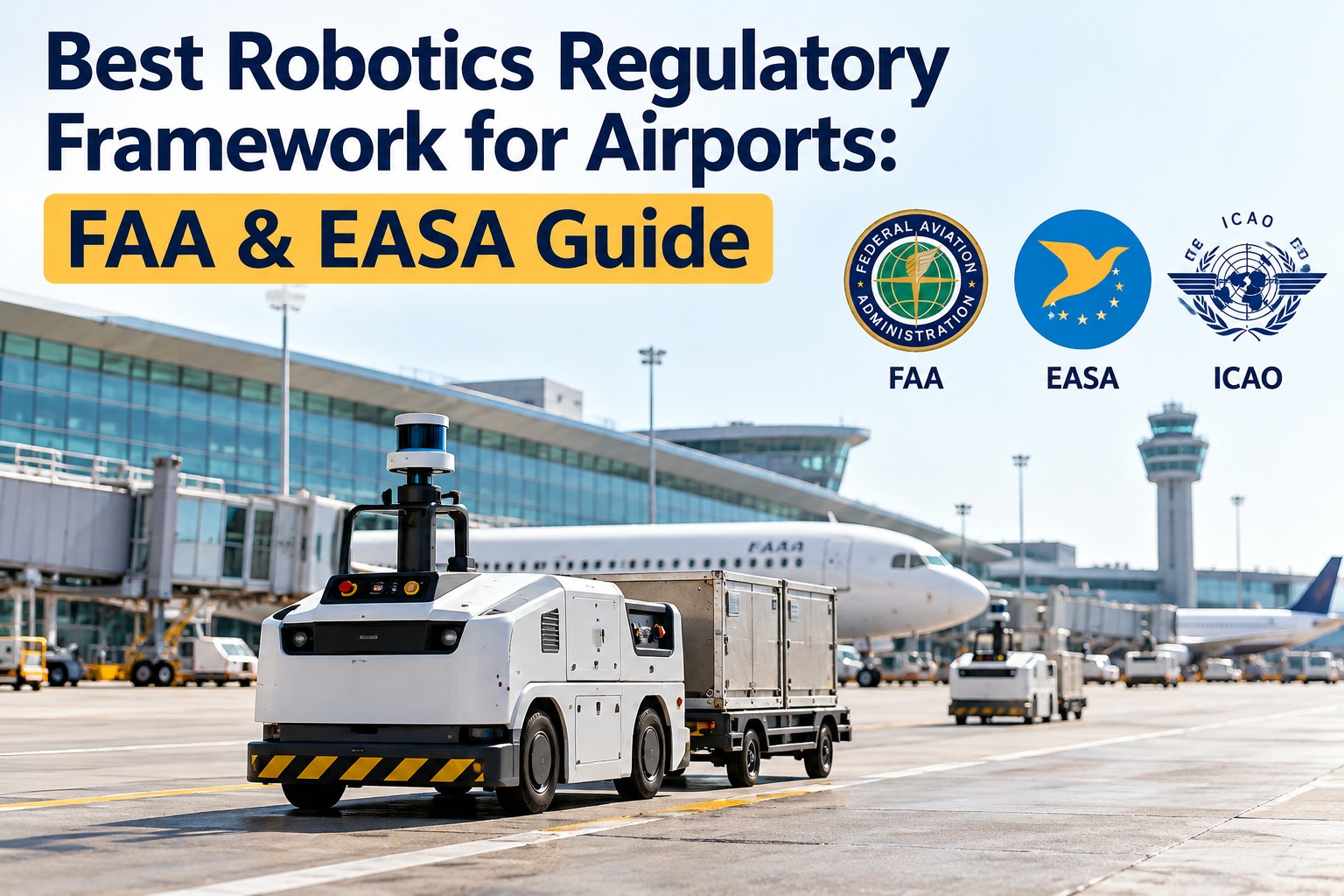
Baggage Handling Robots
AGVs on private 5G receive real-time positional data, avoid collisions, and sync with flight schedules. Any connectivity gap means a stopped robot and a baggage delay — private 5G eliminates that risk.
IoT Maintenance
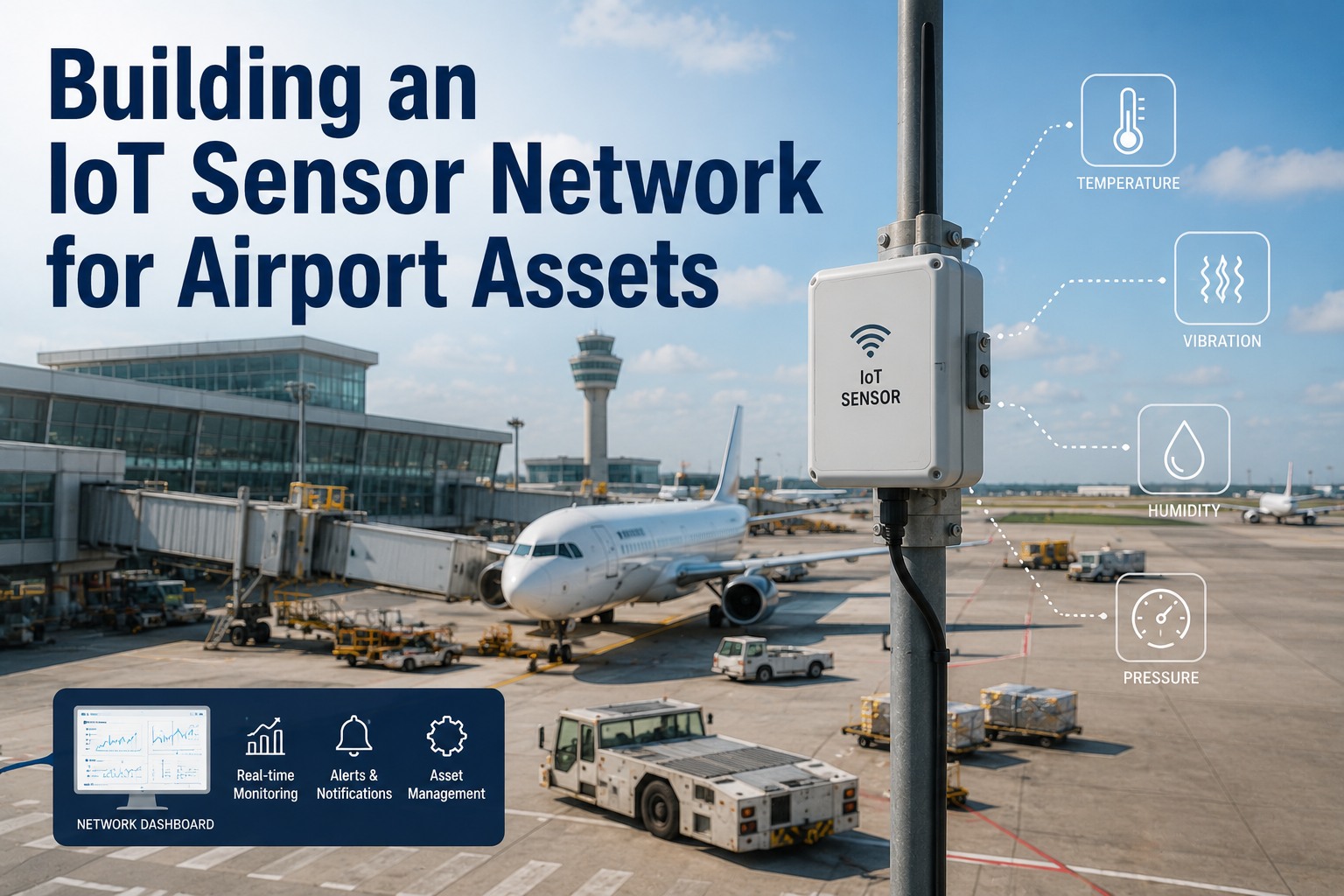
Predictive Asset Monitoring
HVAC systems, conveyor belts, jet bridges, and escalators stream vibration, temperature, and pressure data continuously. IoT sensors on 5G networks never lose coverage — even in underground baggage halls.
Facility Operations
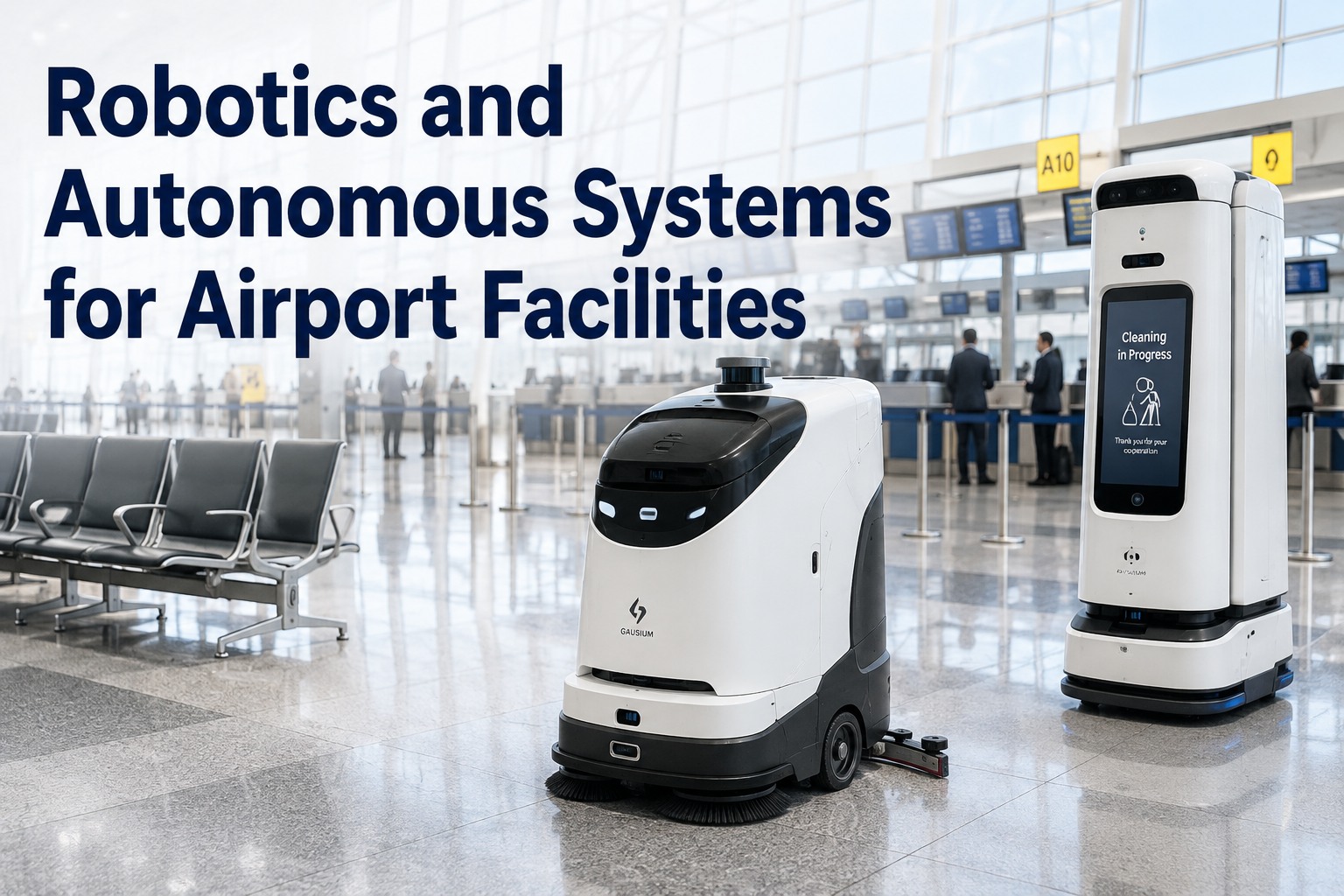
Autonomous Cleaning Robots
LiDAR-equipped cleaning robots navigate terminals at off-peak hours. They require constant 5G uplinks to update occupancy maps and avoid obstacles. Battery status and cleaning routes sync directly to CMMS work orders.
CMMS Integration
Mobile Technician Connectivity
Maintenance technicians on airside ramps receive work orders, update asset records, and capture digital signatures — all in real time, without relying on patchy public carrier coverage in remote terminal zones.
Safety Systems
Perimeter and Intrusion Detection
Hundreds of perimeter sensors — vibration detectors, thermal cameras, ground radar — stream data continuously on a private 5G backbone. Any coverage gap creates a security blind spot that TSA compliance does not tolerate.
Passenger Experience
Smart Restroom and Amenity Sensors
Occupancy sensors, soap dispenser levels, and air quality monitors in public restrooms report in real time. Private 5G makes this viable at scale — thousands of sensors across a major terminal with zero blind spots.
Industry Pain Points
Why Legacy Airport Networks Fail Modern Operations
Most airports were built on Wi-Fi and public cellular coverage designed for passenger convenience — not operational reliability. As automation demands grow, the gaps in legacy infrastructure become costly operational vulnerabilities.
Coverage Dead Zones
Underground baggage halls, tarmac edges, and remote gate areas lack reliable Wi-Fi coverage. IoT sensors there go offline — creating blind spots in your maintenance data exactly where assets are most stressed.
Bandwidth Congestion
Thousands of passenger devices sharing enterprise Wi-Fi degrade performance for operational systems. Maintenance tablets freeze, sensor polling slows, and critical alerts queue up behind consumer traffic.
Robot Command Latency
Autonomous vehicles on Wi-Fi experience 20–100ms latency — enough to cause collision avoidance failures. A robot that reacts 100ms too slowly in a busy baggage hall becomes a liability and an incident report.
Security Exposure
Enterprise Wi-Fi networks that touch passenger infrastructure create attack surfaces for critical operational systems. IoT sensors on the same VLAN as passenger devices violate the security isolation that airside operations require.
Oxmaint Solution
How Oxmaint Connects to Your 5G and IoT Infrastructure
Oxmaint's CMMS platform is built to receive, analyze, and act on data from IoT sensors, edge gateways, and wireless asset monitoring systems — regardless of the underlying network layer. Private 5G provides the connectivity backbone; Oxmaint provides the maintenance intelligence layer on top. Book a demo to see how Oxmaint integrates with your IoT and wireless infrastructure.
Real-Time Sensor Ingestion
IoT and SCADA Integration
Oxmaint connects to IoT gateways, BACnet/IP, Modbus, OPC-UA, and MQTT brokers. Sensor data from private 5G-connected assets flows directly into asset condition records — no manual data entry.
Condition-Based Triggers
Threshold-Based Work Order Generation
When a sensor reading crosses a threshold — vibration spike on a conveyor, pressure drop on a jet bridge hydraulic — Oxmaint automatically creates a work order with asset context, fault code, and technician assignment.
Mobile Technician Tools
Offline-Capable Mobile App
Technicians on private 5G airside areas receive work orders, complete digital checklists, and update asset records in real time. The app caches data locally for areas that remain in coverage black spots temporarily.
Asset Lifecycle Tracking
Full Asset Registry with Condition Scoring
Every IoT-connected asset — jet bridges, escalators, baggage systems, HVAC units — is registered in a full asset hierarchy. Condition scores update continuously from sensor streams, flagging assets approaching failure thresholds.
Predictive Maintenance
AI-Driven Failure Prediction
Oxmaint's AI layer analyzes sensor trend data across the asset fleet — identifying degradation patterns weeks before threshold breaches occur. Maintenance is scheduled before failure, not after the alarm triggers.
Multi-Site Portfolio
Portfolio-Level Visibility
For airport authorities managing multiple terminals or facilities, Oxmaint aggregates IoT data and maintenance KPIs across all properties. One dashboard, all assets, real-time across the entire estate.
Before vs. After
Legacy Wi-Fi vs. Private 5G for Airport Operations
| Capability Area |
Legacy Wi-Fi + Public 4G |
Private 5G Network |
| Latency for Robot Commands |
20–100ms — collision risk in busy zones |
Under 5ms — real-time autonomous operation |
| IoT Sensor Coverage |
Dead zones in basements, tarmac edges |
Full-campus coverage including airside ramps |
| Bandwidth for Operations |
Shared with passengers — degrades at peak |
Dedicated — performance guaranteed 24/7 |
| Security Isolation |
Exposed to passenger network — compliance risk |
Air-gapped from public traffic — TSA compliant |
| Device Density Support |
Degrades above 200–300 devices per AP |
10,000+ devices per sq km — no degradation |
| CMMS Data Reliability |
Gaps in sensor data, mobile app timeouts |
Continuous, uninterrupted CMMS data stream |
ROI Results
Documented Airport IoT and 5G Outcomes
35%
Reduction in unplanned downtime
Airports with continuous IoT sensor monitoring on critical assets report significant drops in reactive maintenance events
40%
Faster baggage processing throughput
5G-enabled AGV systems eliminate the hesitation and latency pauses that plagued previous Wi-Fi-based implementations
90%
Reduction in unnecessary sensor checks
Real-time IoT data eliminates manual rounds — technicians respond to actual conditions, not scheduled inspections
60%
Lower mean time to repair
When technicians receive work orders with sensor context on their mobile devices in real time, diagnostic time collapses
Expert FAQ
5G and Airport IoT Maintenance — Common Questions
Does an airport need to build its own 5G infrastructure, or can it partner with carriers?
Both models work. Major airports often deploy their own private 5G on CBRS (Citizens Broadband Radio Service) spectrum in the USA — giving them full control over coverage, security, and SLAs. Alternatively, some airports partner with telecom carriers who deploy a managed private network on the airport's behalf. The critical distinction is that the network remains logically or physically isolated from the public carrier's traffic — operational data does not mix with passenger data. Oxmaint's CMMS platform connects to IoT assets over either deployment model with no changes to the software layer.
Which airport assets benefit most from being connected to a private 5G IoT network?
The highest-ROI assets to connect are those where failure has the highest operational impact: baggage handling systems, jet bridges, escalators and moving walkways, HVAC units serving critical terminal zones, and perimeter security sensors. These assets share two characteristics — they are high-use, so degradation accumulates quickly, and their failure directly disrupts passenger operations or regulatory compliance. Oxmaint's asset registry prioritizes these by criticality scoring, ensuring that IoT data from the most important assets drives immediate maintenance action.
How does Oxmaint use sensor data from a private 5G network to trigger maintenance actions?
Oxmaint ingests sensor data through IoT gateway integrations — connecting to locally deployed edge systems via API, MQTT, OPC-UA, or BACnet/IP. Each sensor reading is mapped to a specific asset in the Oxmaint registry. When a reading crosses a configured threshold (or when Oxmaint's AI detects an anomaly trend before a threshold is breached), a work order is automatically created and assigned to the appropriate technician. The work order includes the asset record, recent sensor history, diagnostic context, and any relevant PM history — eliminating the manual investigation step that typically delays response.
What is the realistic timeline for deploying a private 5G network in an airport setting?
A phased private 5G deployment in a commercial airport typically spans 6–18 months, depending on terminal size and existing infrastructure. Phase 1 covers spectrum licensing and base station installation in high-priority zones (terminal, baggage hall, airside ramp). Phase 2 expands to full-campus coverage and IoT device onboarding. Phase 3 integrates edge computing and connects operational systems — including CMMS platforms like Oxmaint — to the data backbone. Oxmaint's IoT integration layer can be connected during Phase 2, allowing maintenance teams to start benefiting from real-time sensor data before full network deployment is complete.
Your Airport Already Has the Sensors. Oxmaint Connects the Dots.
Turn Your 5G Network Into a Maintenance Intelligence Layer
Oxmaint connects to IoT sensors, edge gateways, and private 5G-connected assets — transforming raw sensor streams into scheduled work orders, condition scores, and capital planning data. No heavy implementation. No custom integration projects. Start with your highest-priority assets and expand from there.