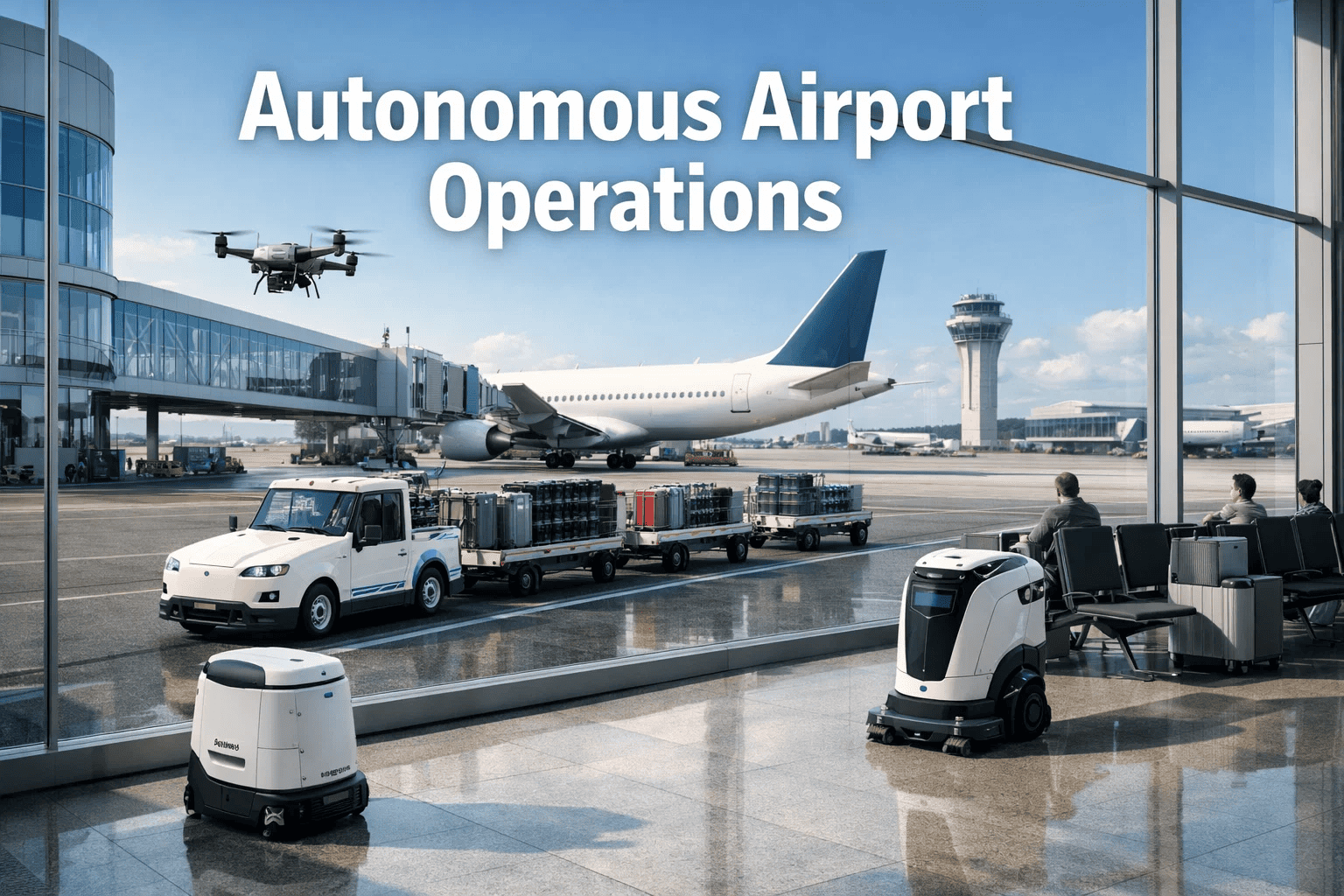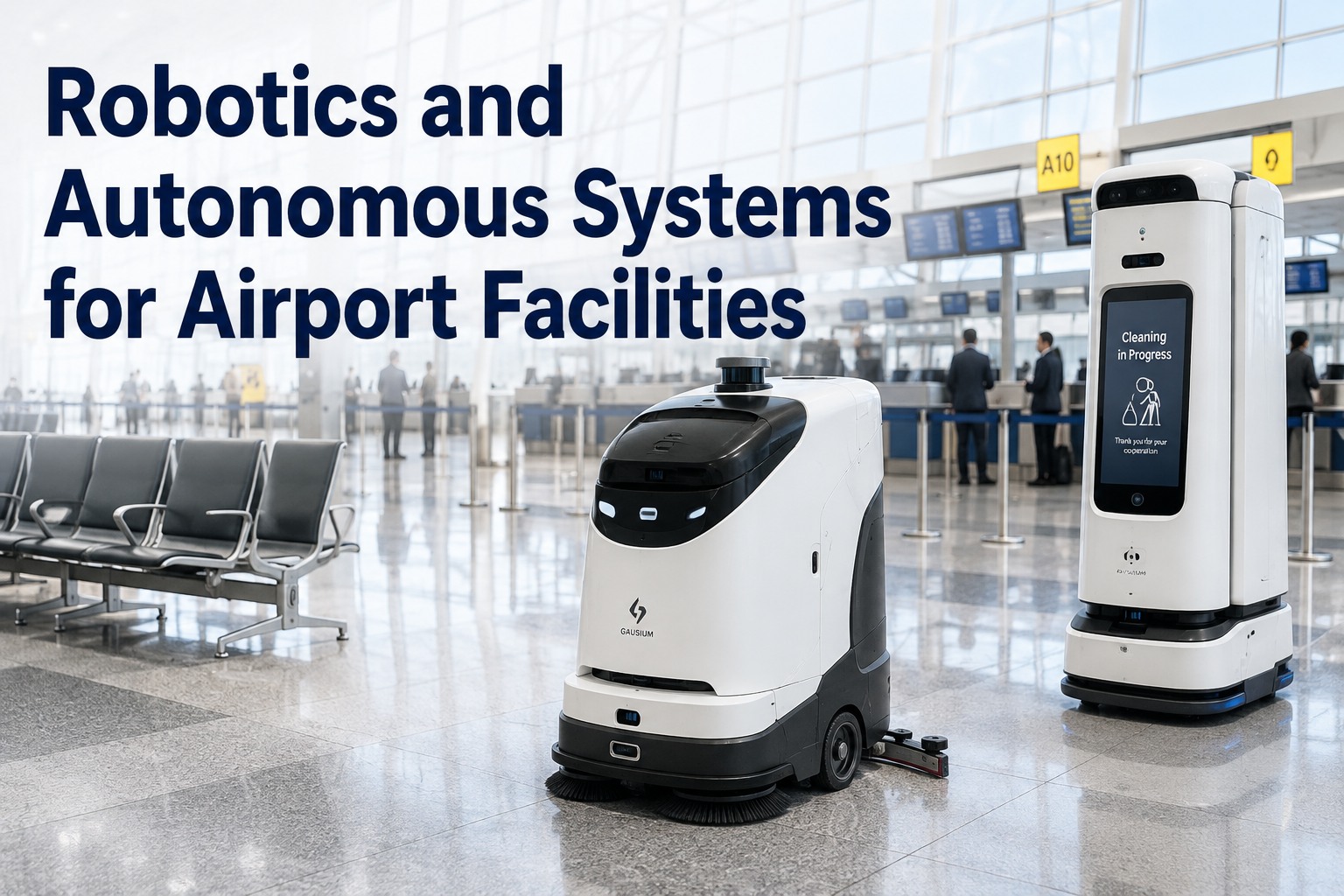
Airport facility robotics — autonomous cleaning, floor scrubbing, security patrol, and restroom monitoring — are moving from pilots to full fleet deployment across terminals worldwide. This guide explains how digital transformation leads can adopt robotics and autonomous systems for airport facility maintenance, covering use case selection, robot fleet management, integration with facilities workflows, and scaling from single-unit trials to terminal-wide operations. With labor shortages tightening and passenger expectations rising, airports that automate routine facility tasks are seeing measurable gains in consistency, coverage, and cost control. Whether you're evaluating your first autonomous scrubber or managing a growing robot fleet, platforms like OxMaint help you track assets, schedule maintenance, and measure ROI — Start Free Trial to see how it works.
How Do Airports Scale Robotics from Pilot to Terminal-Wide Operations?
Autonomous systems can clean, scrub, inspect, and patrol airport facilities tirelessly — but success depends on choosing the right use cases, integrating with existing workflows, and managing robots as maintainable assets. This guide shows you how.
Which Airport Facility Tasks Should You Automate First?
Start with high-frequency, repetitive tasks that consume significant labor hours and have clear success metrics. The best initial use cases for airport facility automation deliver quick wins and build organizational confidence.
Floor Scrubbing & Cleaning
Autonomous scrubbers can cover 50,000+ sq ft per shift, operating during off-peak hours. Ideal for terminals, concourses, and baggage claim areas with predictable layouts.
Restroom Monitoring
Sensor-equipped robots check supply levels, cleanliness, and fixture status every 30-60 minutes, triggering work orders only when needed instead of fixed schedules.
Security Patrol
Autonomous patrol robots with cameras and sensors monitor parking structures, perimeters, and restricted areas, providing continuous coverage and incident documentation.
Terminal Inspection
Robots equipped with cameras and environmental sensors detect HVAC issues, lighting failures, water leaks, and structural concerns during routine autonomous rounds.
How to Scale Airport Robotics from Pilot to Fleet Deployment
Most successful airport robotics programs follow a 12-24 month scaling path. Here's a proven month-by-month framework used by leading airports to move from experimentation to operational reliance.
Pilot Selection & Baseline
Choose 1-2 robots for a single use case in a controlled area. Document current labor hours, costs, and performance metrics. Define success criteria: coverage area, uptime %, cost per hour, quality scores.
Pilot Execution & Data Collection
Deploy robots in live operations. Track utilization, maintenance needs, passenger interactions, and staff feedback. Integrate robot telemetry with your CMMS to log work orders and downtime automatically.
Analysis & Business Case
Calculate actual ROI: labor hours saved, coverage improvements, maintenance costs, passenger satisfaction impact. Build the business case for fleet expansion with real performance data, not vendor promises.
Fleet Expansion Planning
Secure budget approval. Plan fleet size (typically 3-8 units for a mid-size terminal), charging infrastructure, storage, and staffing. Establish preventive maintenance schedules and spare parts inventory.
Fleet Deployment & Optimization
Roll out additional units in phases. Optimize routes, schedules, and task assignments based on pilot learnings. Train facilities staff on robot supervision, basic troubleshooting, and escalation procedures.
Terminal-Wide Operations
Achieve steady-state fleet operations. Robots handle routine tasks; staff focus on exceptions, deep cleaning, and passenger-facing services. Continuous improvement driven by analytics and performance dashboards.
What Does Robot Fleet Management Require?
Managing autonomous airport systems is fundamentally different from traditional equipment. Robots are mobile, software-driven assets that require coordinated maintenance, charging, and performance monitoring across your entire terminal.
Asset Tracking & Telemetry
Track each robot's location, battery status, task completion, and health metrics in real time. Integrate with your CMMS to maintain complete asset histories, warranty information, and lifecycle costs per unit.
Preventive Maintenance Scheduling
Schedule brush replacements, filter changes, sensor calibration, and software updates based on usage hours or calendar intervals. Automated work orders ensure nothing falls through the cracks as your fleet grows.
Spare Parts Inventory
Stock critical consumables (brushes, squeegees, filters) and components (batteries, sensors, wheels). Track parts usage per robot to optimize inventory levels and avoid downtime from stockouts.
Performance Analytics
Monitor uptime %, task completion rates, cost per operating hour, and coverage efficiency. Compare performance across units to identify underperformers, optimize schedules, and justify expansion decisions.
Worked Example: Mid-Size Terminal Robotics Program
A 750,000 sq ft regional airport terminal with 18 daily turns implemented autonomous floor scrubbing. Here's the 18-month financial breakdown:
Beyond payback, the airport gained consistent nightly coverage, reduced slip-and-fall incidents by 30%, and freed staff for higher-value passenger services. The robots are tracked as assets in OxMaint with automated PM schedules and parts inventory.
Managing Airport Robotics with OxMaint CMMS
Robots are assets — and like any asset, they need systematic maintenance, tracking, and performance management. OxMaint gives airport facilities teams the tools to manage robot fleets alongside traditional equipment.
Automated Work Orders
Generate PM work orders automatically based on robot operating hours, calendar schedules, or sensor alerts. Track completion, labor time, and parts used — eliminating manual scheduling spreadsheets.
Asset Lifecycle Tracking
Maintain complete histories for each robot: purchase date, warranty status, maintenance records, downtime events, and total cost of ownership. Make data-driven repair-vs-replace decisions.
Spare Parts Management
Track robot parts inventory with automatic reorder points. Link parts to specific assets and work orders to understand consumption patterns and optimize stock levels — reducing carrying costs by 20-30%.
Performance Analytics
Dashboards show robot uptime, maintenance costs, task completion rates, and ROI metrics. Compare performance across your fleet and generate reports for stakeholders — proving the value of automation investments.
Ready to Manage Your Robot Fleet Like a Pro?
See how OxMaint tracks autonomous systems, schedules maintenance, and measures ROI — book a 30-minute demo tailored to airport facilities.
Airport Facility Robotics: Common Questions
What is the typical ROI for airport cleaning robots?
Most airports see payback in 18-30 months for autonomous floor scrubbers, driven by labor savings (1.5-3 FTE positions redeployed), extended coverage hours, and improved consistency. Robots operating 16-20 hours daily deliver faster ROI than single-shift deployments. Track actual performance in a CMMS like OxMaint to validate vendor projections with your real data.
How do robots integrate with existing airport facility workflows?
Modern facility robots connect via APIs to CMMS platforms, building management systems, and work order tools. When a robot detects an issue (low supplies, equipment failure, spill), it automatically creates a work order assigned to the appropriate team. This integration eliminates manual logging and ensures robotic insights trigger human action. Book a Demo to see integration examples.
What maintenance do airport robots require?
Daily: empty tanks, charge batteries, wipe sensors. Weekly: inspect brushes, squeegees, filters; clean cameras and LiDAR. Monthly: calibrate sensors, check wheel wear, update software. Quarterly: deep clean, battery health check, preventive component replacement. Annual costs typically run 8-12% of purchase price. Automated PM scheduling in OxMaint ensures nothing is missed as fleets scale.
Can robots operate safely around passengers?
Yes. Commercial facility robots use LiDAR, cameras, and proximity sensors to detect and avoid people, luggage, and obstacles. They operate at walking speed (2-4 mph), stop immediately when obstructed, and can be programmed to avoid high-traffic periods. Most airports deploy robots during off-peak hours (10pm-6am) initially, then expand to daytime operation as confidence builds.
How many robots does a typical airport terminal need?
A 500K-1M sq ft terminal typically starts with 2-4 floor scrubbers for nightly coverage, scaling to 6-10 units for comprehensive operations including restrooms, inspections, and security patrol. Fleet size depends on layout complexity, passenger volume, and desired coverage frequency. Start small, measure results with OxMaint's free trial, then scale based on proven ROI.
Transform Airport Facility Maintenance with OxMaint
Manage robots, assets, work orders, and analytics in one AI-powered platform built for modern facilities teams.