Inside a busy MRO hangar, a mechanic waits 40 minutes for a hydraulic actuator that is sitting 200 meters away in the parts cage. That wait is not a scheduling failure — it is a logistics failure. Multiply it across 60 technicians, three shifts, and 18 aircraft in simultaneous heavy check, and you have thousands of lost wrench-hours every month. Automated Guided Vehicles and Autonomous Mobile Robots are ending that problem. This article breaks down exactly how AGV and AMR systems are transforming parts delivery and tooling logistics inside commercial MRO hangars — and how OxMaint's logistics and parts tracking module ties the entire operation together. If you want to eliminate parts-wait downtime now, start a free trial or book a demo to see it in action.
40%
of MRO technician time lost to non-wrench activity including parts retrieval
$8.7B
in annual MRO delays linked to logistics and material handling inefficiencies
68%
reduction in parts delivery time reported by early AMR adopters in aerospace MRO
3.2x
ROI achieved within 24 months by MRO facilities deploying autonomous logistics fleets
Your Hangar Floor Is a Logistics Problem
OxMaint's logistics and parts tracking module connects your AGV and AMR fleet directly to work orders, asset records, and inventory — giving every technician the right part at the right time, every time.
What Are AGVs and AMRs in MRO Context?
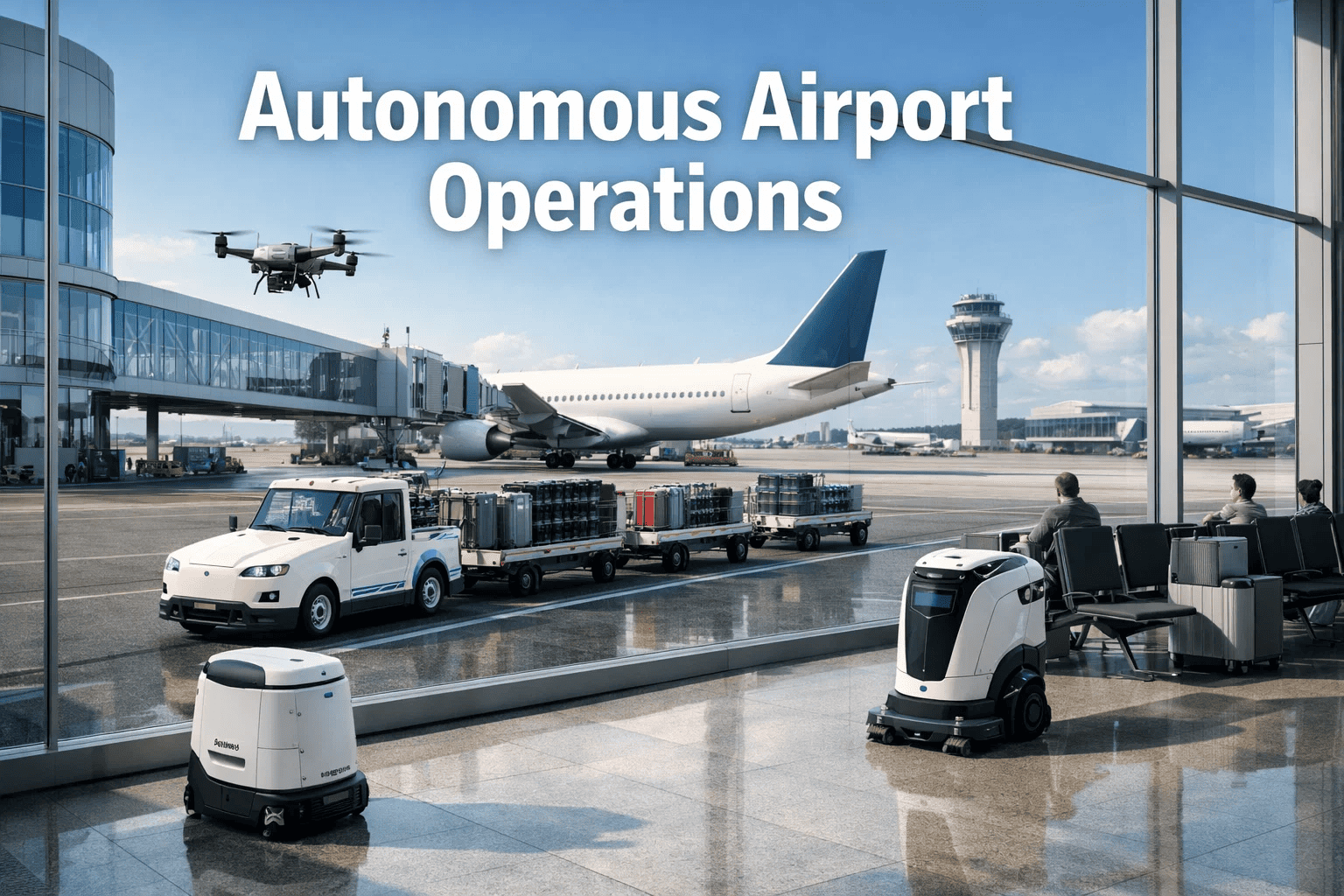
Automated Guided Vehicles follow fixed magnetic, laser, or optical paths through a facility. Autonomous Mobile Robots navigate dynamically using onboard sensors, LIDAR, and real-time mapping — no fixed infrastructure required. In an MRO hangar, the distinction matters: hangars reconfigure constantly as aircraft types change, access platforms shift, and tooling stations move. AMRs handle that environment better than traditional AGVs. Both technologies eliminate the core problem — human couriers walking long distances to retrieve and deliver parts, tools, consumables, and documentation. The MRO industry is adopting both, often in hybrid fleets. OxMaint integrates with both architectures, treating every robot as a trackable logistics asset within the broader maintenance ecosystem. To understand how this works in practice, book a demo and we will walk through a real hangar configuration.
AGV
Automated Guided Vehicles
Follow fixed routes via magnetic tape, laser reflectors, or embedded wire. Ideal for high-volume, repetitive routes — parts cage to staging area, bulk consumables replenishment, heavy component transport up to 1,500 kg.
AMR
Autonomous Mobile Robots
Navigate dynamically using LIDAR, cameras, and SLAM mapping. Reroute around obstacles in real time. Ideal for MRO hangar floors where layouts shift daily and human foot traffic is constant.
HYBRID
Mixed Fleet Architecture
Most large MRO facilities deploy AGVs on fixed supply corridors and AMRs on the hangar floor. Fleet management software — integrated with OxMaint — coordinates routing, priority queuing, and task assignment across both.
INTEGRATION
CMMS-Connected Logistics
When OxMaint generates a work order, parts requests auto-trigger robot dispatch. The robot collects the part, delivers it to the aircraft position, and updates inventory levels — all without a human intermediary touching the logistics chain.
The Real Pain Points in MRO Hangar Logistics
MRO hangar logistics failures are quiet. They do not produce incident reports. They show up in TAT overruns, overtime costs, and aircraft delayed past their scheduled release. The causes are well understood — the solutions have until recently been impractical. That changed when AMR unit economics dropped below $80,000 and integration APIs matured enough to connect robots to CMMS platforms. Here is what was killing hangar productivity before automation arrived. If you recognize these problems in your operation, the fastest next step is to start a free trial and map your current workflow against what automation can fix.
01
Parts Retrieval Dead Time
Technicians average 6–8 retrieval trips per shift in heavy MRO environments. At 12 minutes per trip, that is over 90 minutes of non-productive time per technician per shift. Across a 60-person team, that is 90 lost labor-hours daily.
02
Incorrect Part Delivery
Manual pick errors in aviation parts stores run at 1.5–3% under busy conditions. A single wrong part installed on an aircraft can trigger a full removal, re-inspection, and documentation cycle costing 4–8 hours of skilled labor.
03
Tool Accountability Gaps
Shared tooling in MRO environments is borrowed and not returned. Shadow boards catch some losses but not all. Tooling unavailability delays task starts by an average of 22 minutes — and in safety-critical tasks, missing tools cause FOD risks.
04
Inventory Visibility Breakdown
Parts stores updated manually lag reality by hours. Technicians discover stockouts at the task start — not before planning. Emergency procurement at last-minute rates costs 3–5x standard pricing and introduces 24–72 hour AOG risk windows.
05
Shift Handover Material Chaos
Parts staged for a task in one shift are moved, borrowed, or relocated before the next shift arrives. Documentation of what was staged where is informal or nonexistent. Incoming technicians restart retrieval loops from scratch.
06
Consumable Replenishment Waste
Lubricants, sealants, fasteners, and safety wire are replenished on fixed schedules regardless of actual consumption. Over-stocking clogs staging areas. Under-stocking halts tasks mid-execution. Neither outcome is acceptable in a revenue-driven MRO.
How OxMaint Integrates AGV and AMR Logistics
OxMaint treats logistics as a maintenance function, not a warehouse function. When a work order is created for an aircraft task, the parts and tooling requirements are embedded in that work order. OxMaint's logistics module reads those requirements, checks live inventory, triggers robot dispatch for available items, flags shortfalls for procurement, and tracks delivery confirmation back to the work order record. The technician does not manage any of this — they receive a notification that parts are en route and a confirmation when they arrive. Every movement is logged, timestamped, and linked to the asset and work order it supports. Book a demo to see how this connects to your existing parts store setup.
Parts Tracking
Work Order-Triggered Dispatch
When a technician opens a task in OxMaint, required parts and tools are automatically queued for robot pickup. Priority is assigned based on TAT criticality, aircraft position, and estimated task start time. No manual request needed.
Inventory
Real-Time Stock Synchronization
Every robot pickup and delivery updates inventory in OxMaint instantly. Reorder triggers fire automatically when stock falls below thresholds. MRO planners see live consumption rates and projected stockout dates 14–30 days in advance.
Tooling
Tool Chain-of-Custody Tracking
Tooling delivered by robot is logged out to the specific work order and technician. Return confirmation closes the chain. OxMaint flags overdue tool returns and tracks tool utilization rates — surfacing which tools need additional units purchased.
Compliance
Traceability and Audit Records
Every part delivered to an aircraft task carries a full chain: part number, serial number, batch number, expiry date, storage condition, delivery time, and receiving technician. Regulators and airlines get audit-ready traceability without manual paperwork.
Analytics
Logistics Performance Dashboards
OxMaint tracks delivery time, pick accuracy, robot utilization, and task-start delay reduction across shifts, bays, and aircraft types. Operations managers see exactly where logistics bottlenecks remain and which routes need additional robot coverage.
Planning
Pre-Task Material Kitting
OxMaint's planning engine pre-builds material kits for scheduled tasks 24–48 hours before execution. Robots pre-position kits at aircraft staging zones before the task crew arrives — eliminating retrieval time entirely for planned maintenance.
Before AGV Integration vs. After OxMaint AGV Integration
The operational shift from manual hangar logistics to OxMaint-integrated AGV and AMR systems is not incremental — it is structural. The comparison below reflects real outcomes reported by MRO facilities in the 18 months following deployment. Every metric connects directly to TAT, labor cost, and aircraft availability. Start a free trial and benchmark your current numbers against these.
ROI That Operations Directors Bring to the Board
22%
Reduction in aircraft TAT
Reported by heavy MRO operators within 12 months of AGV deployment integrated with digital work order systems.
$2.4M
Annual labor savings per hangar
Estimated for a 60-bay heavy check facility eliminating 90+ lost labor-hours per day across all shifts.
99.4%
Parts delivery accuracy
AMR systems with barcode and RFID verification achieve near-zero pick error rates versus 1.5–3% in manual operations.
18 mo
Typical payback period
For a 4–6 robot deployment in a mid-size heavy MRO facility, full ROI including integration and training costs achieved within 18–24 months.
Frequently Asked Questions
How does OxMaint connect to AGV and AMR fleet management systems?
OxMaint integrates with leading AGV and AMR fleet management platforms via REST API and webhook connections. When a work order is created or updated in OxMaint, parts and tooling requirements are passed to the robot fleet system as dispatch tasks. Delivery confirmations, inventory updates, and chain-of-custody records flow back to OxMaint in real time. Most integrations are configured within 2–4 weeks using standard API documentation.
Book a demo to review integration requirements for your specific robot platform.
Can OxMaint handle mixed fleets of both AGVs and AMRs from different manufacturers?
Yes. OxMaint's logistics module is designed to work with multi-vendor robot fleets. Each robot type is registered as a tracked asset within OxMaint with its own maintenance schedule, utilization tracking, and performance metrics. Task dispatch can be routed to the appropriate robot type based on payload, location, and availability. This is particularly valuable for large MRO facilities that deploy AGVs on fixed supply corridors and AMRs on dynamic hangar floors simultaneously.
Start a free trial to explore the asset registry configuration.
Does automated parts delivery meet aviation traceability requirements?
OxMaint's delivery chain captures every data point required for aviation part traceability: part number, serial number, batch number, expiry date, storage temperature compliance, pick time, delivery time, and receiving technician acknowledgment with digital signature. This data is stored against the work order and aircraft asset record, making it instantly available for airworthiness documentation, airline audits, and regulatory inspections. The traceability record is stronger than manual paper-based alternatives because every handpoint is timestamped and verified electronically.
What happens to robot maintenance — who tracks when the AGVs and AMRs need service?
OxMaint manages robot maintenance the same way it manages any other critical asset. Each robot is registered in OxMaint's asset registry with its own preventive maintenance schedule, inspection checklist, and work order history. Battery cycle counts, operating hours, sensor calibration intervals, and firmware updates are tracked automatically. When a robot approaches a service threshold, OxMaint generates a work order and routes it to the appropriate technician — ensuring the logistics fleet itself never becomes a reliability problem.
Book a demo to see how robot asset management works in practice.
Ready to Automate Your Hangar Logistics?
Stop Losing Wrench-Hours to Parts Retrieval
OxMaint connects your AGV and AMR fleet to work orders, inventory, and asset records — giving every technician the right part at the right place, automatically. No logistics coordinator required. No manual inventory reconciliation. No paper traceability chains.