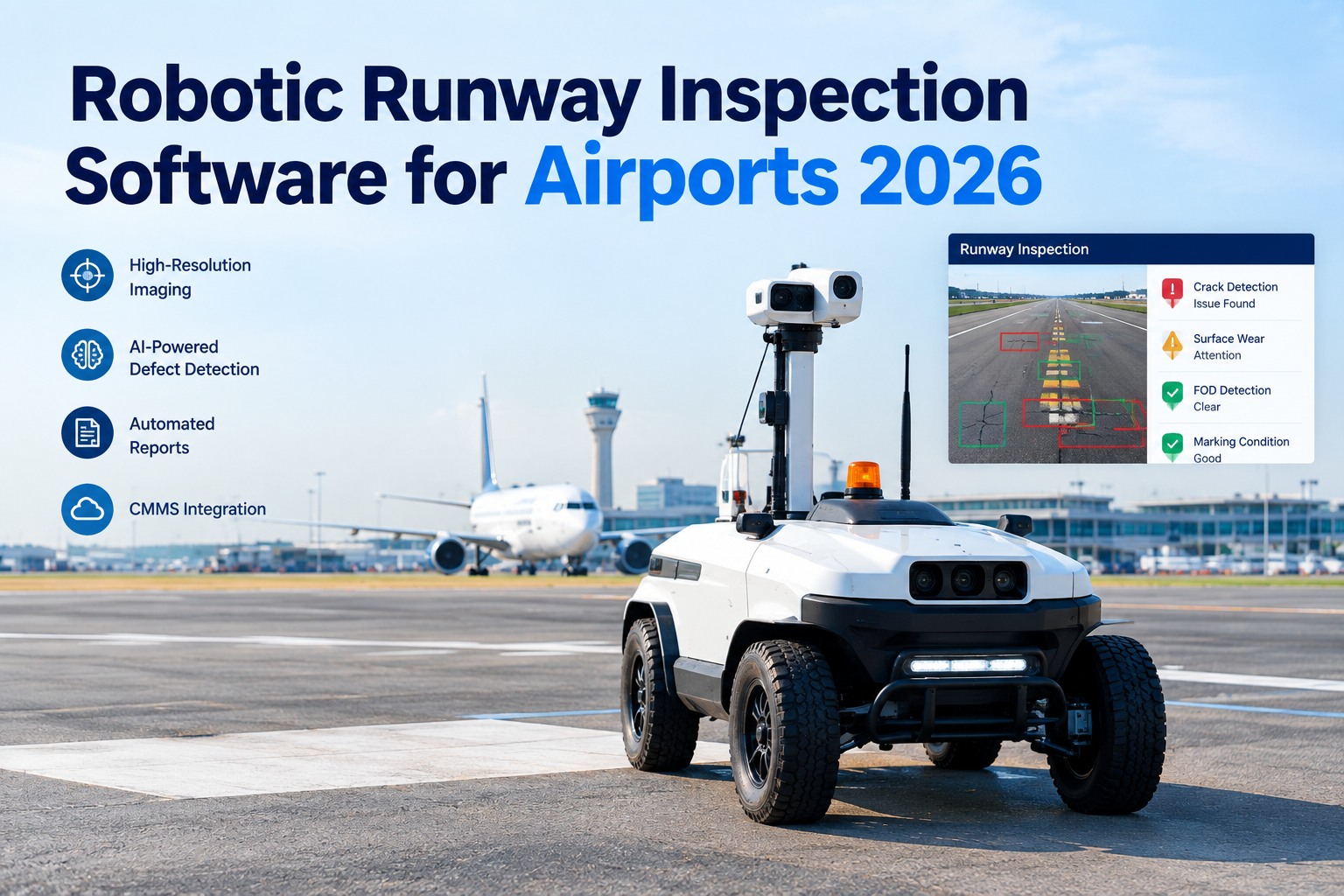
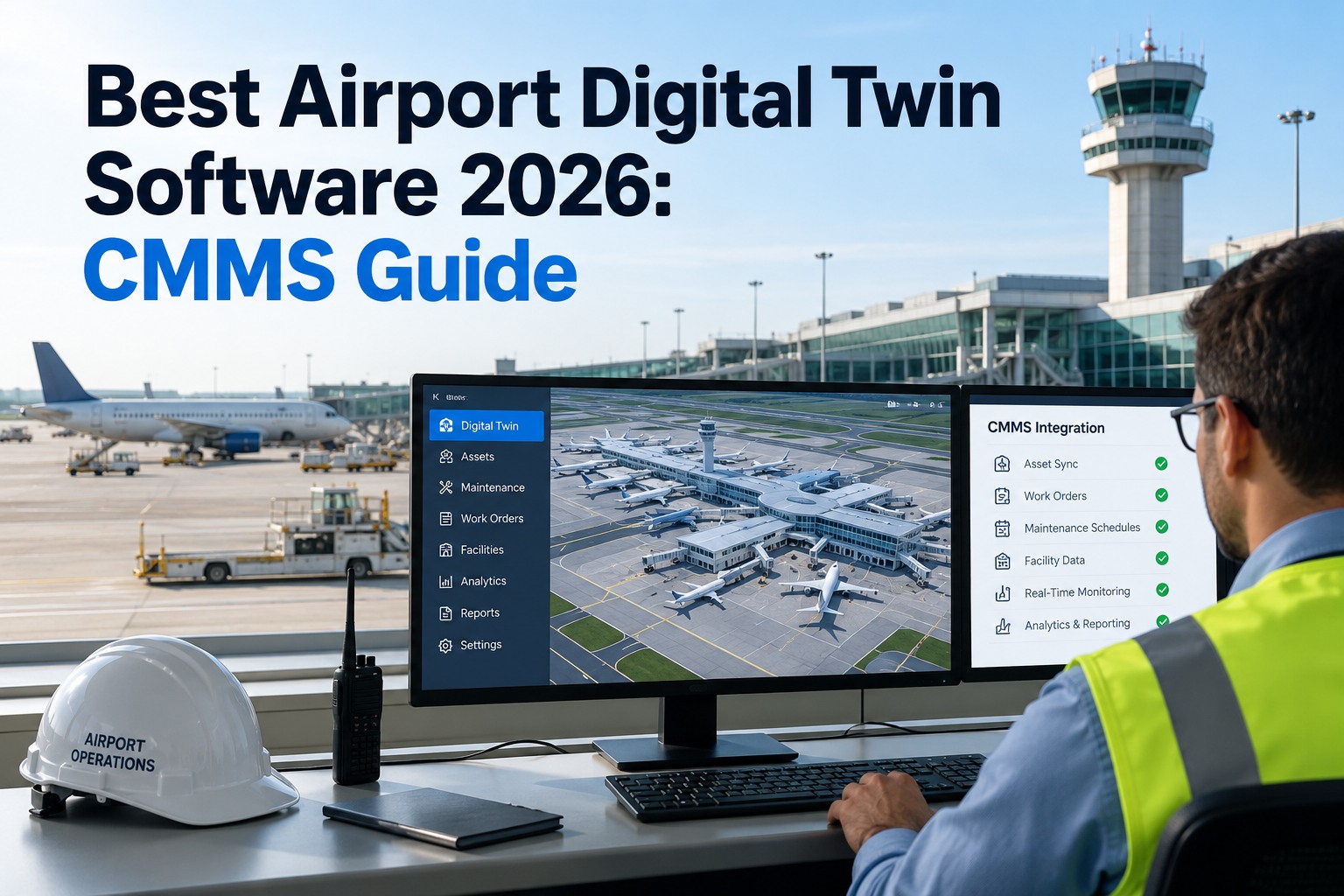
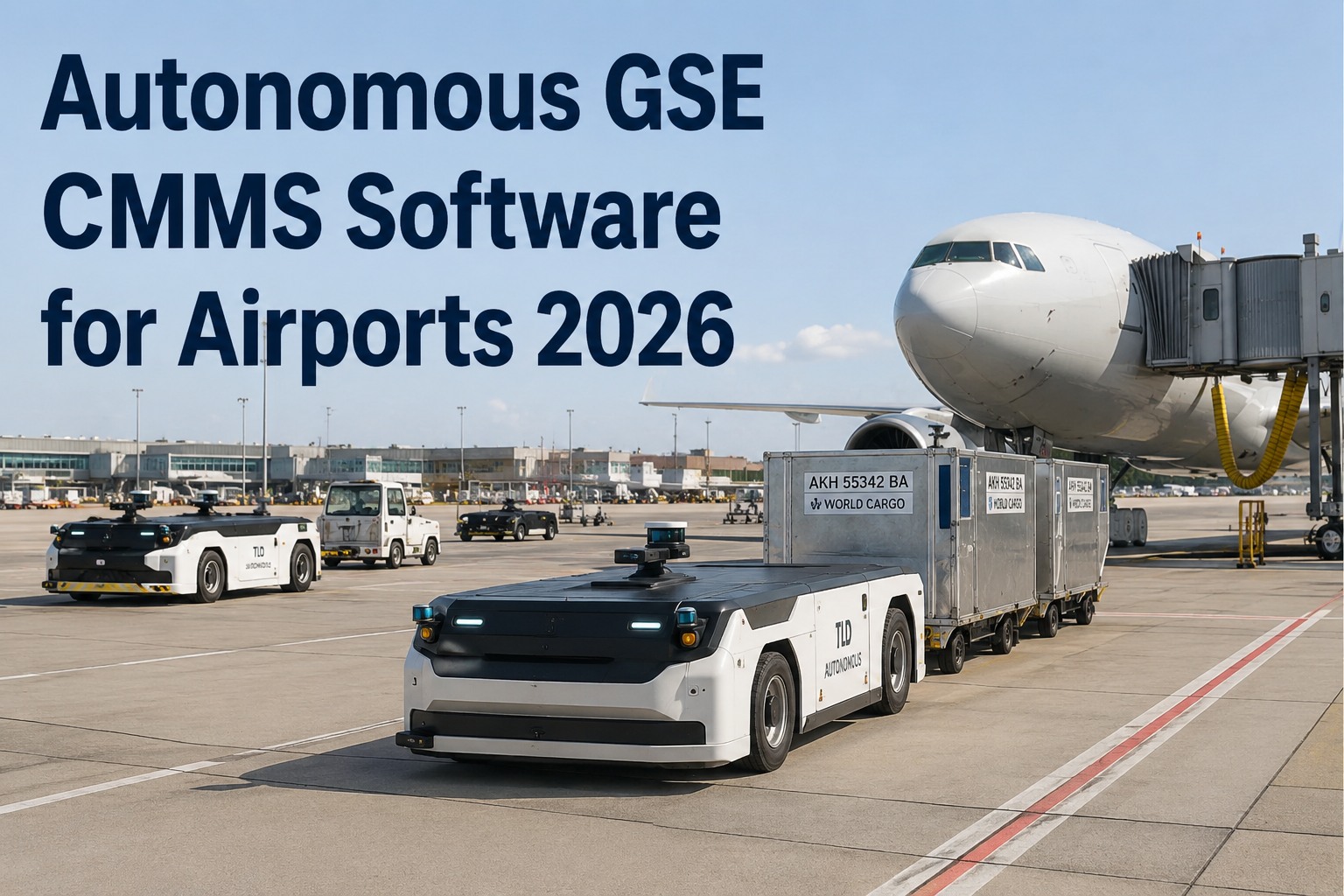
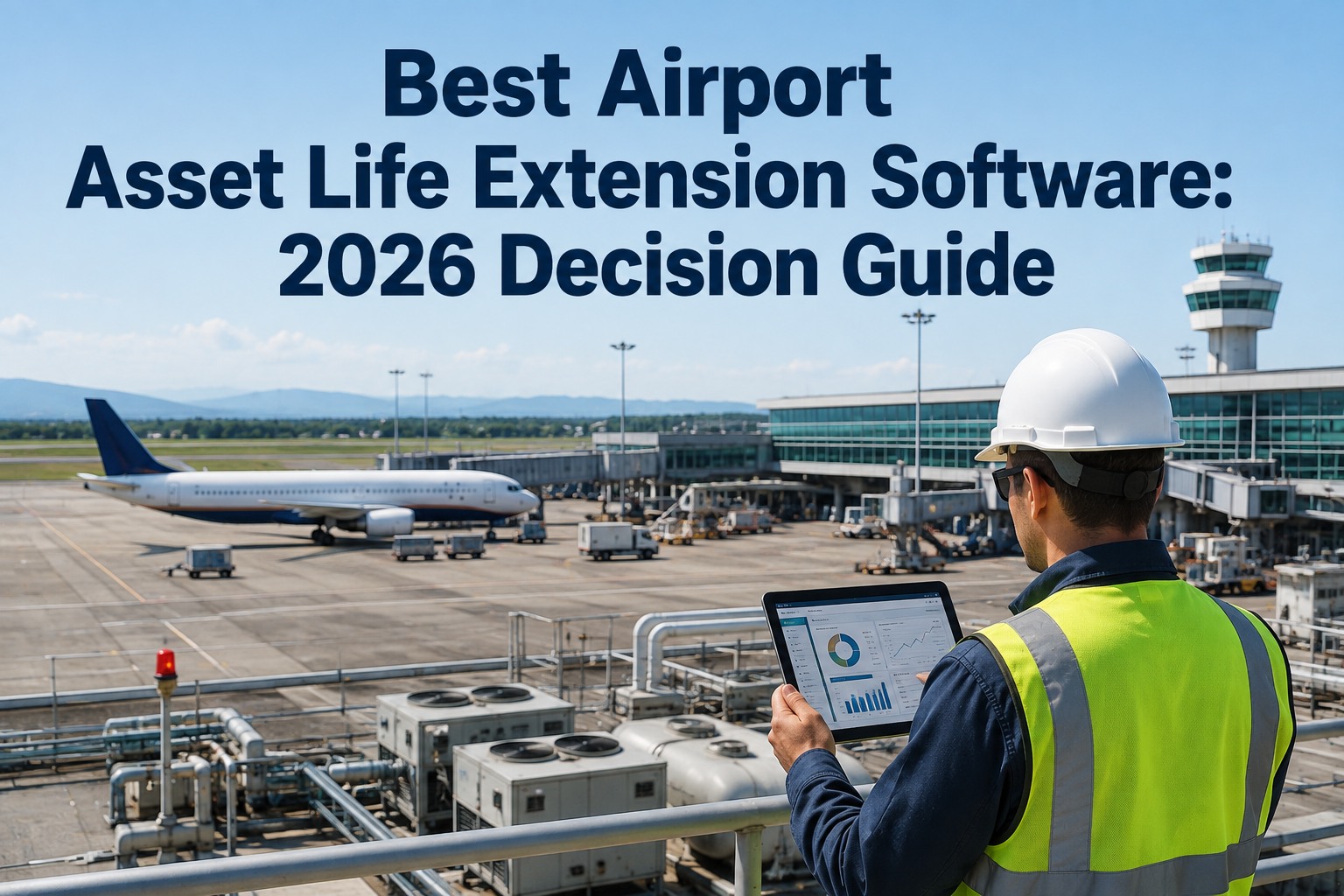
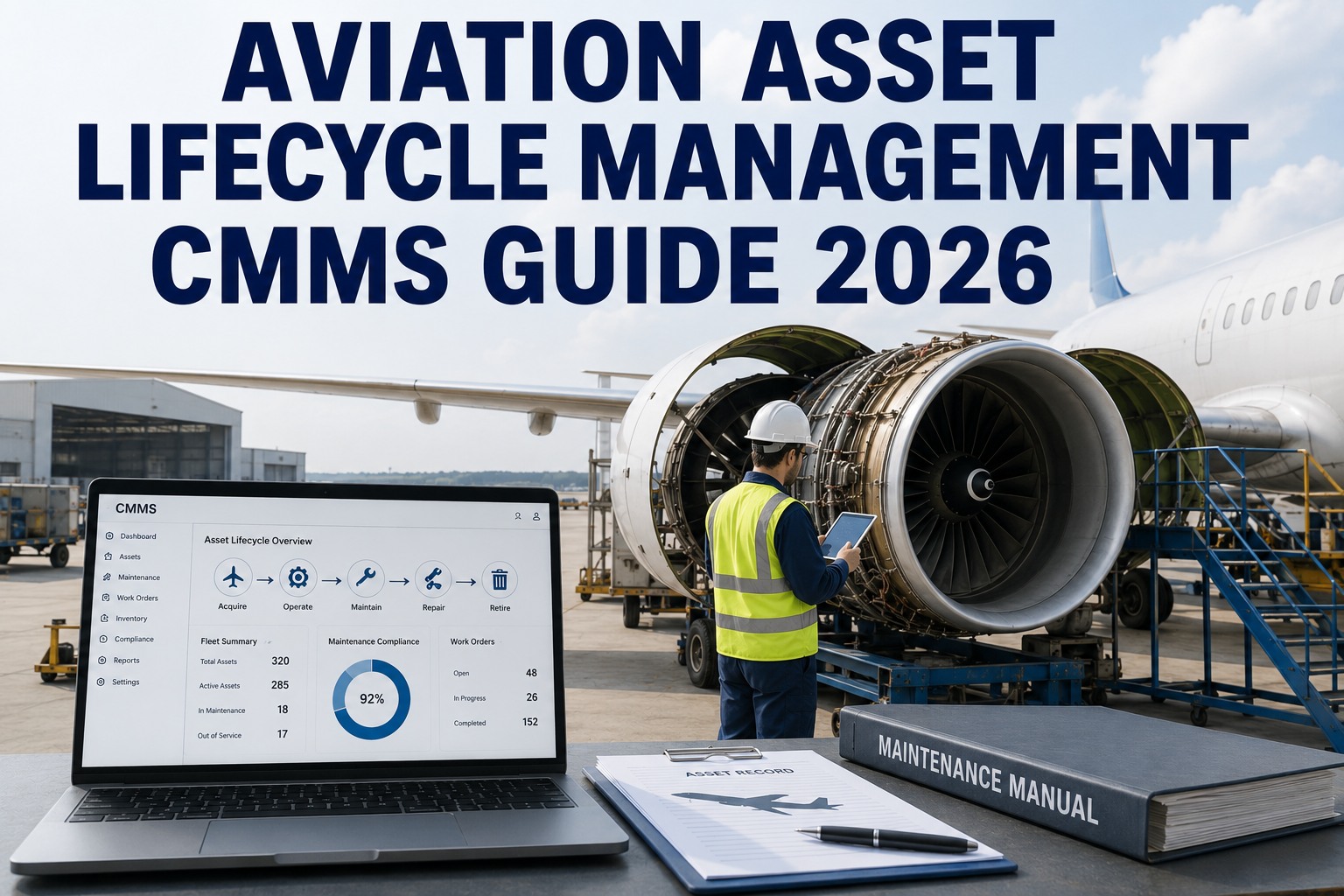
International airports deployed $1.98 billion in robotic systems during 2026—autonomous cleaning fleets, UV-C disinfection units, baggage transport robots, and passenger assistance androids operating 24/7 across terminals. Yet 43% of these deployments fail to achieve projected ROI within 24 months because airports track robot acquisition costs but ignore the hidden drain of reactive maintenance, unplanned downtime, and compliance documentation gaps. Book a demo to see how airports are cutting robotics ROI timelines from 24 months to under 18 months using CMMS analytics and predictive maintenance.
The Airport Robotics Investment Wave of 2026
The global airport robots market surged to $1.98 billion in 2026, growing at 16.8% annually as passenger traffic hit 10.2 billion globally. Airports invest heavily in cleaning robots, baggage handlers, and passenger service units to address labor shortages and deliver consistent 24/7 operations. However, purchase price represents only 35-40% of total cost of ownership—the remaining 60-65% comes from maintenance, parts replacement, energy consumption, and downtime recovery.
Cleaning & Disinfection Robots
$85K - $150K per unit
UV-C disinfection, autonomous floor scrubbers, restroom sanitizers. Operating 18+ hours daily across high-traffic terminal zones.
Baggage Transport Robots
$120K - $200K per unit
Autonomous carts moving luggage between check-in, security, gates, and aircraft. Navigating complex terminal layouts with LIDAR precision.
Passenger Assistance Robots
$60K - $110K per unit
Multilingual wayfinding, flight information, accessibility support. Deployed at security checkpoints, departure lounges, and baggage claim areas.
6-18
months
Typical robotics ROI timeline with structured maintenance programs
35-40%
Reduction in unscheduled maintenance events with predictive analytics
97.5%
to 99.2%
Dispatch reliability improvement with comprehensive fleet monitoring
Case Study: Major International Hub Airport (United States)
A major U.S. hub airport deployed 23 autonomous robots across three terminals in early 2025: 15 UV-C disinfection robots, 6 floor scrubbers, and 2 baggage transport units. Initial investment totaled $2.1 million, with projected ROI at 22 months based on labor cost displacement. However, reactive maintenance practices—spreadsheet tracking, manual parts ordering, and inconsistent service intervals—pushed actual ROI to 31 months. The airport implemented OXmaint CMMS in Q3 2025 to automate maintenance workflows and analytics.
Phase 1: Pre-CMMS
Jan 2025 - Sep 2025
Manual maintenance tracking, reactive repairs, inconsistent robot availability
31-month projected ROI
68% fleet uptime
42 unplanned repairs
→
Phase 2: CMMS Implementation
Oct 2025 - Dec 2025
OXmaint deployment, asset digitization, predictive maintenance triggers established
System integration
Staff training
Baseline data collection
→
Phase 3: Optimized Operations
Jan 2026 - Present
Automated scheduling, parts optimization, real-time analytics driving decisions
17.5-month actual ROI
94% fleet uptime
89% fewer unplanned repairs
Measurable Business Impact
$427K
Annual Maintenance Cost Reduction
Eliminated reactive repair premiums, optimized parts inventory, reduced technician overtime
38%
Faster ROI Achievement
Shortened from projected 31 months to actual 17.5 months through operational efficiency gains
2,840
Additional Robot Operating Hours
Fleet uptime increased from 68% to 94%, delivering more cleaning cycles without adding units
100%
Compliance Audit Pass Rate
Complete digital maintenance records with timestamps, eliminating FAA documentation gaps
How CMMS Analytics Drive Robotics ROI
Traditional robotics ROI calculations focus exclusively on labor displacement: robot cost divided by annual labor savings equals payback period. This ignores the operational reality that robots require maintenance, consume parts, experience downtime, and generate compliance documentation requirements. CMMS platforms like OXmaint provide visibility into the complete asset lifecycle, revealing hidden cost drivers and optimization opportunities.
01
Asset Lifecycle Tracking
Every robot logs operational hours, charging cycles, navigation errors, and component wear automatically. OXmaint aggregates this data into lifecycle dashboards showing total cost of ownership, replacement thresholds, and depreciation curves. Airports make data-driven decisions about fleet expansion versus maintenance investment.
02
Predictive Maintenance Triggers
AI algorithms analyze usage patterns, environmental conditions, and historical failure data to predict component degradation. UV-C lamps scheduled for replacement at 8,200 hours instead of arbitrary 10,000-hour intervals. Floor scrubber brushes replaced when wear sensors hit 65% instead of waiting for complete failure. Prevents both premature replacement waste and unexpected breakdowns.
03
Parts Inventory Optimization
CMMS tracks which parts fit which robots, current inventory levels, lead times from suppliers, and consumption rates. Automatically generates purchase orders when stock hits reorder points. Eliminates emergency shipping premiums and technician downtime waiting for parts. The hub airport reduced parts carrying costs by 34% while improving availability.
04
Real-Time Performance Dashboards
Fleet managers view live uptime percentages, maintenance backlog, cost-per-operating-hour, and ROI progress. Identify underperforming robots, high-maintenance zones, and scheduling conflicts instantly. Export reports for executive reviews, board presentations, and regulatory audits with one click.
94.2%
Fleet Uptime
+26.2% vs. pre-CMMS
$18.30
Cost/Operating Hour
-41% vs. reactive maintenance
17.5
Months to ROI
-43% vs. projected 31 months
4.8
Unplanned Repairs/Month
-89% vs. baseline 42
Robot Fleet Performance by Terminal
Ready to accelerate your robotics ROI? OXmaint transforms robot fleet management from reactive firefighting to predictive optimization—delivering measurable cost savings in under 90 days.
Start Free Trial
Additional Case Study: Regional Airport Authority (Europe)
A European regional airport managing 500,000+ square meters across two terminals deployed 12 floor scrubbing robots in 2024. Initial ROI projections showed 20-month payback based on labor savings. However, the airport lacked maintenance analytics, leading to inconsistent brush replacement, water tank contamination incidents, and navigation sensor failures that caused collision damage.
Challenge
Floor scrubbers operating 18+ hours daily with brush replacement on fixed calendar schedules instead of usage-based triggers. Natural stone floors wore brushes 40% faster than vinyl areas, but all robots followed the same 90-day replacement cycle. Resulted in over-replacement in some zones and under-replacement in others.
Solution
Implemented OXmaint with sensor-based maintenance triggers. System tracks actual brush hours, floor surface type, and wear rates. Replaces brushes when performance drops below 70% effectiveness threshold—ranging from 380 hours on stone to 620 hours on vinyl.
60%
Reduction in cleaning complaints
22%
Brush cost savings annually
14.2
Months actual ROI (vs. 20 projected)
The Hidden ROI Killers in Airport Robotics
Most airport robotics business cases present optimistic ROI timelines based on perfect operational conditions: 100% uptime, zero maintenance delays, and immediate parts availability. Reality introduces friction that extends payback periods and erodes financial returns. CMMS analytics expose these hidden costs and enable corrective action.
Unplanned Downtime
Cost Impact: $850-$1,400 per day per robot
Robot breaks down mid-shift. Manual cleaning crews dispatched. Labor costs spike, cleaning quality drops, and passengers notice visible dirt accumulation. CMMS predictive alerts prevent 78% of sudden failures.
Emergency Parts Shipping
Cost Impact: $200-$600 premium per order
Critical component fails, part not in stock. Overnight shipping from manufacturer adds 300% markup. CMMS inventory management maintains optimal stock levels, eliminating rush orders.
Inefficient Scheduling
Cost Impact: 15-25% lost productivity
Maintenance performed during peak passenger hours, requiring robot removal from high-traffic zones. CMMS schedules service during 2-6 AM low-traffic windows, maximizing operational hours.
Compliance Documentation Gaps
Cost Impact: $50K-$200K per audit finding
FAA or health inspectors request maintenance records. Paper logs missing, spreadsheets incomplete, technician signatures absent. CMMS auto-generates complete audit trails with timestamps.
ROI Timeline Comparison: Manual vs. CMMS-Managed Fleets
Initial robot investment
$2.1M (23 robots)
$2.1M (23 robots)
Annual labor cost savings
$1.15M
$1.15M
Annual maintenance costs
$624K (reactive)
$197K (predictive)
Fleet uptime percentage
68% average
94% average
Effective cost per operating hour
$31.20
$18.30
Time to ROI
31 months
17.5 months
Implementation Strategy for Maximum ROI
Deploying CMMS for airport robotics requires structured implementation to capture full value. Airports that rush deployment without proper asset digitization, staff training, and baseline data collection see minimal improvement. The following four-phase approach delivers measurable ROI gains within 90 days of go-live.
Phase 1
Asset Digitization (Weeks 1-2)
Create digital twin for every robot with make, model, serial number, purchase date
Document all existing maintenance history, repair records, parts replacements
Establish baseline performance metrics: uptime %, cost per hour, failures per month
Photograph and tag physical robots with QR codes linking to CMMS profiles
Phase 2
Preventive Maintenance Setup (Weeks 3-4)
Build maintenance schedules based on OEM recommendations and airport usage patterns
Configure automated work order generation triggers for each robot type
Upload parts catalog with compatibility matrices, stock levels, reorder thresholds
Train technicians on mobile app work order completion and real-time updates
Phase 3
Predictive Analytics Activation (Weeks 5-8)
Integrate robot telemetry feeds into OXmaint for real-time monitoring
Enable AI failure prediction algorithms based on usage, environment, historical data
Configure alert thresholds for critical metrics: battery health, sensor drift, motor vibration
Establish weekly performance review meetings with analytics dashboard review
Phase 4
Continuous Optimization (Week 9+)
Refine maintenance intervals based on actual failure data and cost analysis
Optimize parts inventory levels using consumption trend analytics
Expand integration to include energy management, cleaning quality metrics
Generate executive ROI reports showing cost savings, uptime gains, compliance status
30%
Maintenance cost savings with predictive analytics (FAA study)
15%
Reduction in downtime through proactive interventions (Deloitte)
20%
Labor productivity increase with digital maintenance workflows
Future-Proofing Airport Robotics Investment
Airport robotics will continue evolving with AI autonomy improvements, longer battery life, and expanded application areas. However, technology advancement creates maintenance complexity. Airports implementing CMMS today build the operational foundation to scale robot fleets from 20 to 200 units without proportional maintenance staff increases. The system grows with the fleet.
2026-2027
Fleet Expansion & Diversification
Airports add passenger transport robots, security patrol units, and automated retail delivery systems. CMMS manages mixed manufacturer fleets with unified maintenance workflows, parts catalogs, and compliance tracking.
2028-2029
AI-Driven Autonomous Optimization
Robots self-diagnose component wear, automatically request maintenance appointments, and optimize their own operating schedules based on terminal traffic patterns. CMMS serves as coordination hub, validating robot requests and dispatching technicians.
2030+
Ecosystem Integration
Robotics maintenance data flows into broader airport operations platforms. Energy management systems adjust robot charging schedules based on grid demand. Passenger flow analytics direct cleaning robots to highest-traffic zones in real-time.
Frequently Asked Questions
How quickly can airports expect to see ROI improvement after implementing CMMS?
Most airports observe measurable improvements within 60-90 days of CMMS go-live. Early wins include elimination of emergency parts shipping premiums (typically 15-20% of parts budget), reduction in technician overtime from reactive repairs, and improved fleet uptime through scheduled maintenance windows. Full ROI acceleration materializes after 6-12 months as predictive analytics accumulate sufficient failure pattern data.
What is the typical CMMS implementation cost for a 20-25 robot fleet?
OXmaint implementation for a mid-sized airport robot fleet costs $8,000-$15,000 including software licenses, asset digitization, staff training, and initial configuration. Monthly subscription fees range from $400-$800 depending on user count and feature requirements. Average payback on CMMS investment occurs in 4-7 months through maintenance cost reduction alone.
Can CMMS integrate with robots from different manufacturers?
Yes. OXmaint supports mixed-manufacturer fleets through flexible asset templates, manufacturer-specific maintenance protocols, and cross-compatible parts catalogs. Airports typically operate UV-C robots from one vendor, floor scrubbers from another, and baggage handlers from a third. The system manages all units within one unified platform while respecting each manufacturer's service requirements.
How does predictive maintenance differ from preventive maintenance for robots?
Preventive maintenance follows fixed calendar schedules (e.g., replace UV-C lamps every 10,000 hours regardless of actual condition). Predictive maintenance uses real-time sensor data, usage patterns, and failure analytics to schedule service when components actually need attention. A floor scrubber brush might need replacement at 380 hours in one terminal but last 620 hours in another based on surface type and traffic patterns. Predictive approaches reduce both premature replacement waste and unexpected failures.
Turn Your Robot Investment into Measurable Returns
Airports worldwide are accelerating robotics ROI from 24+ months to under 18 months using OXmaint CMMS analytics. Stop guessing about maintenance schedules. Start optimizing based on real operational data.