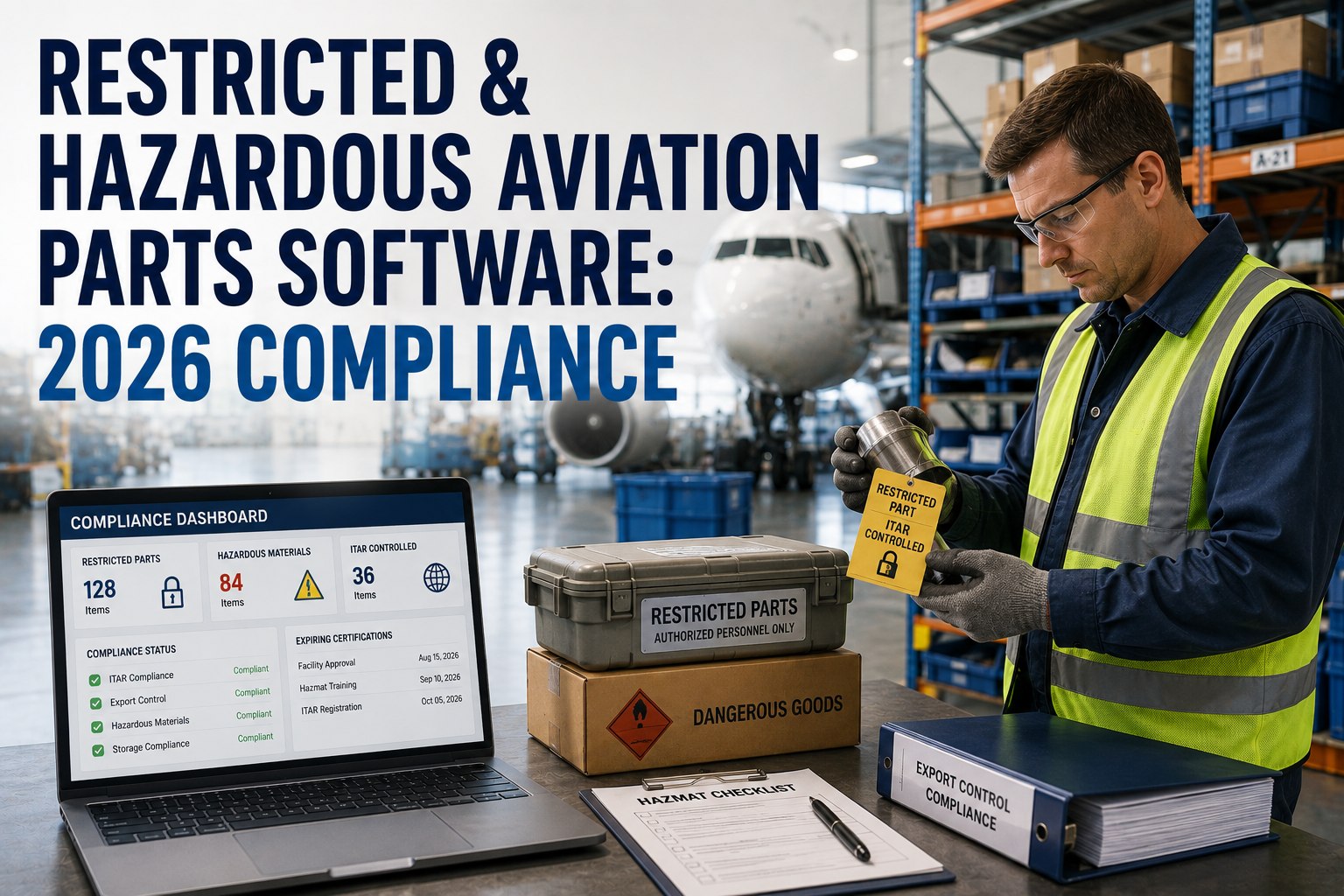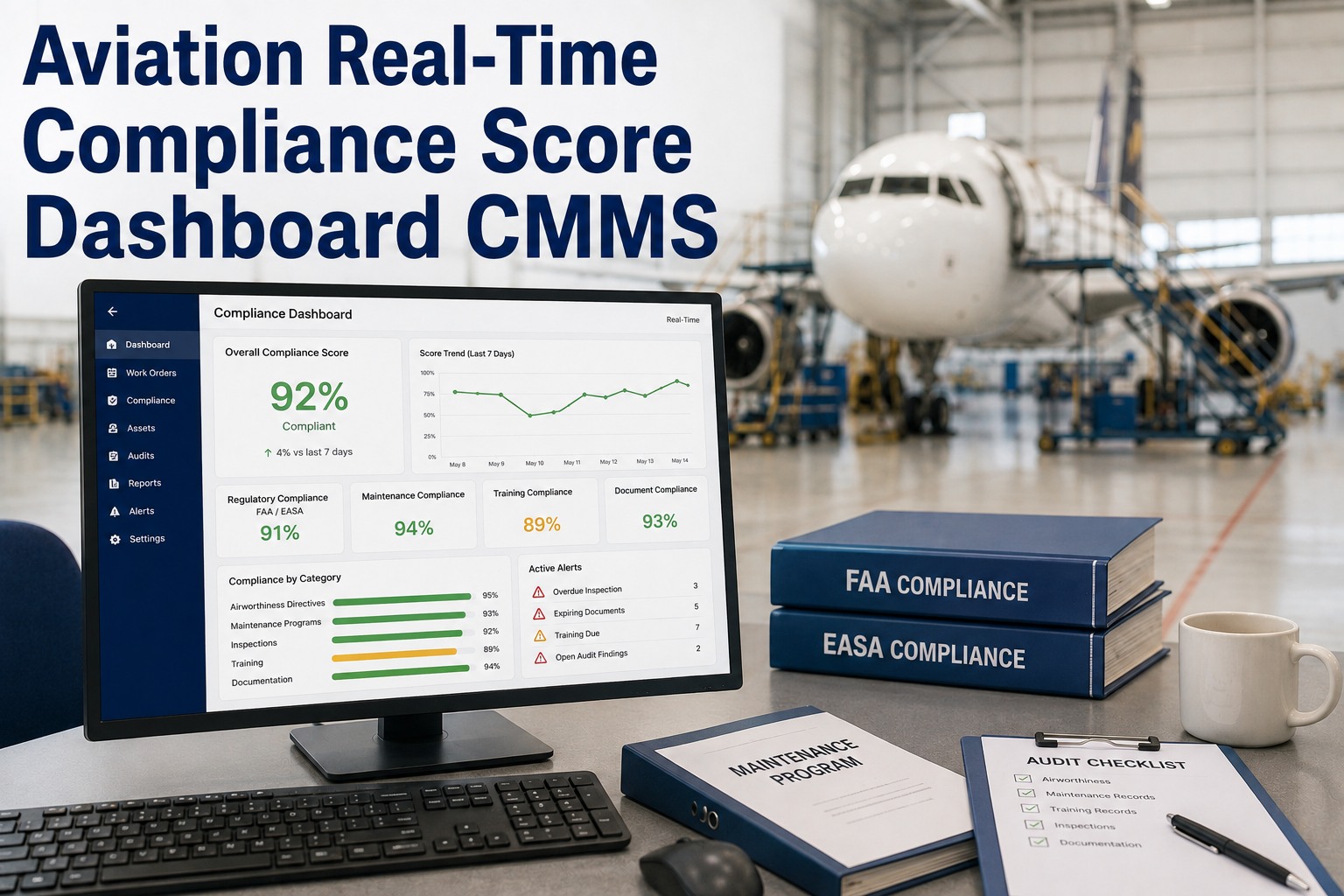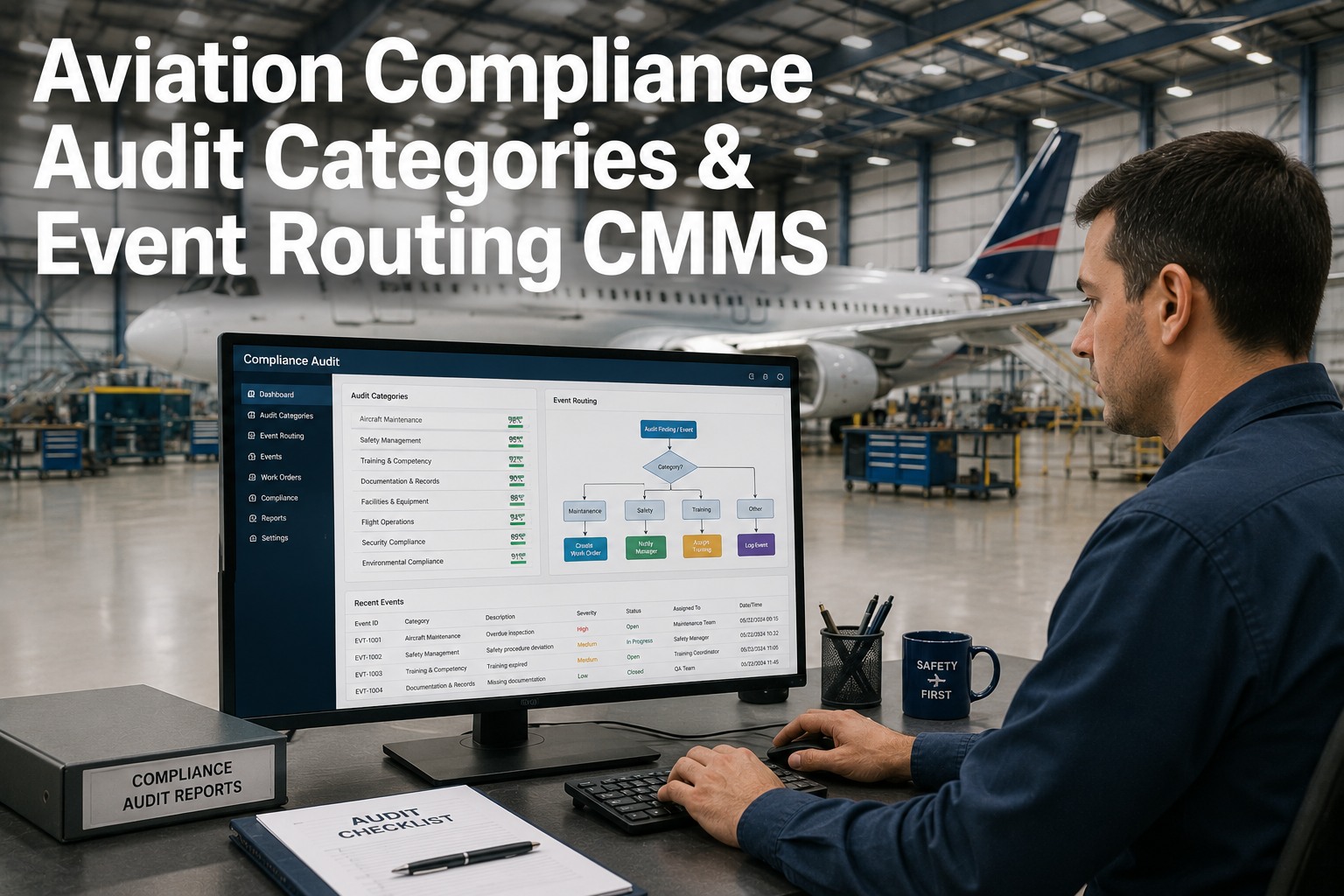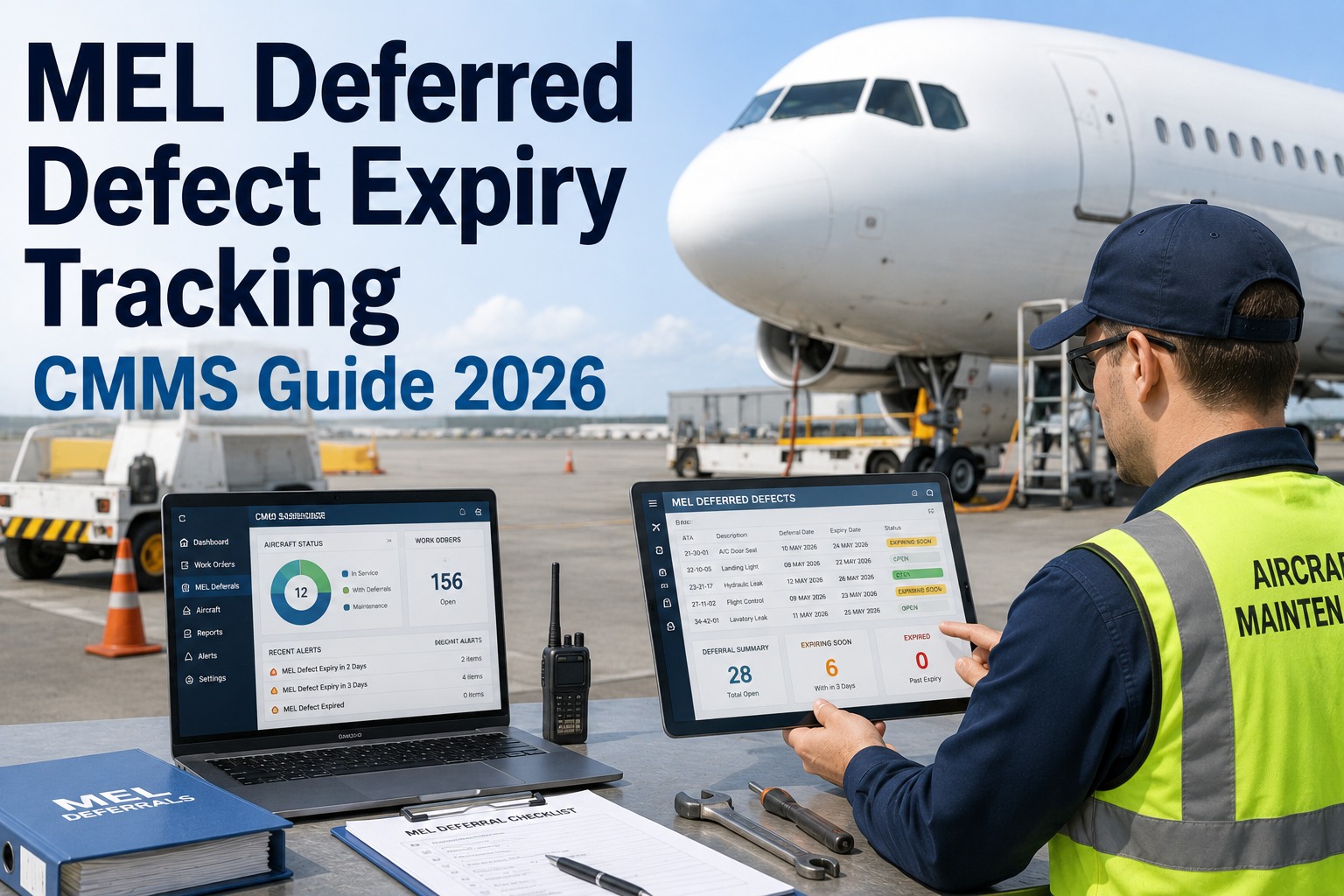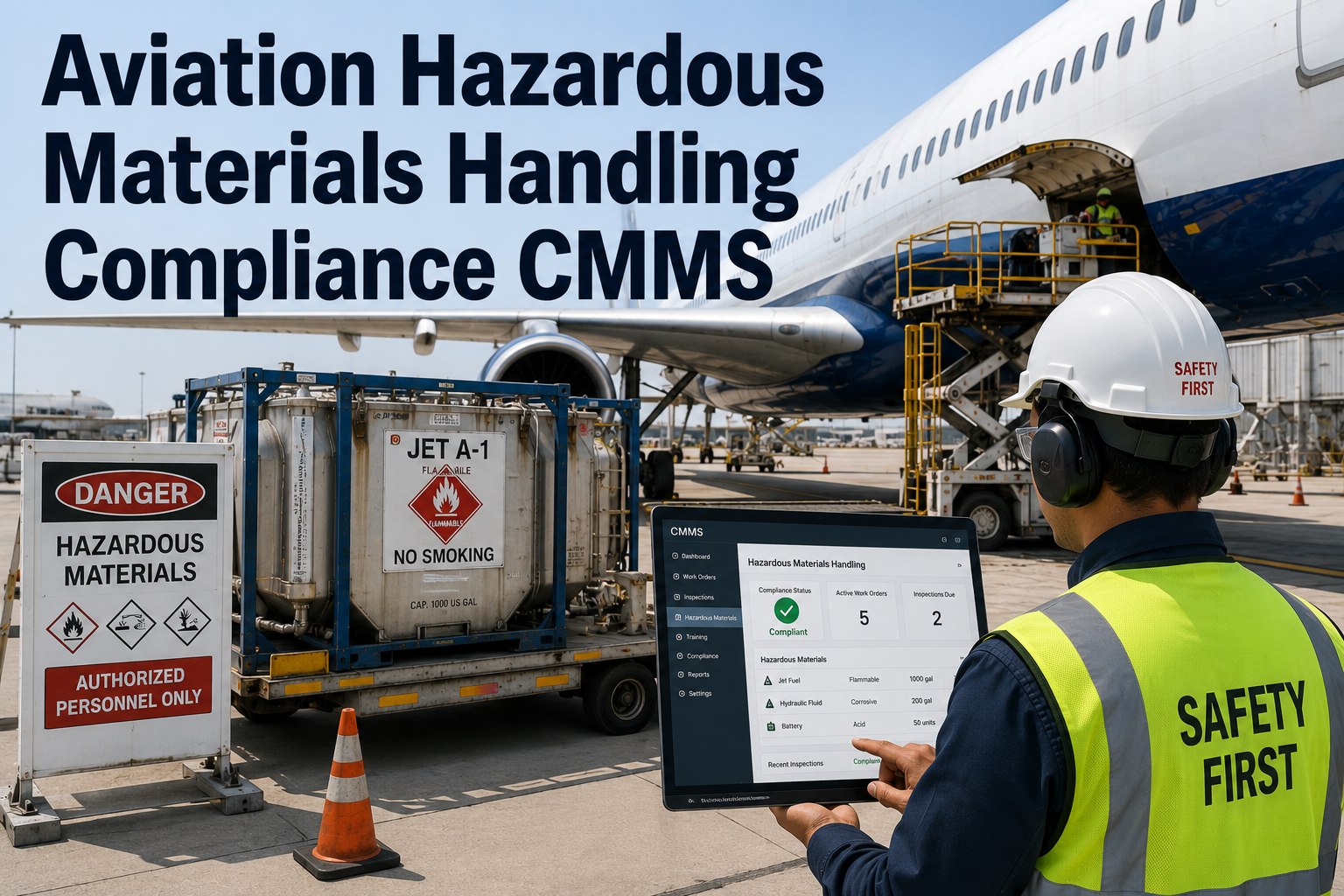
Aviation maintenance teams handle dozens of regulated substances every shift — from Jet A fuel and skydrol hydraulic fluid to methyl ethyl ketone, chromic acid, and lithium-ion shipper batteries — and a single misclassified drum can trigger DOT fines upward of $30,000 per violation or ground an aircraft. This guide maps hazardous materials handling across the MRO environment to the CMMS workflows that keep programs audit-ready: IATA Dangerous Goods Regulations (DGR) compliance, real-time hazmat inventory, spill response, and technician training records. If you want to operationalize the framework described here in your own hangar, you can Start Free Trial and configure chemical storage, SDS vaults, and spill kits against your current asset register in under a day.
Is a single unlabeled drum about to ground your fleet?
A 2025 industry review found that 68% of Part 145 repair-station findings trace back to hazmat documentation gaps — not the chemicals themselves. This guide shows how a CMMS-built hazmat program closes those gaps without slowing MRO throughput.
Five hazmat categories that drive 90% of aviation findings
Aviation maintenance operations juggle over 200 regulated substances across a single hangar floor. The compliance pressure comes from five high-volume categories — and each one carries its own documentation, storage, and spill-response rules under 49 CFR, IATA DGR, and EPA RCRA.
Class 3 flammable liquids. A typical narrow-body defuel event transfers 8,000–26,000 liters, requiring bonded grounding, explosive-proof pumps, and a documented transfer log.
Phosphate-ester blends are corrosive and skin-reactive. Spills over 5 gallons trigger EPA Tier II reporting and require dedicated absorbent pads rated for phosphate esters.
Volatile organics that accumulate in maintenance bays. OSHA PEL for MEK is 200 ppm over an 8-hour TWA; ventilation logs and air-monitoring records must be retained for 30 years.
Class 9 — UN3480/UN3481. IATA DGR 65th Edition limits state-of-charge to 30% for air transport; damaged units require Class H packaging and a notified-cargo booking.
Hexavalent chromium compounds are carcinogenic under Prop 65 and OSHA 1910.1026. Medical surveillance, exposure records, and disposal manifests follow a 30-year retention clock.
From drum to disposal: the CMMS-anchored hazmat lifecycle
A defensible hazmat program does not live in a binder — it lives in the same maintenance system that tracks work orders, asset history, and technician certifications. Six lifecycle stages keep the chain of custody unbroken.
Every drum is scanned against the purchase order. The CMMS auto-attaches the manufacturer SDS, assigns a unique container ID, and flags any missing Section 14 transport classification before the pallet leaves receiving.
Compatibility matrix enforces NFPA 30 segregation — oxidizers separated from flammables by a minimum 20-foot barrier. The system blocks check-out if a drum would violate a bin's chemical profile.
Technicians draw material only against an open work order. Quantity, lot number, and remaining shelf life are logged in real time, with auto-alerts when a container drops below 10% volume.
Daily cycle counts reconcile physical stock against CMMS records. Variance over 2% triggers a hold-and-investigate workflow before the next issue is permitted.
A spill event auto-generates an incident record, pulls the exact SDS, surfaces the nearest spill kit, and routes a notification to the EHS officer — all within the same work-order screen.
Waste streams are profiled, manifested under EPA Form 8700-22, and signed off by a licensed TSDF. The manifest PDF is permanently bound to the originating asset record for the 3-year audit window.
The 5-minute window: spill response procedures that hold up in audit
FAA and EPA reviewers look for two things after a hazmat spill: speed of containment and completeness of the paper trail. The timeline below maps the first 60 minutes — the window in which a 1-gallon skydrol release either becomes a routine log entry or a $12,000 reportable incident.
Which standard applies to which hazmat activity
Most findings are not failures of handling — they are failures of matching the right regulation to the right activity. This matrix is the quick-reference repair stations paste inside the hazmat locker door.
| Activity | Governing Standard | Key Requirement | Retention |
|---|---|---|---|
| Receiving hazardous shipments | IATA DGR 65th Ed. / 49 CFR 171–173 | DG classification, marking, and shipper's declaration | 2 years (air) · 3.75 years (ground) |
| On-site chemical storage | NFPA 30 / 29 CFR 1910.106 | Segregation, ventilation, max container quantities | Active life of facility |
| Technician exposure records | OSHA 1910.1020 / 1910.1026 | Air monitoring, medical surveillance, training | 30 years |
| Hazardous waste generation | RCRA 40 CFR 260–279 | Manifest, satellite accumulation, LQG/SQG limits | 3 years minimum |
| Spill reporting (federal) | CERCLA 40 CFR 302 / EPCRA 304 | NRC notification at RQ threshold within 15 min | 5 years |
| Tier II chemical inventory | EPCRA 40 CFR 370 | Annual report for substances over 10,000 lb | 3 years |
What a CMMS-configured hazmat program actually delivers
A regional MRO with 180 line-maintenance assets and 14 chemical storerooms was spending $42,000 annually on manual SDS reconciliation, paper spill logs, and remediation of documentation gaps before audit. After migrating hazmat workflows into the CMMS, measurable outcomes landed within one quarter.
SDS retrieval dropped from a 4-hour manual search to a 12-second barcode scan against the asset register.
Auto-drafted NRC notifications and spill-kit mapping closed the 15-minute reporting window with margin to spare.
Barcode-driven reconciliation replaced clipboard counts across three hangars and the ramp fuel farm.
Hazmat handling certifications auto-linked to work-order eligibility — no technician can draw a restricted chemical without a current IATA DGR certificate on file.
Stop chasing paper. Start tracking chemicals against assets.
Configure your hazmat inventory, SDS vault, spill-response workflow, and training matrix inside a single CMMS — and walk into your next DOT audit with every record one click away.
Aviation hazmat handling: the questions auditors ask first
No — IATA DGR governs air transport of dangerous goods, including AOG ship-outs and lithium batteries moving between bases. Ground-only storage and use fall under 49 CFR, OSHA, and EPA RCRA. However, most Part 145 stations handle at least one air-eligible hazmat (ELT batteries, oxygen generators, chemical oxygen candles), so a DGR-compliant CMMS configuration is still required to avoid mixed-program confusion.
IATA DGR requires recurrent training every 24 months with records retained for the same period. OSHA exposure records (air monitoring, medical surveillance for chromate or solvent work) carry a 30-year retention. A CMMS that links certification expiry to work-order eligibility prevents a technician from handling restricted material the day after recurrency lapses — a top-5 finding in 2024 repair-station audits.
Any release exceeding the CERCLA Reportable Quantity for the specific substance — 5 lb for chromic acid, 10 lb for MEK, 1 lb for hydrazine — must be reported to the National Response Center within 15 minutes of discovery. EPCRA adds state and local notification layers. You can Book a Demo to see how the CMMS auto-detects threshold breaches from the spill-log volume entry.
OSHA's 2012 HazCom alignment with GHS permits electronic SDS access provided employees can retrieve any sheet in under 60 seconds without barriers — no logins, no search delays. A CMMS with barcode-linked SDS retrieval satisfies this. A printed backup binder is still recommended for the chemical storeroom in case of network outage, but it no longer needs to be the primary reference.
When chemical issue, SDS retrieval, and spill documentation live in the same system as the work order, technicians stop context-switching between paper logs and the maintenance screen. MROs report 12–18% faster task closeout on chemical-intensive work cards (composites bonding, corrosion removal, fuel-tank entry) because the compliance step is no longer a separate workflow bolted onto the job.
Your next audit should take hours, not weeks.
Build a hazmat program where every drum, every SDS, every spill log, and every training certificate is one click away — anchored to the assets they actually touch.
Free 14-day trial · No credit card